


Farina Hits Hopkins for Taking Money From Top Cranston Attorney, But Has Taken Nearly As Much
GoLocalProv News Team
Farina Hits Hopkins for Taking Money From Top Cranston Attorney, But Has Taken Nearly As Much

According to Farina’s campaign “In what likely constitutes major Ethics Code violations by a sitting Cranston City Councilman, recent Rhode Island Board of Elections Financial Reports reveal that two sizable donations to the Cranston Republican Mayoral candidate, Ken Hopkins, made by Rhode Island real estate Attorney Robert Murray have had considerable influence over Hopkins’ voting decisions. Hopkins voted in favor of two separate re-zoning matters involving clients represented by Attorney Murray.”
The only problem is Farina also took donations during this period from Murray — a lawyer who has been a dominant figure in Cranston and state politics for decades. Murray served as chief of staff to then-Governor Ed DiPrete in the 1980s.
GET THE LATEST BREAKING NEWS HERE -- SIGN UP FOR GOLOCAL FREE DAILY EBLASTSign Up for the Most Complete 2020 Election Coverage
“This is a blatant conflict of interest and violates the Cranston Code of Ethics,” said Farina. “A look at Hopkins’ recent Campaign Elections Finance Report shows that he voted in favor of two separate re-zoning ordinances that came before the Cranston City Council in which Attorney Robert Murray represented both companies. Prior to each of these votes, Murray made two sizable donations to Hopkins’ Campaign for Mayor.”
A review of Rhode Island campaign finance data shows that Farina received a $250 donation from Murray on March 18 and Hopkins received a $500 donation from Murray on March 21.
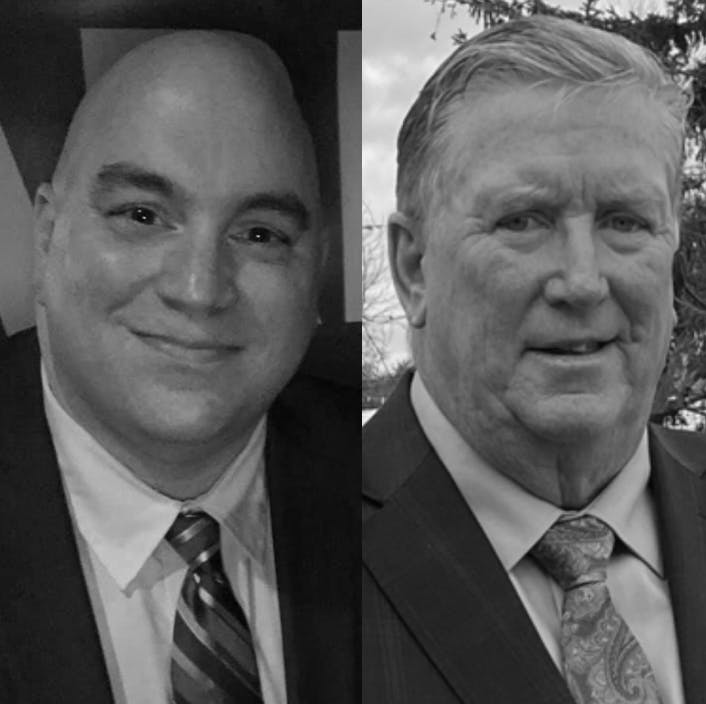
Hopkins calls Farina’s accusation “outrageous and the acts of a failed candidate.”
“Never in my life has anyone ever questioned my ethics and integrity,” said Hopkins. “I proudly serve as a public official with loyalty to no one but the citizens of Cranston.”
“Mr. Farina’s suggestion that my actions could somehow be influenced by a donation is repulsive. The residents of the city know me and know my personal character,” he said. “That’s why they are responding so positively to my campaign for mayor.”
Murray in an email to GoLocal said, “The statement issued today by Mike Farina is disappointing and wrong on the facts and inferences. Never in my 32 years of practicing law has anyone ever hinted that a contribution I may have made was to curry favor for a client or vote.”
"Since 2016, I believe I have given Mike Farina donations of [sic] $1,250 and Ken Hopkins [sic] $1,500 during the same period. Last year alone I gave Mike Farina the maximum allowed by law of $1000 and he never refused one dollar," said Murray.
"On the Mardi Gras zone change, we did an extensive site visit with the neighbors, Council and Planning Commission in February on the Mardi Gras property. There was universal support for that redevelopment project from the neighbors and council members," said Murray.
"I did give Ken Hopkins a donation on March 21st of $500 to his mayoral campaign which was after the Ordinance Committee meeting and vote that was held on March 12th. I also gave Mike Farina $250 on March 18th. Mike did not attend the Ordinance Committee meeting. The March council meeting was then canceled over COVID-19," said Murray. "Both Ken Hopkins and Mike Farina voted in favor of the Mardi Gras zone change in April. There was unanimous support from the City Council."
Farina said there is a difference. In a message to GoLocal, Farina said, "It is true that I have received donations when I hold specific fundraising events, however, I have never received an unsolicited contribution from a lawyer who represented projects going before the City Council. If Bob had had an upcoming zoning issue on the docket when the donation was made, I would have returned or rejected the donation. In this instance, my opponent blatantly exhibited unethical behavior."