


Community MusicWorks: Inspirational Architecture – Will Morgan
William Morgan, Architecture Critic
Community MusicWorks: Inspirational Architecture – Will Morgan
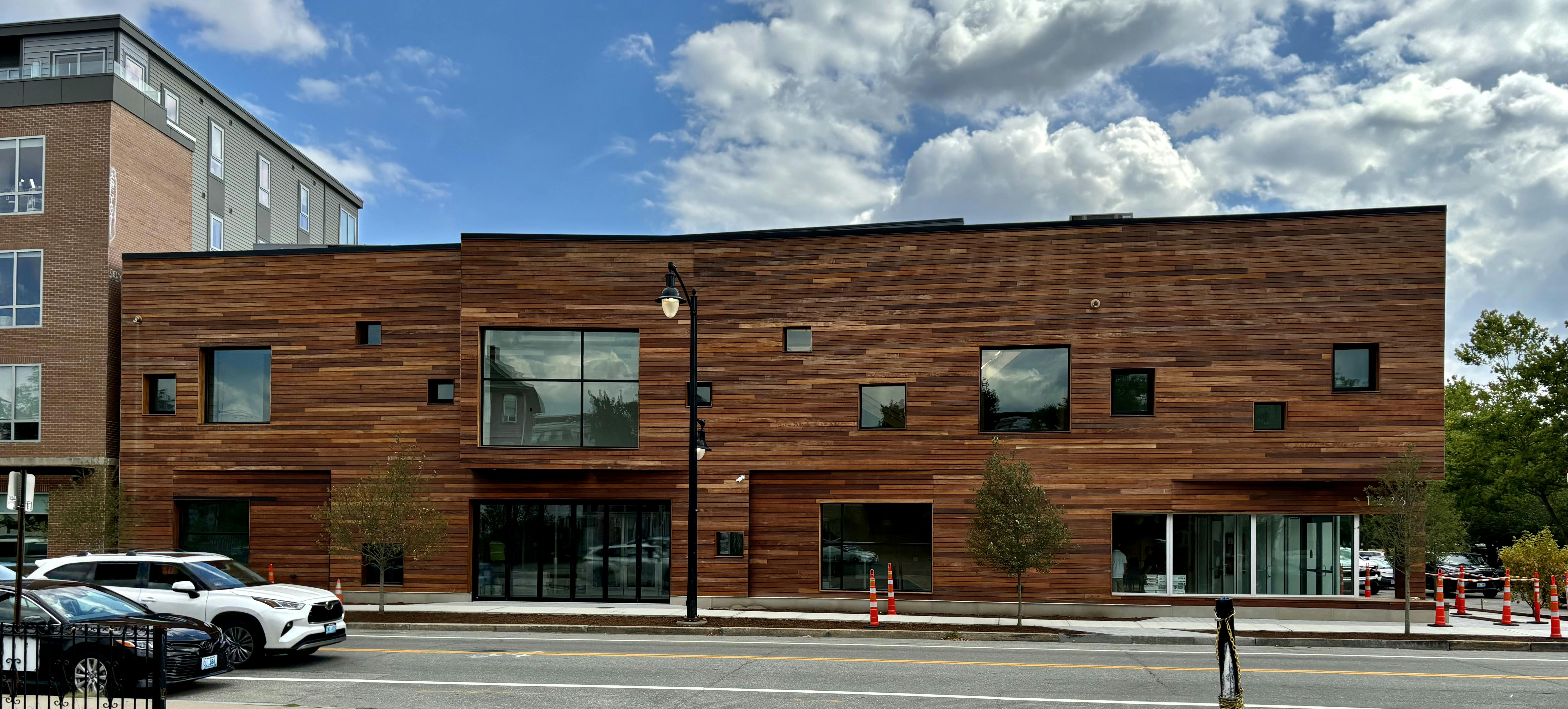
Community MusicWorks Center at 1326 Westminster Street is inspirational architecture for an aspirational organization. To be dedicated on September 28, this stunning building by 3SIX0 Architecture, is the culmination of almost three decades of labor by CMW’s founder and artistic director, Sebastian Ruth. He began as a Brown undergraduate with a small grant and a vision of offering music classes and performances to Providence’s under-served neighborhoods. The success of MusicWorks’ teaching, mentoring, and general community uplift was recognized the National Arts and Humanities Youth Program Award in 2010. Now, the organization’s new headquarters demonstrates a further commitment to the quality of life in Providence through its patronage of first-rate design.
GET THE LATEST BREAKING NEWS HERE -- SIGN UP FOR GOLOCAL FREE DAILY EBLAST

3SIX0, led by Harvard-trained RISD professors Kyna Leski and Chris Bardt, is a small firm where the craft of architecture is practiced as an art, with a solid basis of theory and a concern for materials. They have been quietly enriching the city for a quarter of a century, tackling design issues from furniture to the urban landscape. With Friedrich St. Florian, their competition design for the Pedestrian Bridge over the Providence River was the actual winner before it was replaced by an also-ran. 3SIX0 has done vacation houses, a church renovation, urban interventions, interior designs, such as the Nelson Center for Entrepreneurship at Brown, and Au Bon Pain in Logan Airport. With Community MusicWorks, however, the architects have wrought a visible and notable civic monument.
All good buildings begin with a plan, yet the lot for CMW was an irregular trapezoid–Dexter Street intersects with Westminster at ten degrees off perpendicular. So, trying to develop this anomaly, the architects created an ingenious riff on the non-parallel lines. Almost no space in the music center is perfectly rectangular, and the intersecting lines create triangles and trapezoidal spaces that are dynamic, offering an anticipatory note of tension. Only the nearly-square spaces are the practice rooms, four of which jut out over Dexter Street, adding their zig-zag pattern to the building’s spirit of musical movement. The second-floor practice rooms, and the administrative offices, café, and meeting rooms on the ground floor, surround the heart of MusicWorks, a flexible, 1,300 square feet central performance hall. While the cost of including a concert hall was debated, it was, in the architects’ words, found to be essential, “It lifts the expectations of the students and an empty hall creates the need for it to be filled with music.” Bardt and Leski compare this work to a fugue, where discordant voices eventually blend into a coherent composition.
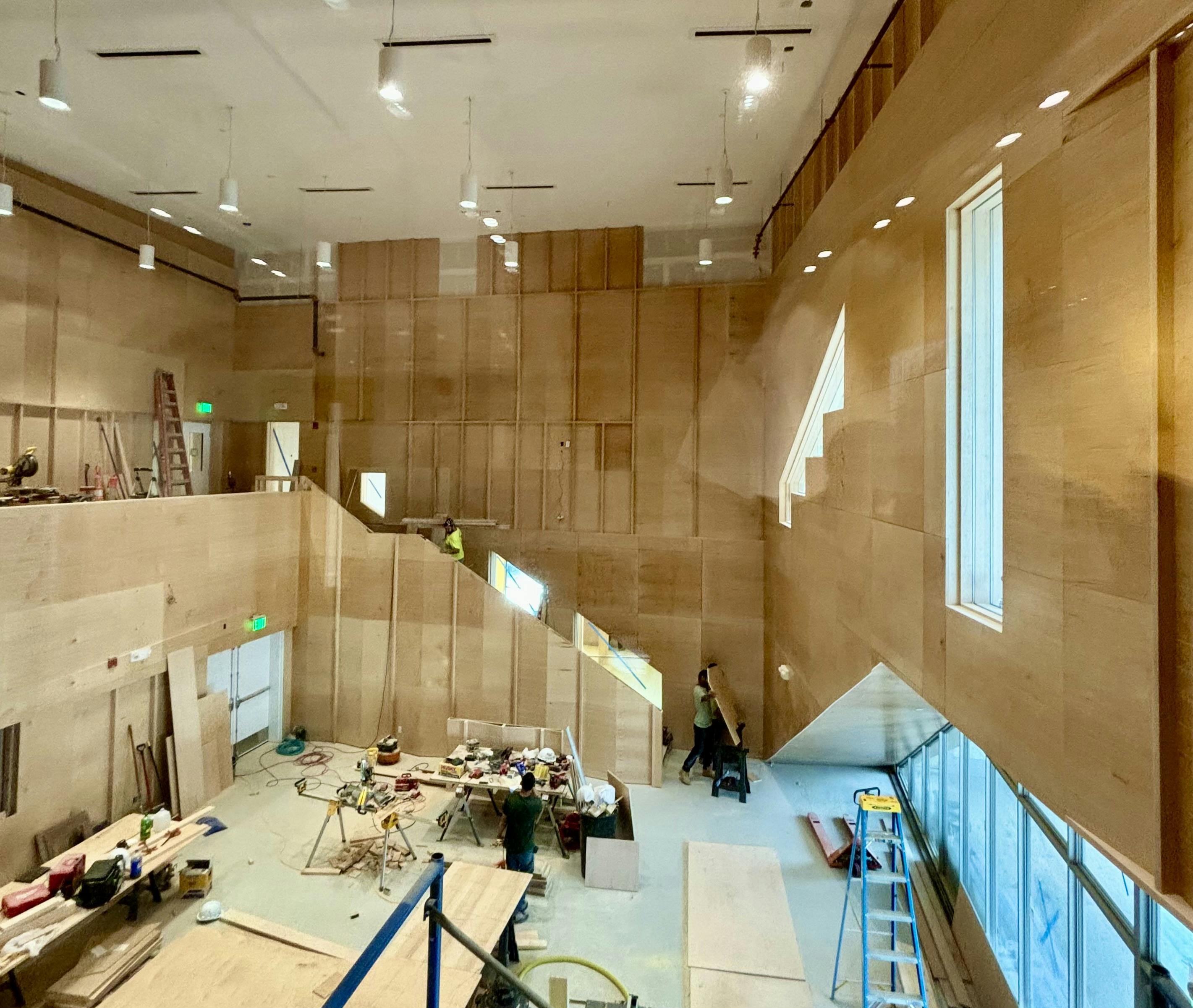
But in keeping with the special community nature of the music hall and its clients, everything about the project had to be addressed with thoughtfully–a reach for the stars, rather than the greed-driven low-balling of so many new Providence buildings. 3SIX0 obsessively and brilliantly pays attention to details, with a strong focus on materials (Bardt’s latest book, published by MIT Press, is titled Material and Mind). Each element flows from the choice of the primary material at the MusicWorks: cross laminated timber. A hybrid CLT structure was used for North Hall, the handsome RISD dormitory, but the 25,000-square feet school on Westminster has an all-wood frame. Rather than steel or concrete, wood–here sourced from Austria–allows for a lighter and a greener structure.
This may be the healthiest building in New England. Everything that could be organic is; the paints, for example, are mineral rather than latex, while rainwater is collected to irrigate the garden that runs along the building’s south side.

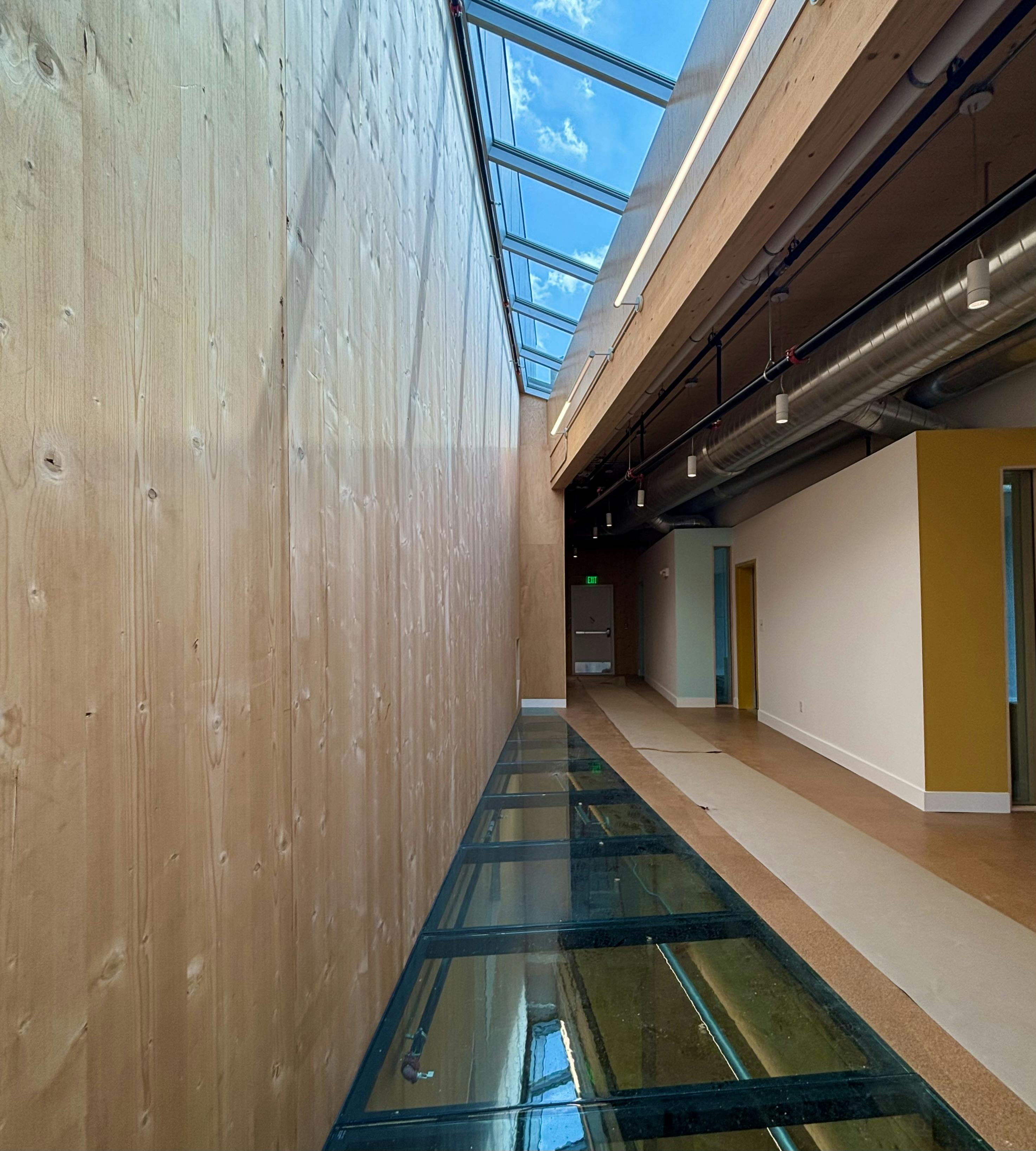
When GoLocal visited the MusicWorks, workers were rushing to complete the building. Students and teachers are eager to start teaching and practicing again. We will have to wait to see how the performance space performs, although noted acousticians from Arup, the internationally-respected engineers, were consulted. But, right now, we can declare than an esteemed and vital organization has gotten significant new headquarters.
Community MusicWorks, a thoughtful, exciting, and affordable piece of architecture, reflects the very best of Providence. Most of all, it shows how a smart, sensitive design team can make a real difference. MusicWorks cost 86 times less than the excessively bloated Performing Arts Center at Brown, but it is many times the spirit and soul of that fatuous bit of egotecture.
