Pawtucket/Central Falls T Station Lacks Design–Architecture Critic Morgan
Will Morgan, Architecture Critic
Pawtucket/Central Falls T Station Lacks Design–Architecture Critic Morgan
In 1952 Dwight Eisenhower’s presidential campaign train stopped in at the Pawtucket/Central Falls railroad station in this once important urban nexus. Within a decade, the station closed, and by 1981 rail service to the dying towns was discontinued altogether. So, the opening of a new Pawtucket/Central Falls MBTA commuter station is very welcome news. Add that this stop on the T’s Providence line is a RIPTA hub, and we have the makings of a real economic shot in the arm for this part of the Blackstone Valley–one with more likely concrete results than a phantom soccer stadium.
GET THE LATEST BREAKING NEWS HERE -- SIGN UP FOR GOLOCAL FREE DAILY EBLAST
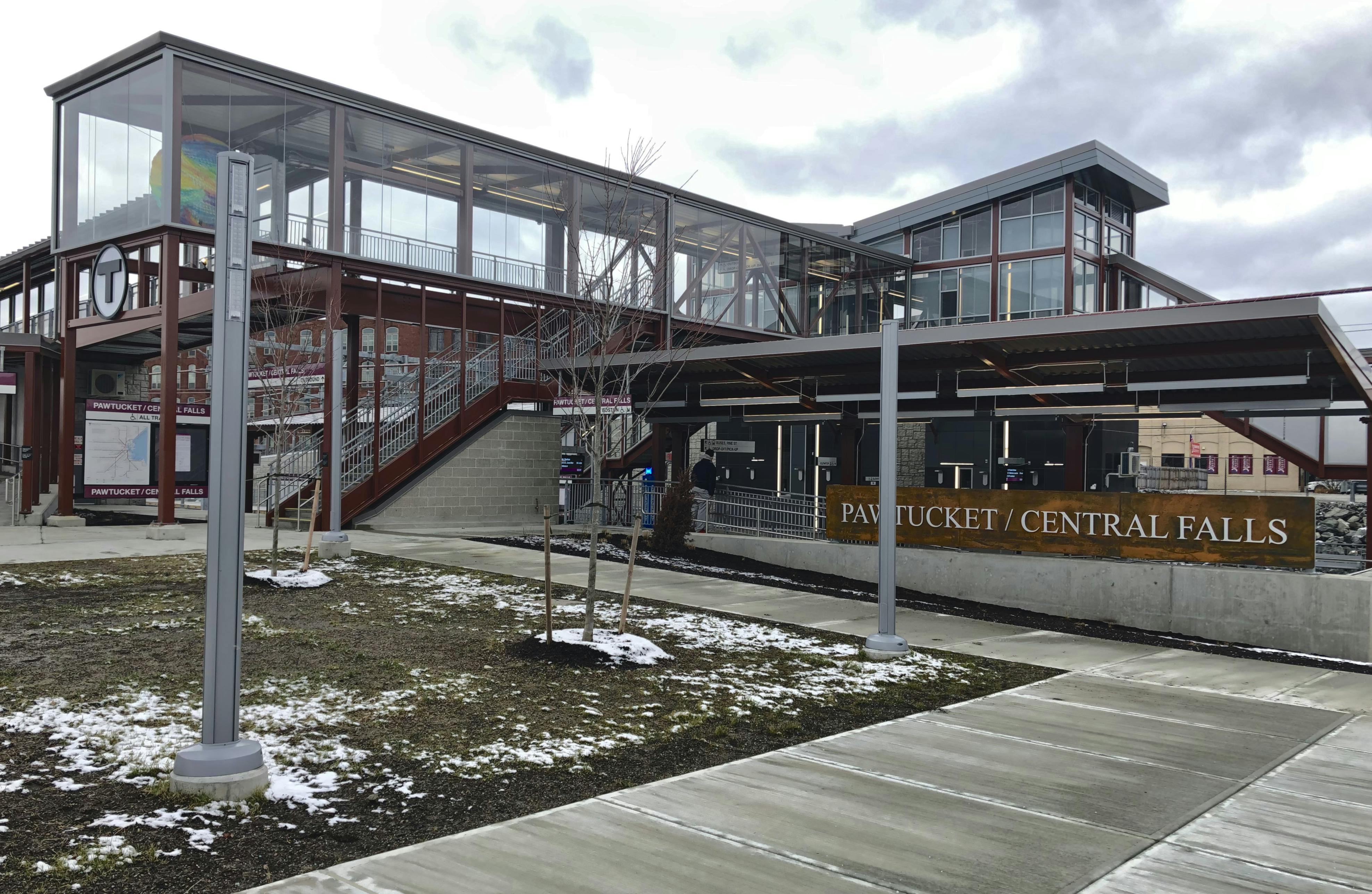
Five years in construction, the train stop on a vast open space between Conant and Dexter Streets, is still awaiting the landscaping that will make the site seems a bit less bleak. The T stop is the work of Barletta Engineering Heavy Division, builders of bridges, parking garages, and transportation facilities. Constructed at a cost of $63 million, the new station provides free parking for 200 cars and seamless connection to local busses–and the potential to increase development nearby, while opening neighborhoods to Boston commuters in search of affordable housing. The structure is a straightforward composition of exposed steel and large expanses of glass. Stairs, elevators, and ramps are the chef design elements, as both sides of the tracks needed to be accessible. The glazed hallway over the tracks provides views of the trains passing beneath, as well as a panorama of Pawtucket’s surviving historic textile mills.

In short, the new T stop does everything that it ought to do in terms of function. Yet, for that much public money, shouldn’t we expect something that offers a nod to history or perhaps something to lift the spirits? Does civic architecture have a responsibility to beautify?


The six-foot sphere of woven thread alluding to the Conant Thread District’s past by conceptual artist Gianna Stewart adds a colorful accent to the main entrance. But this gesture, underwritten by the Rhode Island State Council on the Arts and RIDOT, seems a patronizing and pathetic afterthought instead of something really bold.
A value engineering approach and a business-as-usual ethic weighs down many public works projects in Rhode Island and keeps them from achieving anything approaching better-than-average design quality. Once again, business and government are unable to conceive of building beyond the ordinary.

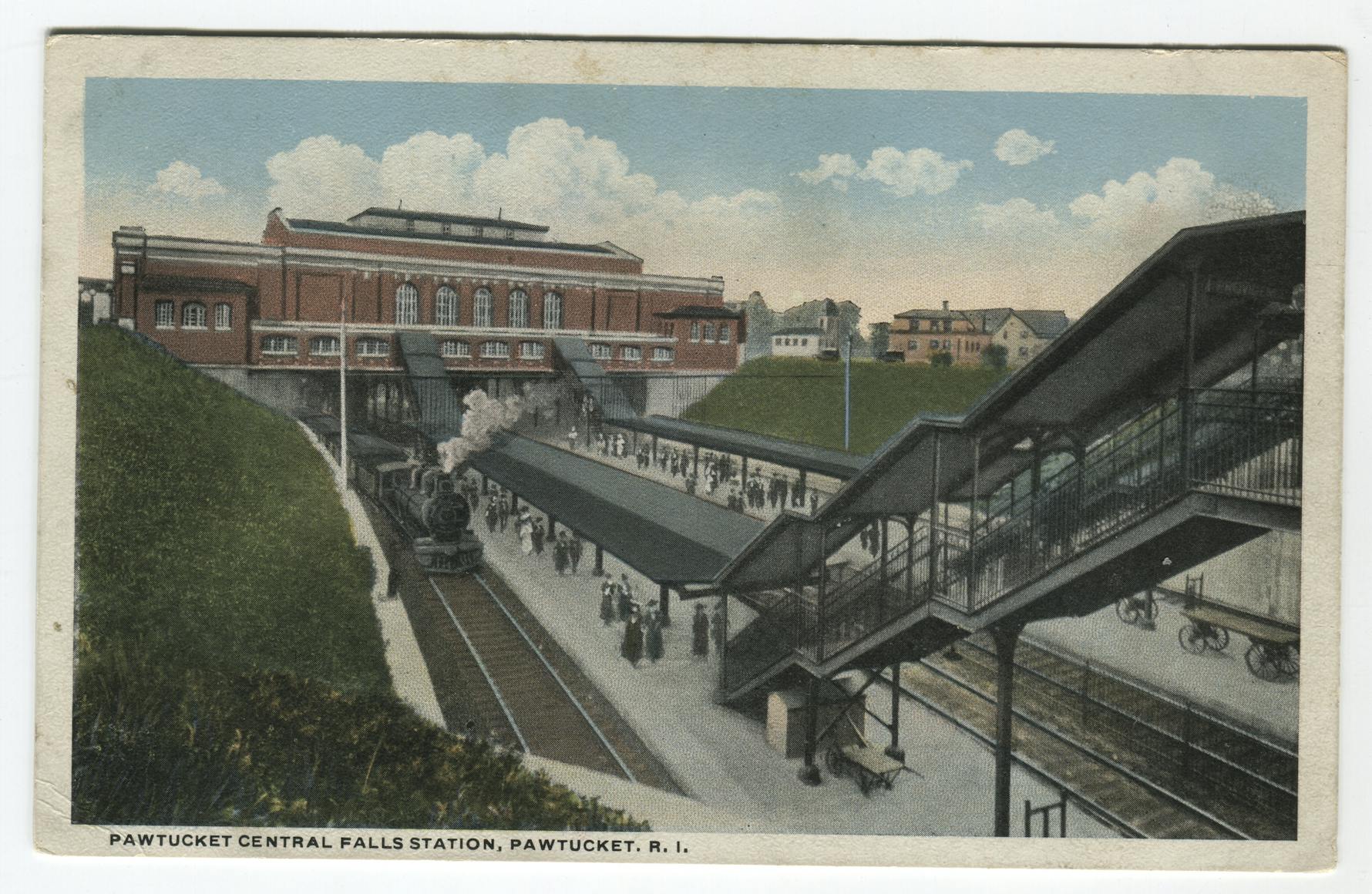
The saddest thing of all is that Pawtucket and Central Falls have an existing railroad station, one that recalls the grand days of rail travel. Built in 1916 by the New Haven Railroad, the 30,000 square feet station was the epitome of civic pride, complete with restaurants, indoor waiting rooms, and a lot of panache. After Amtrak closed the station, it began to deteriorate, and today is it is barely held together by graffiti and pigeon guano. Not long ago, a study said that the station could be restored to its early grandeur at a cost of $58 million, less than the $63 million spent on the new T stop.

The idea of such a renovation may have scared away potential developers. A key reason for not seriously considering the restoration alternative was the putative excuse of not enough parking. If you have been to either downtown Central Falls or Pawtucket lately, you may have noticed large areas of open land. Rather, the problem was lack of imagination and failure of nerve. A restored railroad station would have given Pawtucket and Central Falls a real landmark that would have told the world that the cradle of America’s industrial revolution was making a genuine comeback.