Brown’s Performing Arts Center, a Giant White Shoe Box – Architecture Critic Morgan
Will Morgan, Architecture Critic
Brown’s Performing Arts Center, a Giant White Shoe Box – Architecture Critic Morgan

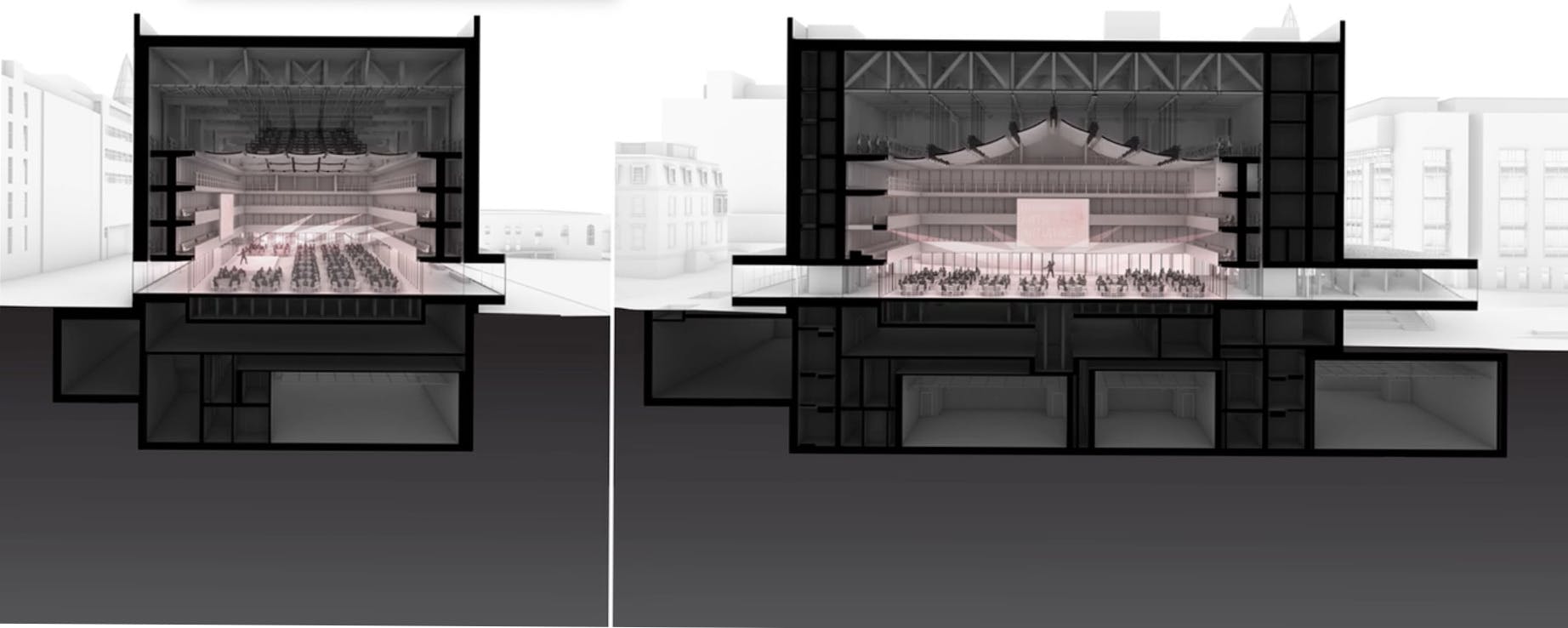
What is now just a mysterious, over-scaled block of faceted aluminum, may, in fact, do some pretty exciting things within its 118,000-square-foot package. The PAC will offer five stage and audience configurations in a single space. “All six surfaces of its shoe-box shaped main hall,” the architects note, “modulate physically and acoustically through automated and manually assisted performance equipment.” (Translation: This expensive structure will be costly to maintain.)
The space will be adjustable with seating gantries, retractable acoustic curtains, and stage lifts, so that Brown ought to be able to do almost anything with performance art from traditional to experimental. In its various guises there can be 350 seats for recitals, 250 seats for dance, drama, and opera, and as many as 650 attendees for a full orchestra. The massive superstructure needed to carry all this wizardry requires complicated machinery and a lot of manpower; configuration changes take ten seconds on the architect’s website, but four days in real-time.
GET THE LATEST BREAKING NEWS HERE -- SIGN UP FOR GOLOCAL FREE DAILY EBLAST

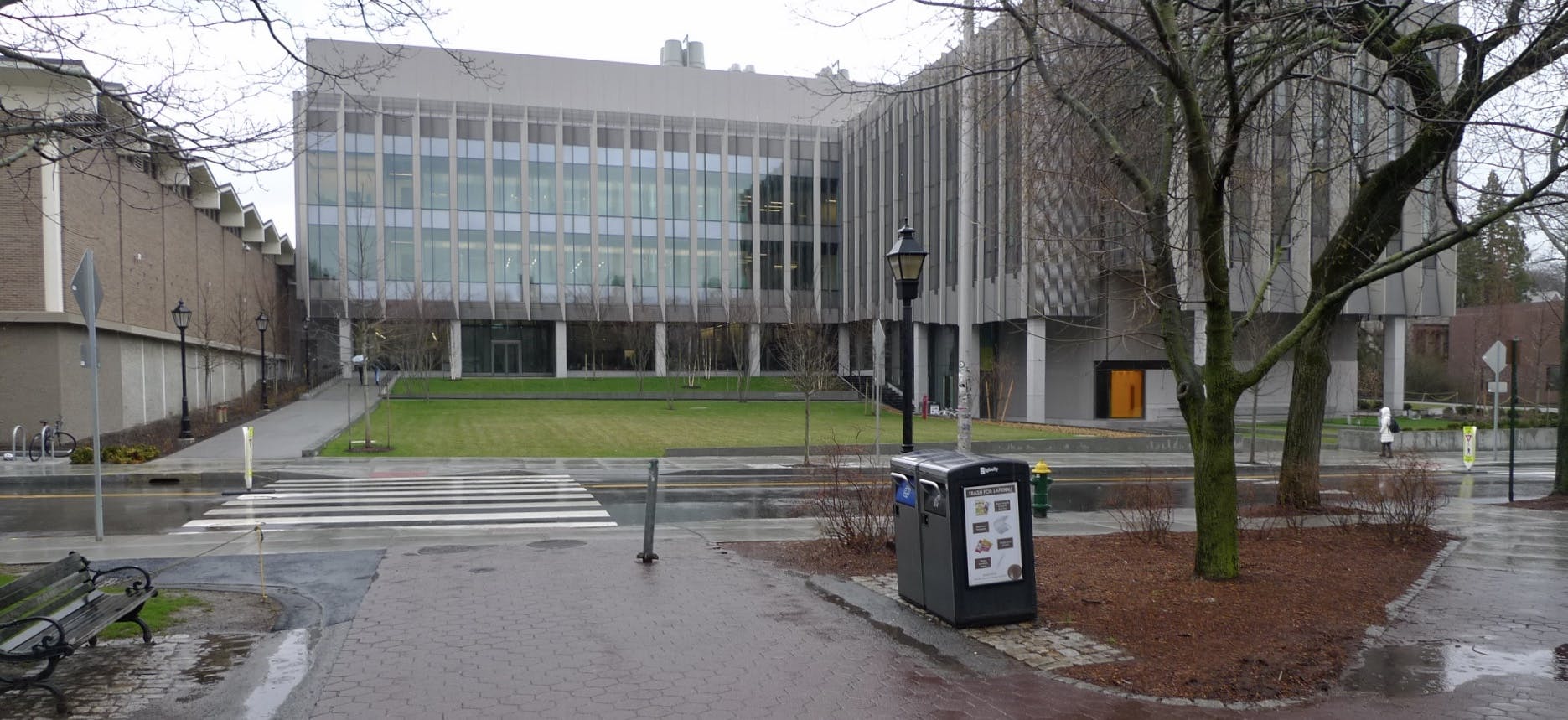
Despite all the fancy equipment and the enticement of an enriched cultural scene on campus, the new PAC looks a lot like an alien intruder in the tightly-packed College Hill townscape. “It feels,” muses RISD graduate and University of Wisconsin campus architect, Kip McMahan, “as if the Shell station that was here could re-emerge with as much consequential sense of place.” And, as Kim Salerno, an architect and planner who recently moved to Benefit Street notes, “White, silver and cool colors stand in stark contrast to the warm earthy hues of the Hill. Even the granite on the Hill is warm.”

The PAC reminds us that Brown, to its credit, does hire exceptional architects, especially when compared to the insultingly banal developer aesthetic employed on the 195 land and elsewhere downtown. But too often Brown doesn’t give these designers enough freedom to use their talents to their best advantage.
The characteristically dramatic REX gesture of a horizontal slice interrupting the building’s vertical thrust is also a major shortcoming. Although this contrasting glazed floor provides a grand viewing spot from which patrons can survey the campus, this floating plinth resulted in an awkward entry and a constricted main hall.
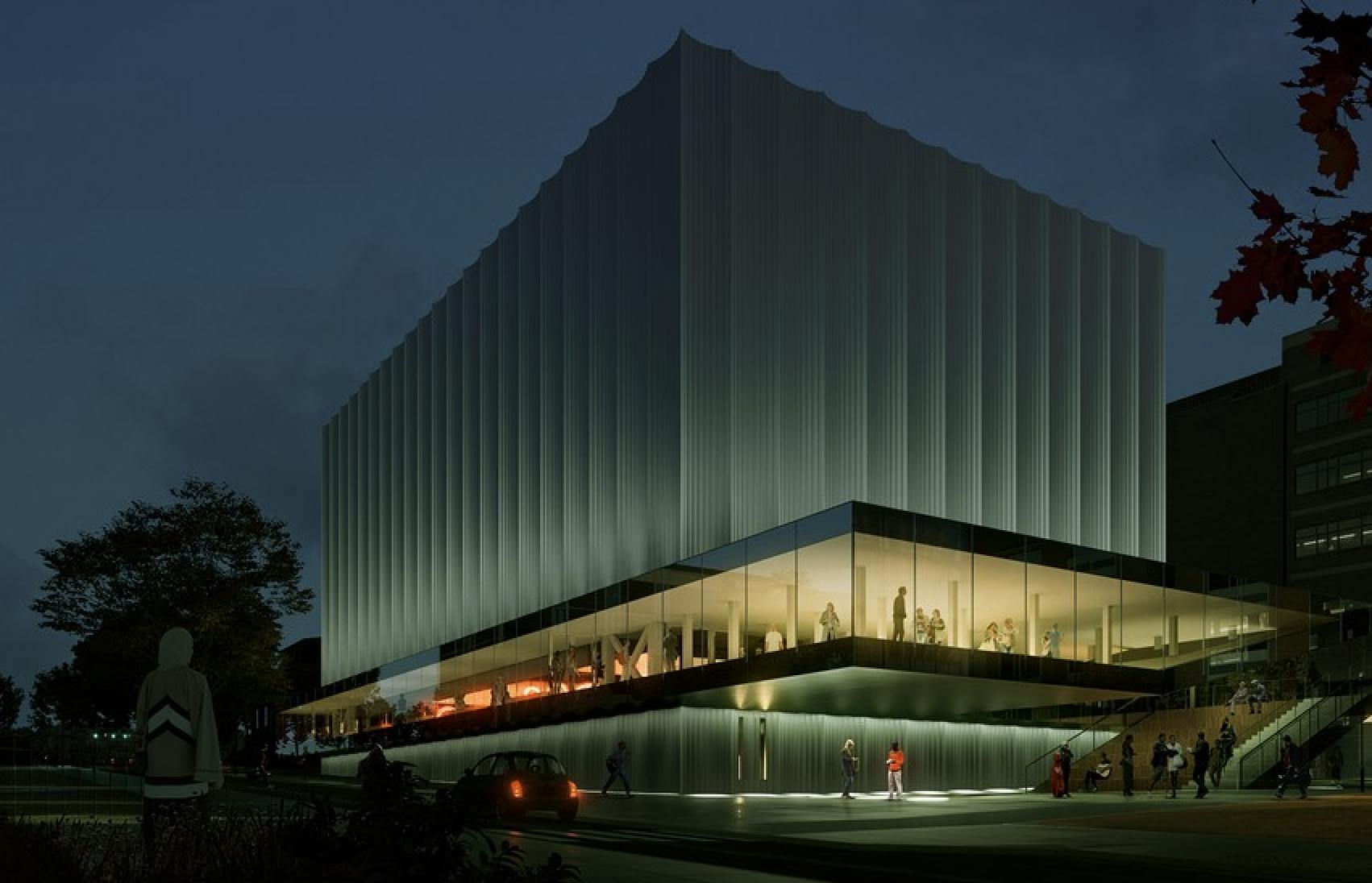
As a design removed from context, however, the monumental PAC has the proportions of a Greek temple, while the fluted aluminum cloak works better than many of the punch-hole textured surfaces that adorn other REX boxes. The Brown arts building, in spite of itself, is almost elegant.
But a structure in the center of a crowded college campus is not a stand-alone piece of art. As Kim Salerno put it, “A jewel box is great, but will the urban gestures deliver?” I asked the former Newport planning board member to give her thoughts on the PAC. “I love the new building materials, surfaces and textures,” she replied, “and I love the icy quality of the design, but I really want to see how the new architecture relates to the old.”
In the case of Brown’s Performing Arts Center, it does not relate at all. What it does is raise the question of whether Brown is succeeding in getting its arts identity together? Or is the university just purchasing their bona fides with trendy architecture pushed by consultants who ought to know better?
As the architects’ website disingenuously declares, “REX dares to be dumb.” But it was Brown who was so naïve as to be sold this white elephant masquerading as a cool piece of modern architecture.