Inspired Contemporary Design in Little Compton – Architecture Critic Morgan
Will Morgan, Architecture Critic
Inspired Contemporary Design in Little Compton – Architecture Critic Morgan
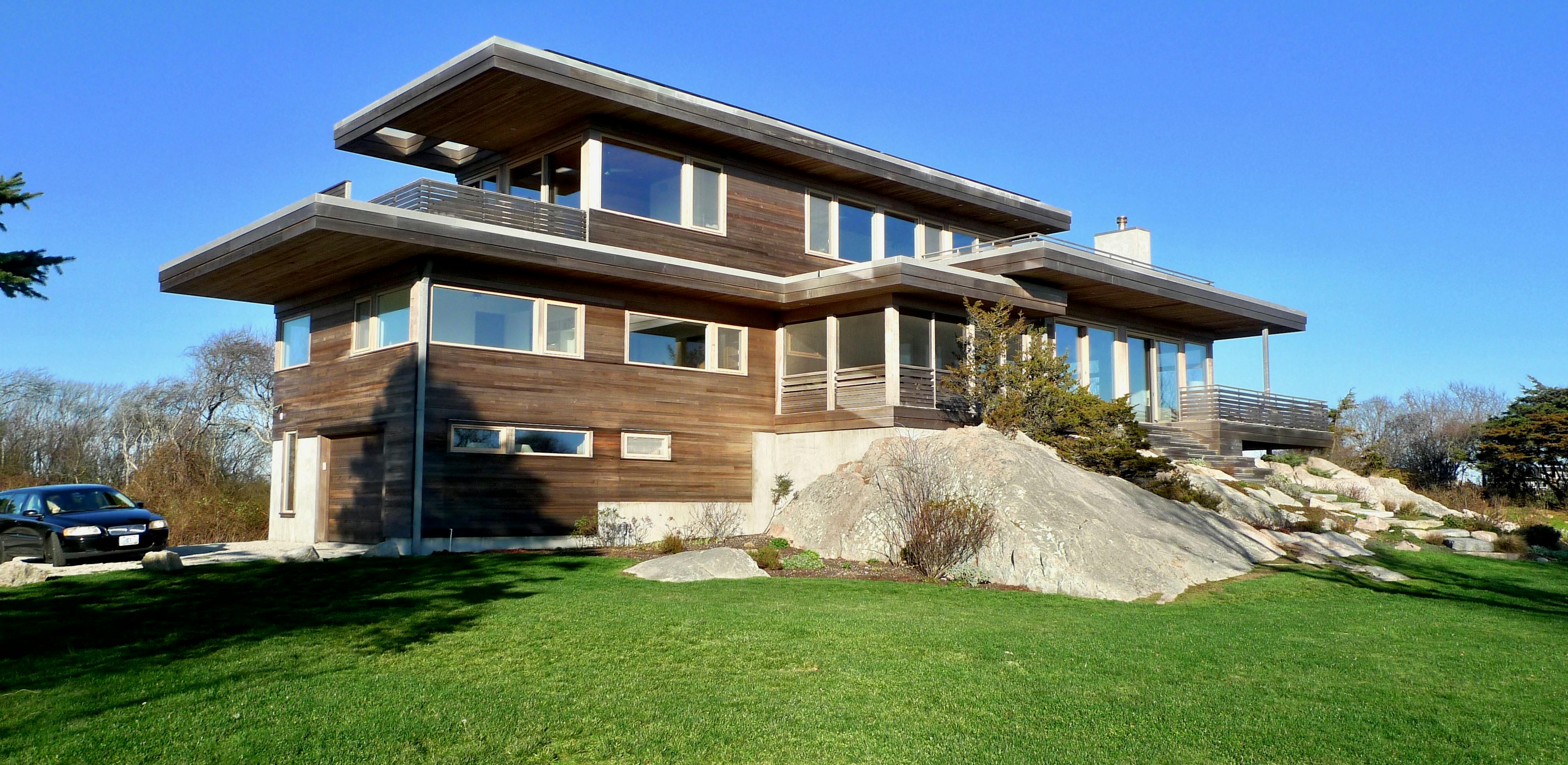
Little Compton is a place apart. With its farms running right down to the sea, its old houses and old money, the town is nearly a picture perfect piece of New England coast. Given its Quaker heritage of farming and serenity, and until the recent discovery of the South Coast towns along Buzzards Bay, this unspoiled Brigadoon has so far avoided unsympathetic development
GET THE LATEST BREAKING NEWS HERE -- SIGN UP FOR GOLOCAL FREE DAILY EBLAST
Coastal real estate is always desirable, but Little Compton has few houses for sale. Of a dozen properties on Zillow, only a handful are priced below seven figures; more typical are houses for on the market $3.6 and $4.8 million dollars. The most expensive house, at $5.2 million, is a beautifully sited house on the beach in Sakonnet by one of the most accomplished architects of modern seaside houses, Maryann Thompson.
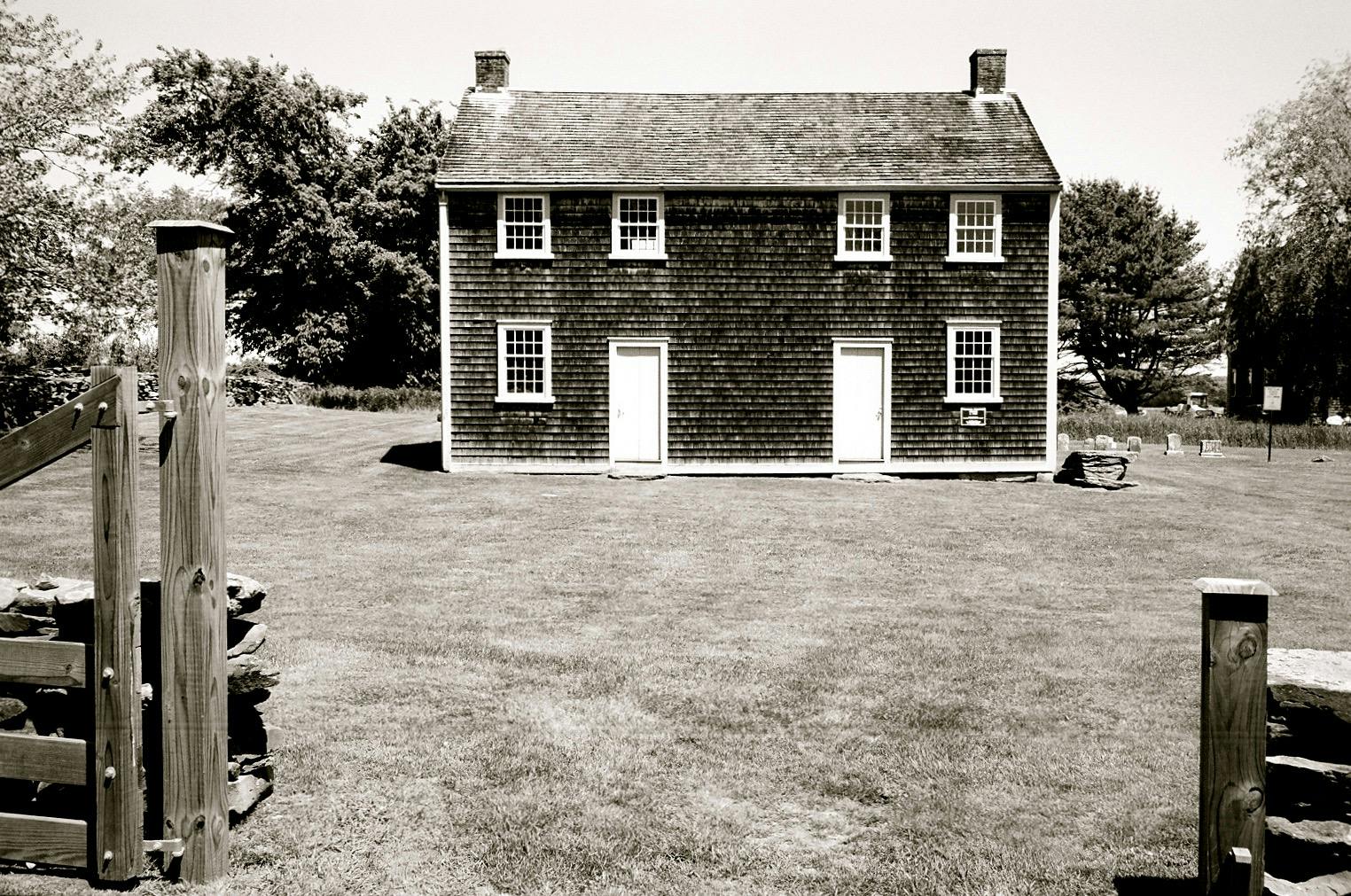
Little Compton's signature architectural aesthetic is perceived of as early American: 17th- and 18th-century central-chimney farmhouses, Cape Cod cottages, or turn-of-the-20th-century rusticators cottages with porches to capture the breeze, and all are wrapped in the ubiquitous cedar shingles.

Little Compton, nevertheless, does have a history of non-traditional, even avant-garde modern houses, beginning with the flat-roofed International-style house built on Warren's Point Road by the Harvard-trained architect, Thomas Marvell. Among the nationally known designers working here are Arquitectonica (the colorful apartment block on Miami Vice), William Rawn (Seiji Ozawa Hall at Tanglewood), and the brilliant designers of Goosewing Farm, Bohlin Cywinski Jackson. Regional stars, such as Estes/Twombly, Michelle Foster, and Roger Ferris, also have contributed handsome contemporary interpretations to the quiet local vibe.

One of the most interesting of these new dwellings is a fifteen-year-old, 1,700 square foot house surrounded by two acres of the woods. It may be the town's the least costly, least ego-flexing, and most architecturally significant new home in recent memory. 6 Long Highway was actually built on a shoestring budget, by two artists in search of an idyllic retreat after years of loft living in Boston. (The house is just been put on the market, at lowest cost of any offering in Little Compton.)
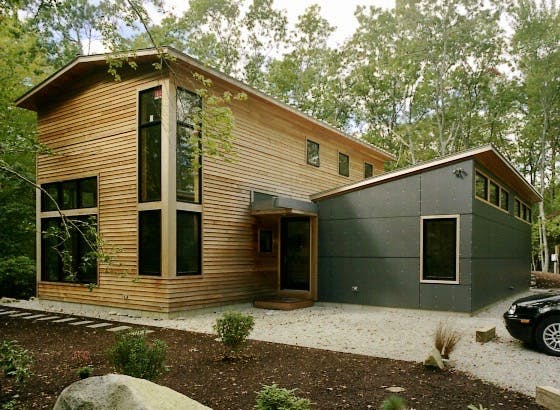
Bronlyn Jones and Robert Bauer, both painters, were looking for land in Rhode Island to build their dream house and studios. Needing a base for their search, they rented an apartment in South Providence owned by architect Caleb Messier. When they found their wooded acres, they asked him to design a house for the site, but they could not afford any of the builders' estimates. So, Messier suggested that he and five recent graduates of Roger Williams build the house themselves.
The result by the crew, calling themselves Sixteen on Center, was a thoughtfully crafted dwelling. The Iowa-born clients compared the collaborative project to a community barn raising. And like a utilitarian shed, the house has no extraneous design elements–just basics shelter beneath a gently pitched standing-seam roof. The living quarters of the house are sheathed in cedar clapboards from Eastern Europe, while the studio wing is wrapped in dark gray cement-board panels from Germany.
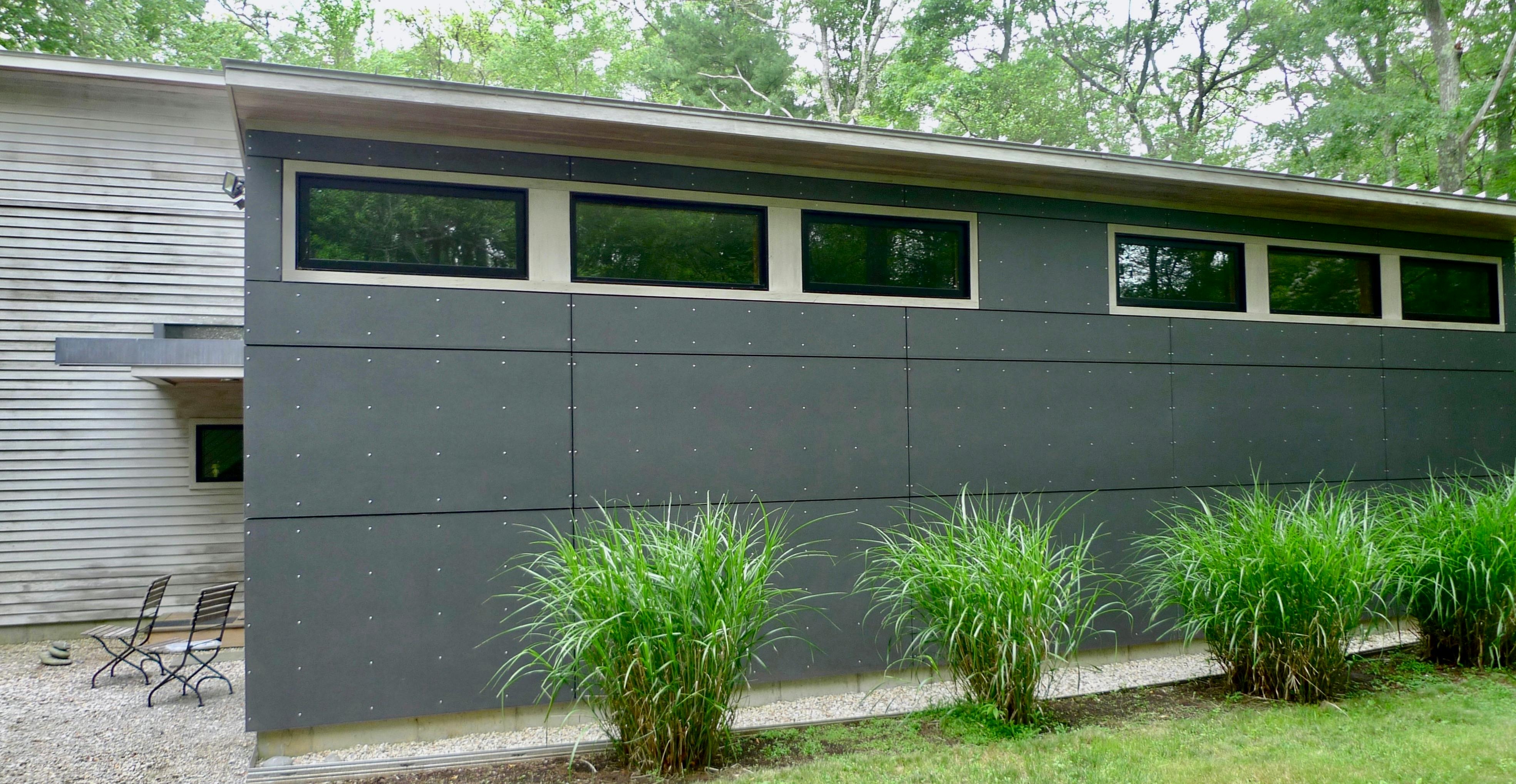
Rob and Uschi Yaffe, creators of Pawtucket’s Garden Grille and The Grange in Providence, bought the house when the original clients decamped to Maine, and converted what was a pair of studios to a den and a guest room. The open floor plan recalls Frank Lloyd Wright's most inexpensive houses; like them, it has a poured-concrete radiant heated floor, not to mentions varying ceiling heights to shape movement throughout the interior.
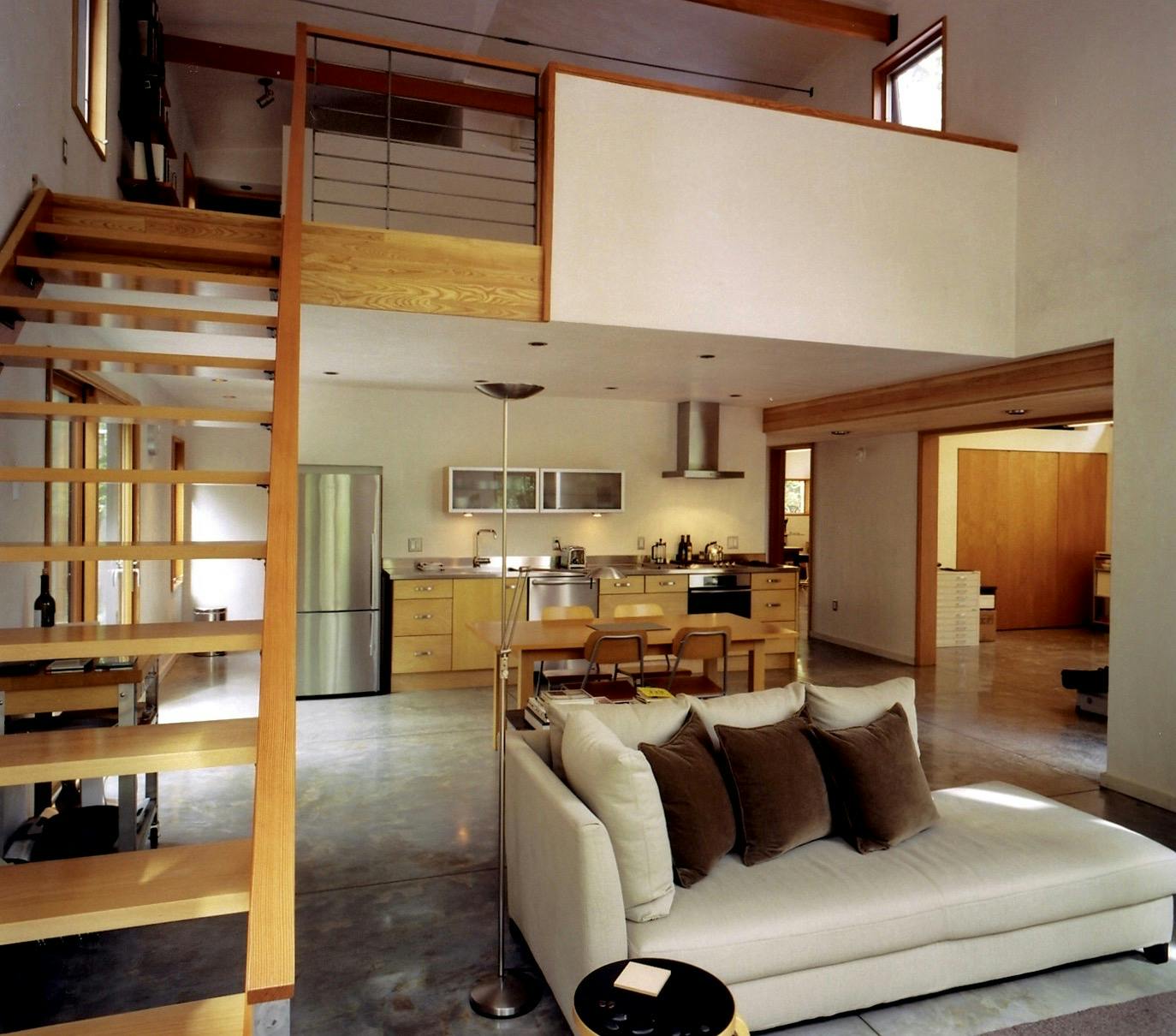
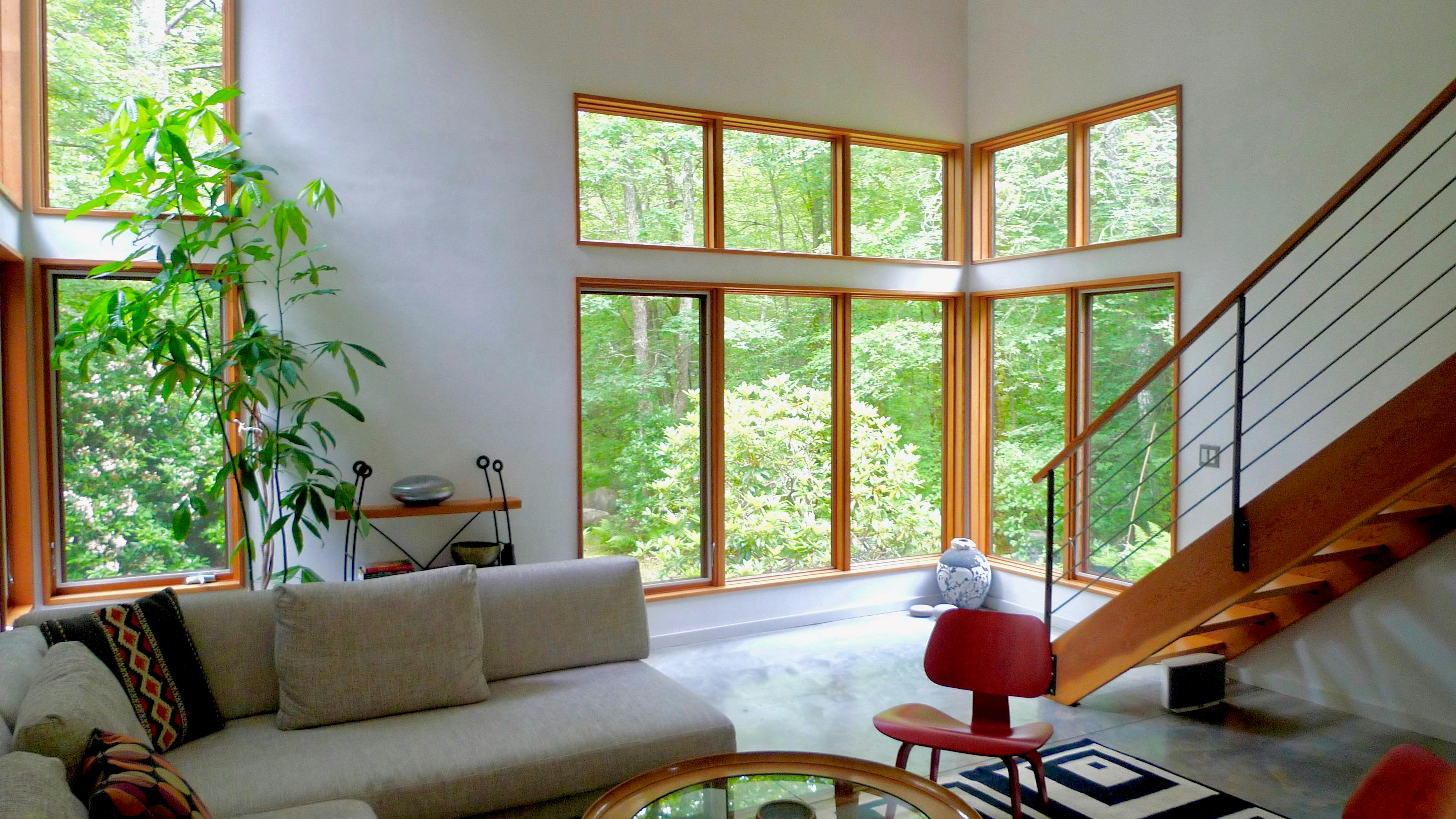
The minimalist aesthetic and the inexpensive yet rock-solid construction, as well as the closeness to nature, make this a special house. Rob Yaffe calls it "magical." It reveals another dimension to the usual clichés about the town. Rather than following the country gentleman style of the long-time gentry or the elaborate beach houses that follow new money, 6 Long Highway reinforces strong traditions of Little Compton. It offers a nod to its modest Quaker roots and agricultural utility, as well as being an inspired work of contemporary architectural design.