Newport’s $100 Million Fixer Upper - Architecture Critic Will Morgan
GoLocalProv
Newport’s $100 Million Fixer Upper - Architecture Critic Will Morgan

"Let me tell you about the rich," F. Scott Fitzgerald wrote in 1926. "They are different from you and me."
GET THE LATEST BREAKING NEWS HERE -- SIGN UP FOR GOLOCAL FREE DAILY EBLASTNewport and money go together like glitz and the Ritz. Newport's Bellevue Avenue symbolizes the incredible amassing of wealth by the merchant princes of the Gilded Age. Over-the-top palaces such as the Breakers and Marble House speak of ambitious social climbers who have arrived.

Newport's continuing drawing power is fueled by our fascination with money and the people who make it. It is certainly no different today, as we Americans are ever more enthralled by the idea of wealth and the power it represents. The very rich have the stature of mythological beings.
And as Newport well demonstrates, super-wealth often goes hand in hand with an edifice complex. From the pharaohs, monarchs, and the Robber Barons, to Donald Trump, the accumulation of money practically predicates grand building projects. This encompasses the bling of Trump Tower or the gilt of the Gold room in Newport's Marble house. But there is also the less self-congratulatory, philanthropic Rockefeller family type endowment of colleges, concert halls, and especially art museums.
The actualization of status can be as much acquisition as building. The uber-rich collect Manhattan penthouses, homes on Martha's Vineyard, California estates, and Montana ranches as if they were acquiring properties on a Monopoly Board. The late Malcolm Forbes, for example, had a 17-century house in London, a château in Normandy, and an island in the South Pacific. Forbes could reach the various parts of his empire on his private jet, the Capitalist Tool, or on his yacht, Highlander, a converted Canadian Navy destroyer.
Forbes Magazine publishes an annual list of America's wealthiest people. Depending upon the particular year, Oracle software mogul Larry Ellison is listed as the fifth or sixth richest person in the United States (Bloomberg rates Ellison as the world's eighth richest man). He too, like Malcolm Forbes, has bought an entire island, in Hawaii. And like many plutocrats with a love of sailing and a desire for opprobrium, he was drawn to the nautical and social Valhalla that is Newport.
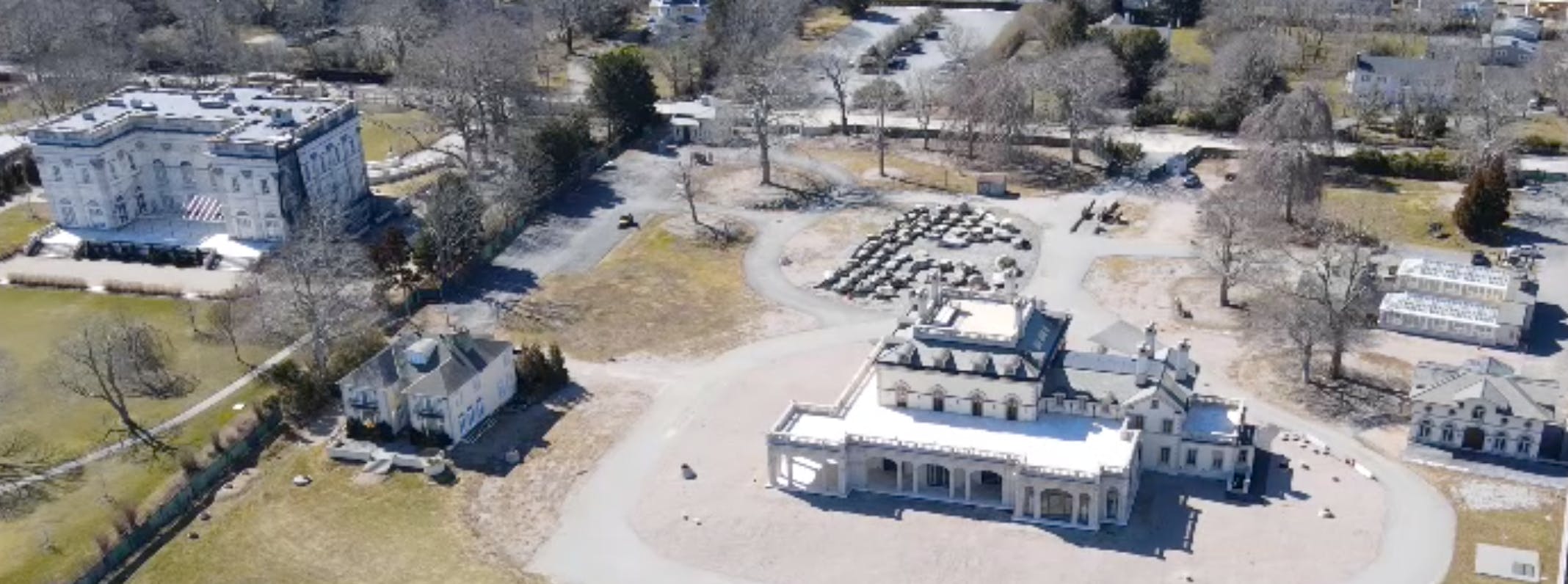
Two years ago, Ellison paid $11 million for Seacliff, a ten-room brick house, in a vaguely Norman-Georgian country style. While not one of the more significant Newport houses, it has a stunning Atlantic Ocean view. It also has a starkly modern guesthouse built right into the rocks below Cliff Walk. While it is not known what plans the new owner has for Seacliff, it abuts and thus enlarges Beechwood, the former Astor mansion that is the centerpiece of Ellison's Newport fiefdom. The Beechwood land now spreads from Rosecliff to Marble House.
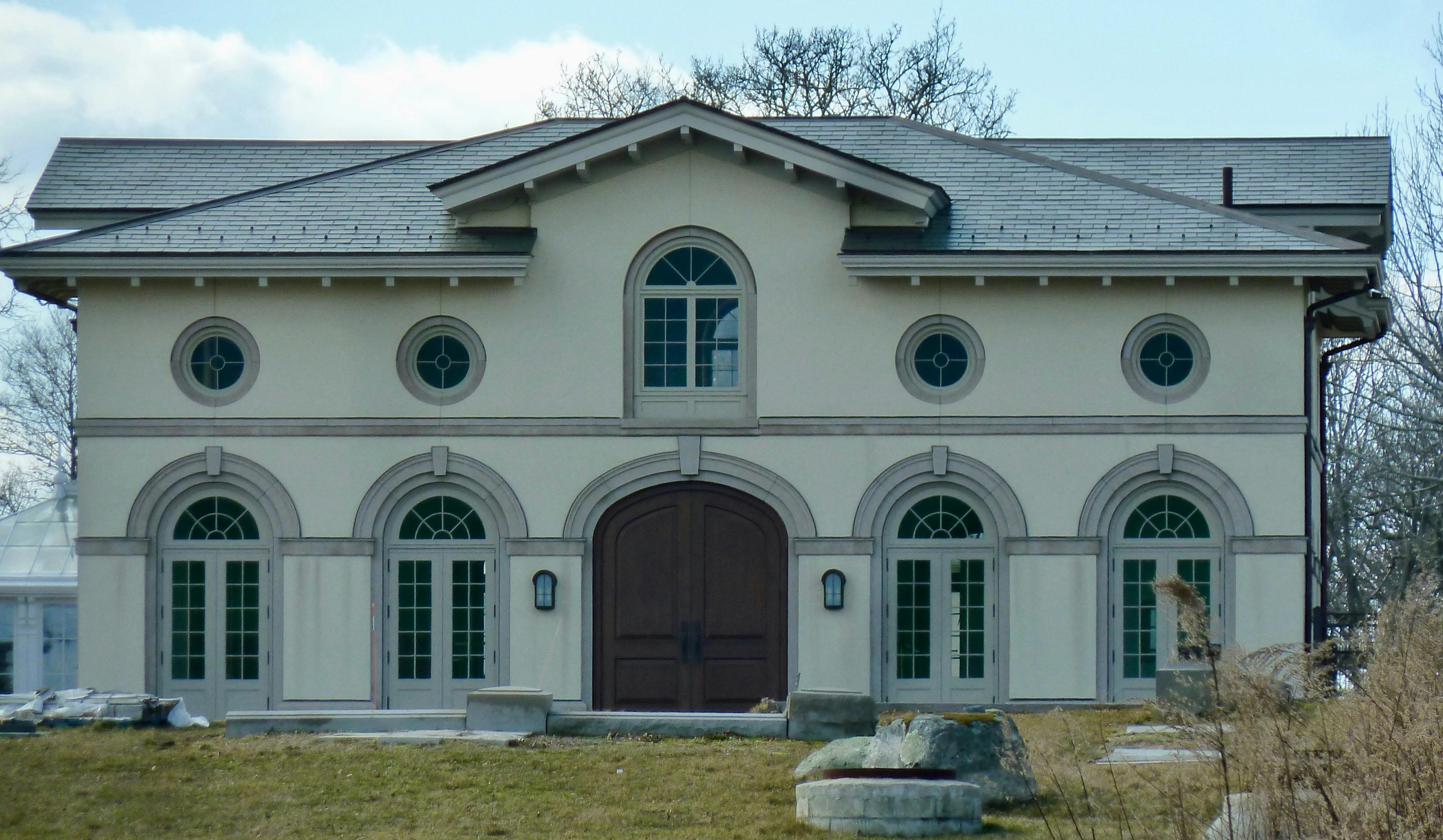
The main house is slated to become the Beechwood Art Museum, which is to house Ellison's collection of 18th and 19th-century European art. Despite the promise of such a cultural gem for Newport, complete with formal gardens, it remains in a seemingly endless state of construction. London's Daily Mail noted that neighbors were calling the project "an eyesore."
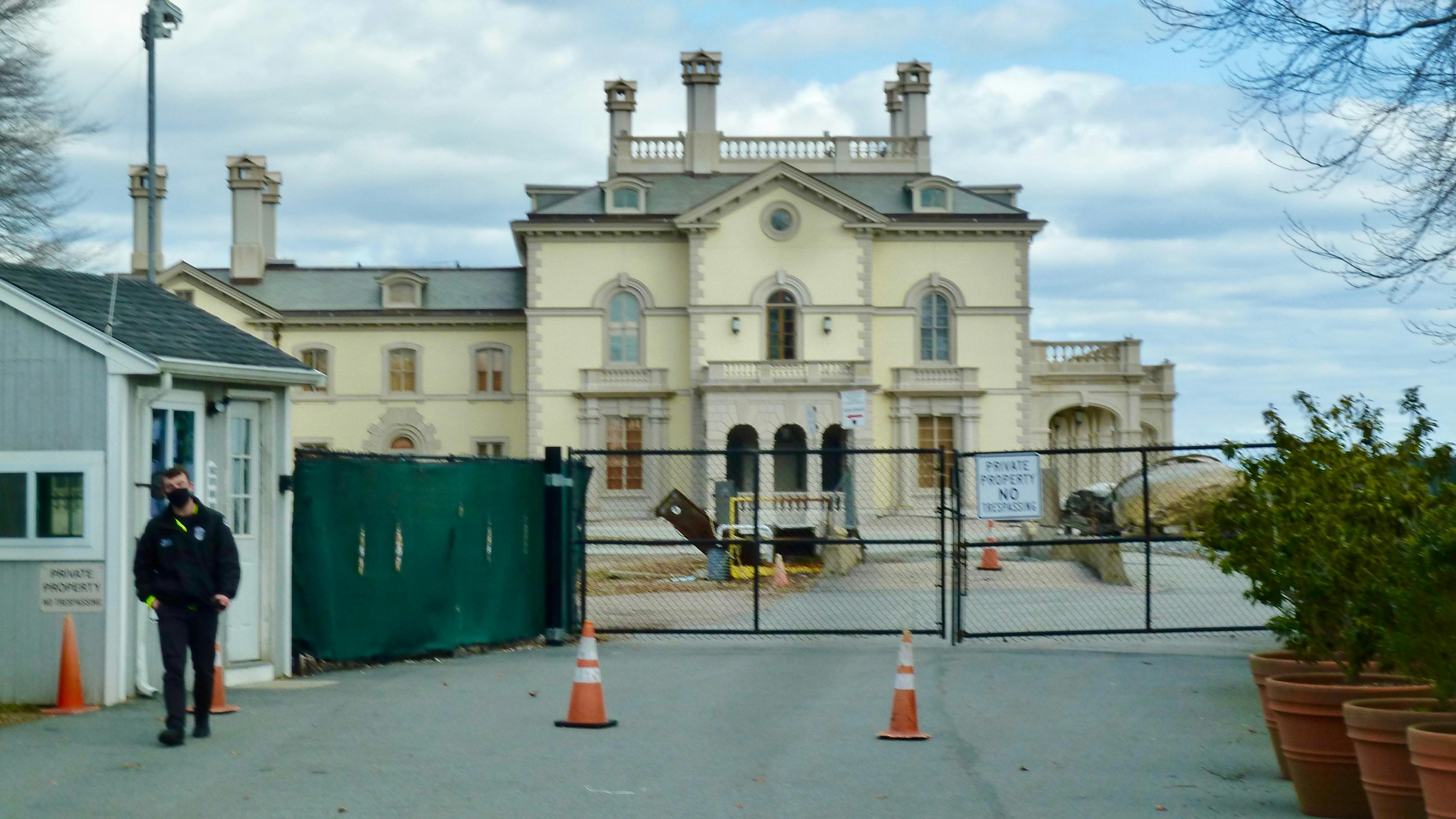

Few people know when the Beechwood will be completed, and the restoration architect is bound by a confidentiality agreement. One hopes this will be another jewel in Newport's crown, but Beechwood now is something of a mystery. And like much in America's premier playground for the rich, it is heavy on drama. It is reported that $100 million has been spent on the project to date.
Editor's Note: This story was updated to reflect the firms that Grosvenor worked at. The project was a client of Northeast Collaborative Architects. We apologize for the error.