"What Can Brown Do for You?" University’s New Mega Project –– Architecture Critic Morgan
GoLocalProv
"What Can Brown Do for You?" University’s New Mega Project –– Architecture Critic Morgan
Any new work of architecture at Brown is of special interest. As the once liberal arts college transforms itself into an ambitious research university, its seemingly unbridled growth has a major impact on College Hill. Brown's popularity and its image are tied to its unparalleled historic and visually appealing setting. So, the blossoming of the campus is both welcome and concerning–remember the half dozen Victorian houses that occupied this site?
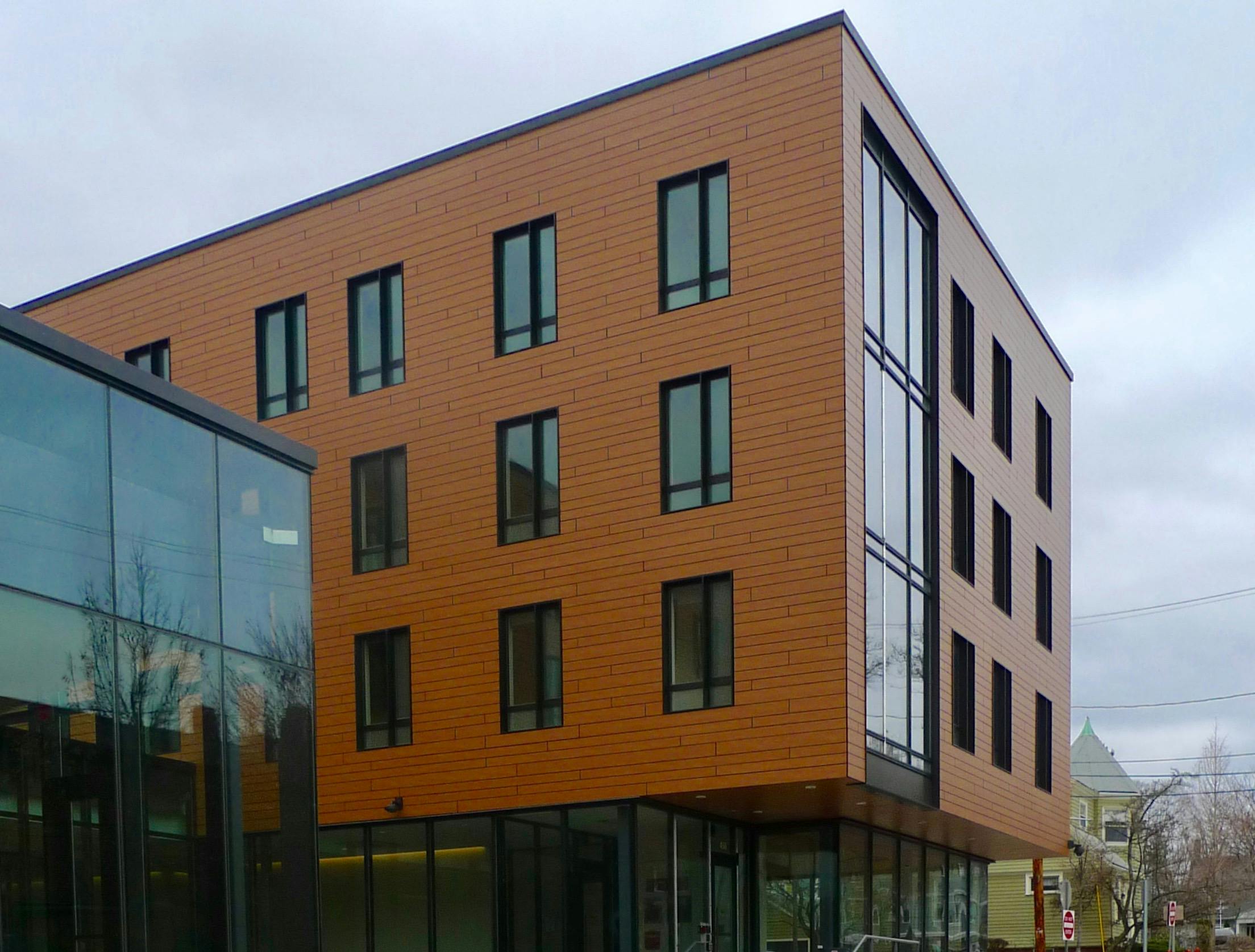
The ground floor will offer counseling services, laboratories, radiology, a pharmacy, a student ambulance corps, and a score of examining rooms. A complicated shaping of spaces was required to protect the privacy of students using the wellness section, while allowing access to the dormitories. One glass block serves as a multi-purpose room, suitable for lectures, classes, and even yoga. Close by is a kitchen, for nutritional instruction as part of the entire healthy living remit of the building.
GET THE LATEST BREAKING NEWS HERE -- SIGN UP FOR GOLOCAL FREE DAILY EBLAST

Constructing the 96,0000-square-foot wellness complex also had to respond to the university's commitment to an all-electric campus by 2040 (there are no fossil fuel devices in the building). Operable windows in all of the student rooms and an abundance of natural light hint at sustainable design, although features like the energy recovery system are not visible. The hybrid cross-laminated timber and steel frame contributes to a lower carbon footprint. And not least of all, the exposed wood framing inside adds a touch of warmth–a visual instance of the architects' claim that the building's design "is centered on a holistic approach to wellness and well-being."

The architects' contention that two outdoor courtyards will connect "users" to the "healing aspects of direct access to nature" seems a tough sell given the unrelenting urban crowding and high automobile traffic of the Thayer Street neighborhood. Nevertheless, the Brook Street facade was ostensibly conceived as an extension of Pembroke Field across the way.

The idea was that the wellness center would, in project principal Clifford Gayley's words, "fall away rather than loom," and to engage with the street (unlike the seriously-looming apartment block immediately to the south). Breaking the mass into several smaller units by juggling several cube-like forms almost succeeds. The glass parts read as crisp and modern, while the reflective gray brick along the sidewalk is exceptionally handsome.
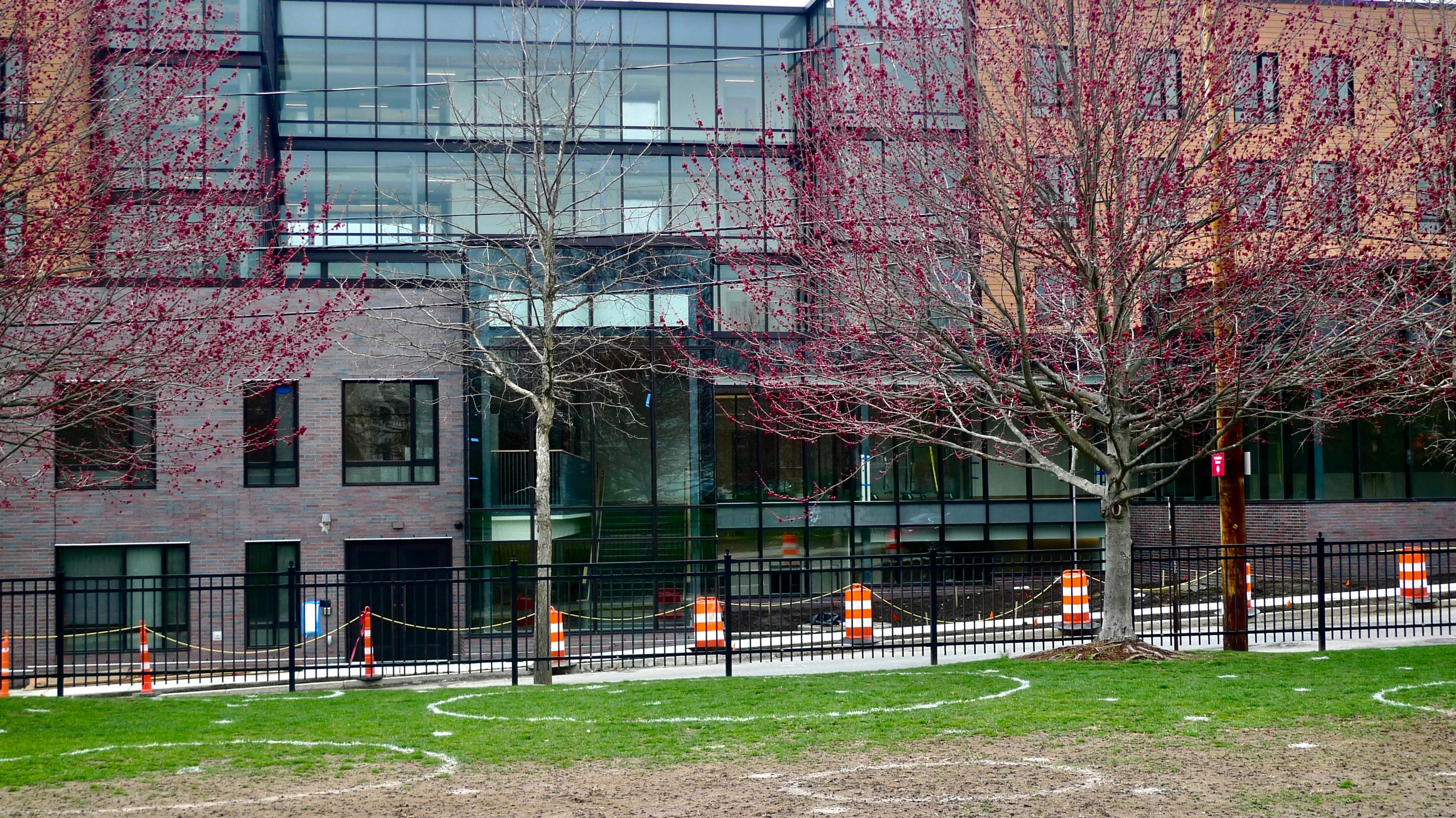
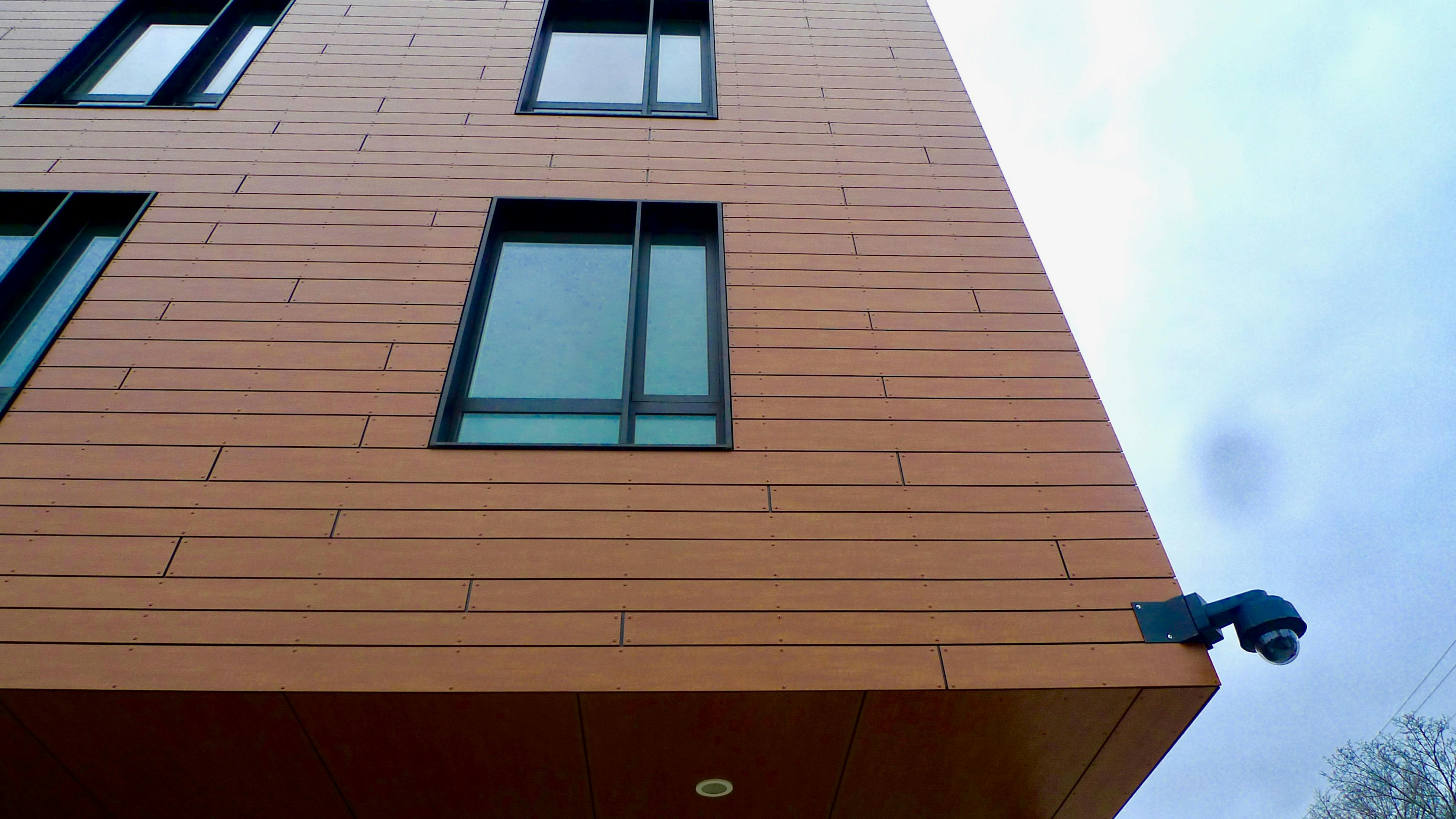
Some East Side residents mistakenly thought that the entire structure was going to be composed of brick, but the pumpkin-colored exterior cladding was chosen in part to contrast with the iron-spot masonry. While this rain screen, sometimes marketed as Stonewood, may be more economical, easy to clean, and graffiti resistant, but it lacks gravitas. Students, however, may find its non-traditional mien perversely appealing.
Best known for Seiji Ozawa Hall at Tanglewood, William Rawn Associates has produced handsome libraries, courthouses, churches, and medical centers in its near four-decade run. But its signature work has been on campuses–it is hard to think of almost any college in New England that does not feature a thoughtful, sometimes noteworthy, composition by the Rawn team. They can be masters of context, can have a sense of architectural history (although their historical allusions can border on the cute), and are often refreshingly modest.
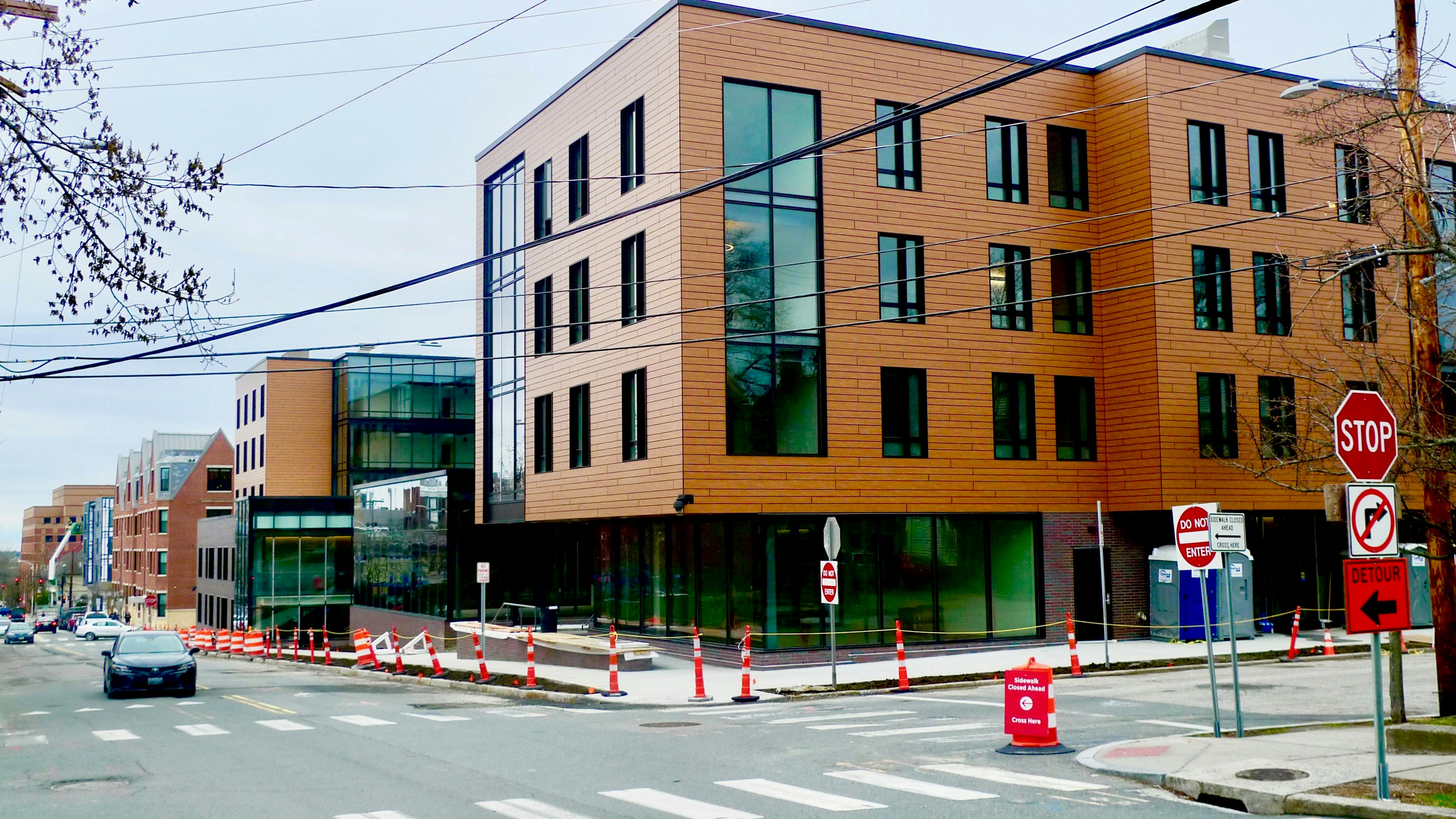
Did Rawn give Brown its best effort with the Wellness Center? Probably, given the demands of the program and sustainability issues. Brown loves this project and maybe its denizens will, too. Yet, we expect such a prominent architectural statement from the university to be more visually aspirational than something that could pass for a suburban office block.