Rethinking Newport’s Open Space–Architecture Critic Morgan
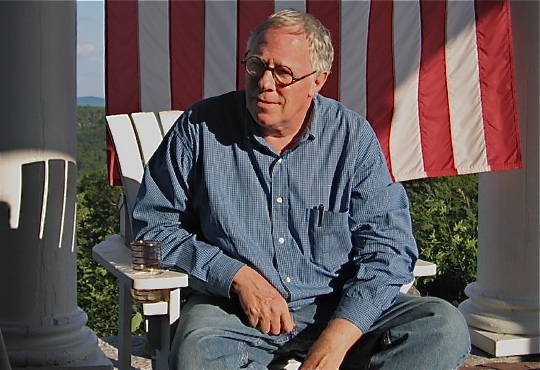
Will Morgan, Architecture Critic
Rethinking Newport’s Open Space–Architecture Critic Morgan
There is a very unusual piece of land in the heart of Newport. Except for a handsome small brick building that was once the bus station, this is an empty lot. Tucked behind the 1926 Newport Country Courthouse and the 1739 Colony House, this urban orphan is best known as the former location of Neil Coffey's filling station. Gasoline was pumped here for almost a century; the station was a handy landmark as one threaded their way down from Bellevue Avenue to Washington Square, looking for the way out of town.
GET THE LATEST BREAKING NEWS HERE -- SIGN UP FOR GOLOCAL FREE DAILY EBLAST
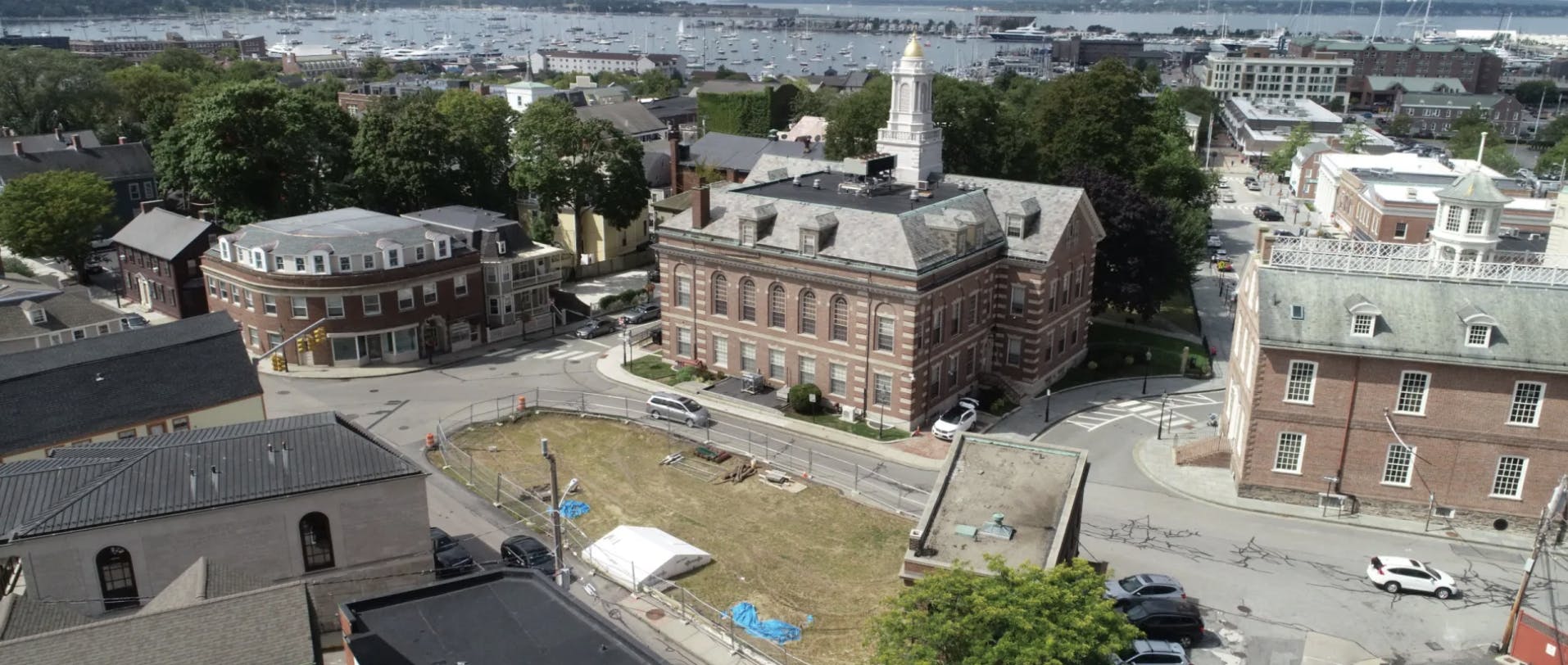
This nexus is literally the original crossroads of Newport, close to notable monuments, such as Touro Synagogue and Washington Square. Today, this historic spot is nothing more than a traffic island–a fulcrum for half a dozen streets that funnel through here. What appears to be an urban wasteland is the site of the spring discovered by the town's founders in 1639. It is currently in limbo, awaiting a grander future.
The splendid natural harbor was the chief reason for settlers relocating from the northern end of Aquidneck Island, but the need for fresh water was also paramount. This is the place where the incorporators of Newport declared that the colony would welcome religious dissenters from Massachusetts and anywhere else. One of these founders, John Clarke, secured the second royal charter from King Charles II, a momentous document that granted the colony self-government, religious freedom, and separation of church and state.

When the filling station was closed six years ago, cultural leaders, such as sculptor Howard Newman, Bellevue Avenue resident and conservationist Lily Dick, and like-minded citizens formed Newport Spring and purchased this once sacred spot. (The deed is held by the Church Community Housing Corporation, which supports affordable housing and safe neighborhoods.)
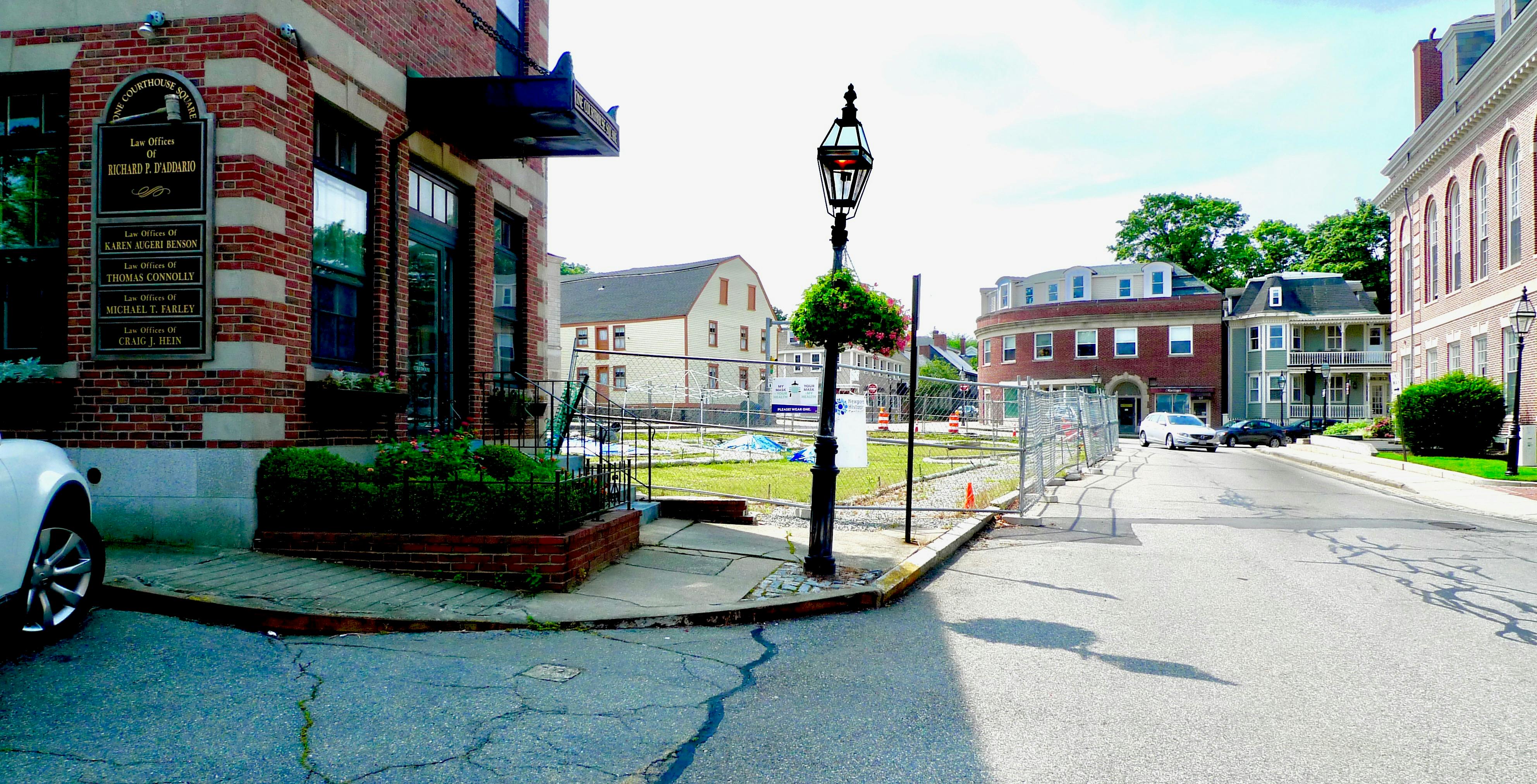
The preservationists underwrote archaeology that uncovered the original spring, removed two 10,000-gallon gas tanks, and hired architectural and landscape consultants, while supporting a state-sponsored traffic study. Their ambitious goals for the project include restoring the original city center, connecting neighborhoods to business districts, and reactivating a strong sense of community.

Newport Spring's less lofty aim is trying to raise a few more million dollars to turn this strategic slice of downtown Newport into an outdoor community space. While one applauds these efforts, this traffic island does not lend itself to being a park. For one thing, Eisenhower Park is just the other side of the courthouse, while the state's traffic planners have yet to decide how accessible the lot will be to pedestrians. Also, being Newport, there is endless opposition to almost any change. Newport is the city of inertia, where battles over a something as minor as a parking space can become demonstrations of a highly refined sense of NIMBY entitlement.

Newport Spring seems to have stalled, perhaps because the theme of the spring's discovery seems a slender thread upon which to hang this entire development, whatever form it might take. Yet the pioneers here were instrumental in founding Rhode Island and are well worthy of remembrance. Having over-emphasized Newport's Gilded Age excess and its yachting heritage for so long, the early colony's forward-thinking liberalism deserves some monument.
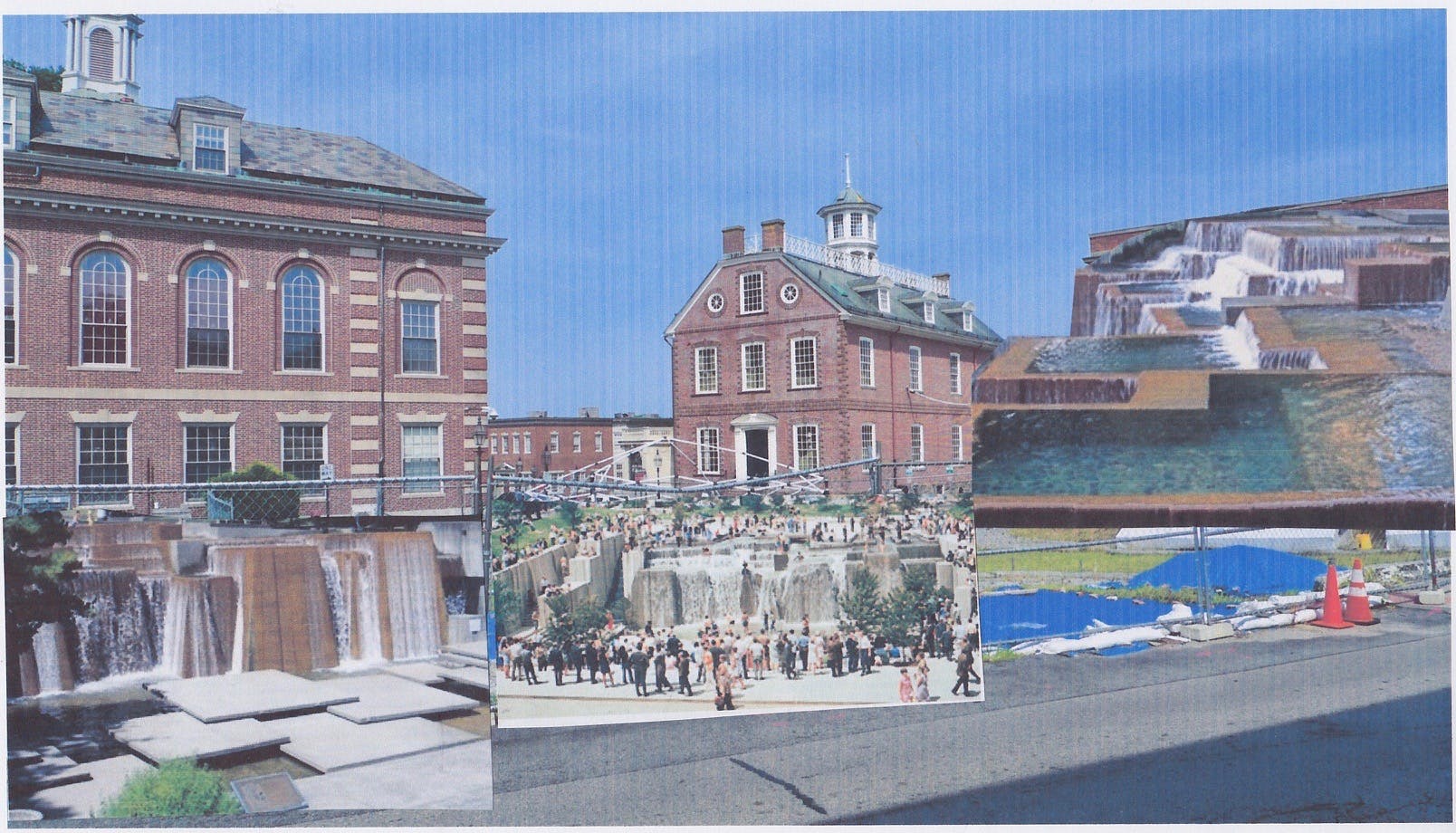
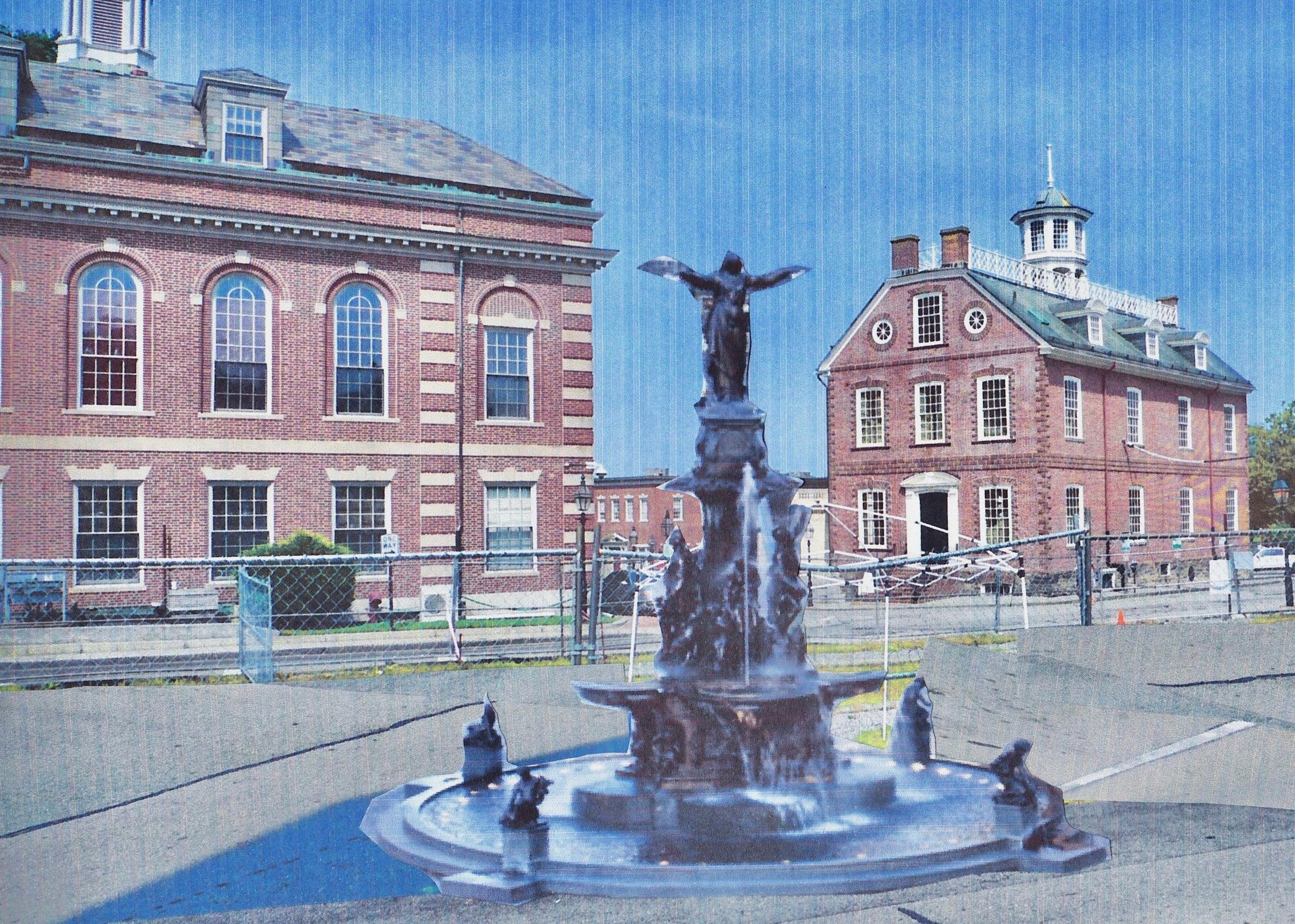
Newport Spring should be a bold statement, like those made by Rhode Island's founders. Start with water–a giant fountain, whether traditional or contemporary. In attempting to manifest an abstract concept, let's simply begin with something that feeds everyone's fascination with free-flowing water, something that runs year round and reflects the seasons. Future development of the space for coffee shops, music venues, or historical tableaus can wait until how we see how Newport responds to its life-giving spring. Water may be enough.