


New Worker Housing: North Main Street – Architecture Critic Morgan
Will Morgan, Architecture Critic
New Worker Housing: North Main Street – Architecture Critic Morgan

The housing crisis in Providence is not new, but it has reached a crisis point. But what better time to ask how the City of Providence will address the issue than an election year. It is time to be worthy of the Creative Capital moniker by underwriting affordable shelter for our citizens, gathering market forces, government muscle, and responsible design into smart, innovative, yet practical solutions. Let’s start with a commitment to new housing on North Main Street.
GET THE LATEST BREAKING NEWS HERE -- SIGN UP FOR GOLOCAL FREE DAILY EBLAST
The 195 Commission has clearly demonstrated how not to develop an innovation district, much less provide real-life housing. The Fane Tower is not the answer to affordable housing, nor are luxury apartments, not to mention the proliferation of student tenements masquerading as responsible real estate development. The affluent aside, Providence needs workforce housing. Rhode Island has earmarked $250 million from the American Rescue Plan for housing, but with the median price for a single-family home here at more than $400,000, one wonders how far the $30 million allocated for down payment assistance will go. It is time for a bolder approach than subsidies. Why not designate a targeted new housing zone with achievable goals that could be a template for the rest of the city?

The logical place for the city’s new housing makeover is North Main Street, the slightly more than a mile section from Cypress Street to the Pawtucket Line, from KFC to Gregg’s. Here is a neglected edge area that is screaming for development, and while admittedly down at the heels, it is close to downtown and to the rest of the fabled East Side. Mostly, it is near a lot of businesses and institutions–hospitals, medical offices, colleges, state government–that are staffed by the very worker bees who would like to live where the rents or mortgages were not prohibitive, and close to their jobs.

North Main Street already has a lot of the infrastructure to supply an influx of new residents. It is on a bus line, right by the intercity bus station, and has easy access to I-95. It already has Dunkin Donuts, filling stations, restaurants, drugstores, a health club, medical offices, liquor stores, a church, and various small businesses, not to mention a 110-acre public cemetery serving as the lungs of the city. There is an esplanade of trees for half of the distance, and there are open vistas to the west.

Its very seediness may be an advantage, as North Main has an abundant supply of empty lots, which would obviate demolition costs. There may be a patchwork of ownership, but surely empty lot owners are just waiting for fortunes to change, hoping for productive use of their empty buildings and fallow land. How expensive can these now-abandoned spots be? Perhaps some paying taxes on such non-productive emptiness might consider donating their land to the city.

Without the complications of operating in an historical district, much of the North Main land provides a blank slate for erecting a variety of housing schemes. Architect Jack Ryan’s handsome new Matilda Overlook apartment complex behind Pep Boys is an excellent first entry into a revitalized North Main Street. Whether apartment blocks, four-family units, single-family, or some combination thereof, we must come up with ways to offer living spaces in the face of daunting building costs. It is easy to understand the appeal of multi-million-dollar single-family construction to builders and developers. But there is money to be made in constructing hundreds or thousands of replicable, modular, or prefabricated units. In May, President Biden ordered federal mortgage lending agencies to favor two-and four-unit structures, as well as accessory units.
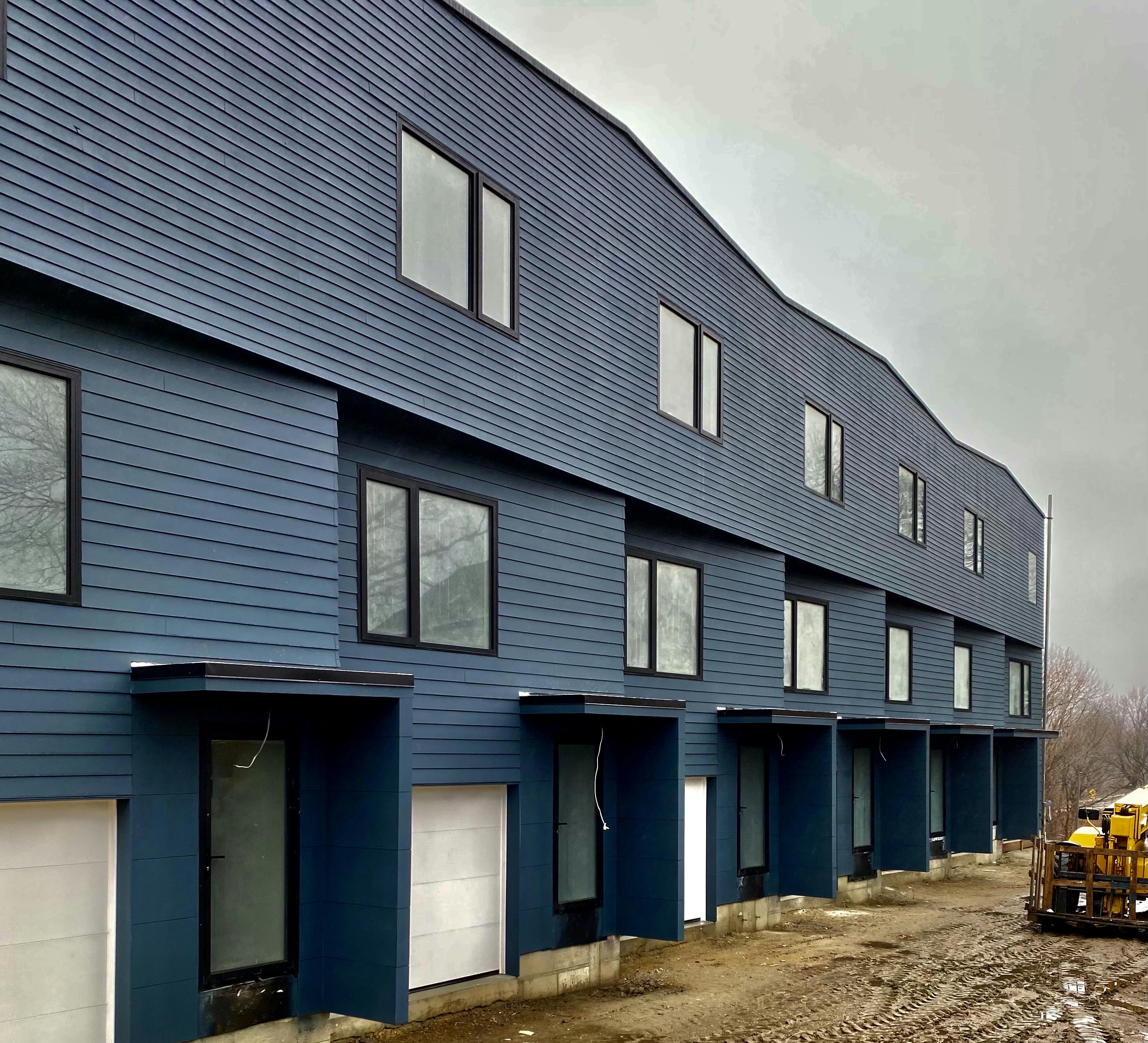
The empty lots of North Main, along with demolition of some bits of urban goop, offer opportunities for all sorts of configurations, from micro houses to cottages, row houses, clusters, and even the occasional taller block (as long as the design encourages a sense of community rather than one of isolation). We can welcome recreations of the triple-decker, the ideal workforce housing, as well as gaggles of Elon Musk’s Boxabl homes, manufactured steel homes that come fully furnished for $49,500, and which can be set up in a day.

Call it whatever you like–North Main Enterprise Zone, New Workforce Living, Providence Provides–but this mile of housing presents a special opportunity for Providence. And now is the time for the gubernatorial, mayoral, and legislative candidates to commit themselves to such an effort.