


COLLIER: The City’s Coolest Park–Architecture Critic Morgan
William Morgan, Architecture Critic
COLLIER: The City’s Coolest Park–Architecture Critic Morgan

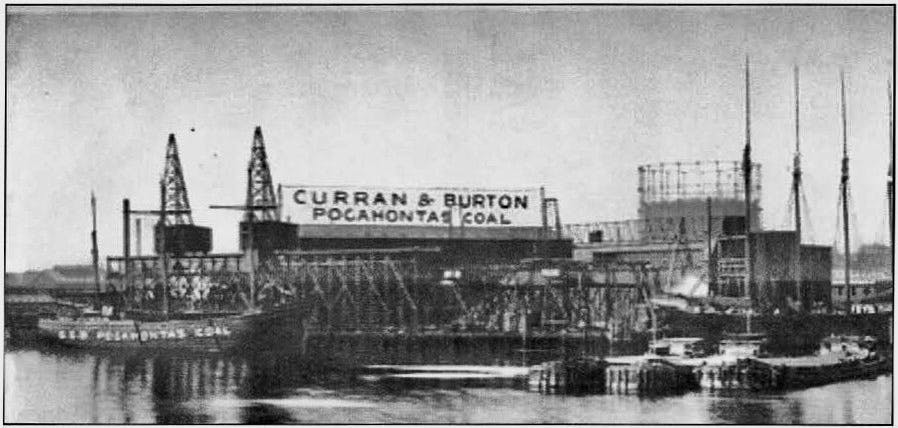
What links a Soviet submarine, architect William Warner, the New York, New Haven & Hartford Railroad, electric streetcars, coal carrying sailboats, and unrivaled views of the upper end of Narragansett Bay? Providence boldly removed an interstate highway through downtown and created a large park space. But there is also a too-little-known greensward beneath the new highway. Collier Park’s identity is ironically gathered from the industrial hubbub of the working waterfront that downtown planners were seemingly trying to forget.
GET THE LATEST BREAKING NEWS HERE -- SIGN UP FOR GOLOCAL FREE DAILY EBLAST

William Warner, planner and landscape architect as well as one of the design gurus of the city’s waterside renaissance, capitalized on the rawness of the place. His two-story concrete and steel Transfer House recalls Collier Park’s role as the landing place for the fuel to run two adjacent powerhouses, Manchester Street Station and South Street Station. This pavilion provides a fabulous view of the water, and one can imagine it being used for concerts, small gatherings, classes, and so forth. The site, however, could use some sprucing up. Historical panels outlining the park’s importance have been vandalized, while much of the interior is a canvas for graffiti.
Warner developed the abandoned coal delivery system into a series of sculptural objects that work as historical reminders as well as abstract pieces of art. When Providence trolleys were electrified in 1895, coal to create the electricity to power them was unloaded from the last generation of working schooners (there was a repair yard for sailing ships close by).

Coal was transferred from the piers onto a short railway that hauled it to the power stations. Manchester Street was constructed by the New Haven Railroad when they acquired the city’s streetcar franchise. By 1926, when New England Electric took it over, the development of gasoline-powered busses had rendered the trolleys obsolete.

About twenty years ago Collier Park achieved some notoriety when a 300-foot-long Russian submarine was docked here as a tourist attraction. Featured in the film K-19: The Widowmaker, starring Harrison Ford and Liam Neeson, the sub was the brainchild of Mayor Buddy Cianci. It was welcomed to the city by Nikita Khrushchev’s son, Sergei. That somewhat bizarre chapter in the life of the park ended with the sinking of the sub and its subsequent relegation to the scrap heap.
That Cold War tangent is peripheral to Collier Park’s story, for the real background is more interesting. Warner deftly shaped the open green space and employed the surviving elements of the transportation of coal from harbor to power station. (The Transfer House, the rolling steel cage of transporting equipment, the conveyors, the bollards, and the piers remind me of the follies designed by deconstructivist architect Bernard Tschumi for Parc de la Villette in Paris.) More than just a place to relax, play frisbee, or contemplate the waterfront space, Collier Park provides an unvarnished story of a foul fossil fuel–the predecessors to today’s clean RIPTA buses.

Perhaps the best thing about Collier Park is the prospect of so much of the city’s maritime history, highlighting the changes wrought over the past few decades. Bill Warner was largely responsible for the transformation of the waterfront, much of which can be seen from Collier Park: the blue Iway Bridge, the Manchester Street power plant, India Point Park, and the Providence River. Even undiscovered, this small park is the city’s coolest, in large part because it reminds us how transformative it can be if we trust our physical assets–not to lawyers and businessmen–but to the designers of vision that call this city home.