


The Cellar: ‘Old World’ Merlot
Steffen Rasch, GoLocalProv Wine Writer
The Cellar: ‘Old World’ Merlot
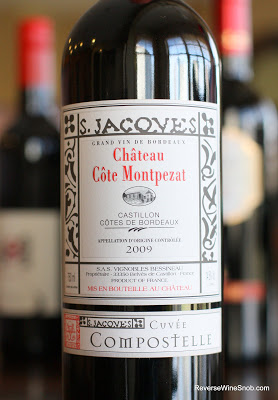
In recent years the phrases ‘New World’ and ‘Old World’ have taken on an additional meaning. They now refer to geography as well as the style in which a certain wine is made. A wine from California (a New World wine) can now have ‘Old World sensibilities’ while a Portuguese (Old World) wine can be made in a ‘New World’ style. I know it can be very confusing.
GET THE LATEST BREAKING NEWS HERE -- SIGN UP FOR GOLOCAL FREE DAILY EBLAST
This week’s examples are both Merlots; a variety whose New World expression (especially Californian) has been getting a lot of flack in recent years primarily for being too soft, too ripe – basically boring and without structure. If you are among the ones that have written Merlot off I strongly urge you to look for an Old World example – like this week’s two featured examples that are both under $20.
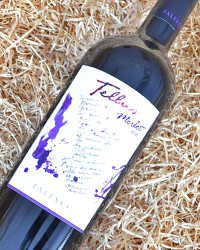
The other example is from one of Italy’s most popular wine region right now – Umbria. One of the region’s largest family owned and operated producers Falesco recently released a series of varietal wines called ‘Tellus’ aimed for the American market. Among the wines released is a really delicious Merlot. Compared to the Bordeaux the 2013 Tellus Merlot comes across lighter, fresher, with more pronounced acidity. While there is plenty of fruit to go around there is also secondary flavors of herbs and truffle. The finish is long with mouth-puckering tannins.
Cheers,
Steffen Rasch is a Certified Sommelier and Specialist of Wine. Follow him on Twitter at @SteffenRasch or learn about wine in person by signing up for one of his tastings at the Providence Wine Academy.
Rhode Island’s Best Wineries

Newport Mansions Wine and Food Festival, Newport
This is the Rhode Island festival that all others are judged against. Newport Mansions Wine and Food is in its ninth year of bringing together sublime food talent in a gorgeous Newport setting. This year is no different as the main headliners are Martha Stewart and Sara Moulton. They don't stop there though...imagine hundreds of wines to be sampled on the lawn of Marble House, tasty treats from lots of local restaurants, and appearances by local chefs like Champe Speidel preparing and serving their creations. You've got a bona fide classic! Tickets starts at $135. www.newportmansions.org

Newport Vineyards, Middletown
This vineyard was originally planted in 1977 with the goal of preserving the coastal land. Captain Richard Alexander planted 10 acres of French-American grapes in 1977 with the help of his family, friends, and neighbors. In 1988, in partnership with the Nunes family, Captain Alexander established his first winery. In 2002, the land was placed into perpetual preservation through a partnership between the Nunes Family, the Aquidneck Land Trust, and the State of Rhode Island.
Tours and tastings occur Sunday – Friday at 1 and 3 p.m. and hourly on Saturday from 11 a.m. – 4 p.m. $12 per person for 5 samples; $15 per person for 5 samples plus signature glass. 909 East Main Rd. 848-5161,www.newportvineyards.com

Greenvale Vineyards, Portsmouth
Located along the beautiful Sakonnet River, Greenvale Vineyards has been in the family since 1863 and is listed on the State and National Registers of Historic Places. Cortlandt Parker, the farm’s fourth generation, and his wife Nancy started to grow grapes here as a hobby in the 1960’s. In the early 80’s, the Parkers decided to embark on the development of a commercial vineyard. The focus is on conservation of open space, preservation of historic buildings and the education of its visitors. Tastings occur daily and cost $12 for 7 varietals; tours are daily at 2 p.m. and are *$15 per person for the tour and tasting. 582 Wapping Rd. 847-3777, www.greenvale.com

Langworthy Farm Winery, Westerly
Langworthy Farm was built in 1875 on the historical home site of Governor Samuel Ward. Owners Joe and Gail Sharry first planted vinifera grape vines in 2002 and produced the first barrel of Chardonnay in stainless steel that same year. They now produce more than a dozen varietals, including 7 reds. Alongside the vineyard is a Victorian farmhouse bed and breakfast that the Sharrys operate in season. Meals, of course, are always paired with house wines.
Tastings run daily from July 4 through Labor Day and are $7 per person for 5 wines. 308 Shore Rd. 322-7791, www.langworthyfarm.com

Carolyn's Sakonnet Vineyards, Little Compton
A popular and iconic Rhode Island vineyard, Sakonnet was founded in 1975 and for over 30 years has pioneered the production of fine wines in New England. Several vinifera varietals including Chardonnay, Pinot Noir, Gewurztraminer, Cabernet Franc, and the unique hybrid Vidal Blanc are grown, and Sakonnet also produces an award-winning Sparkling wine. This is Rhode Island’s largest vineyard, producing upwards of 30,000 cases annually.
Tours and tastings occur daily between noon and 3 and are $10. There is also a café and outdoor seating. 162 West Main Rd. 635-8486, www.sakonnetwine.com


