


Citizens and State Archives Cut as Washington Bridge Cost Hits RI’s $14B Budget
GoLocalProv News Team
Citizens and State Archives Cut as Washington Bridge Cost Hits RI’s $14B Budget
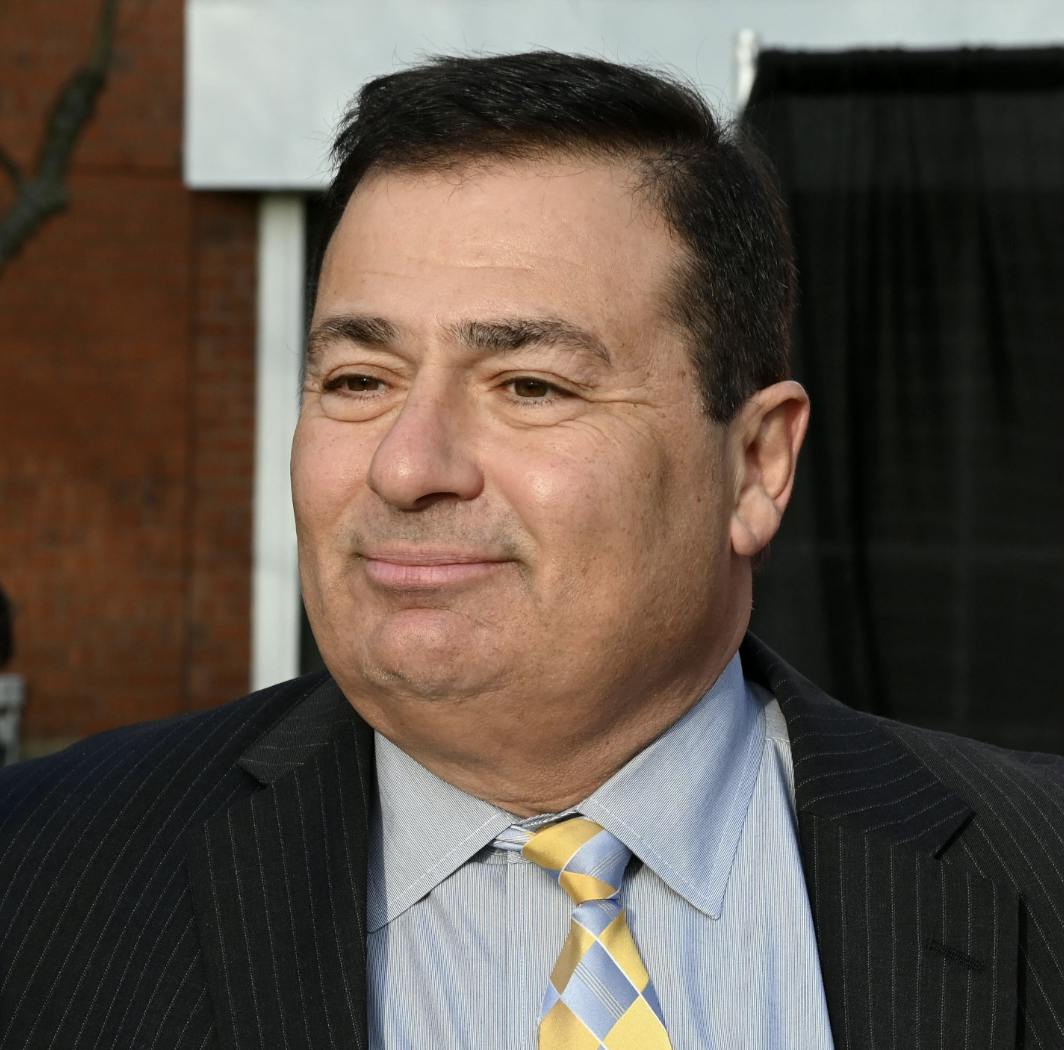
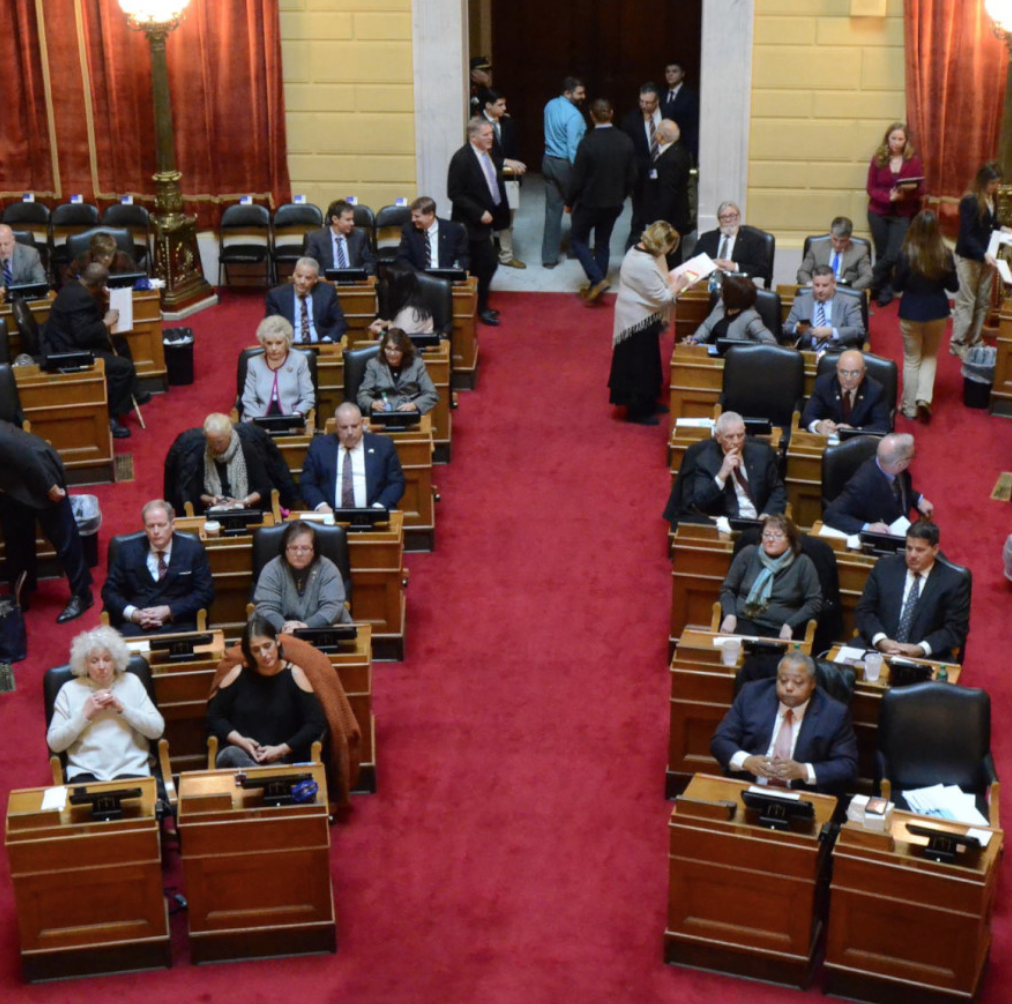
On Friday night, the House Finance Committee voted 13-1 to approve a $13.947 billion budget for the 2025 fiscal year.
Republican George Nardone of Coventry was the only dissenting vote.
GET THE LATEST BREAKING NEWS HERE -- SIGN UP FOR GOLOCAL FREE DAILY EBLASTThe cost of the failed Washington Bridge will begin hitting Rhode Island taxpayers. The plan allocates $83.6 million for the state match for federal funds for the reconstruction of the shuttered westbound Washington Bridge that brings I-195 over the Seekonk River between Providence and East Providence.
Rhode Island Department of Transportation Director Peter Alviti continues in his role despite overseeing two federal investigations into his agency (6/10 project and Washington Bridge Failure).

The budget does not include Governor Dan McKee’s Citizens Bank deal.
Shekarchi announced on Friday that the budget will not include a late-session proposal to alter the state’s financial institutions tax nor funding to purchase a facility owned by Citizens Bank in East Providence.
He said he is interested in discussing the financial institution's tax and other measures that keep Rhode Island competitive with neighboring states.
“I don’t want to be the speaker who loses Citizens Bank. I will roll up my sleeves and get to work with them over the summer so we can pre-file legislation that can be vetted early in the year, but right now, we don’t have enough information to know whether this plan is the right move for our state,” said Shekarchi
The budget also will not include funding for a new state archives and museum. Shekarchi cited the lack of an identified site for the building or any partner organizations to help carry out the proposal. The governor’s original budget proposal included a $60 million bond that would be put before voters, but the project was estimated to cost more than $100 million.
The budget bill (2023-H 5200A) now goes to the full House of Representatives, which is slated to take it up on June 7, beginning at 2:30 p.m.
Claims of Support for Education
“Through this budget, we are emphasizing education at every level and supporting children. This budget is the result of a truly collaborative process between my colleagues here in the House, the dedicated members of the House Finance Committee, our partners in the Senate and Governor McKee and his team to carefully create a plan that meets Rhode Island’s needs for education, students and children first, while addressing our challenges, such as housing and health care,” said Shekarchi (D-Dist. 23, Warwick).
Under the spending plan approved by the committee, schools will receive a $70.9 million increase in state aid, $33.8 million more than originally sought by McKee, to help schools and students still reeling from the effects of the pandemic.
The committee made more modest increases for multi-language learners (MLL), the governor’s Learn365RI initiative for out-of-school learning, and efforts to boost reading and math achievement, but they will still get a boost. Currently MLL students get 15% extra over the core education aid; it will increase to 20% and be incorporated directly into the education funding formula. Learn365RI will get $5 million, and there will be $5 million more for reading and math achievement. The committee fully funded an $813,000 proposal by the governor to provide free breakfast and lunch to the 6,500 students statewide who currently receive reduced-price school meals.
The budget provides an additional $1 million in operating support for the Community College of Rhode Island and $2 million for the University of Rhode Island and continues both the Rhode Island Promise and the Hope scholarship programs, which provide two years of free tuition to Rhode Islanders at CCRI and Rhode Island College, respectively. The bill authorizes a two-year extension of the Hope scholarship program. It also covers with general revenue $2.3 million for the dual and concurrent enrollment initiative, which allows high schoolers to earn college credits without costs. Federal funds for the program have expired.
One of the four bond questions that would go before voters in November would fund two major facilities at URI and RIC. The first is $87 million to build a state-of-the-art Biomedical Sciences Building at the Kingston campus of the University of Rhode Island. McKee had planned to ask voters to approve $80 million, but the committee added $7 million to fully fund the project as a means to bolster both URI and the life sciences industry in Rhode Island through increased research infrastructure.
That bond would also provide $73 million to fully fund renovation of Whipple Hall at RIC to house the new Institute for Cybersecurity and Emerging Technologies.
URI, RIC, and CCRI would see numerous campus improvement projects, many of which are funded partly through state Capital Plan funds.
The committee added an additional $20 million to McKee’s proposal for a bond question on the November ballot to support more affordable housing creation, bringing the total to $120 million, the largest housing bond in the state’s history. The bond would provide $90 million for affordable housing, $10 million for acquisition and revitalization, $10 for homeownership programs, $5 million for site acquisition, $4 million or housing-related infrastructure and $1 million for municipal planning.
Additionally, the bill authorizes using up to $10 million from the housing bond for public housing. Earlier this year, the Department of Housing contracted a six-month study of public developer models, such as one in Montgomery County, Md., that develops buildings that house families of varying income levels through a public revolving fund.
Odds and Ends
The committee included over $160 million from all sources to fully fund the plan recommended by the Office of the Health Insurance Commissioner to raise Medicaid reimbursement rates next year, rather than over three years as the governor had proposed. That includes $3.8 million for Early Intervention providers.
The committee included a proposal by the governor to redirect $10 million in unspent federal COVID funding to nursing homes.
The proposal adds $30.6 million to the governor’s request of $30.3 million to fund pending increases to support providers contracted by the Department of Children, Youth and Families.
The committee included a new program, to be run through the state Treasurer’s office, to use $1 million of general revenue to purchase medical debts of struggling Rhode Islanders.
Recipients of Rhode Island Works, the state’s cash assistance and work-readiness program for low-income children and their families, will get a 20% raise in cash benefits and higher income disregards, and children will no longer lose their benefits if their parents are sanctioned. Lawmakers have instituted raises over the last several years, following a 30-year period without a single rate increase.
The committee increased eligibility for child care support, raised the rates of center-based providers, and extended the child care for child care providers pilot program for an additional year.
The plan also doubled the amount of assistance for businesses in East Providence hurt by the closure of the bridge, from $1.3 million in the recent governor’s proposal to $2.6 million.
The committee increased a proposal to direct $5 million of unspent federal ARPA funds for an existing municipal grant program for construction of roads, sidewalks and bridges, adding $2 million.
The House plan adds another $5 million to the $10 million the governor proposed to help the Rhode Island Public Transit Authority close a $18.1 million budget gap following the end of federal pandemic aid. Speaker Shekarchi said he’s been assured by the agency that the extra funding is enough to ward off any service reductions in the coming year.
Among the proposals not included was a late-session proposal to alter the state’s financial institutions tax and to add funding to purchase a facility owned by Citizens Bank in East Providence. Speaker Shekarchi said he is absolutely interested in discussing the financial institutions tax and other measures that keep Rhode Island competitive with our neighbors. The timing and the complexity of the recent proposal made it not ready to be put before legislators right now.
The budget includes a proposal to raise the exemption on certain pension plans and annuities income from $20,000 to $50,000 for qualified single filers, $100,00 for joint filers.

It also changes the calculation for pension benefits to base it on the highest three consecutive years of earnings instead of five.
The committee added open space programs to the “green bond” to appear on November’s ballot: $5 million for farmland protection, $5 million to the Department of Environmental Management’s open space program and $3 million to DEM’s Division of Agriculture and Forest Environment to fund forest and habitat management on state property. The committee reduced some of the bond’s allocation for work at the Port of Davisville, as well as funding to repair Newport’s Cliff Walk that has now been awarded from federal funds, keeping the bond to $53 million with the open space additions.
The committee added a new $10 million bond referendum to support arts infrastructure in Rhode Island, including $6 million for specific “shovel ready” projects at Trinity Rep, the Tomaquag Museum, and Newport Contemporary Ballet.
The committee kept intact a proposal to hike the cigarette tax by 25 cents per pack, and amended a proposal to institute a new tax on electronic nicotine delivery systems to create a two-tiered system similar to Connecticut’s structure.