


Gas Prices and Politics Have Killed Critical Component in RI’s Climate and Transportation Strategy
GoLocalProv News Team
Gas Prices and Politics Have Killed Critical Component in RI’s Climate and Transportation Strategy

Earlier this week, Rhode Island gubernatorial candidate Seth Magaziner proposed using the new federal infrastructure funding to push more than 20 initiatives — everything from broadband across the state to replacing lead pipes and making RIPTA free and expanding service.
When asked how an initiative like free RIPTA could be funded after the federal Infrastructure dollars run out, Magaziner’s campaign told GoLocal that the regional Transportation Climate Initiative (TCI) would take over the funding gap — an annual cost of about $15 million.
GET THE LATEST BREAKING NEWS HERE -- SIGN UP FOR GOLOCAL FREE DAILY EBLAST"The proposal for free statewide RIPTA is projected to cost about $15 million annually, which could be paid for from TCI revenue or state general revenue," said Patricia Socarras of the Magaziner campaign.
In August, a report released by the United Nations calls a “code red for humanity" regarding global warming.
“It’s just guaranteed that it’s going to get worse,” said report co-author Linda Mearns, a senior climate scientist at the US National Center for Atmospheric Research. “I don’t see any area that is safe…nowhere to run, nowhere to hide.”
The report was issued by the Intergovernmental Panel on Climate Change, an organization of 195 governments, and was drawn from a three-year analysis of 14,000 peer-reviewed scientific studies. It is the first major international assessment of climate-change research since 2013 and the first of four IPCC reports expected in the next 15 months.

This week, however, TCI unraveled.
It was just last December when governors from Connecticut, Massachusetts, and Rhode Island held a major press announcement about the critical need for TCI.
In December of 2020, then-Rhode Island Governor Gina Raimondo said that TCI would generate approximately $20 million a year for the state primarily through a regional approach to increasing gas prices to fund climate control strategies and programs.
Raimondo said, “Joining the Transportation and Climate Initiative is an investment in Rhode Islanders. This first-of-its-kind program will provide $20 million annually for public transit, safe streets for bikers and pedestrians, and other green projects. Most importantly, it will provide much-needed relief for the urban communities who suffer lifelong health problems as a result of dirty air.”
Governor Charlie Baker said in December of 2020, “As a Commonwealth, we have an obligation to address climate change head-on and a challenge this great requires action across our region and nation. That’s why I am proud to join Governor Lamont, Governor Raimondo and Mayor Bowser [DC Mayor] to launch this trailblazing program to reduce greenhouse gas emissions while building the clean, resilient transportation system of the future.”
“By partnering with our neighbor states with which we share tightly connected economies and transportation systems, we can make a more significant impact on climate change while creating jobs and growing the economy as a result. Several other Transportation and Climate Initiative states are also committing to this effort today and we look forward to these partners moving ahead with us as we build out this first in the nation program,” added Baker.
Last week, Connecticut Governor Ned Lamont -- then Baker -- pulled back their support, and then finally on Friday, Dan McKee rescinded RI's support for TCI.
All three are expected to run for re-election in 2022.
TCI attracted a range of critics.
Paul Diego Craney, the spokesman for the Massachusetts Fiscal Alliance, said last week in a statement after Baker announced he was no longer supporting the initiative, “TCI is a regressive gas tax scheme that would have hurt the middle class and the working poor the most. It’s such wonderful news to see that Massachusetts families will not be forced to endure the economic hardship TCI would have imposed upon them.”
"TCI aims to change behavior and consumption by moving people toward electrification through the imposition of a 'sin tax,'" said RITA President & CEO Chris Maxwell said when TCI was first rolled out.
“There is no more valuable a partner to the noble cause of conservation, reduced emissions, and efficiency, but we also have a critical task at hand which is to move our nation’s freight. TCI is problematic to us as business owners," said Maxwell. "We will remain vigilant and very cautious as the plan moves forward and urge the Governor to genuinely engage the business community on this matter and the trucking industry will be the first to sit down with her.”
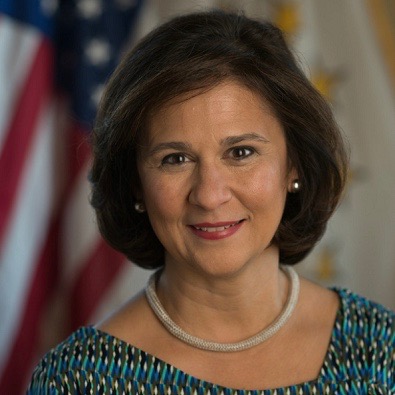
Rhode Island Secretary of State Nellie Gorbea said that the legislation passed by the Rhode Island General Assembly last year is critical to addressing the issue.
Rhode Island's recently adopted climate legislation however has been criticized as ill-defined, pushes off milestones for years, leaves much of the tough decisions to regulators, and is only a single-state strategy versus TCI which was a multi-stage approach.
"As Governor I will take a leadership role in bringing the region together to address the impacts of climate changes. For Rhode Island this includes a commitment to meeting the targets in the recently enacted Act on Climate, it is clear that McKee was unable to do that," said Gorbea.
"Rhode Island needs real leadership to make meaningful progress on climate change. I know how to work across communities and across borders to solve big policy problems. I've spent years working with other states and the federal government to secure our democracy. That's exactly the kind of experience I will utilize as governor to bring our region together and make sure we're ready for the challenges and opportunities of climate change," she added.