


Hundreds of Millions Invested in Minor League Baseball Has Not Helped Attendance
GoLocalProv News Team
Hundreds of Millions Invested in Minor League Baseball Has Not Helped Attendance
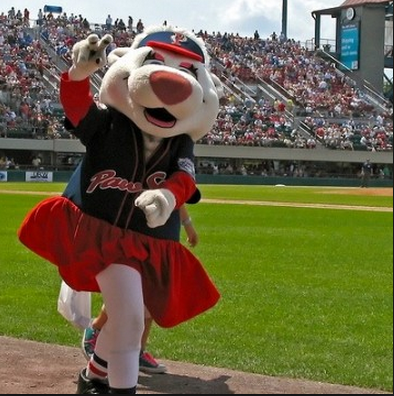
A GoLocal review of the teams in the league that the Pawtucket Red Sox compete in - the 14-team International League — shows that despite nearly hundreds of millions spent on new stadiums and improvements, league attendance over the past ten years has remained virtually flat.
During the past decade, total league attendance has increased per game by just over 4.5%. There seems to be no correlation between upgrades and new stadiums and increased attendance.
GET THE LATEST BREAKING NEWS HERE -- SIGN UP FOR GOLOCAL FREE DAILY EBLAST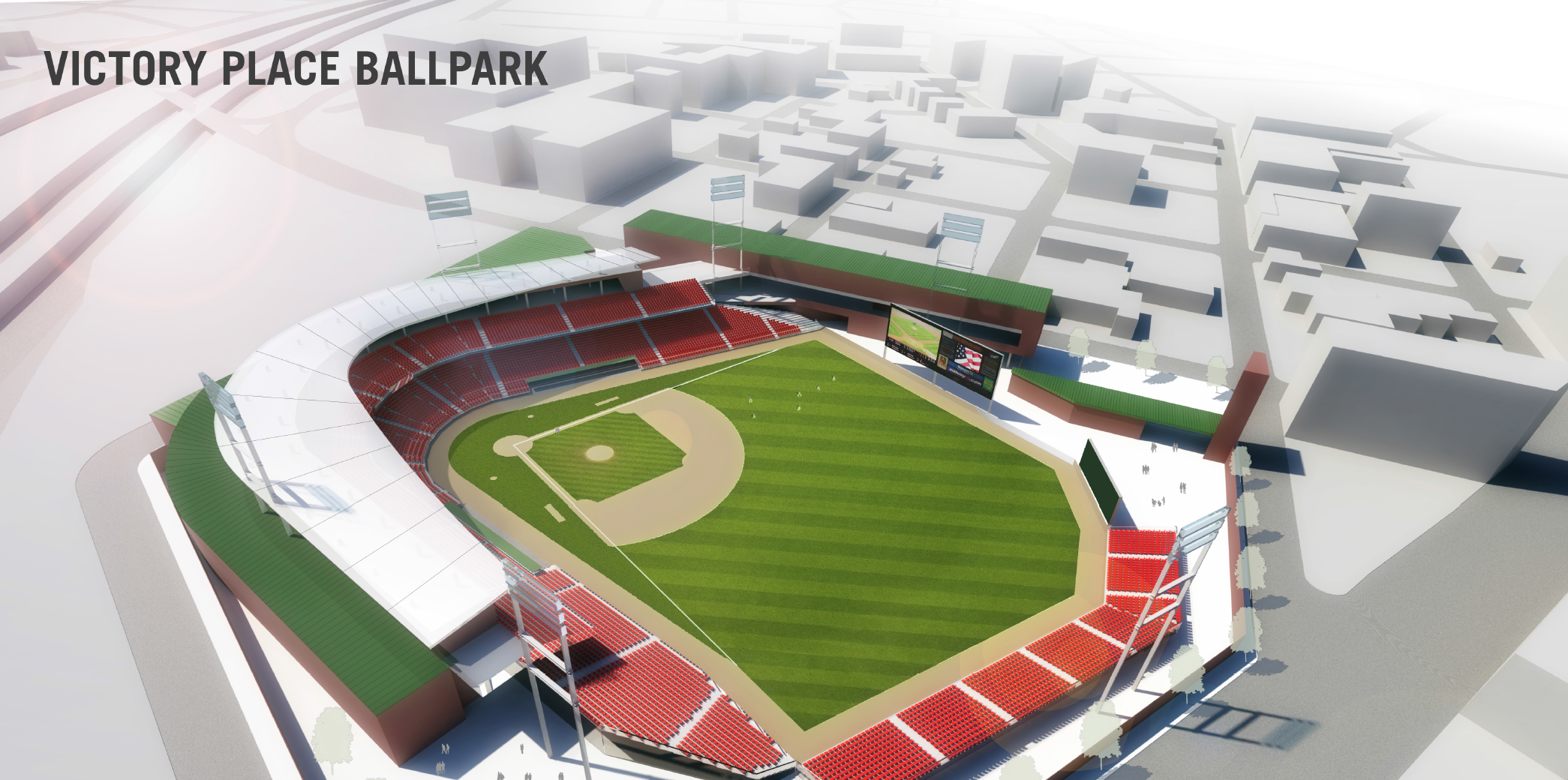
“We have our fiscal train wreck coming in three years, when the casinos are up and running in Massachusetts. We'll have a large per drop in tax revenue in the state -- we have to be extra careful with what we do,” said Len Lardaro, Professor of Economics at the University of Rhode Island.
Pawtucket has realized nearly $30 million in costs for upgrades (costs plus debt service) and all funded by Rhode Island taxpayers, yet despite the improvements, Pawtucket’s per game attendance has dropped over the past decade.
In 2005, the PawSox averaged 9,561 attendees per game. Last year, that number had dropped by nearly 30% to 7,367.
Correspondingly, the Louisville franchise - the Louisville Bats — is another example of a team that saw an initial boost and then a decline.
Louisville Slugger Field, home of the Bats, moved into a new stadium in 2000 and in 2005, the team averaged 9,182 attendees a game - second highest average attendance in the International League.
In 2014, the Louisville team’s average attendance had dropped to 7,990 - a 15% decrease. The Louisville Slugger Field stadium cost $40 million.
“It is very unlikely that subsidies for AAA baseball stadiums can be justified based on any tangible economic outcomes related to games. Most of the economic activity generated by professional sports is simply consumer spending that would have occurred somewhere else in the community at some other time,” said Brad Humphreys, Professor of Economics at West Virginia University.
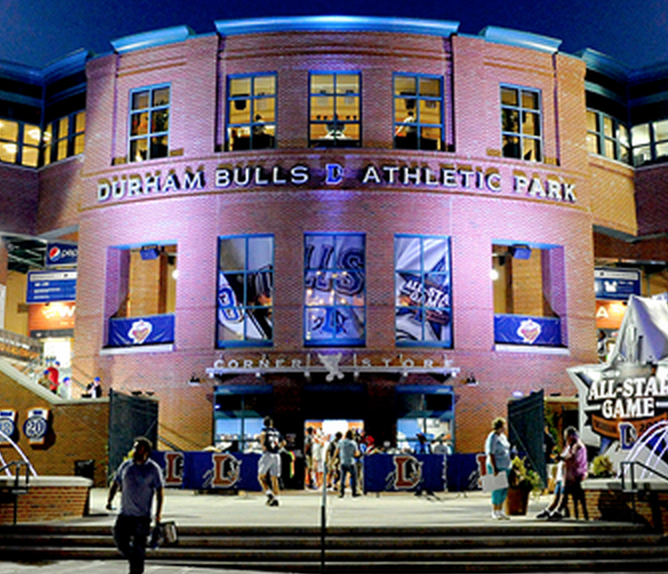
For Durham, North Carolina, a new stadium bolstered the Durham Bulls attendance, but just slightly. In 2014, nearly $20 million was spent upgrading the Durham Bulls Athletic Facility. Despite the significant investment in improving the park, attendance increased only marginally. In 2005, the Durham Bulls average per game attendance was 7,227 and in 2014 - the first season after the renovations - per game attendance only increased to 7,615 — a 5.3% increased.
The Toledo Mud Hens opened a new stadium in 2002 at a cost of just under $40 million. Attendance at the Mud Hen games has also decreased. In 2005, the Mud Hens hosted on average 7,845 per game and in 2014 it dropped to 7,680.
“An AAA team simply concentrates consumer spending in a very visible place. If you removed the team from the area, those entertainment dollars would have been spent elsewhere in the area. So the subsidies just move consumer spending around,” said Humphreys.
Holy Cross Professor Victor Matheson raised serious questions about the demands of these minor league teams asking for government investment. “Given the landscape, how can new owners justify asking for public dollars to support a minor league stadium?”
“They can't,” Matheson continued. “Or maybe, they can ask all they want, but government officials looking to make the wisest use of taxpayer dollars should resist the call.”
Overall, despite the investment of hundred of millions in new stadiums and renovations, International League parks have only seen incremental attendance improvement - the increase per game is less than 400 fans per game.
“And it's not just about the net levels -- it's opportunity costs. What's the value in its next best use of that 195 land? It's more that a $1 a year -- you have to validly count what it could have been, and that would be in the tens of millions,” said Lardaro.
Leaders React to PawSox Owners' Providence Stadium Proposal

Gary Sasse
Former Rhode Island Director of Administration, Executive Director of the Rhode Island Public Expenditure Council, and Founding Director of the Hassenfeld Institute for Public Leadership at Bryant University
"A minor league ballpark may not be an economic game changer. Thus it's cost and benefits must evaluate environmental, cultural, social and economic factors. The key point is any stadium should be consistent with the overall strategic development of Providence. This story has not been told yet."

Edward Mazze
University of Rhode Island Distinguished Professor of Business
"I would like to see the PawSox stay in Rhode Island. I do not think Rhode Islanders should pay for a new stadium for the next several decades or see Providence not collect taxes that could make it to a better city.....with better schools, lower property taxes and a lower automobile tax. To support the current proposal, there has to be tax payments to Providence, a financial deal with Pawtucket by the owners or the state to deal with the empty stadium and the owners paying for the new stadium with little in the way of state government assistance.
If there is state government financing assistance, there must be a guarantee that the team would not leave the state for the length of time of the financing. It would be interesting if the owners would consider selling "seat licenses" as a way of raising funds to build the stadium. This would be a real market test as to whether or not there is a need for a new stadium."

Monique Chartier
Spokesperson, RI Taxpayers
"The Paw Sox owners have asked the City of Providence for a waiver of property taxes. But the last thing that Providence needs is to remove yet another property from tax rolls. City Council President Luis Aponte's request that state taxpayers make up lost property taxes is understandable but out of the question, especially in light of the state's own very serious budget deficits.
Governor Raimondo has correctly pointed out that the state has very limited resources to invest in economic growth. These limited resources cannot go to develop prime public land into a very seasonal use that will have minimal impact on the economy at a substantial cost to local and state taxpayers. Our state leaders must say no to this project and return to the vitally important work of helping ALL businesses, not just one, by improving the state's tax and regulatory climate. We as a state can consider whether to participate in the luxury of a sports stadium as soon as our economy is healthy again."

Pam Gencarella
Spokesperson, OSTPA
"If Skeffington and his very wealthy partners want the PawSox in Providence then they should put an offer on the table that covers all of the costs to make it happen. They must provide revenue to the state for the land that they want to develop, and property tax revenue on its full value to the capitol city."
Pictured: James Skeffington

Mike Stenhouse
CEO, RI Center for Freedom and Prosperity
If the team is seeking taxpayer dollars, then taxpayers should get something in return, whether a share of equity or a slice of team revenues. For example, the federal government received equity for its investment in GM, while the Green Bay Packers are owned by citizen shareholders. It's not beyond possibility; let's find a way to make it happen."

Terrence Hassett
Senior Deputy Majority Leader, Providence City Council
"I believe the stadium is beneficial to Providence and the state. The parking capacity must be resolved in favor of the stadiums' fans that is fair and reasonable. What events and other uses are not being presented which I find troublesome. A stadium is a great venue for families, colleagues and generally, baseball fans to enjoy. A $120 million commitment from state taxpayers is a large role asked of them wherein the return on the participation is not convincing to date."

Aaron Regunberg
Rhode Island State Representative, (D-Dist 4, Providence)
"For me to support a deal, that $120 million figure needs to come down dramatically, and a strong community benefits agreement needs to be reached. I also think it would be reasonable - if the state is making a significant public investment in the project - to see the state receive a portion of the profits from the stadium."

Laurie White
President, Greater Providence Chamber of Commerce
"It is still in the early innings. The chamber was briefed on the proposal on Friday and we expect that it is subject to change. Conceptually, it is very exciting. Awaiting further details."

Gina Raimondo
Rhode Island Governor
"The PawSox are an important institution in Rhode Island and our goal is to keep them in the state," said Raimondo. "The idea of a stadium in downtown Providence that can be used for multiple purposes is exciting. That said, my top priority is getting Rhode Islanders back to work, and we have very limited resources to invest in economic growth - especially in the face of a large structural deficit. I am committed to working with Mayor Elorza, the Speaker, and the Senate President to evaluate whether this project is in the best interest of Rhode Island, and whether we can afford it."

Stefan Pryor
Rhode Island Commerce Secretary
"We hope and aim to keep this treasured team in Rhode Island. The project has the potential to enhance the vitality of a key district within our capital city. At the same time, this proposal involves a significant request for public resources. In collaboration with the City of Providence and the General Assembly, we will review this proposal in order to determine whether it makes financial sense and whether it will help catalyze the I-195 corridor."

Nicholas Mattiello
Rhode Island Speaker of the House of Representatives
"We have not received a written legislative proposal yet, but when we do, it will be thoroughly analyzed. I will be talking to my House colleagues and I will gauge public opinion before making any assessment on the direction the state should move in."

Teresa Paiva Weed
Rhode Island Senate President
"The proposal that has been presented by the new owners of the Paw Sox to build a professional ballpark in Providence potentially represents a significant investment in Rhode Island. The proposal will be fully analyzed by the full Senate in a thorough and transparent process.”

Jorge Elorza
Mayor, City of Providence
“The prospect of keeping the Red Sox’ Triple A team in Rhode Island represents a significant and exciting development opportunity for our city and state. We have coordinated to develop guidelines that ensure a thorough analysis of the stadium proposal. As Mayor, I am committed to continue working in close coordination with Governor Raimondo, Council President Aponte, our leaders in the General Assembly and the I-195 Commission as we move forward to make Providence and Rhode Island a better place to work, live and do business in the long term."

Luis Aponte
Providence City Council President
“The stadium has the potential to be catalytic and transformative in the way residents and visitors experience Downtown Providence. With the promise of drawing hundreds of thousands of spectators annually to the city, the stadium could help spur development of the nearby I-195 parcels, and generate additional revenue for the city and the state. We are committed to working with the Governor, the General Assembly, and the developers to ensure the project aligns with our goals and vision for the city, and that it is a good investment of our resources.”

Donald Grebien
Mayor of Pawtucket
"Perhaps the state should consider buying the franchise and reinvest in Pawtucket. It would be more cost effective and the state would have ownership at the end of the deal," said Grebien Communications Officer Rico Vota. "The Mayor has received many calls, emails and postings from fans throughout the state that do not support this current proposal. He is very careful to make sure that his decision is not solely based on the fact that he represents Pawtucket who would loose this valuable, historic ballpark. As someone who comes from the private sector, this deal only makes sense for the new business group and not the state of Rhode Island in its current structure."


