


Is The Boston Globe’s Kevin Cullen Part of ‘Fake News’?
James Freeman, Columnist
Is The Boston Globe’s Kevin Cullen Part of ‘Fake News’?
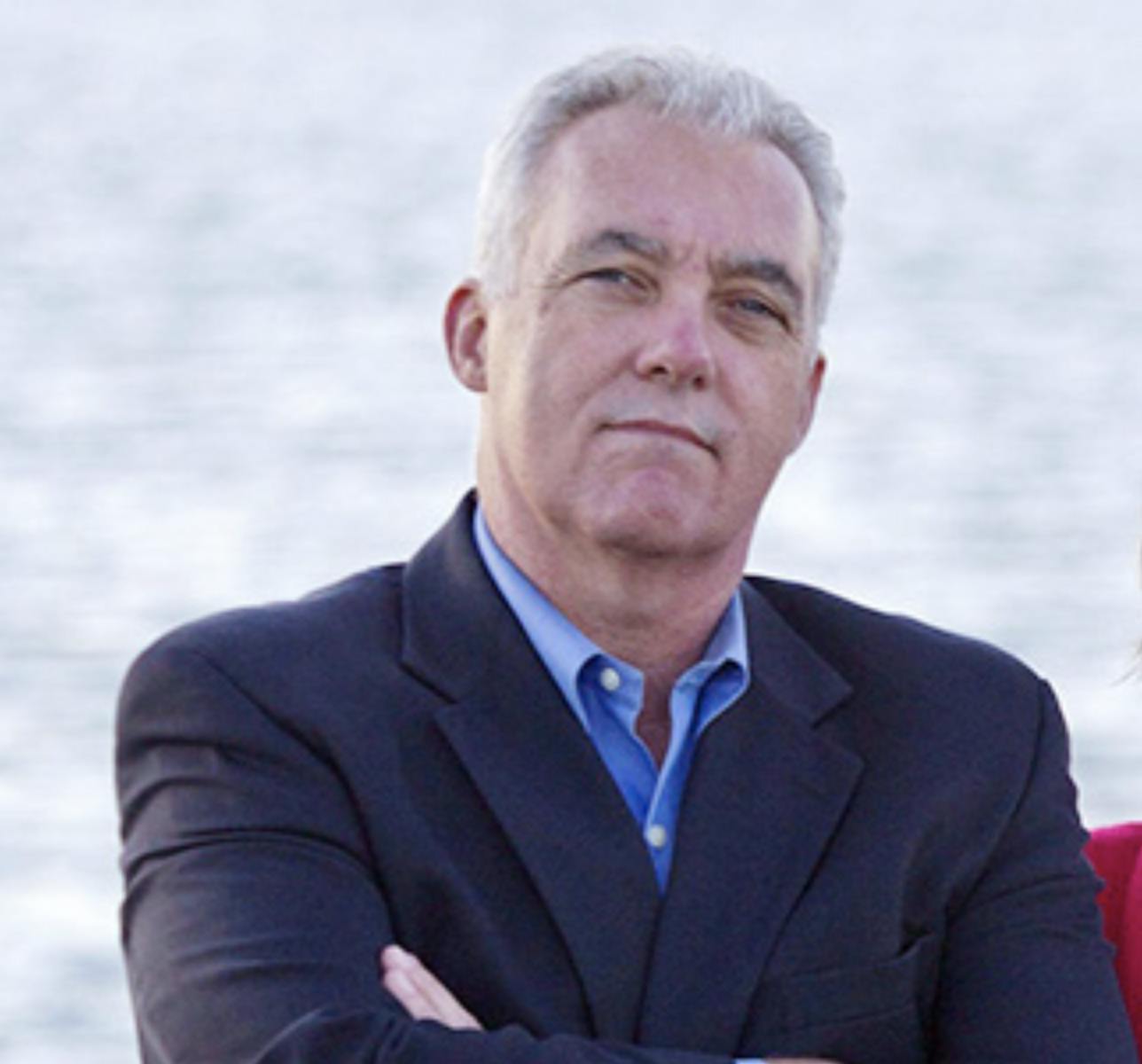
Cullen, a journalist with The Globe since 1985, and part of its Pulitzer Prize-winning teams of 2003 and 2014, is accused of embellishing and fabricating certain Boston Marathon bombing stories in the wake of the April 15, 2013 carnage.
Of particular concern is Cullen’s first column after the bombing (“A perfect Marathon day, then the unimaginable”) and a subsequent interview he gave with the BBC. As the radio duo -- Kirk Minihane and Gerry Callahan -- charges, his writing, and statements seem to show important inconsistencies. The column is ambiguous. It strongly implies he was at the finish line. However, during the interview, he said he was “a mile away” from the finish line when the bombs exploded.
GET THE LATEST BREAKING NEWS HERE -- SIGN UP FOR GOLOCAL FREE DAILY EBLASTFurthermore, Minihane said Cullen later admitted that he did not arrive at that location until hours later. A blog post on weei.com says that “Cullen also appears [in the BBC interview] to make up details regarding Jane Richard.” She was badly injured during the bombing and is the mother of Martin Richard, one of three killed on Boylston Street that day.
Perhaps contributing to the fury, in a retrospective column (“Five years later, we feel the grief like a sixth sense”), Cullen wrote, “I can smell Patriots Day, 2013.” He also recalls the sound, the sight, the feel and the taste of that gruesome day. And, for good measure, what he calls the sixth sense. Grief.
Cullen is now causing a lot of grief at The Globe.
All the commotion is the latest incident in what has been described as a “toxic relationship” between the paper and the radio station. But the paper must determine if fuzzy facts are all merely understandable, hence pardonable, slips of a memory still foggy from haze of the ensuing events or if they were deliberate attempts to mislead and lie.

Notably, this isn’t the first time a Globe columnist has had to address questions about embellishing stories with potentially embarrassing outcomes. Nearly 20 years ago, Mike Barnicle and Patricia Smith resigned from the paper in disgrace. Both were caught fabricating characters and events in their columns. Barnicle, still unrepentant, has been a long-time contributor at MSNBC (under the innocuous title “veteran columnist”) and Smith (who acknowledged her misdeeds) is now a nationally acclaimed poet. But she shares something in common with Cullen. The Pulitzer Prize.

In 2014, likewise, Cullen was a Pulitzer finalist in Commentary. That achievement was recognized (his editor, Brian McGrory was a jury member) for Cullen’s “street-wise local columns that capture the spirit of a city, especially after its famed Marathon was devastated by terrorist bombings.” An event of which no one will forget. And will subject Cullen to more intense public scrutiny and criticism than Smith.
(Interestingly, Cullen’s nominated work in this category did not include his first column after the bombings. The one that has sparked the outrage.)
As mentioned, Cullen was a member of The Globe’s Spotlight investigative team that actually won the 2003 Pulitzer Prize for Public Service for exposing the cover-up of the sexual abuse scandal by Roman Catholic priests (his published contribution). He was also a member of the team that won the 2014 Pulitzer for Breaking News Reporting. The pending review of Cullen’s writings ought to go back to at least 2002, maybe earlier. Should it be found that his work associated with these teams was corrupt, it would surely taint those coveted Pulitzer Prizes, too.
And with a now-evident sense of irony -- a seventh sense? -- in 2016 Cullen was awarded best general column writing by the Society of Professional Journalists. It boasts a Code of Ethics imploring journalists to “seek truth and report it,” “minimize harm,” “act independently,” and, “be accountable and transparent.”
Today, Cullen’s columnist profile still contains this curious line: “I thought Harvard had standards until they gave me a Nieman Fellowship.” They might nonetheless. But whatever happens to Cullen, careless or calculating, he will undoubtedly be associated with “Fake News.” An award that just smells.
James P. Freeman is a New England-based writer. He is a columnist with The New Boston Post and former columnist with The Cape Cod Times. His work has also appeared in The Providence Journal, The Cape Codder, newenglanddiary.com, insidesources.com, and nationalreview.com.
17 Biggest Media Stories of 2017

#17
Whitest Newsroom in America
The Providence Journal currently does not employ a minority reporter or editor. For the daily newspaper in an urban community that is majority-minority, the lack of any representation in the newsroom is stark contrast to the community it covers.
In 2015, the Providence Journal wrote a multi-piece series titled "Race in Rhode Island," but now less than two years later, the last minority reporter, Alisha Pina, has resigned and taken a job in public relations for the State of Rhode Island.
“I was saddened to see Alisha Pina move on. While our communities have become more diverse in cultures, races and languages spoken, the newsrooms made up of people of color have reduced drastically,” said Ann Clanton of the National Association of Black Journalists, New England Chapter.
The percentage of minorities working as reporters in newsrooms across the county is flat or slightly increased, according to recent studies.
“The annual survey also found that 28 percent of the news organizations reported having at least one minority journalist among their top three editors and 77 percent reported having at least one woman in a top-three position,” reported ASNE - the survey is funded by the John S. and James L. Knight Foundation.
Minority journalists comprised 17 percent of the workforce in newsrooms that responded to this year's ASNE Diversity Survey.
A 2014 study conducted by the American Press Institute and the Associated Press-NORC Center for Public Affairs Research, found that only 25 percent of African-Americans and 33 percent of Hispanics said they felt the media accurately reflected their community — according to a story in Salon.
"There’s no [minorities] that I know of (at the Providence Journal),” said Jim Vincent, President of the NAACP Providence Branch. "I would think it’s something on their radar screen, and they’re actively recruiting people of color at all levels — I’m trusting that they’re actively engaged."
The Providence Journal recently offered a buyout package to its newsroom. On Thursday, John Hill, head of the Providence Newspaper Guild told GoLocal that Deputy Executive Editor Peter Phipps, reporter Karen Lee Ziner, and one unidentified reporter had accepted the buyout package. It is expected that Providence Journal will have additional layoffs.
“With the exit of our friend Pina from the Providence Journal, I am concerned about the media-wide apathy, lack of resources - hiring of people of color. I urge the managing editors, newsrooms to reach out to the Journalism Departments and schools at our Historical Black Colleges and Universities and the National Association of Black Journalists and National Association of Hispanic Journalists,” said Clanton.

#16
More Consolidation - More Corporate
New York-based GateHouse which owns many of New England's community newspapers has consumed the Newport Daily News and is bidding for the bankrupt Boston Herald.
Texas-based Nexstar purchased CW-28.
A little less local New England ownership -- a lot more corporate consolidation.

#15
Texas-Based Nexstar Buys Another Providence Station
WPRI’s parent company Nexstar bought CW28 in Providence for $4.1 million. This gives Nexstar three stations on Providence — a CBS, a Fox and a CW affiliate. Nexstar is headquartered in Irving, Texas and owns more than 170 stations across the country.
CW28 was owned by OTA Broadcasting which was launched by billionaire Michael Dell.
In April, OTA’s Providence stations alone brought in over $158 million in the auction of the station's television spectrum to the wireless companies. Overall, the company brought in $440.7 million by selling the frequency broadcast licenses of 10 stations in the U.S.

#14
Trump's FCC Loosening Rules for Broadcasters
Quietly the Trump Administration-controlled FCC made a major rule change for the benefit of the consolidating giants like WJAR-10’s parent company Sinclair and WPRI-12’s parent Nexstar.
The FCC change eliminated a nearly 80-year-old requirement for TV and radio stations to maintain a main studio in or near the communities they serve. The elimination of the rule means Sinclair no longer needs to have a Cranston location and could broadcast from their corporate HQ in Maryland or any other state.
“This rule is unnecessary; most consumers get in touch with stations over the phone or through electronic means,” Republican Chairman Ajit Pai said in an online posting ahead of the vote. Stations can produce local news without a nearby studio, and the rule can impose “major costs” on broadcasters, Pai said.
Paid, appointed by Trump is rapidly rolling back regulations on broadcasters. Bloomberg reports, “Federal Communications Commission Chairman Ajit Pai is moving to change the Lifeline communications subsidy program in ways that will quash waste and “more efficiently and effectively” help provide internet service to poor people, according to the agency.”

#13
Another Local Media Company Takes a Blow
WBZ was one of the great news radio stations in America. b
iHeart (Parent company of WHJJ, WHJY) is forcing WBZ employees to re-apply for their jobs
iHeart, who just bought Boston all news station WBZ-AM — one of the last great AM radio stations and according to a report in the Boston Globe, they have “indicated employees at the station will have to re-apply for their positions, and that it does not plan to honor two union contracts.”
“In a letter sent Thursday to a union official, an attorney for iHeartMedia said that the company ‘will interview and consider for employment the on-air announcers and off-air production staff currently employed by CBS at WBZ-AM,’’ reported the Globe.
“The letter goes on to say that iHeartMedia ‘will not be assuming the two collective bargaining agreements between CBS Radio’ and the Screen Actors Guild-American Federation of Television and Radio Artists, SAG-AFTRA.”

#12
DNA Info's Closure
Billionaire Founder of TD Ameritrade closed his digital news sites after the employees unionized.
According to the New York Times:
A week ago, reporters and editors in the combined newsroom of DNAinfo and Gothamist, two of New York City’s leading digital purveyors of local news, celebrated victory in their vote to join a union.
On Thursday, they lost their jobs, as Joe Ricketts, the billionaire founder of TD Ameritrade who owned the sites, shut them down.
At 5 p.m., a post by Mr. Ricketts went up on the sites announcing the decision. He praised them for reporting “tens of thousands of stories that have informed, impacted and inspired millions of people.” But he added, “DNAinfo is, at the end of the day, a business, and businesses need to be economically successful if they are to endure.”
DNAinfo and Gothamist have never been profitable and a bit of a billionaire's plaything, but the workers may have dramatically misunderstood that this was a “vanity play” by Rickets more than a growing business concern.

#11
Boston Globe's Endless Printing Woes
In September, the Boston Globe's printing woes boiled up.
Vinay Mehra, the Boston Globe's president and chief financial officer, said that the printing problems at the newspaper are caused by the printing union. The comments were made in an article that was published in the Globe on Sunday. Printing and distribution problems are plaguing the paper and have lead to cancellations by subscribers.
But in an email exchange with GoLocal, Steve Sullivan who heads the Pressman’s union said his members are having, “no trouble adjusting, the [principles] of newspaper production remain the same and our members are adjusting fine.”
According to the Globe article, “some senior pressmen have been resistant to change. ’I don’t want to bash them, but that is human nature,’ [Mehra] said.
Mehra is the third leader of the Globe in the past nine months. Mike Sheehan left the Globe in December after three-years [Sheehan is an investor in GoLocal24].
Sheehan's replacement as chief executive officer was Doug Franklin who stepped down in July citing differences with the Globe’s owner John Henry — also a principal owner in a company that owns the Boston Red Sox and Liverpool soccer team.
According to Sullivan, who is the President of the Boston Newspaper Printing Pressmen’s Union Local 3, there are approximately 125 in the Pressman’s union and “on average 25 years of experience as journeyman press operators, some more, some less."
Sullivan added that “vigilance is the solution and it must become the new normal in print media. We've shown that type vigilance on a nightly basis despite some of the challenges.”
The Globe reports that they have spent $75 million to build out it's new printing. "We appreciate the investment in Taunton and our long-standing partnership with the Boston Globe that's spans over a century. It's vitally important for this to work. We are confident that it will," said Sullivan.

#10
Newport Daily News Sold to GateHouse
“Today is one of the saddest days of my life – a day I have always hoped would never come – when I must tell you all that the Sherman family has decided that we must sell the papers,” Albert K. “Buck” Sherman Jr., retired publisher of The Daily News and president of Sherman Publishing's board of directors, said when announcing the sale to the company's employees as reported by the paper.
But now, the Newport paper is just one of the hundreds of community papers owned by GateHouse.
According to the paper's history,"Sherman Publishing was established in 1918, when Edward Sherman purchased The Newport Daily News, which was founded in 1846. Edward Sherman's sons, Albert K. Sherman and Edward A. "Ned" Sherman Jr., became co-publishers in 1948.
When Ned Sherman retired in 1975, Albert Sherman became the sole publisher. In 1976, Albert Sherman handed over ownership of Sherman Publishing to his three children, Buck and Bruce Sherman and Katharine Sherman Zins.
Albert Sherman retired in 1980 and was succeeded as publisher by Buck Sherman. William F. Lucey III, who joined the company in 1985, has held the position of publisher since Buck Sherman's retirement on New Year's Eve 2009.

#9
Boston Herald Bankruptcy
Earlier in December, the publisher of the Boston Herald Pat Purcell announced to his employees that the tabloid had filed for bankruptcy.
In addition, GateHouse Media, who owns the Providence Journal and the Worcester Telegram will seek to buy the assets and name out of bankruptcy, pending court approval.
At least two other buyers have emerged. The Herald will layoff 50 employees.
It is just the latest blow to the newspaper industry that is seeing a collapse in both revenue and circulation.
In a letter to employees, Purcell wrote: "I am very proud of the spectacular management team with whom I have worked hand in hand over the years. And I am equally as proud of the excellent staff in all areas of our company who have worked tirelessly to make the Boston Herald a relevant and respected provider of local and regional news for Boston and the area.
"Boston is a better city for the Herald's unique and fearless local reporting. Because of all of you, we are well known for our influential political, community, business and sports coverage across the region and beyond."
According to the Boston Globe Purcell said, “I wanted to keep Boston a two-newspaper town as long as I could, Apparently, this is as long as I could.”
The rival to the Globe was once owned by Purcell's close business ally Rupert Murdoch and peaked at 900 employees. Today, it is down to just 240 and the Globe does the Herald’s printing. That may change and the printing could shift under GateHouse to one of their other facilities.
Issues like who will be responsible for significant pension liabilities are unknown. Employees will be forced to reapply for their jobs.

#8
National Public Radio Sexual Harassment Plague
No media company in America has been hit harder with allegations, firings, and suspension relating to sexual harassment than National Public Radio.
Their biggest stars, their news director and turmoil in management.
NPR Chief News Editor David Sweeney - out
NPR News executive Mike Oreskes - out
Garrison Keillor - out
Tom Ashbrook, host on On Point - suspended
WNYC's Leonard Lopate and Jonathan Schwartz - out
WNYC host John Hockenberry - out

#7
Lauer Out
In late November, NBC announced that Matt Lauer who has hosted the Today Show for more than two decades and launched his career in Providence at WJAR-10, is out.
No one was bigger in media than Lauer.
The announcement was made during the opening of the Today Show at 7:00 AM.
Lauer earned an estimated $28 million a year from NBC.
"This is a sad morning at 'Today' and NBC News," said his co-host Savannah Guthrie. "As I'm sure you can understand, we are devastated. I'm heartbroken for Matt. He is my dear, dear colleague."
The firing was tied to at least multiple cases of alleged sexual harassment.

#6
Mega Deals - Nexstar
In January, Nexstar's big acquisition closed and one of the stations they picked up was Providence's WPRI-12.
The impact is less local and more corporate.
The station has seen cuts, and cutbacks -- reporters had to turn in their company phones.
Got a complaint and you want to talk to the top guy -- you need to dial a Texas area code first.

#5
WBRU Sold to Christian Radio Group
On August 1, 1981, MTV began broadcasting and the first music video the new network played was "Video Killed The Radio Star” by The Buggles.
Now, as the autopsy is being done on WBRU, the appropriate mantra might be that the Internet killed the radio star, or as Bruce McCrae, aka Rudy Cheeks told GoLocal LIVE, “I had predicted this some time ago [about the death of radio]. TV is soon going to be Internet. Younger people who are the basic consumers of alternative rock music -- and alternative journalism -- are internet oriented.”
“It's not that complicated -- it was a business decision based upon the best interests of the university and its students. In the best of all situations, they'd have the funds to do everything they want to do now,” said Michael Harrison, one of America’s top analysts of radio and publisher of Talker’s magazine.
The new 95.5 signal owner, Education Media Foundation, is a Christian radio broadcasting group that reported assets of more than half-a-billion dollars according to the company's audited financials for 2016.
Years in the Making
One former top Brown student WBRU leader says the death of the station took years to develop, “Years of waning recruitment, high student turnover, and fatigue with the strict guidelines imposed by the commercial radio model all contributed to the decision to sell the 95.5 signal,” said Leah Michaels, formerly a GoLocalProv intern and top WBRU staffer.
“Rather than continue operating at a loss in what many saw as a dying market, the student leadership decided to sell the signal and use the money to continue WBRU with more freedom online and make the student workshop into something that they felt would revive student interest and fit better in the modern media landscape,” added Michaels who today is Associate Producer at Lucky 8 TV.
"I must say, I was not totally surprised - this is what's happening with radio. Most of the alternative press is gone. Everything has become Internet-based. This is the same for radio -- the old brick and mortar [stations] are being bought by niche operations,” said McCrae.
Shifting Revenue
This past year, WBRU generated approximately $1 million in revenue. Former executive Randy Hershoff tells GoLocal that in the 1990s the station's revenue was up to $3.1 million.
The spokesman for the Board of WBRU, Art Norwalk claims that WBRU is not dying -- it's just changing, “Today's young people, who form WBRU's staff and desired audience, do not engage with music or information on the radio. We expect an increase in student interest in working at WBRU now that it will be an online workshop focusing on future-oriented development of content and distribution.”

#4
Sinclair and Trump
The relationship between the Trump administration and Sinclair is no
In July, HBO’s John Oliver show focused on “right wing bias” of Sinclair Broadcasting — the nation’s largest owner of local television stations and Providence’s WJAR-10’s parent company.
“Oliver on his HBO show "Last Week Tonight" on Sunday said that Sinclair's right-wing bias rivaled that of Fox News and Breitbart and expressed caution over the planned merger, saying would it inject conservative views into local news broadcasts,” writes Ali Berland at The Hill.
“I did not know it was possible to dip below the journalistic standards of Breitbart,” said Oliver. “That’s like being too bad a chef to work at a carnival food cart.”
Sinclair is awaiting federal regulatory approval to purchase Tribune, which owns 42 stations, for nearly $4 billion.
In May, GoLocal reported:
The New York Times published an article on Sunday that outlined how the parent company of Providence’s WJAR-10 is requiring its stations to air pre-packaged daily news segments that are right-wing leaning.
Now, Sinclair Broadcasting - who owns WJAR - is in the midst of purchasing Tribune's 42 television stations for $3.9 billion.
Vox calls the deal a mega-move for conservative media. “Sinclair Broadcast Group — a conservative, Trump-friendly television empire — is poised to become one of the most powerful players in the mainstream media. The relatively unknown company, whose stations have mixed conservative commentary with local news, is now on the verge of a deal that would allow it to reach nearly three-quarters of American households.
Close tied between the Trump White House and Sinclair
Latest for WJAR
This is not the first case of WJAR’s parent company being linked to GOP political causes.
In December, Politico reported that Sinclair Broadcasting made a deal with the Trump campaign for better access - which isn't even the first time that WJAR's parent company has been tied to pushing a conservative agenda.
“Kushner said the agreement with Sinclair, which owns television stations across the country in many swing states and often packages news for their affiliates to run, gave them more access to Trump and the campaign, according to six people who heard his remarks,” reported Politico, of remarks made by Trump's son-in-law, who is married to Trump's daughter, Ivanka.
Locally, WJAR 10’s General Manager Vic Vetter said he had no comment on the New York Times story.
President Donald Trump
The Sinclair family is known for being politically conservative and in 2004 the company sparked a national firestorm for pushing an anti-John Kerry documentary and initially directed their stations across the country to run the 'anti-Kerry veterans group Swift Boat Veterans documentary,' according to a Sinclair journalist in the news department who said they were instructed to treat a partisan documentary as a news item.
“Jon Leiberman, the Sinclair reporter fired for publicly criticizing the company's handling of the documentary, said Sinclair executives told its news staff Sunday that they planned to run a 'significant chunk' of the film, 'but they refused to put a time on it.' He said he objected when the company told reporters to develop news stories around the film,” according to a 2004 CNN news report.
“Since November 2015, Sinclair has ordered its stations to run a daily segment from a 'Terrorism Alert Desk' with updates on terrorism-related news around the world. During the election campaign last year, it sent out a package that suggested in part that voters should not support Hillary Clinton because the Democratic Party was historically pro-slavery,” wrote the New York Times.

#3
Cumulus Goes Bankrupt
Earlier in December, Cumulus Media filed for bankruptcy. The goal is to shed more than $1 billion in debt.
In the Rhode Island market, this is the second time this radio cluster of stations has filed for bankruptcy in the past eight years. In 2009, Cumulus predecessor Citadel filed for bankruptcy. The company owns WPRO AM, WPRO FM, HOT 106, and LITE 105.
In the past two years, Cumulus’ stock has been crushed. Investors were forced to agree to an 8-to-1 stock swap and then saw the stock drop from $1.32 to $0.15 per share. The company was delisted by NASDAQ earlier this month.
In the bankruptcy announcement, Mary Berner, President and Chief Executive Officer of Cumulus Media Inc., said, “Over the last two years, we have focused on implementing a business turnaround to reverse the Company’s multi-year ratings, revenue, and EBITDA declines, create a culture that fosters motivated and engaged employees, and build an operational foundation to support the kind of performance we believe Cumulus is capable of delivering.”
“However, as we have noted consistently, the debt overhang left by previous years of underperformance remains a significant financial challenge that we must overcome for our operational turnaround to proceed,” she added.
The company claims 69 percent of the secured lenders have agreed to the bankruptcy provisions and the shedding of debt.
Earlier this month, the company missed an interest payment on debt totaling $23 million.
The impact to the Rhode Island cluster will likely trigger more austerity and cuts.
Talkers magazine publisher Michael Harrison predicted that Cumulus would enter bankruptcy and forewarned that the largest radio group — iHeart — may not be far behind.

#2
GoLocal LIVE Launched
Launched in February of 2017, GoLocal LIVE is a first of its kind live online digital program that features interviews, reports, and even music with the biggest names in Rhode Island, across the United States, and the world.
When launched, GoLocal LIVE was intended to connect Rhode Islanders faster and more dynamically to the most newsworthy and most interesting people. It has now done it more than 1,000 times and watched millions of times on GoLocal, on Facebook, Twitter, and YouTube. All of it takes place in our studio on Weybosset Street in the Financial District in downtown Providence at the Navigant Credit Union Broadcast Center.
“What has been exciting is we have been able to bring a sweeping array of cool and innovating quests in the region, the nation, and the world -- ranging from New York Times bestselling authors, to the United States' National Archivist, to leading experts on race in America,” said Molly O’Brien, Lifestyle Editor of GoLocal LIVE.
“One of America’s top writers, Ben Mezrich, kicked off his book tour with us for his latest book ‘Wooly’ and I saw him at a fundraising event a couple weeks later — he was all about the GoLocal format because he had an opportunity to speak at length about his career and his next projects,” said News Editor Kate Nagle.
Mezrich is the author of a slew of New York Times bestsellers and is ranked as one of “Hollywood’s 25 Most Powerful Authors.” He wrote the books that became movies such as “21” and “The Social Network.”
“I love the opportunity -- we broadcast a high-level conversation to the community and then share it real-time in video across a range of digital platforms across Southern New England,” said O’Brien.
GoLocal LIVE has been able to tap into experts and leaders throughout the world on a real-time basis. When a terror attack hit Manchester, England, GoLocal LIVE hosted international relations expert Mark Baillie of King's College in London's War Studies Department.
One recent highlight was the appearance of Irish Prime Minister Enda Kenny who discussed the growth Ireland is realizing due to Brexit.
Experts have brought perspectives from Houston during the hurricane, from Jerusalem on the peace process, from Paris on terror attacks, and from the Middle East to discuss sanctions on Qatar, to name a few.
“One of the most valuable and exciting elements is to be first in the region in reporting and both local and touching folks across the globe,” said Josh Fenton, CEO and Co-Founder of GoLocal 24.

#1
Providence Journal Shrinks to 15 Reporters
It was once the newspaper of record. The Providence Journal dominated news, opinion, and commerce, but now it a just a tiny shadow of itself.
According to John Hill, head of the Guild, the paper now employs just 15 reporters. It once had a newsroom greater than 300.
Its circulation has shrunk to approximately 50,000.


