Removing Barriers to Interconnect Our New Energy Economy - Guest MINDSETTER™ Rep. McKiernan
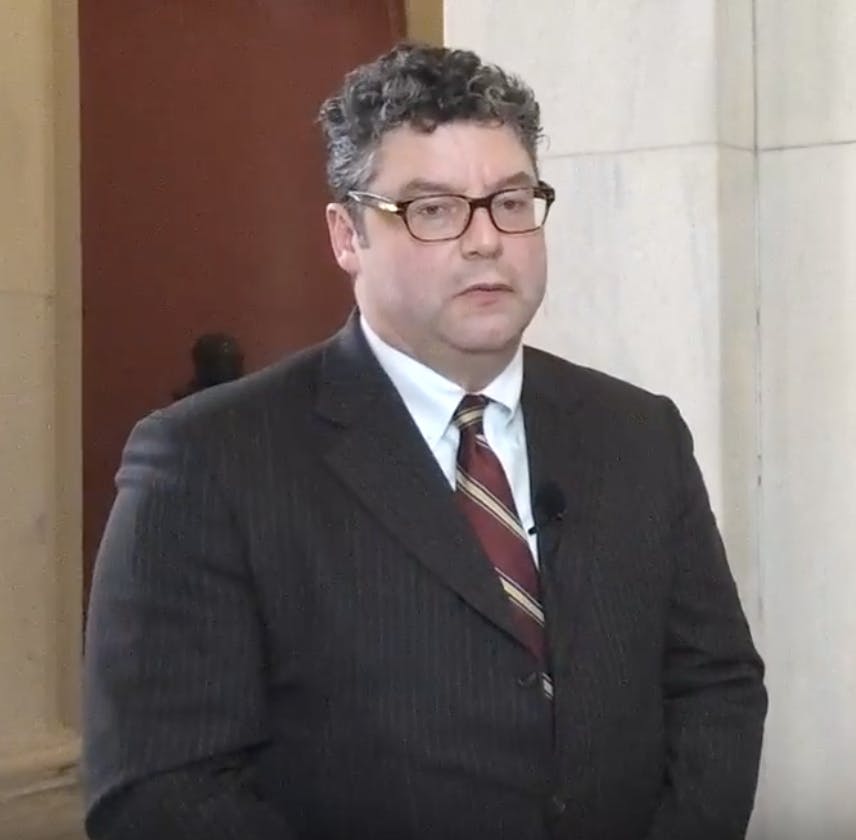
Guest MINDSETTER™ Rep. Daniel McKiernan
Removing Barriers to Interconnect Our New Energy Economy - Guest MINDSETTER™ Rep. McKiernan

So, our general assembly continues to take big steps to build a local clean energy supply, easing access to below-market self-supply through net metering, making municipal tax policy more consistent and predictable, and holding our utility to clear standards for the connection of this new electricity to our distribution system (interconnection). At the administrative level, our State is innovating and pressing for this new energy economy, developing methods to identify and value the costs and benefits new energy inputs (PUC docket 4600), improving distribution system planning to better accommodate new energy interests, upgrading advanced metering infrastructure to allow for time of use rates that will steady our demand, and reforming the utility business model (power sector transformation). Rhode Island is hard at work on a much better energy future.
As with any new developing industry, clean energy projects are only as strong as their weakest link. To fulfill our aggressive goals, we must always be vigilant to break down barriers. The general assembly tried to solve problems with interconnection in 2017, holding National Grid to standards for the cost and time to get projects connected. But, even together with other administrative incentives, those changes have not been enough. As noted in the Phase 1 report on power sector transformation, “the primary financial means through which the utility can grow its business and enhance earnings for shareholders is to invest in capital projects. This bias, created by the regulatory framework rather than by the utility itself, discourages the utility from seeking more efficient solutions that do not depend on large capital investments.” The same utility that administers interconnection is biased against local generation of clean, local energy. That’s why it is so important for us to effectively regulate the interconnection process. As a sponsor of House Bill 6136 think it is time to be clearer on our standards for interconnection.
GET THE LATEST BREAKING NEWS HERE -- SIGN UP FOR GOLOCAL FREE DAILY EBLASTThe clean energy industry continues its chorus of concerns about utility administration of interconnection. We tried to set clear timelines around the application process, but the utility continues to seek more information and delay processing. The utility has introduced new standards in the midst of the interconnection process, changing the playing field on projects in mid-stream, after developers incur significant development costs based on familiar standards. Developers complain that the utility refuses to produce information needed to evaluate whether its concerns about distribution and transmission system impacts have merit and whether the costs of resolving those problems are driven by these new projects or are based in its long-deferred system maintenance. Lately, National Grid has referred many large projects to unexpected, uneconomically long transmission studies purportedly requested by the region’s independent system operator (ISO) while ISO and its policy disclaim any interest in those studies. Previous attempts to increase accountability seem to be coming up short. Energy 2035 is clear that one important way to support our new energy economy is to reduce the soft costs of development. National Grid’s decision to subject projects to unnecessary costs of disputing its interconnection decisions raises the cost of a more reliable, cheaper and cleaner energy future, all while utility staff and lawyers are paid by the disadvantaged ratepayers. We must increase accountability, raising the stakes for failed compliance. The renewable energy industry has spoken and the sponsors of this legislation hear the call for better regulation of National Grid’s administration of interconnection.
The legislation is our proposed solution. It requires the utility to provide all documentation of the actual cost of interconnection so that developers can contest unreasonable charges and be properly reimbursed for overestimated prepayments. It is even more specific about the process National Grid must follow for the correction of incomplete applications and the time within which it must act on corrected information. If outside influences (like ISO) threaten delay, developers must be informed and allowed to intervene and drive expedient solutions. The utility ought to get public utility commission approval for any changes to its standards for interconnection and then publish those standards before applying them to new projects that apply for interconnection. Perhaps the most significant reason our last effort to better regulate interconnection has not worked is because National Grid succeeded at limiting its repercussions from non-compliant management. Therefore, we propose to hold shareholders fully accountable for damages resulting from failure to comply with the standards, removing the limitations on types and extent of damages available for such failings.
Although commonly known as a “public utility,” National Grid is privately held and principally accountable to its shareholders. Its economic interests in natural gas and returns from investments in distribution and transmission system improvements conflict with our State’s interest in interconnecting more reliable and cheaper local clean energy. Our utility cannot be expected to properly administer interconnection to serve our best interests without diligent enforcement of proper regulation. The sponsors of House 6136 refuse to tolerate any unwarranted interference with a more affordable and reliable homegrown clean energy future.