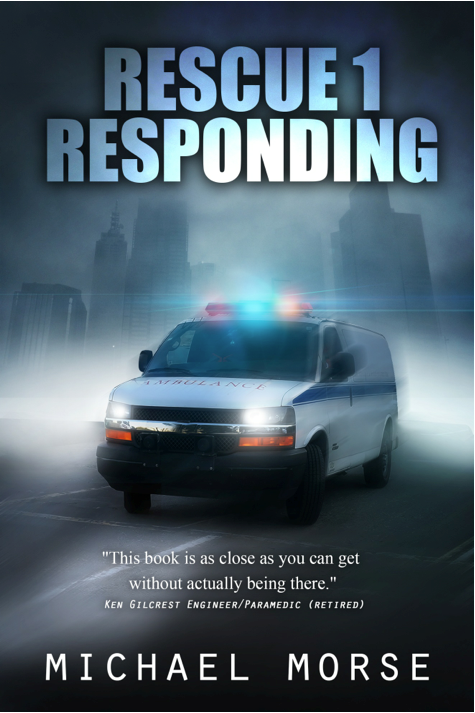
Rescue 1 Responding: Chapter 3, a Book by Michael Morse
Michael Morse, Author
Rescue 1 Responding: Chapter 3, a Book by Michael Morse
I’m glad I took the time to document what happens during a typical tour on an advanced life support rig in Rhode Island’s capitol city. Looking back, I can hardly believe I lived it. But I did, and now you can too. Many thanks to GoLocalProv.com for publishing the chapters of my books on a weekly basis from now until they are through. I hope that people come away from the experience with a better understanding of what their first responders do, who they are and how we do our best to hold it all together,
Enjoy the ride, and stay safe!
GET THE LATEST BREAKING NEWS HERE -- SIGN UP FOR GOLOCAL FREE DAILY EBLASTCaptain Michael Morse (ret.)
Providence Fire Department
The book is available at local bookstores and can be found HERE.
Note From the Author
The Providence Fire Department handles EMS for the city. Seven ALS units currently respond to all 911 emergencies that they can handle. Mutual aid is often needed as the Providence crews are usually tied up. The calls are relentless; people have become used to calling 911 for non-emergency medical reasons. When I was a kid, you would have to be bleeding to death, been decapitated or worse to call 911. Now, the common cold is reason enough to call for a ride to the emergency room. 90% of the “emergencies” that I responded to during the writing of these books were for people who chose to use the 911 system simply because they knew that they could. It is a worldwide problem. Giving the populace the choice of paying for parking, sitting in a waiting room and playing by the rules or pushing three buttons on their phone and having the fire department show up and get them to the ER with no fuss, no cost and no worries is simply too tempting to pass up. The result is an overburdened 911 system, disgruntled EMT’s and an astonishing lack of resources. True emergencies often have nobody available to respond to, and people die waiting for EMS. It happens all the time but is seldom reported. The answer to the problem we hear most often is to add more units, more EMT’s and more support staff. My answer? Give the EMS people responding to the calls the power to refuse transport to people with non-life threatening or disabling problems. We simply cannot do more with less; the system is collapsing under its own weight.
Chapter 3
“He’s lucky to be alive,” says Mike.
“I’ll say. Imagine if that was you and Henry driving through the park. Would you have stopped to help those kids?”
“I really don’t know.”
“Neither do I. I guess you just respond to things when they come up. That guy probably never thought he would do what he did until he did it.”
“He’d make a good firefighter,” says Mike. “That’s what we do; respond to things that come up. Other than that, we get paid to wait.”
“What did you do before this?” I ask, surprised and embarrassed by the fact that I don’t already know.
“Post Office. There is a reason so many people go crazy working there. It’s pretty dull.”
“I’ll bet.”
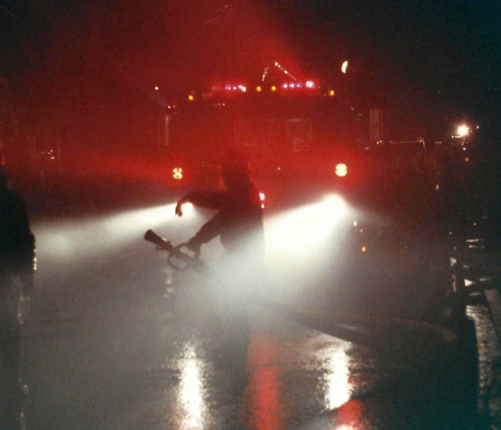
My fondest memories from the beginning of my career, when I was a firefighter working on an engine company, involve the conversations we would have. We found ways to solve world hunger, could run the Patriots, Red Sox or Bruins better than the bozos who called themselves coaches could, and knew the path toward world peace. The conversation was lively, informative and most important, hilarious. Most days the banter would begin over the coffee pot in the morning and go all day.
The rescues are in and out all day and never get into the flow of things. Entering into the ass end of a conversation makes you the ass of the conversation, I was told by an old firefighter, when I added my two cents to a conversation that I knew nothing about. It was good advice.
“Let’s head back to quarters and see what’s up,” I say.
“Maybe we’ll stay there for a while.”
It is 1930 hrs, or 7:30 p.m. Just as we are walking up the stairs I hear a welcome announcement.
“All Hot!” blares from the stations PA system. We’re just in time. It is Steve’s turn to cook and - as expected - he has made his “Mexican Chicken.” He puts some chicken breasts in a baking dish, covers them with salsa, tops that with cheddar cheese, then sprinkles some diced olives and scallions on top. With a little spicy rice on the side, we’re ready for a fiesta. All that’s missing are the Coronas.
“There are other things to eat than Mexican Chicken,” says Jay.
“How did you get so fat if this is all you eat?” Captain Healy asks Steve, as he puts enough food on his plate to feed three men. He’ll go back for seconds.
“People in fat houses shouldn’t throw stones,” responds Steve.
Arthur adds, “It is good Friday. Mexican fish would have been more appropriate.”
“I forgot all about Good Friday!” says Steve. “I hope I don’t go to hell.”
“I’ve already been there,” says the Captain as he takes a bite. “All they eat is Mexican Chicken. And all of the demons look just like you.”
“That’s not hell, that’s heaven,” says Steve. Suddenly, the blow lights come on and the P.A. system blares out the following.
“Attention Engines 10, 11, 13 Special Hazards, Ladders 5 and 2 and Battalion 2 a still box.
The members of Engine 13 drop everything and hit the poles. A still box means there is probably a fire. The P.A. system comes back with the rest.
“Engines 10, 11 and 13, Ladders 5 and 2, Special Hazards and Battalion 2, respond to 121 Moore Street for a reported structure fire.”
“Let’s head over there,” I say.
“Why?” Mike asks.
“Because we’re firemen and there’s a fire,” I say, sounding more annoyed than I intended.
“We used to be firemen, now we’re rescue blows,” Mike says.
“Once a fireman, always a fireman.”
“Let’s eat first,” says Mike.
“If it’s a code red get ready to roll,” I say
A code red is our way of relaying the information to fire alarm and all responding companies that there is a working fire at the location and to proceed. Code yellow indicates a small fire or some other emergency that the first due companies will handle. Code blue means false alarm. We wait to hear the code while eating our chicken.
Fire alarm doesn’t send a rescue until the fire is confirmed, or if there are multiple calls and they can tell the fire call is real. After fielding thousands of calls the dispatchers can sense which calls are legitimate from the ones that are not. I monitor the radio transmissions and wait to hear. I don’t have to wait long as the radio transmits Engine 10’s message:
“Engine 10 to fire alarm, we have a code yellow, food on the stove.”
“Message received Engine 10; all other companies can go in service.”
The person living on Moore Street probably left his dinner cooking and it caught fire. The apartment filled with smoke and somebody called 911. The fire department won't send just one truck when there is a report of a fire inside of a building. Better to err on the side of caution and have too many trucks and firefighters than not enough, especially when lives could be in jeopardy.
Mike and I finish our meals then cover the plates left on the table with foil. Mike cleans up the kitchen and I head to my office. The guys will be back to finish dinner and insult each other but I need some time to unwind. It’s going to be a long night.
The Red Sox are on TV; I hope I get a chance to watch some of the game. For some weird reason, I liked the Red Sox more when they always broke the hearts of their fans. Something about getting what you wish for not always being a good thing comes to mind...
2209 hrs. (10:30 p.m.)
“Rescue 1 and Engine 9, Respond to 232 Power Street for a twelve year old male who fell down a flight of stairs.”
It has been almost three hours since our last run. The break was welcome. I think the Sox won the game but I fell asleep while watching. Power Street runs next to the Brook Street fire station. The 9’s should be on the scene quickly. Mike has the lights and sirens on as we speed toward the incident. Most of the time these calls are not life threatening, but injuries sustained on stairs can be critical. I want to get there quickly.
“Engine 9 to fire alarm, Inform Rescue 1 we have a twelve year old male, conscious and alert lying upside down at the bottom of a flight of stairs complaining of neck pain.”
“Rescue 1, received.”
The patient will need to be immobilized and transported to Hasbro. I don’t have to tell Mike anything, he knows what to do. When we arrive on scene I go inside while Mike and Mark, one of the firefighters from Engine 9, prepare the backboard, collar and necessary straps needed for extrication. I walk up ten cement steps, through an ornate doorway and into the home. The patient is lying at the bottom of a wooden staircase, upside down. The smells of past centuries linger in the hall, musty and mysterious. A plaque marking this as a historic home is proudly displayed on the exterior. The name of the builder or owner, most likely one in the same, is engraved on the plaque along with the year the house was built, 1838. I wonder if any ghosts are watching.
The patient is lying on his back looking up at the ceiling. His mother sits a few steps above the boy. She tells me what happened.
“He was running down the stairs like he always does only this time he tripped and fell down.”
“Did you see him fall?” I ask.
“Of course, I was right behind him.”
“Did he slide down the steps or roll over and over, like tumbling?”
“Oh, he tumbled all right. He fell forward then flipped over and landed right there. He hasn’t moved.”
How many steps did he fall down?”
“About eight.”
“Did he lose consciousness?”
“No, but he won’t move.”
“Won’t, or can’t?”
“Won’t.”
“What is his name?”
“David.”
I crouch next to David to do an initial assessment.
“Can you move?” I ask.
“I don’t know, I haven’t tried,” he responds.
“How will you know if you don’t try?” I ask.
“I don’t want to slip into a coma,” he says, deathly serious.
“Are you feeling any pain?” I ask while looking him over to see if there are any gross deformities. There are not.
“No, but I might be slipping into a coma.”
“What makes you think that?”
“Because people always go into comas.”
“No they don’t,” I say.
“Yes they do,” he responds.
“Comas aren’t so bad.”
“How do you know?"
“I don’t for sure, but they don’t look all that bad.”
Mark and Mike have retrieved the backboard and collar from the truck, place the board next to him and apply the cervical collar. Starting from his head, I work my way up his entire body, asking if he feels pain and feeling for any sign of trauma. It will be impossible to extricate him without moving him a little. He has to lie flat on the backboard. I hold David’s head, keeping the neck aligned with the rest of him as Mike holds his hips and Mark gets the legs. Pat gets the long board in place and prepares to place it under the patient.
“On three roll him onto his side,” I direct the guys. “One, two, three.” When I say three, we all move together, placing David on his side while Pat slides the board underneath.
“On three roll him back. One, two, three.” As one we put him onto the board. Straps are used to hold him in place. In about a minute we have him immobilized and are ready to carry him to the truck.
“Am I in a coma?” David asks.
“Nope, you’re just tied up like a mummy. A coma might be better,” I tell him, as we carry him from the house and into the rescue. Once there, I evaluate his vital signs and do a basic neurological assessment.
“Squeeze my hands,” I tell him, as I put my hands into his.
He squeezes hard enough to crack my finger bones, both sides equally.
“Push your foot forward like you’re stepping on the gas,” I say, placing my hand on the bottom of his foot.
“I’m twelve, I don’t drive,” he says.
“And you’ve never driven a bumper car or a go cart?” I ask.
“I might crash and go into a coma.”
“Just push, will you!” He does. I put my hands on top of his feet and ask him to pull back. He does that too. He has pulses in both of his feet. We’re ready to transport him to Hasbro. From the look of things he was lucky. There doesn’t appear to be any damage to his body, and his fear of slipping into a coma is probably temporary.
David’s mother comes with us as we transport. She doesn’t seem too concerned.
“Have you been through this before?” I ask her.
“How could you tell?” she responds.
“Intuition I guess. You’re not acting like this is the first time he has been in this position.”
“He’s never ended up in a rescue, but he’s constantly falling and worrying he’s paralyzed or slipping into a coma.”
“I’m sure he’ll be fine,” I say to both of them.
“I’m sure too,” says his mom.
“You’re not the ones slipping into a coma,” says David, his eyes fluttering, the weight of an uncertain future lingering over him. His mom and I can’t help ourselves and laugh out loud.
Heidi is at the triage desk at Hasbro. I tell her the story, emphasizing David’s fear of slipping into a coma. I don’t know if he is being dramatic or is really afraid. I get the feeling he is toying with us a little, having some fun and getting attention. I don’t mind a bit, I’m happy he wasn’t injured more severely. The speed at which life changes is incredible. Nobody ever sees it coming.
We transfer David from our stretcher to the one waiting for us at the hospital. Heidi has just finished the latest installment in Stephen King’s series, The Gunslinger. One of the best things about reading a good book is finding somebody else that has shared the experience.