


The Illegal Immigration Election - Gary Sasse
Gary Sasse, Guest MINDSETTER™
The Illegal Immigration Election - Gary Sasse
After a period of relatively liberal immigration, the United States enacted a quota system in 1921 to regulate the flow of migrants. It assigned immigration quotas based on the portion of nationalities reflected in the U.S. Census. As a result, 82 percent of the quota were allocated to Western and Northern Europe, 14 percent to Eastern and Southern Europe, and 4 percent for the remaining Eastern Hemisphere. This had a dampening impact on immigration to the United States. The Cato Institute reported that the annual immigrant inflow in 1924 equaled 0.63 percent of the U.S. population, dropping to 0.05 percent in 1940.
In 1965, Congress replaced the national origins quota system with immigration laws designed to unite immigrant families and attract skilled workers. According to The Center for Immigration Studies, under the new law most of the applicants for immigration visas started coming from Asia and Latin America, and the number of immigrants tripled from about 320,000 in the 1960s to over a million in 2000.
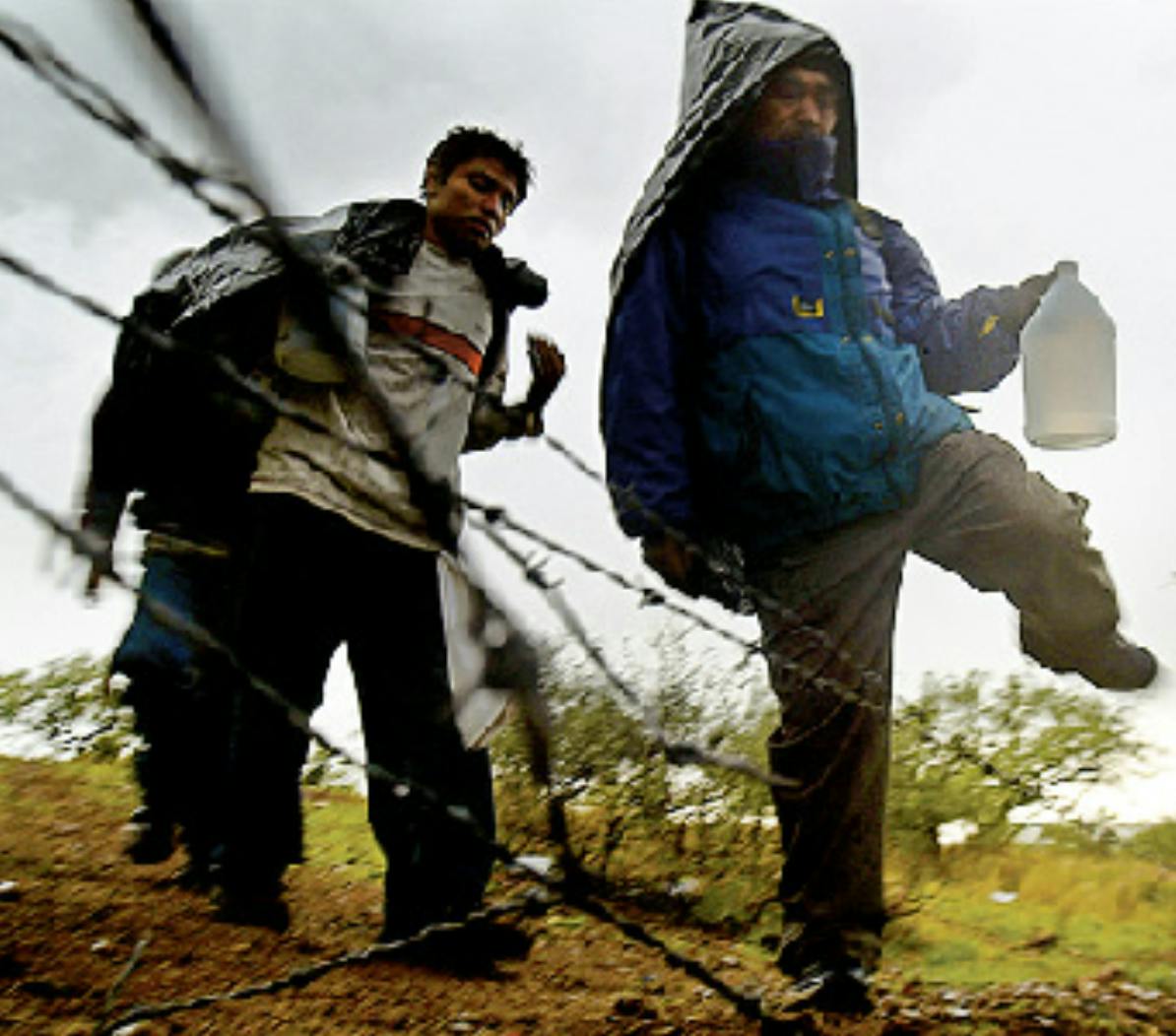
GET THE LATEST BREAKING NEWS HERE -- SIGN UP FOR GOLOCAL FREE DAILY EBLASTNevertheless, illegal immigration has surged in this century. This resulted from a confluence of conditions. There was a breakdown in the rule of law coupled with economic hardships in several Latin American nations. Smugglers began advising migrant asylum seekers how to game the American asylum system. Finally, the Biden Administration demonstrated a lackadaisical approach to controlling the southern border. The Liberal Patriot reported that in 2017 Customs and Border Protection encountered about 527, 000 migrants trying to enter the United States without legal authorization. By 2023, customs officials encountered over 3.2 million.
John Judis a co-author of “Where Have All the Democrats Gone” wrote in the Liberal Patriot, “What’s novel about the Biden years has been the vastly expanded use of parole and asylum in boosting immigration by those who could not hope to get through normal legal channels.”
Traditionally refugees were eligible for asylum in the United States if they had a well-founded “fear of persecution” resulting from their race, religion, nationality, or political opinion. President Biden broadened the meaning of “fear of persecution” to encompass domestic violence, police brutality, sexual discrimination, and gang violence. It is reported that his Administration even considered including the threat of climate change.
The first step to restore a sustainable and common-sense approach to control illegal immigration would be to raise the bar on what constitutes “fear of persecution.” The standard should not be the current one of “a significant possibility,” but rather one premised on whether an individual is “more likely than not” being subject to persecution. As Steven Rattner and Maureen White recently opined in the New York Times, “we should raise the legal standard for consideration for asylum from a “significant possibility “that asylum would be granted to something closer to the standard used for final decisions in immigration court.”
In addition, asylum seekers should be mandated to apply either in Mexico or their home country, and adequate resources must be afforded to U.S. immigration courts and officials.
Historically, migrants without papers can be admitted into the United States through a parole process on a case-by-case -basis for humanitarian reasons. This provision was intended to permit the Attorney General to act only in emergent, individual, and isolated situations. President Biden, however, liberalized the use of parole by applying it to selected countries. In 2019, about 35,000 migrants were paroled into the country. In 2023 the number exceeded 300,000. Tough choices need to be made because it is unsustainable for America to take every refugee from all failed nations. A better policy would be to support efforts to improve conditions in those countries.
Democratic mayors and conservative Republicans agree on one thing: disdain for the Biden Administration’s policies to control the southern border. Dealing with the border crisis could influence the outcome of the 2024 Presidential election. If effective steps are not taken to secure the border, the country may face what is unthinkable to many Americans—a second Trump Administration.
Gary Sasse served as Director of the Rhode Island Departments of Administration and Revenue and Executive Director of RIPEC.