


War of Words Erupts Over Investigation of Crossroads By Homeless Newspaper
GoLocalProv News Team
War of Words Erupts Over Investigation of Crossroads By Homeless Newspaper

An investigation by Street Sights, a newspaper “written for, about, and by people who are homeless or have been homeless” about the conditions at the Crossroads facility in Providence for the homeless has set off the executives at agency claiming the story is incorrect.
The story quotes a dozen homeless individuals who cite deplorable conditions at Crossroads, with commentary on everything from safety issues tied to drug dealing to broken facilities for the disabled.
GET THE LATEST BREAKING NEWS HERE -- SIGN UP FOR GOLOCAL FREE DAILY EBLASTThe article reports, “‘Honestly it’s sad because they have the homeless who actually live there sleeping like dogs on the floor,’ said Cassandra and Jesus, who decided to start sleeping outside after they got sick of Crossroads. ‘They treat us like animals,’ they said. ‘You don’t get the respect you’re supposed to be getting and they will throw you out in the snow.’”
READ THE FULL ARTICLE BELOW
The article was written by the paper’s investigative reporter Peder Schaefer -- a sophomore at Brown University -- and was edited by Street Sights founder and editor Ralph Davis.
According to Davis, nearly all of the interviews conducted with the homeless were taped by Schaefer and he stands by the story.
Street Sights has been an initiative of the Coalition for the Homeless and the paper has been printed for more than a decade.
GoLocal reached out to Executive Director Karen Santilli and was repeatedly told that she would return phone calls and emails, but she never responded.
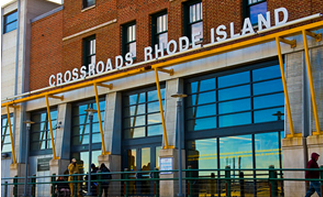
Crossroads repeatedly denied in emails to GoLocal that Street Sight’s reporter reached out, but Davis said he spoke to Crossroads’ John MacDonald on the phone and MacDonald complained about the paper doing the story and refused comment. MacDonald serves as the Vice President of Adult Services for Crossroads.
The Street Sight story also quotes the homeless who claim that "showers, sinks, and air conditioning were often broken and not repaired for months, and that bed bugs were rampant throughout the shelter.”
Campellone said, “In fact, Crossroads works very hard to provide a safe environment for our clients. Experiencing homelessness, however, is extremely traumatizing. In addition to homelessness, the vast majority of our clients have also experienced other sorts of emotional and physical trauma. As many as 40% report mental health issues. As a result, many of our clients don't feel safe anywhere, never mind in shelter. Stabilizing them in housing, which is our mission, is a critical first step in helping them rebuild their lives."

The following is the article as published by Street Sights.
Crossroads Rhode Island is the largest organization in the state serving individuals and families that are experiencing homelessness. With an annual budget of over $10 million, their mission is “to help homeless or at-risk individuals and families secure stable homes” with an emphasis on “safety, respect, and effectiveness” for clients.
Crossroads, according to information from their website, helps shelter over 2,000 people every year. Instead of conditions of safety and respect, however, many tell stories of unclean and dangerous living conditions, and disrespect from Crossroads staff.
Street Sights investigative reporter Peder Schaefer interviewed a dozen people at Mathewson Street Church about their experiences with living at the Crossroads shelter on Broad Street in Providence, and the Harrington Hall men’s shelter in Cranston. Additional interviews took place at other locations.
DISRESPECT AND UNCLEANLINESS
“Just the bugs themselves,” said Mario who has been homeless for two years, living off and on at Crossroads. “I don’t care much for them, and the way (Crossroads employees) treat you. They don’t treat you like a human person the way they talk to you.”
“Honestly it’s sad because they have the homeless who actually live there sleeping like dogs on the floor,” said Cassandra and Jesus, who decided to start sleeping outside after they got sick of Crossroads. “They treat us like animals,” they said. "You don’t get the respect you’re supposed to be getting and they will throw you out in the snow”
On their website Crossroads defines safety as “promoting an environment free from physical and emotional harm and ensuring a feeling of security and comfort to all.” Multiple interviews with those who have lived in Crossroads shelters display a different situation. “I’m just amazed at how they’re supposed to be helping people out, they’re supposed to be a place you can turn to,” said Lenny. “I used to be a wealthy lawyer, very well educated, and I’ve seen what they do to people and how they treat people at the shelters. It’s inhuman almost. I mean some of the shelters and Pastor Jack do a great job, but I never saw this side of the world until I lost my son, had a breakdown, and now I’m here.”
“For a lot of people, this is all they know about human nature. It’s so sad.” Lenny went on to say that he doesn’t blame the staff or even Crossroads itself. “A lot of the staff are very kind people,” Lenny said. “I think they’re limited though by a lack of resources. They have a lot to deal with. They don’t have great security, and they’re dealing with a lot of people who are mentally unstable. These people are being paid minimum wage to deal with those who fight, carry knives. It’s not really Crossroads’ fault.”
Harrington Hall is a men’s shelter run by Crossroads in Cranston, Rhode Island with a capacity of 112. Street Sights has received multiple complaints about a staff member there who many men are afraid of. One man reported witnessing a staff member forcibly shove a man against a wall. The worker is a large man and reported as being very loud and sarcastic in his manner, infringing on the body space of others with his large frame and ejects those who argue back. “He is mean and cruel,” another said. “My leg was hanging off my bunk while I slept and he kicked it.”
One man told of how he and the other men at Harrington Hall became physically ill. They were experiencing headaches, nausea, red eyes and sore throats as a result of the overuse of a cleaning chemical containing ether. In addition, the HVAC filters were in need of replacing which worsened the situation. He reported the issue first to Crossroads and he said that nothing was done. Repeated attempts to get Crossroads to remedy the situation were fruitless. The situation got corrected only after contacting the board of health and other agencies.
“The corruption starts inside the hall with the staff members,” said this man, who was only able to correct the health issue after contacting outside agencies. “There are some staff members. He said who really do care and will try and get close with the clients to help them and get to know them, but they are told by management not to get close with the clients.” He said, “They need to hire people with a background of being homeless; having had the experience of being without. When you go through that adversity, you’re the best teacher and role model.”
Many others reported that they do not feel safe in the shelters, fearful that their belonging will be stolen. They are afraid of the many people using alcohol and drugs in there.
Many allege that substantial amounts of drug dealing takes place in the “Towers” at Crossroads as well as on the sidewalk outside.
One man said, “I am clean now but it used to be a ‘no-brainer’ as to where to buy my drugs; just go to Crossroads!” Many state that the predominance of all of the using and dealing is reported to Crossroads security who, they say, “know what’s going on but look the other way.”
There are also concerns with how the facilities within the main Crossroads shelter on Broad Street are maintained. Many of the clients Street Sights talked with, and Mario confirmed, said that showers, sinks, and air conditioning were often broken and not repaired for months, and that bed bugs were rampant throughout the shelter.
Mario said that it took four months for a sink to be repaired in one of the sleeping areas at Crossroads main building on Broad Street. The showers, he went on to say, are unreliable, sometimes not working and seldom cleaned and sanitized. In addition, there is currently a dangerous situation which is a shower designed for the handicapped that is out of order; a very unsafe condition.
“It’s unsanitary,” said Diamond Madsen, a caseworker at another agency, who used to be homeless. “You didn’t clean the beds like you supposed to. You didn’t clean the showers like you’re supposed to. Constant issues of bedbugs, constant mice… It’s not a safe place. If I became homeless again I would not go to Crossroads. I’d go to the [Providence Rescue] Mission, or I’d sleep outside.”
Financial data from publicly available records show that Crossroads has a large amount of funds to pay for services for clients, but that large portions of these funds go into paying employee salaries instead of towards repairs within the shelters. Financial data indicate Crossroads spent over $12 million in 2017, the last year returns are available, and that over $8 million of those expenses went towards salaries and salary related expenses, such as payroll taxes and pensions, for Crossroads employees.
Karen Santilli, the president of Crossroads Rhode Island and the highest-salaried employee, was paid $212,270 in 2016. Based on a 40 hour work week this boils down to $1.70 per minute. Other high earners are Laurie Devlin, the Chief Financial Officer, who was paid $147,750, and Michelle Wilcox, the Chief Operating Officer, who was paid $185,237.
In contrast, in 2002, no employee at the organization was paid over $100,000. The president at the time, Anne Nolan, made $92,400, and Laurie Devlin, then the director of finance, now the Chief Financial Officer, made only $60,000 a year. Devlin’s salary has increased over $80,000 since 2002.
A closer look into the finances also reveals the relatively low amount of money spent on repairs and maintenance at Crossroads, which, following a lack of respectful interactions, are the number one concern for most clients. In 2016 $107,800 was spent on repairs and maintenance of all Crossroads properties, including Harrington Hall and the main Crossroads location on Broad Street.
That means less than one percent of all the money Crossroads spent in 2016 went towards repairs and maintenance. More money went towards the salary of one person, President Karen Santilli, then towards repairs and maintenance across the entire Crossroads system.
Crossroads is a flawed organization. They help hundreds and hundreds of Rhode Islanders every year who have fallen on tough times, getting them a warm place to stay, access to a bathroom, and the chance to find rehousing and jumpstart their lives again. Behind the veil of legitimacy, however, driven by the quantity of those helped, lies a darker aspect. The unclean shelters, the safety hazards, the excessive salaries, and some demeaning staff.
Crossroads stature as the leading homeless care organization in the state – as indicated by elite board members from government and industry – has insulated them from the concerns the homeless have about the quality of service Crossroads provides.
“They want to keep you as a statistic,” said Madsen. “It’s like a warehouse now. No one should be in a warehouse. These people breathe, they deserve to have a chance. Winter time is coming, people are scared now. They don’t know where they’re gonna sleep. Hopefully there will be a grate where the heat’s coming out, and they’ll be able to sleep right there, but if they don’t have that they’re scared. They’re trying a lot just to have one night of peace out in these streets.”
Crossroads administration declined to comment.