


Whitcomb: Exhibitionist Wedding; Muddied Protest; Fearful Flattery; New York Fever Dream?
Robert Whitcomb, Columnist
Whitcomb: Exhibitionist Wedding; Muddied Protest; Fearful Flattery; New York Fever Dream?

"Too Darn Hot” from “Kiss Me, Kate” - CLICK TO VIEW
GET THE LATEST BREAKING NEWS HERE -- SIGN UP FOR GOLOCAL FREE DAILY EBLAST
“People in this town drink too much
coffee. They’re jumpy all the time. You
see them drinking out of their big plastic
mugs while they’re driving. …
“Everyone’s wide awake but looks incredibly
tired.’’
From “A New Lifestyle,’’ by James Tate (1943-2015), a Pulitzer Prize-winning poet who lived in Amherst, Mass., where they do drink a lot of coffee.
“What a torture to talk to filled heads that allow nothing from the outside to enter them.’’
-- Joseph Joubert (1754-1824), French essayist
“I’ve got some s--t I’m conservative about and some s--t I’m liberal about. Crime—I’m conservative. Prostitution – I’m liberal.’’
--Chris Rock (born 1965), American comedian, actor and filmmaker.
"How is it that we hear the loudest yelps for liberty among the drivers of negroes?"
-- English writer and scholar Samuel Johnson (1709-1784), in his 1775 pamphlet “Taxation No Tyranny,’’ in which he cited the hypocrisy of some American revolutionaries.
A Glorious Fourth to all, with black powder, roman candles, cold beer, hot dogs, parades and all. Can you find the time to read the whole Declaration?
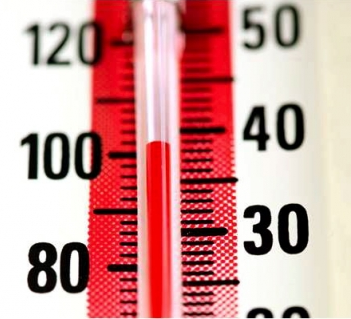
Movie-theater managers and restaurant operators heavily touted that they had air conditioning. Go swimming (but maybe it was too cold in the ocean), go to Howard Johnson’s (look it up) or go to the movies!
But summers are longer these days, and window air conditioners are lighter and cheaper than they were back in the ’60s. So now most people consider A/C, once a luxury, as a necessity.
I’ll never forget the record New England heat of Aug. 2, 1975, when it reached 107 F in a few places. My wife and I, who had gotten married a week before, were driving back from New Castle, N.H., to Philadelphia. The sides of the roads were lined with stalled cars and steaming radiators. (Cars are more reliable now.) But we were in an old VW bug; this species had air-cooled engines. So we were able to press on in our car, which was stifling even with all the windows open.
When we got to steamy Center City Philly, a phone message said that my father had had a heart attack driving to his office in Boston in his non-A/C- equipped car. He died the next day in the local hospital he was able to drive to. (His death was one reason we moved to Providence the first time.)
A/C revolutionized American politics by making the generally right-wing South easier to live and work in. The populations of the old Slave States (unfortunately?) surged, along with their political power. And such tropical cities as Singapore wouldn’t have become so big and important without air-conditioning.
But air-conditioning also demands that vast quantities of global-warming fossil fuel be burned to power electricity-generating utilities, and A/C directly puts out heat into the air.
It used to be jokingly asserted that Congress did less damage when Washington, D.C., was much less air-conditioned than now. Call it heat-related lethargy as a preventive against too hastily and superficially considered legislation, such as what we’re getting now.
But given how many lives A/C saves, it’s awkward to complain much about it.
“Some say the world will end in fire,
Some say in ice.
From what I’ve tasted of desire
I hold with those who favor fire.
But if it had to perish twice,
I think I know enough of hate
To say that for destruction ice
Is also great
And would suffice.”
--“Fire and Ice,’’ by Robert Frost (1874-1963)
The grotesque, exhibitionist wedding celebrations in Venice of Amazon’s Jeff Bezos and his wife, celebrity journalist Lauren Sanchez (these days she’s mostly famous for being famous and for the extensive cosmetic surgery she seems to have had) have outraged Venetians. They feel the couple has tried to, in effect, take over the gorgeous wet city for a few days of orgasmic narcissism. The couple’s festivities, symbolizing ever more extreme and arrogant wealth even as most people in the West see themselves as getting poorer, are symbols of our Gilded Age.

Indivisible’s June 14 anti-Trump rally at the Rhode Island State House failed, if meant to appeal to the majority of the population. Screaming, chanting and slovenly leaders, obscene signs and, worst, dragging in too many issues that weren’t germane to the two central threats posed by the Trump regime – tyranny and corruption. “Free Palestine!’’, “Trans Rights!”, “Abolish ICE!” Organizers spread themselves far too thin.
Reminder: Free Palestine means “end Israel” to many. And abolishing ICE would be an invitation for more illegal immigration, making it harder for the Border Patrol to do its job. The problem isn’t ICE per se but rather how the current regime is using it.
xxx
Speaking of trans rights, much as I dislike the current right-wing-controlled U.S. Supreme Court, I agree with its recent decision to uphold a Tennessee law banning puberty blockers and hormone treatments for minors who think they are, or would like to be, members of another sex than the one they were born with. Young people all too often are confused about their identity. It seems only common-sense to put off to adulthood what could be irreversible bodily changes. Then, it’s their body to do what they want with.
And, as I’ve said before, letting someone who was born male play on females’ teams is unfair.
At the most, only about 1.5 percent of the U.S. population is trans, but you’d never know it from the hysteria of some people who act as though being trans is catching.
Comforting Devices
Why is it so difficult to enact gun-control laws even in “liberal’’ states such as Rhode Island. Of course, one obvious reason is that the majority of the current U.S. Supreme Court, often an extension of the gun lobby, ignores that the Second Amendment, which is badly punctuated, connects gun ownership rights to having state militias:
“A well regulated Militia, being necessary to the security of a free State, the right of the people to keep and bear Arms, shall not be infringed.”
The phrase “well regulated” is important! And earlier Supreme Courts backed common-sense gun laws over many decades.
Using gun ownership to assuage personal anxiety/paranoia is well entrenched in American culture, though having a gun is associated with a decrease in personal safety, e.g., suicide and domestic violence. At least part of the gun culture goes back to the frontier, when guns were mostly used for hunting. (I have a couple of very old shotguns used for that purpose.)
A long-time, if not close, friend of mine, Bill Ruger (1939-2018), who ran the very profitable gun-making company Sturm, Ruger & Co., wryly told me that many of his customers anxiously stocked up on guns before the 2016 presidential election for fear that a Hillary Clinton administration would get new controls enacted. Sales plunged after her defeat by the gun-lobby-supported Trump. (Bill, I should say, was one of the smartest and funniest people I’ve ever known, albeit somewhat mysterious to many.)
Anyway, Rhode Island, in its most publicized, if not effective, gun legislation in a long time, will now ban the sale and manufacturing of assault weapons (which are engineered for war – to kill as many people as possible as fast as possible). But the law will mostly be a joke since it won’t ban the use or possession of such licenses. Assault-weapon lovers can just drive to, say, New Hampshire to stock up. And the Supremes may well rule the Rhode Island law unconstitutional.
The mass shootings will continue, usually by young or middle-aged white men with chaotic right-wing opinions.
xxx
I wonder if and when Rhode Island will reconsider its devotion to marijuana sales. How many stoned people will we tolerate on the roads?
Good Use of Flattery
The thing to remember about Donald Trump in his international forays is that his extreme narcissism/id can sometimes defeat the national interest. It’s all about presenting himself (with his deep layer of insecurity) as a gigantic world-historical figure. But this requires lots of lies and exaggerations, be it about how much damage was done by our bombing of Iranian nuclear sites or his perverse relationship with Vladimir Putin. (How much of that relationship is based on blackmail, fear, money or envy of dictators?)
Interestingly, Trump never notes that Iran, which has long been his idea of U.S. foreign public enemy No. 1, is a close ally of fellow tyrannical Russia. And our orange emperor still refuses to send military aid to Ukraine, even though it’s in effect helping to defend the West from Putin’s vicious expansionism, and as the dictator uses physical sabotage and cyberattacks against some NATO member nations, which are officially, anyway, our allies.
Getting Trump’s agreement (often fleeting) on major issues requires that other leaders constantly flatter him, noting his brilliance and charm, even if he insulted them a week before.
Such flattery apparently worked at the NATO summit last week, when Trump, for a change, clearly supported the organization, though avoiding criticizing the fellow he often just calls “Vladimir’’. That, and his oft-confusing threats to leave NATO, helped push the alliance’s members to promise to boost defense spending to 5 percent of GDP by 2035 (hmm…) to ward off more Russian aggression. Good for him. American presidents have long pushed Europeans to spend much more on their own defense.
America, for its part, spends about 3 percent of GDP on defense.
But the European push to boost defense was mostly caused by the fear spawned by Putin’s bloodthirsty invasion of Ukraine. It’s obvious that conquering Ukraine would be followed by attempts to subjugate first, the Baltic Republics, and then other parts of Eastern Europe. Many Europeans are rightfully very scared of fascist Russia.
But Spain will probably continue to avoid that full commitment, and who knows what Putin-friendly Slovakia and Hungary will do? The last two should have been tossed out of NATO and the European Union (which heavily subsidizes them) long ago. And, again, 2035 is long time by which to hit 5 percent.
How much the U.S. spends on defense:
Meanwhile, Trump and his valets have gotten rid of many professional national-security and diplomatic staffers and replaced them with ignorant and incompetent suck-ups.
The great musical leader’s take on war:
https://thehill.com/blogs/blog-briefing-room/5367873-trump-posts-video-with-bomb-iran-song-amid-ceasefire/

Can you have a socialist city in a hyper-capitalist country, especially when that city is America’s financial capital? Well, no.
But the victory of the very energetic and maybe charismatic state Assemblyman Zohran Mamdani, who calls himself a “democratic socialist,’’ in last Tuesday’s New York City Democratic primary does bespeak a desire by many Democrats for a far more forceful challenge to America’s right-wing plutocracy and ever-widening income inequality. His main foe was the smart but sometimes thuggish former governor Andrew Cuomo, who may again be his chief foe in November if the former governor runs as an independent. But the most impressive candidate in the primary by background and achievement was city Comptroller Brad Lander.
Mr. Mamdani, a Muslim in a city that’s been called the real Jewish capital of the world, has promised to use his power to do such things as “stop masked ICE agents from deporting our neighbors,” make buses “fast and free” and to freeze the rent on many housing units. Among other challenges, he’d have to face pushbacks from state government, and he has virtually no executive experience. The state government is unlikely to approve the higher taxes on the rich needed to pay for his programs. And what happens when a recession arrives and tax revenues plunge?
It’s very unlikely he’ll fulfill his biggest promises if elected in the general election in November. Like Democratic Socialist Bernie Sanders, while he was mayor of Burlington, Vt., he’d have to make many, many compromises. Thus, the hysteria about his rise, especially from Gotham’s powerful billionaire class, is excessive.
Meanwhile, the word for Democrats around America is to copy Mamdani’s energy, if far from all his policies.
Showoffs
This past week’s grotesque, exhibitionist wedding celebrations in Venice of Amazon’s Jeff Bezos and his wife, celebrity journalist Lauren Sanchez (these days she’s mostly famous for being famous and for the extensive cosmetic surgery she seems to have had) have outraged Venetians. They feel the couple has tried to, in effect, take over the gorgeous wet city for a few days of orgasmic narcissism. The couple’s festivities, symbolizing ever more extreme and arrogant wealth even as most people in the West see themselves as getting poorer, are symbols of our Gilded Age.
Will growing anger about some of the hyper-rich, some of whom evade most taxes and most of whom increasingly fence themselves from everyone else, eventually lead to social disorder?
xxx
In a wasteful country, it was refreshing to read that at the recent American Institute of Architects conference in Boston much emphasis was put on the need to focus on retrofitting buildings in order to do such things as making them more energy-efficient, turning office space into housing, saving money and reducing construction disruption around the buildings. This is instead of replacing them with some sexy new design of a building, perhaps by a “starchitect.’’ Practicality and sustainability are getting more and belated attention, though it will probably undermine the sense of architects as artists, though most are artists in varying degrees.
Maybe Like People You’ve Met
Richard Bausch is a master of the short story, as you can see in The Fate of Others, a collection of tales about at least superficially “normal’’ and mostly middle-class people facing quandaries they never expected, traumas and joys from their deep past and how a changing culture (up to almost this year) changes us as individuals. Indeed Mr. Bausch is a sort of cultural historian. But then, born in 1945, he has seen a lot. He uses that experience and an acute ear and voice for storytelling with empathy, irony and tight exposition. His sometimes piercing, sometimes funny, sometimes sad dialogue vividly dramatizes characters, mostly middle class, whom you may well long remember. You might react as if you already knew some of them.
My favorite story was about a young woman moving back to the house of her parents in Memphis after divorcing her creepy Italian husband and wreaking havoc.