


Whitcomb: Give the Trail a Try; Russia’s Vast Lost Opportunity; Krill Coolers
Robert Whitcomb, Columnist
Whitcomb: Give the Trail a Try; Russia’s Vast Lost Opportunity; Krill Coolers

-- Alain de Botton (born 1969), British philosopher
GET THE LATEST BREAKING NEWS HERE -- SIGN UP FOR GOLOCAL FREE DAILY EBLAST
“But who’s who?
Who made it,
One side or the other?
Bad neighbors make good fencers.’’
-- From “Spite Fence,’’ by Richard Eberhart (1904-2005), a New Hampshire-and-Maine-based poet and teacher
“September fattens on vines. Roses
flake from the wall. The smoke
of harmless fires drifts to my eyes.
This is plenty. This is more than enough.’’
-- From “September Song,’’ by Geoffrey Hill (1932-2016); the full poem is disturbing.
Ah, the scents of September, which tend to evoke a soft melancholy and bring back distant memories (especially of school), as does spring with its very different smells.
As vegetation dies and is decomposed by fungi, chemical reactions create a seasonal smell, as does the exhalation of gases from newly fallen leaves. And smell can have a big impact on emotions.
It’s too bad that most Americans apparently see the Labor Day holiday as signifying the end of the summer because the best summer weather comes in September. We’re such lemmings!
I love the comic look of huge sunflowers blooming along sidewalks, like clowns lined up.
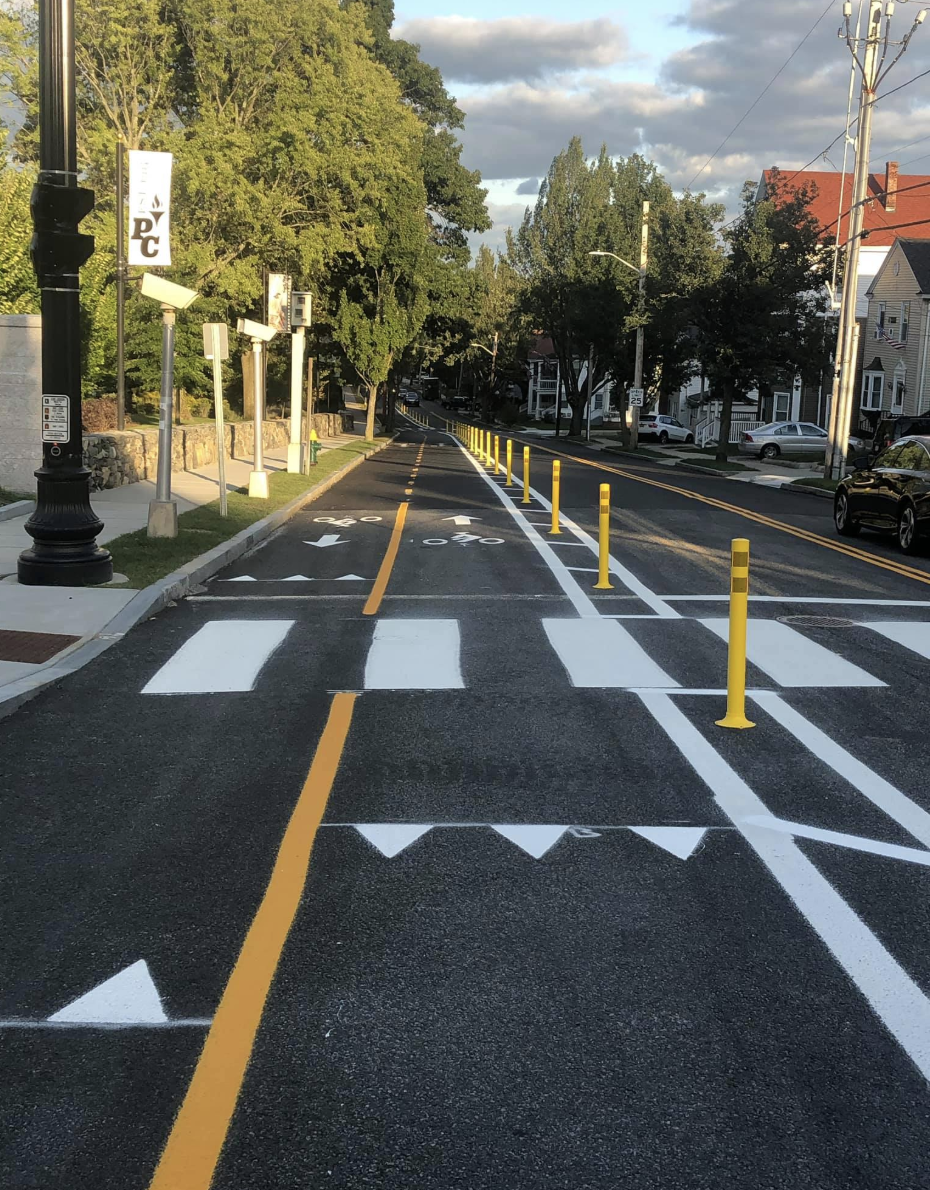
The controversy over setting up a bike and walking lane (sometimes called an “urban trail”) in a commercially successful and charming stretch of Hope Street on Providence’s East Side has raised the inevitable issue of parking, which upsets some merchants and shoppers alike.
See: https://pvdstreets.org/hope/
The proposal would replace some of the street-side space now allocated to parked cars. Big parts of the fight come both from too many Americans’ unwillingness to walk more than a few feet from their cars to shop (and you can see the results in their physiques) and residential neighbors not wanting cars crowding nearby streets.
This gets me to think that the strip needs some sort of attractive (faced with brick or wood?) parking garage to take off some of the pressure.
Meanwhile, a big problem with bike lanes in some places is the failure of bicyclists to learn and obey basic traffic rules, e.g., signaling, and of police to enforce them. Time for Providence Police and other officials to work on that, including with signs and hefty fines!
Some of the local merchants want the city to call off a trial of the trail set for Oct. 1-8. No, the experiment should go forward! Let’s see how it unfolds and then either drop the idea or, if the project is to become permanent, adjust as needed. Of course, any change like this brings out Nimbyism and anxiety in people who have operated in a setting that has changed relatively little over the years.
But read what’s happened elsewhere:
https://thesource.metro.net/2017/11/20/biking-is-good-for-business/
A Different Mission
As we head deeper into the political campaigns, beware of anyone running for a government executive job who promises to manage their area of responsibility “like a business’’. The mission, duties and constituencies of government are not those of for-profit businesses. The main mission, in brief, is to “promote the general welfare,’’ (my emphasis) as cited in the U.S. Constitution.
Having said that, I also think that some experience working for a for-profit business of any size is an asset for an elected government official so that he or she can better understand our economic system’s relationship to business. (By the way, I’ve been a small businessman myself.)
Often when an aforementioned campaigner talks about managing a part of government “like a business” the implication is that business is less corrupt than government. In fact, it’s the other way around, as I found watching large, medium and small businesses as a business editor at three big newspapers. One function of government, after all, is to protect us from commercial fraud.
Anyway, let’s admire most of those who run for office in order to perform public service. Unlike most of us, they’re willing to stick their necks out.
xxx

Folks thinking about sports stadiums built with tax money would do well to put this link in their browser and hit it every week or so to read updates.
https://www.fieldofschemes.com/
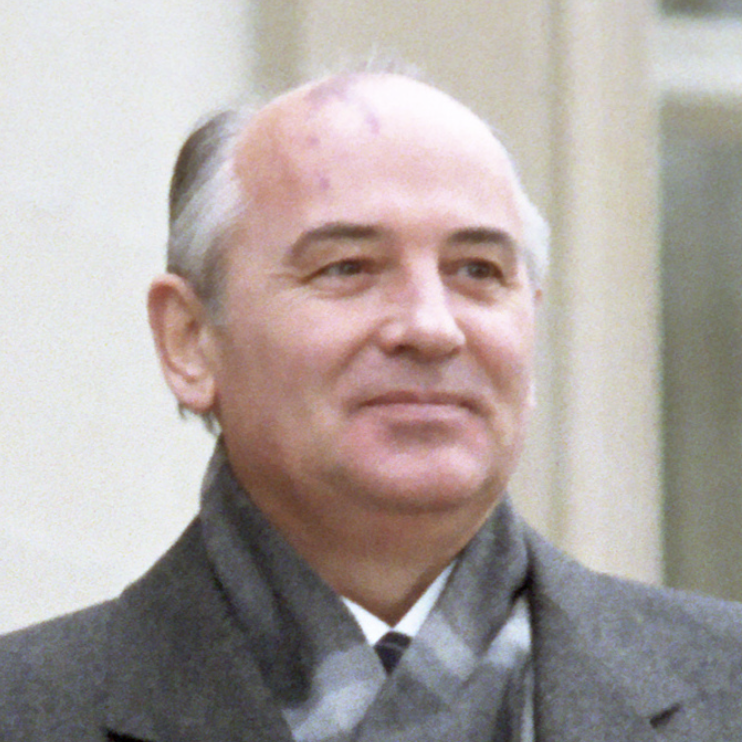
“Because he did not understand what was happening, Gorbachev also did not prepare his compatriots for major political and economic change. He did not help design democratic institutions, and he did not lay the foundations for an orderly economic reform. He removed the old system, put nothing in its place, and then seemed shocked and surprised when a Mafia state arose to fill the vacuum….
“Although none of the forces he accidentally set in motion prevented Russia from turning back into a tyranny, the end of Soviet Communism could have been far more bloody, far more violent, and far more like the current war in Ukraine. If someone else had been in charge, it might well have been.’’
-- Historian and journalist Anne Applebaum in The Atlantic
The death of Mikhail Gorbachev, the last Soviet leader, at 91 reminded us of the tragic missed opportunities that followed the collapse of the Soviet Union, and Gorbachev’s exit from power, at the end of 1991. Many historians and economists believe that Russia’s move into capitalism should have been done far more slowly. That might have constrained the corruption and chaos that happened in the ’90s, producing great economic distress for the average Russian, and lessened the chances that the country would slide back into tyranny. But then, despotism has always been Russia’s default position.
Too many Western officials and arrogant, know-it-all economists encouraged Russia to move abruptly from a stagnant communism into what became a “capitalism’’ in which thieving, politically connected oligarchs ruled the roost, inflation ran rampant and most people saw their standard of living fall for years.
The West could have, and should have, done more to prop up that tortured nation in those early post-Communist years to ease its way to a true market economy and stable democracy.
xxx
It’s dangerous being a big Russian businessman. Lots of “suicides.” They should certainly stay away from windows.

It looked like the long-delayed power line to run from hydroelectric generation in Quebec (comfortably close to us) into the New England grid was kaput after a legally dubious referendum in Maine blocked the line. The project is called New England Clean Energy Connect.
But the Maine Supreme Judicial Court last Tuesday held that important sections of the law enacted by the referendum were unconstitutional because they deprived the company building the line -- Avangrid -- of rights that had already been legally vested before the vote. In short, the justices opposed the retroactive nature of the referendum.
Now the case goes back to a lower court for review.
Note that well-funded opposition to New England Clean Energy Connect includes such still fossil-fuel-heavy companies as NextEra Energy, which naturally see the power line as threatening their businesses.
The story is far from over, but in a world of accelerating global warming and countries held hostage by corrupt dictatorships financed by natural gas and oil, the Maine decision is a glimmer of good news.
In other energy news –for the long term –accelerated by Putin’s blood-soaked invasion of Ukraine and his ongoing energy blackmail of Europe, Denmark will increase its wind-power capacity in the Baltic Sea to 3 gigabites and connect it to the electric grid of Germany, which has Europe’s biggest economy. Denmark’s wind-power capacity is now 1.5 gigabites and Germany’s is 1 gigabite.
But it won’t be ready until 2030. I wonder if such projects will just encourage the thugs in the Kremlin to step up their fuel extortion while they still can.
Meanwhile, it’s good news that talk is intensifying within the European Union about getting rid of its unanimity clause, which has made it easier for pro-Putin countries like neo-Fascist Hungary to dilute efforts to stop Russian aggression and promote E.U. energy independence. The clause mandates that all members must approve certain policies. For that matter, some in the E.U., which heavily subsidizes Hungary, argue that that nation should lose its membership.
xxx
You never know! In a recent paper published in Nature Communications, a group of University of Toronto researchers suggest using the sort of pigments that those tiny, shrimp-like creatures in the ocean called krill use to protect themselves from the sun. The researchers are developing a synthetic version of those pigments that could do something similar for building facades, perhaps reducing some buildings’ energy use by more than 30 percent.
Hit this link for the article:
https://www.nature.com/articles/s41467-022-31527-6

Red States such as Texas like to tout their allegedly low tax burden, but if you burrow into the data, it turns out that the tax rates are not low for low and middle-income folks but only for the rich (who run these states). A look at Texas and California’s state and local taxes as a share of family income by the Institute of Taxation and Economic Policy provides some fodder.
California, which Texas GOPQ pols like to denounce for its high taxes, actually has lower tax burdens for the poor and middle class than Texas, which, not coincidentally, also has very bad public services.
I suspect that researching other low-tax-bragging Red states would come up with similar results.
https://www.chron.com/news/houston-texas/article/texans-pay-more-taxes-than-californians-17400644.php
And a reminder of how Blue States subsidize Red ones:
Saving Trees
“Chestnuts roasting on an open fire’’
-- From “The Christmas Song’’
As I’ve written here before, the American chestnut tree, which is both gorgeous and very useful (food, furniture, etc.) to humans and other species, and was once very common, has suffered for decades from a deadly fungus, brought, natch, from abroad. But researchers at a State University of New York research station in Syracuse are working with somewhat controversial genetic modification to make them resistant to the fungus This could have big implications for saving other tree species in the Northeast, though such genetic manipulations unsettle some people.
Here's the latest story on this:
The Jungle of Friendship
“Tis the privilege of friendship to talk nonsense, and to have her nonsense respected.’’
-- Charles Lamb (1775-1834), English essayist
The essayist, critic and editor Joseph Epstein’s book Friendship: An Expose, an elegant and often mordant look at mostly modern friendship, but with references back as far as ancient times, inevitably got me thinking of my own friendships and how they arise, fade and sometimes (but rarely) revive.
There are the close palships of early and middle youth that usually disappear if one of the friends moves to another town. I think of one I had in my hometown; he was probably my best friend for two or three years. He was and, I’m told, is still very bright and engaging. Although he lives only about 40 miles away – in the same town we grew up in -- I haven’t met with him, or even talked on the phone with him, since about 1963, though he invited me by email a couple of years ago to a reunion of schoolmates, which I declined. I have no desire to replay my boyhood, even if only for a couple of hours.
Then there are the college friends, very few of whom I’ve kept up with, mostly because of geographical dispersal. But a couple I got to know well after college, and I’m still in touch with them.
Of course, many of us have had some co-workers become personal friends, though intrinsic conflicts of interest can undermine such relationships, and shop talk can become tedious.
The things that most hold together my -- and I’d guess most folks’ -- friendships over the years are shared long-term interests and, in a general way, a similar view of the world, a sense of humor and the absurd, and a tolerance of each other’s innumerable flaws.
I’ve almost never ended a friendship over politics and have had plenty of friends from the right and left, some quite close. Sadly, Trump changed that: Two of my oldest friends, one of them by some measures, my best friend, embraced the traitor/kleptocrat’s demagoguery, lies, cruelty, and bigotries, But the hints that sort of thing might happen appeared years before.
I sadly but permanently ended those ties, not over policy disputes but over character. Yes, I’m no saint myself….
Finally, as Mr. Epstein notes, maintaining treasured friendships requires ongoing effort. If one of two friends (perhaps for good reason) is unwilling to make that effort, it’s time to close up shop.
And after you’re 60, your friends expire at an alarmingly fast rate. You had better develop some younger ones. Old age can get very lonely. (And make sure that your physician, dentist and lawyer are younger than you are!)
Anyway, Mr. Epstein has provided a remarkably useful and often amusing guidebook for navigating the ambiguities, pleasures and irritations of making and maintaining friendships and calmly accepting the end of some of them. I was, however, surprised by the many tautologies and straight-out repetitions and logical inconsistencies/contradictions in the work, considering Joseph Epstein’s long prestige as a writer.
He writes that “the first rule of the art of friendship, I have come to believe, is that not all friendships need to be deepened,’’ while writing at the end of the book
“With friendship, the two contradictory ideas are these: friends can be an immense complication, a huge burden, and a royal pain in the arse; and second, without friendship, make no make mistake about it, we are all lost.’’
By the way, Mr. Epstein’s book Snobbery: The American Version is a hoot.