


Whitcomb: Good Eating, Etc.; Absurdly Slow; $4,000 per Hire; Chrono Confusions; War Correspondents
Robert Whitcomb, Columnist
Whitcomb: Good Eating, Etc.; Absurdly Slow; $4,000 per Hire; Chrono Confusions; War Correspondents

“I left that town long ago for war and folly.
Phylogeny rolled to a stop at the old Peabody.
I still hear the dishpan bell of the yellow trolley.’’
-- From “The Elm City,’’ by Reed Whittemore (1919-2012), American poet. He served twice as U.S. poet laureate. “The Elm City’’ is New Haven, where he grew up. (Not many elms left.)
GET THE LATEST BREAKING NEWS HERE -- SIGN UP FOR GOLOCAL FREE DAILY EBLAST
xxx
“The most happy marriage I can imagine would be the union of a deaf man to a blind woman.’’
-- Samuel Taylor Coleridge (1772-1834), English poet
Kelp is great stuff – as highly nutritious food, as a thickener and sweetener, for cosmetics and as a fertilizer. It is also a weapon in the battle against global warming: It absorbs carbon dioxide more effectively than do trees. And it takes in the excessive nutrients that wash into the water from chemical fertilizers (ah, those lawns and golf courses!) and other manmade stuff. Further, it’s harvested in the winter, and so less likely to draw the well-lawyered opposition of, say, affluent people with summer places along the shore.
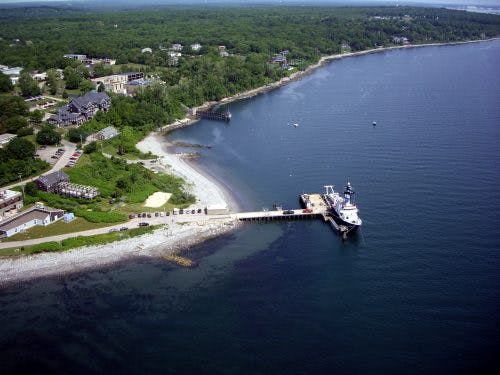
That gets me thinking about the University of Rhode Island’s Bay Campus, in Narragansett, home of URI’s internationally respected Graduate School of Oceanography. The Bay Campus needs major repairs and additions if the school is to continue to do the world-class research (with economic-development rewards from that) that, with teaching, is central to its mission.
Gov. Dan McKee has proposed a $50 million bond issue for improvements at the Bay Campus for voters to decide on next November. But URI says the full cost of the needed work is $157.5 million; there’s hope that state legislators will back a bigger amount than $50 million. They should: The School of Oceanography has a major part to play in the state’s future, environmentally, economically and otherwise. That includes defense, energy and, yes, aquaculture.
Hit this link to read the ecoRI News story:

It took a year plus 45 days to build the Empire State Building, the construction of which started on March 17, 1930, when equipment was not nearly as good as it is today.

Yikes! Commonwealth Magazine reports that the administration of Massachusetts Gov. Charlie Baker is offering for-profit and nonprofit employers $4,000 for “each new worker they hire this year’’ as a way of starting to close the pandemic era gap between “available jobs and available employees.’’ The administration estimates that 85,000 fewer employees are in the state’s workforce now than before the pandemic, with an estimated 200,000 positions open.
The magazine says that the goal of the “ HireNow program is to give employers an incentive to recruit and train workers whom they normally would not bring in for an interview because of their lack of skills.’’
This sounds like something that Rhode Island should at least consider. God knows, the state needs far more trained people to enter and re-enter its workforce. Indeed, the lack of well-trained people is probably the state’s biggest economic problem.
To read the article, please this link:
xxx

xxx
There’s a funny and maddening article in the March 28, New Yorker magazine titled “Five O’Clock Everywhere: Retirement the Margaritaville Way,’’ about a Florida retirement community where devotion to the pursuit of fun, and not much else, reigns, subsidized by “our ramshackle system of interstate tax arbitrage.’’ It reminded me again what an economic parasite The Sunshine State is. But then, much of it will be permanently underwater even before Warren, R.I., and Newport’s Point Section.
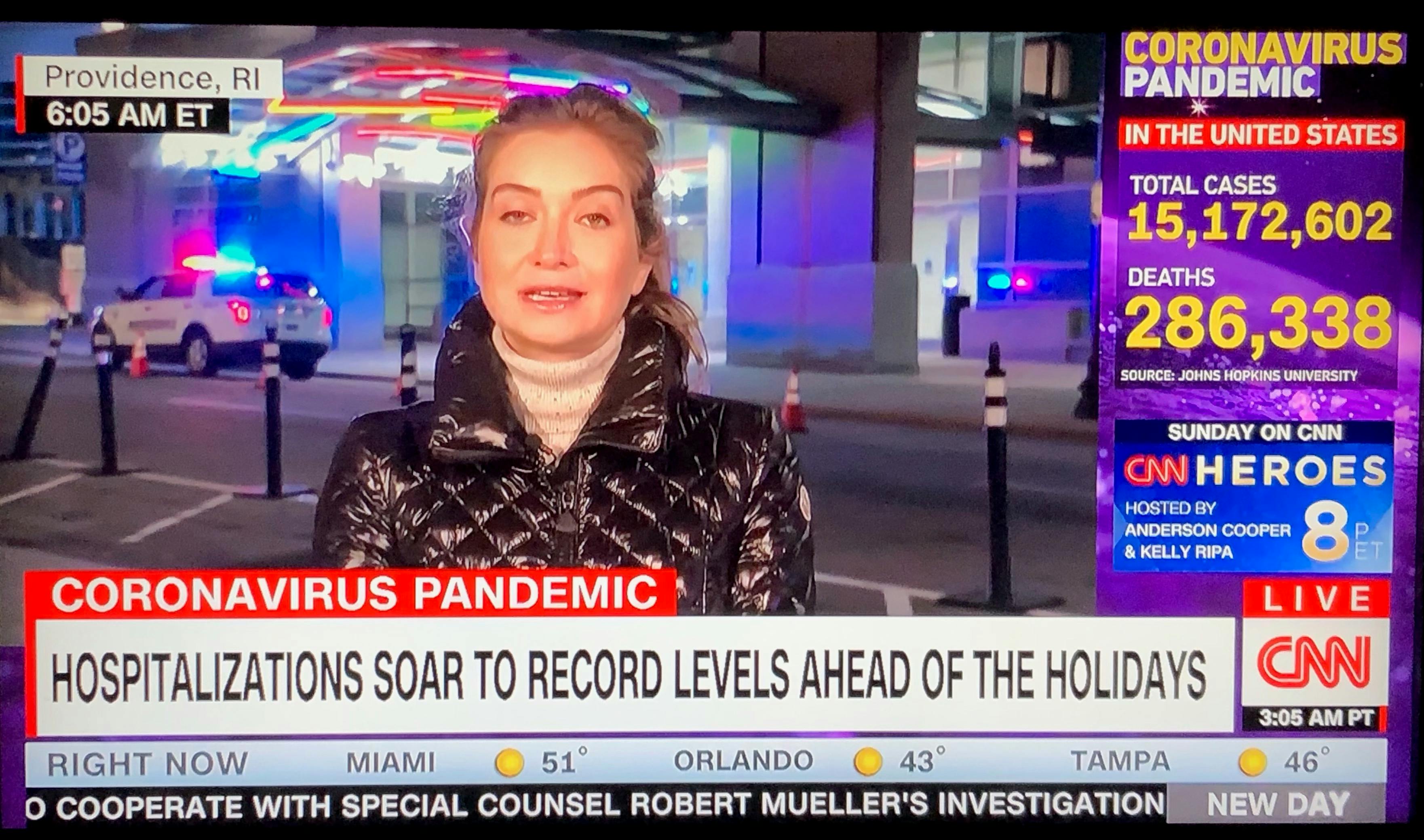
A column by Bloomberg’s Tyler Cowan struck a chord in these volatile days. He noted that the frantic/manic 24/7 electronic news media have dangerously speeded up our impatience. Not that long ago, we got most of our national and international news from newspapers and a few broadcast radio and TV networks. There was often a lag time between the event and its publicizing. Now, more and more of it comes from Twitter and other social media and from cable-TV outlets whose producers are under immense pressure to update every few minutes, with little or no time to weigh importance or show context, historical or otherwise. And the algorithms that media companies use make frequent looking at the news report, especially with the video, addictive.
Mr. Cowan noted:
“Once upon a time, news of war was lumpier and more periodic — people watched the nightly news or read the morning paper. They could turn on the radio and hear more frequent bulletins, but due to the absence of the Internet {World Wide Web} and other means of modern communication, there were far fewer reports from far fewer sources.
“The now-never ending stream of information shapes our perception of time. For many people, especially America’s news-intensive elites, it may make the war feel much longer than it actually has been.’’
We’ve all come to expect a nonstop flow of updates on big stories, and become very impatient when we don’t get it. But this often comes at the expense of understanding. Mr. Cowan cites as an example the claims that Ukraine is winning in Putin’s blood-drenched war, in which Russia’s military is far, far bigger than Ukraine’s. But it’s only been a little over a month since this outrage started. (Hitler occupied his part of Poland (his ally at the time, Stalin, stole the rest of it) in five weeks, which was considered very fast. The war against democratic nations that the gangster in the Kremlin launched long ago could continue for a long time. Has our damaged sense of time dangerously reduced the patience we need to face the long battle with autocracy?
Likewise, with COVID-19. There has been such a flow of news and opinion about it since it was declared a global pandemic a little over two years ago that many people see it as over and are ignoring measures needed to limit its next surge. The ceaseless flow of news about it has eroded our patience.
Another big way that the information flood has changed us is by making it more difficult to remember events. There are too many layers of high-velocity information, encouraging mass attention deficit disorder and memory loss.
To read Mr. Cowan’s essay, please hit this link:
Senate Circus
The clown show that was the Republican interrogation last week of U.S. Supreme Court nominee Ketanji Brown Jackson, a Black woman who’s a federal appeals court judge, was predictable. The white male far-right QAnonish extremists, accompanied by the ignoramus Marsha Blackburn, lobbing loaded questions at Judge Jackson were trying to appeal to their willfully ignorant base. Their heartland – the South -- has the lowest level of education, the highest percentage of social pathologies and the most intense poverty – and thus the greatest percentage of suckers for hour upon hour of fact-free demagoguery. Judge Jackson displayed impressive calm and patience in dealing with these phonies.
It’s remarkable how little legislating most senators do. They spend virtually all of their “working time” posturing in front of cameras and raising money from rich, influencing-seeking donors. But, hey, their voters don’t mind.
Those of us of a certain age remember similar senators touting racial segregation not that many decades ago. Still, it had its entertainments, such as the oily, hypocritical Lindsay Graham predictably refusing to shut up as he exceeded his allotted time and of course Texas’s fascist loudmouth nonstop narcissist (“Do you know who I am?!’’)Ted Cruz (whom even his fellow GOP senators detest).
(Some day we’ll learn a lot more about the smarmy Graham’s personal back story.)
Of course, they were heavy with the social issues – gay rights, abortion, “critical race theory,” guns, etc., that’s red meat for their base and a nifty distraction from the widening economic inequality, price-gouging monopolies and so on that GOP/Anon policies promote, with the public and hidden aid of big-time plutocrats. Then there were unsuccessful attempts to paint the judge as soft on child porn. Indeed, these Republicans are sex-obsessed.
Of course, they dragged in their presumption about the alleged intentions and views of the Constitution’s Framers back in the late 1780s, when, for example, slavery was generally seen as okay, women and most poor people weren’t allowed to vote and “the right to bear arms” (no assault rifles back then!) was wrapped around the idea of a “well-regulated militia”).
The most important things that we know for sure about what the public intellectuals and other leaders who created the Constitution wanted are the structure of government --- the legislative, executive and judicial branches – that they created, and that they recognized that as America changed the Constitution would have to be amended. They never saw the document as frozen in time, contrary to what the remarkably dishonest “originalists’’ imply. And the Framers had a deep mistrust, indeed cynicism, about human nature, especially people’s susceptibility to demagogues. (Not surprisingly, Judge Jackson, to try to spread oil on the hearings’ rough waters, took pains to sound as if she would dig deeply to try to ascertain what the Framers meant in the Constitutional Convention of 1787.)
But the demagogues on the Senate Judiciary Committee of course claim to know the views of the Framers, which, in their telling, perfectly comport with the positions of the GOP/QAnon Party.
Meanwhile, they trot out the alleged victimhood of religious (or at least self-proclaimed “religious”) people who suffer so much because, for example, gay people now have the right to marry. Well, if they don’t like gay marriage then they shouldn’t have one.
It’s all part of an effort to get votes by denouncing “wokeness” and “cancel culture’’ when in fact no one is getting cancelled except the likes of history teachers brave enough to suggest that slavery had long-term deleterious effects. And poor lambkins victimized white males still comprise most of America’s power elite. Thought experiment: Would you rather be born white and male or female and black; hetero or gay?
“Wokeness” about past and present discrimination doesn’t threaten The Republic, though it can sometimes be a bore and a cause of silly self-consciousness and timidity in some places, especially some colleges. The First Amendment still reigns.
As for dragging in the Bible in complaining about gay marriage and a host of other issues: I’ve always been happy that I had to read the whole thing (some of it very boring) in school while I was being brought up as a Christian who attended church most every Sunday. The Good Book, based on stories from thousands of years ago, and translated into English in widely differing ways, is filled with so many contradictions and confusions, beauty and beastliness as to make it a, er, uncertain guide for public policy. In any event, Christianity is not mentioned in the Constitution, and you’re free to practice or not practice, a religion, though if you plan to run for office, it’s a good idea to claim you’re a very devout believer.
xxx
Evan Neumann, charged with taking part in the Jan. 6, 2021 riot aimed at keeping wanna-be dictator and Putin servant Trump in office, has been granted asylum in Belarus, Russia’s satellite kleptocratic dictatorship. It should be a good learning experience for him, like most of the rioters, an angry white male.
xxx
A Very Perilous Occupation
A few words about journalism in dangerous places.
It’s impossible for a country to have freedom and democracy without a journalism free of government control.
As a news editor, reporter, and commentator for various publications for decades, both in the U.S and Europe, often focusing on international news, I’ve often been awed by the courage of foreign correspondents in general and war correspondents in particular. The latter have a higher death rate in conflict zones than soldiers. They take huge chances to bear witness to the horrors of war and tyranny. The corrupt dictatorships that are the cause of most wars single out journalists for killing. Tyrants want to keep the outside world from knowing the extent of their brutality, and seek to scare away and/or kill or jail opponents.
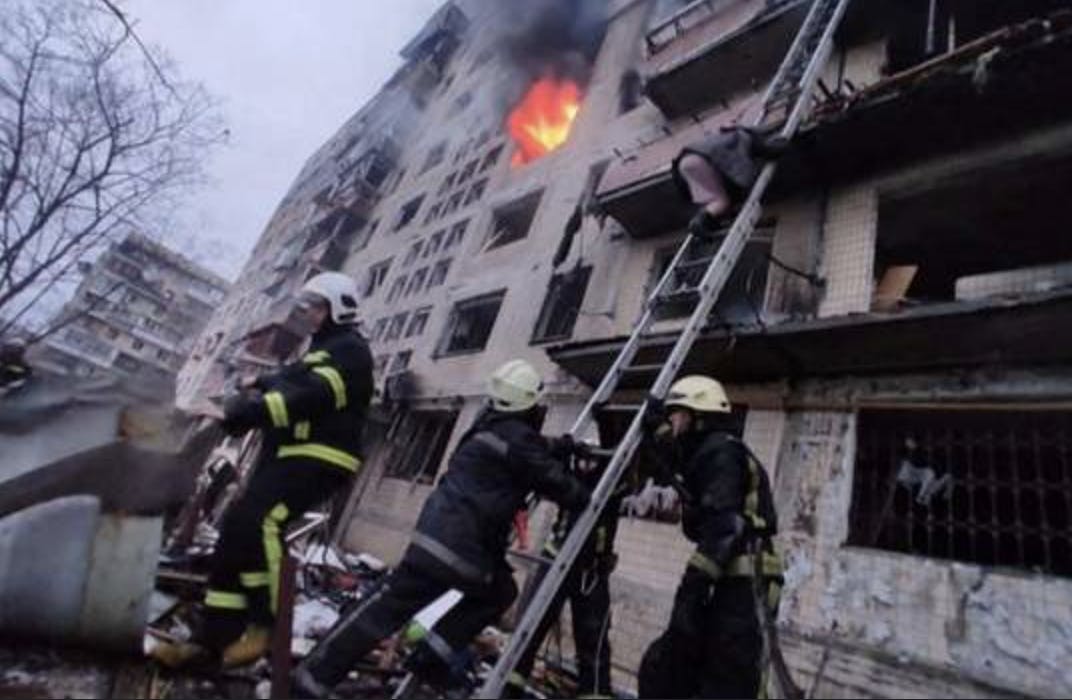
We’ve seen amazing examples of journalists’ courage under intense fire in Putin’s invasion of Ukraine. With Russian missiles and bombs dropping, tanks and artillery firing and the threat of chemical warfare, these news people soldier on to bring us the reality of a murderous despot’s aggression. The BBC’s and CNN’s war correspondents are prime examples. Every day we see them on TV or online risking their lives in the biggest war in Europe since World War II.
And consider the brave journalists who try to cover events within nations ruled by dictators, such as Russia, Iran, and Saudi Arabia. Foreign correspondents, they are at the risk of violence, arrest, torture and prison, though deportation is the most likely penalty. But of course, the most at risk are citizens of these countries trying to practice honest journalism. News people from abroad have a certain protection from their home governments that locals don’t have.
This gets me to a core benefit of free expression and a vibrant news media: By reporting on current history they provide those in power as well as the general public with the information needed to make decisions to adapt to changing conditions – indeed to adapt to reality. Nations with heavy censorship, and where fear of the dictator makes even high officials unable and/or unwilling to face the truth, are so rigid that they lack the flexibility to change course. Democracies are messy but they have self-correction mechanisms that tyrannies like Russia lack and so are more dynamic and innovative.
That’s also why they’re usually more prosperous than dictatorships as well as vastly more humane.
All are reasons to protect rigorous, honest journalism, and to revere those who put their lives on the line to line to practice it.
As They Age
The diaries of James Lees-Milne (1908-1997), an English novelist, biographer and architectural historian, are a marvel of observation of society, nature, buildings, politics and many other things. But what I found the most memorable was his precise take on how the many people he knew changed over time – emotionally, physically and intellectually. In particular, many of his descriptions of the aging process in individuals, by turns compassionate and clinical, are unforgettable, and a useful guide for us all.