


Whitcomb: The Apex Opportunity; Christmas-Display Inflation; The Silent Treatment; Tip of the Hat
Robert Whitcomb, Columnist
Whitcomb: The Apex Opportunity; Christmas-Display Inflation; The Silent Treatment; Tip of the Hat

“It’s cold without the softness of a fall
Of snow to give these scenes a common bond….
We need some snow to hush the whole thing up….
GET THE LATEST BREAKING NEWS HERE -- SIGN UP FOR GOLOCAL FREE DAILY EBLAST
An instant plebiscite would vote for snow
So overwhelmingly if we could call it now.’’
-- From “The Crying Need for Snow,’’ by Clive James (1939-2019), Australian critic, broadcaster, poet and all-around man of letters. He spent most of his working life in England.
“What people call insincerity is simply a method by which we can multiply our personalities.’’
-- Oscar Wilde (1854-1900), Irish playwright and poet
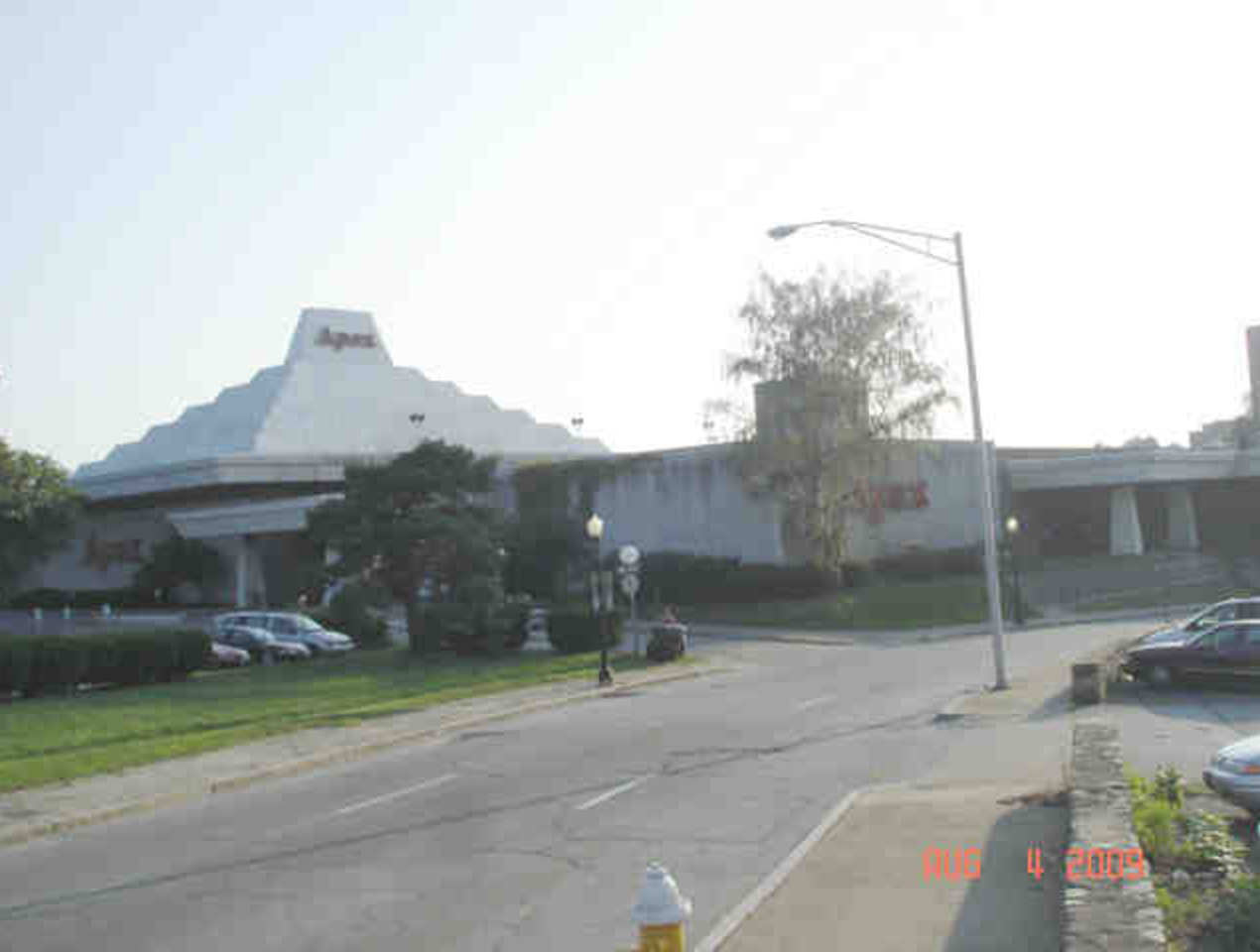
Presumably, they’ll have to tear down the kitschy Apex ziggurat. That is, unless they want to turn it into an Amazon or Walmart distribution center/sweatshop that would be a tad more interesting to look at than such grim one-or-two-level warehouses (like the one destroyed by the tornado in Illinois on Dec. 10) usually are.
The opening next year of the new MBTA Pawtucket/Central Falls train station will boost development at the site.
Good luck, Pawtucket!
Community Crisis
How sad:
Steve and Vicki Bishop will apparently have to vacate their beloved 4th Street Diner, in Newport, at 184 Admiral Kalbus Rd. It’s been there since 1967. The property owner, Colbea Enterprises LLC, wants to expand the gas station next door and build a Seasons Corner Market and a car wash. This would require tearing down the diner and the vacant building behind it.
If the Colbea scheme does happen, let’s hope that the diner itself can be moved and its many very loyal customers continue to enjoy its comfort food, cheery service and role as a community center.
Holiday Spectaculars
In the increasingly ferociously competitive world of front-yard Christmas displays, my favorites are those dominated by inflated figures – Santa, reindeer, Frosty the Snowman, the Holy Family and so on – usually supplemented by florid lighting and sometimes even by a Christmas tune, secular or religious.
From across the street, you can often hear the figures wheezing like asthmatics as the air pumps keep them upright, until the pumps are turned off or the characters spring leaks and fall flat on the ground.
Vanity, vanity, all is vanity!
Whatever you think of the aesthetics, these displays are very profitable amusements for your local utility.

Those cheap-goods national-chain stores such as Dollar General and Family Dollar, of which there are many around here, may face increasing unionization pressure in coming years as workers rebel against low wages, long and unpredictable hours, and sometimes ruthless local and national managements.
These stores, filling the gap that used to be filled by locally-owned neighborhood grocery stores and what we used to call “variety stores,’’ sell cheap stuff. But there’s a wrinkle:
Many of the items they sell are stocked in small sizes instead of in bulk to keep per-item prices looking low and profit margins high.
xxx
“Progressives” would be more effective if they knew more about economics in general and small business in particular.
It Will Fluctuate
When economic historians look back on the pandemic, we’ll get a better idea of how much of the recent inflation has been caused by extreme profiteering by huge oligopolies that have been permitted since the government basically stopped enforcing antitrust laws 40 years ago. They can’t overcome the lobbyists in Washington.
The inflation rate in November was 6.8 percent, caused, in addition to any profiteering, by pandemic-related pent-up demand, the stimulus of federal relief money and the international supply-chain mess. (The pandemic’s effects have shown how dangerously dependent we are on imports.) These things will fade.
The unemployment rate last month was 4.2 percent.
What would bring down inflation fast now would be many more Americans resisting heavy-duty ads appealing to those trying to keep up with the Joneses by buying, buying, buying stuff, much of it from our adversary China. For many people, the healthiest way – economically and emotionally -- to get through Christmas is to ignore it as much as possible. Of course, if you have young children that’s impossible….
Maybe the buying and inflation will slow soon, aided by Fed rate increases, another heavy round of COVID-19 and some high-tech fixes to international supply chains.
xxx
There’s an extremely wide variety of reactions to the COVID threat, from those who are terrified to leave home and would wear a hazmat suit if they could, to those who take a blasé attitude to a disease that might never go away. So it’s very difficult to plan any gathering of more than, say, 10 people.
We all have our own cost-benefit analyses when it comes to COVID-19; I’d classify myself as a moderate.
Chilly New Englanders?
“I never said, 'I want to be alone.' I only said 'I want to be let alone!' There is all the difference.’’
-- Greta Garbo (1905-1990), movie star, on her most famous quote, from Grand Hotel (1932)
An article in Commonwealth Magazine reports that new Boston Mayor Michelle Wu is disappointed that virtually no one on her MBTA Orange Line rides talks to her, even just to say hello.
She says:
“But we’ve got to change the culture of riding the T. It is a civic space for community conversations, but everyone’s always really quiet on there. Maybe I’m still a Midwesterner at heart.’’ The mayor was brought up near Chicago.
To read the Commonwealth piece, please hit this link:
New Englanders tend to be reserved and guarded with strangers, unlike, say, in the South and West, where people tend to be very friendly to all, if often just superficially, like someone trying to sell you a car.
It sort of reminds me of how in disasters, such as in tornado-ravaged Kentucky and other poverty-stricken “conservative’’ states, much is made of the good works of friendly churches and others in the private sector as opposed to aid from government (though Kentucky, a very poor state, is grabbing all the federal help it can now).
I’d rather have the much more impressive services provided by government in “socialist’’ New England than depend, say, on local churches (which are themselves subsidized by taxpayers because they’re tax-exempt – even the many ones that operate like political-party adjuncts).
Paul has often opposed big federal disaster relief programs, including bills passed following hurricanes Sandy, Harvey and Maria.
xxx
Some of my ancestors were in the salt business on Cape Cod in the 19th Century. It seems so long ago that large amounts of such a basic commodity, like ice cut from ponds in Maine, would be produced in low-tech ways in New England, for the local and faraway markets. (Blocks of ice from New England would be packed in sawdust and shipped by boat to the Southeast.)
The smarter relatives moved money that they made from this commerce into more lucrative manufacturing of shoes, tools and so on. A few even straggled into mid-20th Century high tech. Of course, all sectors fade in the end.
Taking on Light Pollution
“When you consider the radiance, that it does not withhold
itself but pours its abundance without selection into every
nook and cranny not overhung or hidden….’’
--From “The City Limits,’’ by A.R. Ammons (1926-2001), American poet
Pittsburgh is among the big cities planning to reduce light pollution. The pollution is screwing up animal and plant life and isn’t good for the animals called people either, because it upsets our 24-hour day/night bodily cycles.
Pittsburgh will switch to lower-wattage LED bulbs and add shades over the lights along bridges, roads and other public areas. This will also save it money.
The light pollution is so intense in many urban places that it’s virtually impossible to see the stars. I hope that Providence, Boston and other New England cities undertake projects like Pittsburgh’s.
And many of us want vehicle manufacturers to reduce the blinding intensity of headlights, which are particularly painful from high-profile vehicles such as SUVs.
While we’re on the road: a plea for drivers -- including police officers! -- to signal while changing lanes or heading onto an exit. The increase in speeding we’ve seen in the past couple of years is bad enough without so much signal-less driving.

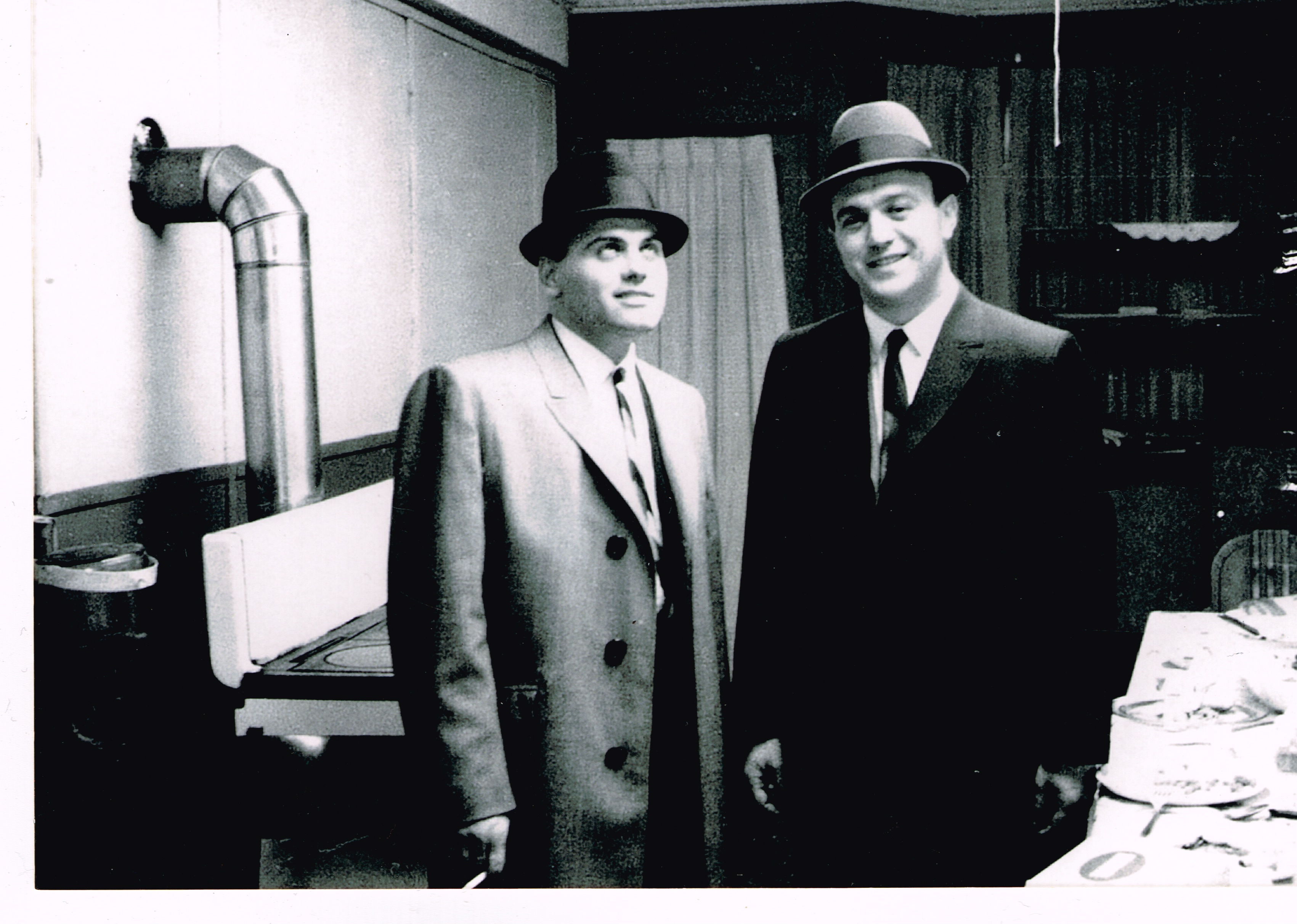
I’m old enough to remember when most adults wore hats. My father and other men of the time who went to offices to work usually wore felt headgear, except, perhaps, in the summer, when some would wear straw hats. And many, perhaps most, women wore hats, too, when going to work or shopping (the last chore of which fell even more heavily on them then than now).
So pervasive was hat-wearing that photos of anarchists’ rallies in the ’20’s and 30’s show a sea of hats!
(I like to wear hats and caps myself because I’m usually cold.)
Hats have served some pleasant social functions, too. You could tip the brim of your hat as a sign of respect and taking your hat off while entering someone’s home was also such a gesture. Nowadays, of course, many people never remove their (usually baseball) hats while inside, even in fancy restaurants. It’s a much less dignified time all around, for good and for bad.
To open a car door for a lady, a common courtesy only a few decades ago, now might be construed as sexist. And standing as an older person approached your table, once common, might be seen as awkward by some people.
I’ve read some speculation on why hat-wearing faded. One was that more and more people did most of their moving around in cars and so no longer needed frequent protection from the elements. Another is that men returning from World War II were sick of having to wear hats. But my father and most of his friends were veterans of that war and many of them wore hats for decades after the war.
Then there was the theory that John F. Kennedy’s (born, like my father, in 1917) failure to usually wear hats encouraged others not to. I don’t know about that, and JFK was much less popular, much less a cultural model, in his brief presidency (probably won by fraud) than you might think.
In any case, I rather miss the hat culture.
xxx
There’s something very heartening about a witchhazel tree blooming on a mild day in December.
xxx
A snowstorm is inconvenient but at least it stops the leaf blowers for a little while.
xxx
More and more companies aren’t sending printed statements so that they can save money and boost profits by sending docs only via the (insecure) Internet. But printed statements are often more secure, easier to read and better for record-keeping. For that matter, many consumers feel the need to print out statements that they’ve been sent digitally, forcing them to bear the cost of printers and papers that you might think that the companies should bear.
The Latest in the List
Trump Casinos, Trump University, Trump Steaks, Trump Vodka…. And now we have Trump Media & Technology Group Corp (TMTG), a social-media operation that will successfully market lies and demagoguery, two products that the world-historical swindler knows how to sell to his tens of millions of suckers. Meanwhile, members of the plutocracy will help finance the startup, with the aim of pushing policies that cut their taxes further and eliminate pesky regulations in such sectors as health and the environment.
I wonder how well Trump Media will fit in with his main propaganda organ, Fox, that cesspool created by Australia’s most toxic export, Rupert Murdoch.
Byron’s Brilliant Travelogue
For years I’ve been told by travel writers and others that Robert Byron’s (1905-1941) book The Road to Oxiana, mostly about the English explorer and writer’s travels in Persia and Afghanistan, along with other “exotic” (to us) places along the way, is a masterpiece of the genre. It has eccentric but somehow spot-on descriptions of people, buildings (especially mosques and other Muslim-related structures) and gorgeous and ugly landscapes.
He wields his knowledge of architectural history with an unpretentious aplomb, and displays dark and deadpan humor as he confronts corrupt officials, bizarre and potentially violent tribesmen, illness, flea-borne and otherwise, while traveling by truck, car, horse, donkey and foot.
From the book:
“The people of this village {Laman, Afghanistan} are strangely disobliging. Eggs? Parafin? Hay? They had nothing of the sort. I said I would pay. But seeing me accompanied by a government servant, they would not believe it.’’
“Herat (Afghanistan), 8 December. What a day it was. God save me from any more adventures on a drained stomach.’’
“Mrs. Budge Bulkeley, worth 32 million pounds, has arrived here (Isfahan, Iran) accompanied by lesser millionairesses. They are in great misery because the caviar is running out.’’
Correction: In my Dec. 5 column, the fierce Fox commentator Lara Logan’s last name was rendered as “Long.’’ Apologies to Ms. Logan.