


Whitcomb: Outdoor Angst; Wave Art; Goat Dairies; Viral Ignorance; Remembering Sundlun
Robert Whitcomb, Columnist
Whitcomb: Outdoor Angst; Wave Art; Goat Dairies; Viral Ignorance; Remembering Sundlun

“Act as if you were already happy, and that will tend to make you happy.’’
-- Dale Carnegie (1888-1955), self-improvement guru
GET THE LATEST BREAKING NEWS HERE -- SIGN UP FOR GOLOCAL FREE DAILY EBLAST
“It is time to be old,
To take in sail –
The god of bounds,
Who sets to seas a shore,
Came to me in his fatal rounds,
And said: ‘No more!’’’
-- From “Terminus,’’ by Ralph Waldo Emerson (1803-1882)
Ignorance Goes Viral
Part of the reason for the GOP/QAnon’s success in spreading misinformation about COVID-19 is the failure of public education, especially in the ignorance-rich Red States, to adequately teach biology. An alarmingly large number of Americans seem to have virtually no knowledge of viruses in general and how they spread and mutate in particular. And no clue on how vaccines work, even though even most of the most fanatical Trumpers have been vaccinated for something, say as a condition for school admission.
Their ignorance, willful or otherwise, has lately spread the Delta variant of the disease much faster and wider than otherwise would have been the case, which in turn has undermined our freedom to move around and get back to normal life. It’s the anti-vaxxers who are taking away our liberty, not those health officials and others who are desperately urging people to get their shots.
Meanwhile, most establishments now have signs telling folks they can enter without masks if they’ve been vaccinated. But virtually no one is asking for proof. What a joke!
The throngs of unvaccinated people suggest that new COVID-19 variants besides Delta and Delta Plus may be poised to cause trouble. Will they be even more contagious and dangerous than the Delta variants? In any event, even if you’re one of the relatively few folks who get the virus even after vaccination, the shots will almost certainly save you from getting very sick.
As for teachers, healthcare workers, and other public-facing personnel, fire ‘em if they refuse to be vaccinated.
Of course, the war to undermine vaccination hurts the economy, which is just what the GOP/QAnon wants as long as a Democrat is president.
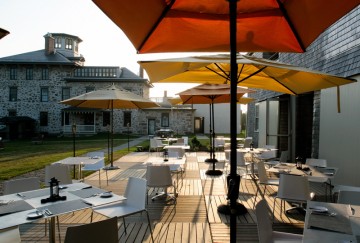
The pandemic, of course, has pushed many restaurants to start or expand outdoor operations in order to survive. So when we meet people at an eatery they’re apt to say with a cheery voice: “Let’s eat outside.’’ Unfortunately.
That means, in too many places, encountering bees and yellow jackets, panhandlers, loose dogs, squirrels, rats, screeching cars and trucks and even, as has happened to us, a very violent downdraft (sending furniture and table umbrellas flying) with a thunderstorm. But, I suppose, you can get some good stories out of being intimately involved, if only for an hour or two, with street life, and it’s a convenience for smokers.
I feel sorry for the waiters who must rush back and forth outside.
xxx
And last week we outdoor eaters got to savor the haze from the acrid smoke from fires Out West, which the jet stream sent us. Even disasters on the other side of the continent have an unsettling way on intruding on us in the wet Northeast.
xxx
It’s tomato-population-explosion time, perhaps a little earlier than usual this summer because of higher-than-normal (whatever “normal” is these days) temperatures and rainfall. What to do with them all? Tomato ice cream and sorbet (which reminds me of when we only had sherbet)? Tomato pancakes? Tomato pastries? Or set up a backyard target to throw them at, or just pitch the ripe ones at each other for cooling, dog days relief. There’s a long tradition, after all, of disgruntled folks throwing rotten tomatoes, and eggs, at politicians and other celebrities.

It’s nice when artists and others use New England’s innumerable beautiful outdoor spaces for exhibitions.
Thus it is with artist Melissa McGill’s coming show “In the Waves’’ at Newport’s Rough Point (which we used to call Rough Trade), the estate of late and deeply eccentric, indeed creepy (but philanthropic!) billionairess Doris Duke.
Ms. McGill has put out a call for young people to participate in the show, set for next month and meant to focus attention on global warming-caused sea-level rise and other man-caused environmental issues. Dodie Kazanjian, the founder of Art & Newport, is the curator of the exhibition.
This spectacle involves Ms. McGill painting waves on fabric made out of recycled plastic pulled from the ocean; plastic pollution has become a huge menace to sea life. The young people participating in the spectacle will use handles at the ends of long fabric strips to create motion to mimic that of waves.
“I’m painting the waves in a very expressive way, with the different colors that reference the ocean at Rough Point,” Ms. McGill told the Newport Daily News’s Sean Flynn, in a fun article. “I have done studies and research so they really evoke the ocean there.” (Does the ocean at Rough Point really look that much different than the ocean anywhere?)
For more information, please hit this link:
xxx
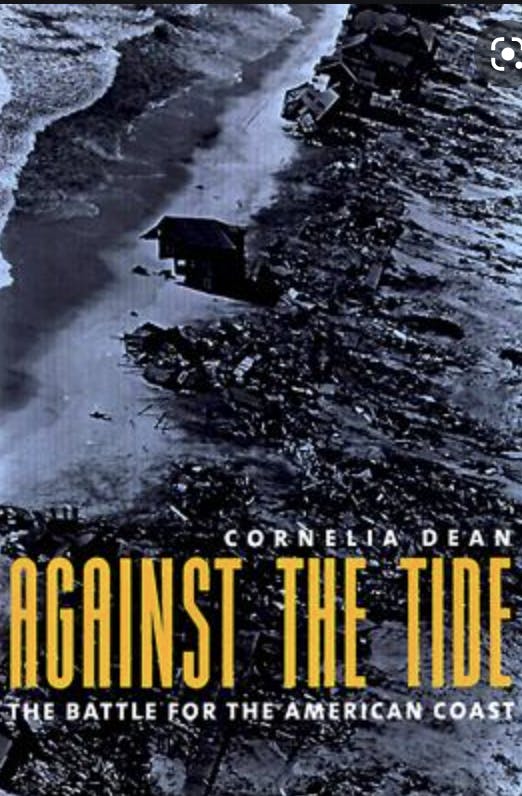
By the way, although it was published back in 1999, Cornelia Dean’s prescient book Against the Tide: The Battle for America’s Beaches, remains a dramatic, prescriptive (and often alarming) guide to the issues around rising seas and coastal development. Ms. Dean, the former New York Times science editor, continues to study the not-very-slow-motion coastal crisis.
Dock-to-Dock
Tailwind Air will start seaplane service between Boston Harbor and Manhattan on Aug. 3. It will begin with two round trips a day and then expand to four on Aug. 21, but the service will only operate from March to November, at least to start.
The company says the trip will take 75 minutes from dock to dock. Convenient! But this sounds like an affluent person’s deal. One-way fares will start at $395.
Are there enough wealthy people in Rhode Island to make such a service economically viable between Providence and New York or Newport and New York? I’d guess no.
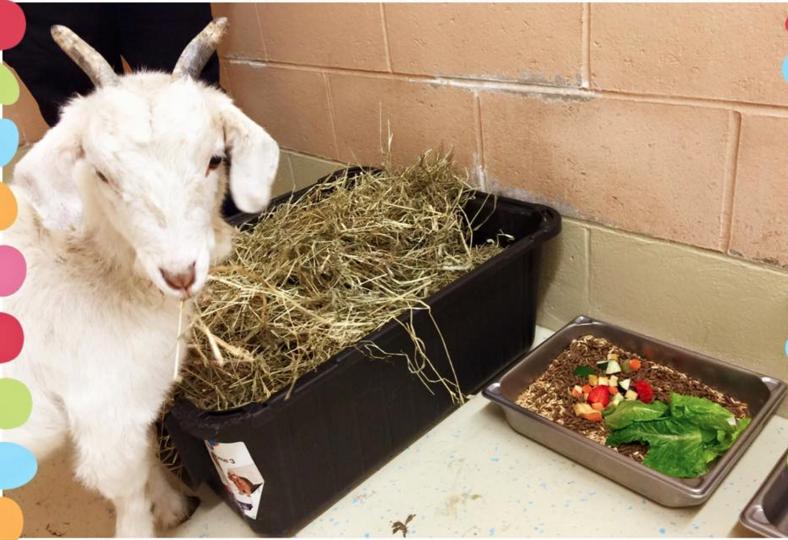
I spend quite a lot of time in rural upland New England, and have seen an increase in the number of farmers supplementing or even replacing the revenue from dairy cows and beef cattle with that from goats raised for their milk. The milk, and the cheese and yogurt made from it, is healthier for you than cows’ milk. And goats require less food and make fewer demands on the environment, including putting out less methane than cows. Further, they’re highly efficient at keeping land open; yes, goats really do feast on stuff that cows won’t touch. And they’re much more entertaining: They have stronger personalities than cows. And look at the baby goat craze!
Moving to the Well-Insured
Big “nonprofit” (meaning that they don’t pay taxes) hospital groups based in cities are increasingly expanding out into wealthy suburbs in search of folks with generous private insurance plans; this means even higher pay for hospital senior executives.
Consider Boston-based Mass General Brigham and its $400 million program to set up new ambulatory-care centers in Westwood, Woburn, Westborough, Mass., and Salem, N.H., and Boston Children’s Hospital, with its $435 million plan, to, in Commonwealth Magazine’s words:
“{E}expand an existing site in Waltham, move physicians in Weymouth into a new office building, and build an entirely new Needham multi-specialty outpatient surgery center.’’
The magazine also notes that these two very rich institutions affiliated with the Harvard Medical School also want wider opportunities for referrals for “additional inpatient and outpatient care at their expensive flagship hospitals’’ in the city.
A question is that as the suburban expansion continues, will these hospital companies pay less attention than they should to the poorer patients in the city who may only be covered by Medicaid?
Hit this link for more information:
So Make Them Actually Give
Donor-advised funds (DAF’s) have usually been a good deal for rich philanthropists looking for big tax deductions and protecting capital gains on their investments. But these things don’t set deadlines on when money actually goes into the charities.
Thus, DAF’s can be a bit of a scam as used by some people; God knows, the tax laws are very skewed to favor the very rich.
So praise is due to Maine U.S. Senator Angus King, an independent who caucuses with the Democrats, and Iowa Republican Charles Grassley for coming up with a bill to address this issue and get more money flowing faster to nonprofits.
It is, natch, complicated. Pretty much everything is in the U.S. tax code, by far the world’s most complicated. But its essentials include creating two new kinds of DAF accounts. One, reports the Associated Press, would give donors “an immediate income-tax deduction for money they agree to give to a charity within 15 years.’’ Another, says the AP, would “let them delay the distribution of their money for 50 years,’’ but with “no income-tax deduction until then.’’ Still, they would “get to enjoy capital gains and estate tax savings for donating stocks or other gifts into a DAF.’’
“Community foundation-sponsored DAFs with less than $1 million would be exempt from the requirement. But donors with more than $1 million in such accounts would qualify for upfront tax benefits only if they distributed at least 5 percent of their assets annually or gave their money to a charity within 15 years. Under current law, assets can remain in a DAF indefinitely, tax-free.’’
The bill strikes me as a good start to address what has become a growing abuse of the tax laws by the privileged.
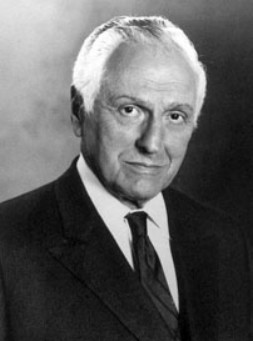
The tenth anniversary, on July 21, of the death of the late Rhode Island Gov. Bruce Sundlun, brought a pang. He was, to use the old cliché, “larger than life’’: World War II hero, prosecutor, aviator, business executive, a central figure in reviving downtown Providence and the sort of tough and visionary leader that the Ocean State needed in 1991-95 during a severe economic crisis. His life recalls the old imperative of “when in command, command.’’ He was the all-too-rare politician willing to make very unpopular decisions for the long-term greater good.
His work ethic was formidable, as I learned when, for example, he’d call me late at night when I was The Providence Journal’s editorial page editor in the ‘90s.
He put his impatience to get urgent things done to good effect, though often offending people in the process as he pushed through like a bulldozer. He didn’t lack enemies.
He could be arrogant and irascible as well as self-deprecatory and very charming and sometimes very funny. And what a story teller! I kept telling him over the years that he should write his memoirs, which he agreed would be a good thing. But sadly he never got around to it. A good scriptwriter could have gotten a few films out of it.
History Lessons
“He who cannot draw on three thousand years is living hand to mouth.’’
-- Johann Wolfgang von Goethe (1749-1832), German poet, playwright, novelist, scientist, statesman, theater director and critic
The nonprofit Lapham’s Quarterly is a gorgeously illustrated publication (and associated stuff, including podcasts) about history and ideas put out by the American Agora Foundation. Each issue has a cohering theme, such as War, Memory, Climate and Happiness. The latest one is Technology.
The works of writers and visual artists ranging from thousands of years ago up to the present are represented as they address the human condition.
All too many of us are ignorant about the major personalities, events and ideas in the millennia of human history that led to what’s happening now. Lapham’s Quarterly, founded by long-time Harper’s Magazine editor Lewis Lapham, addresses that in beautiful ways. We have subscribed to it since the first issue, in 2007, and think that it’s the most exciting approach to spreading the drama and lessons of history we’ve seen.
The older I get, the more interested I am in the broad sweep of history and less in daily eruptions of news.
Hit this link for more information: