


Whitcomb: People Moving Around; R.I. Leaders Should Think Long Term; Growing Season
GoLocalProv
Whitcomb: People Moving Around; R.I. Leaders Should Think Long Term; Growing Season

“The weather’s turned, and the old neighbors creep out
GET THE LATEST BREAKING NEWS HERE -- SIGN UP FOR GOLOCAL FREE DAILY EBLASTfrom their crammed rooms to blink in the sun….’’
From “The Old Neighbors,’’ by Katha Pollitt (1949), American poet and essayist
“I have just returned from Boston. It is the only thing to do if you find yourself up there.’’
-- Fred Allen (1894-1956), Massachusetts-born humorist best known for his work in the Golden Age of Radio
The big news around here (which surprised me) was that Rhode Island held onto enough people to retain its two congressional seats. Massachusetts will keep its nine seats and Connecticut its five. I attribute much of Rhode Island’s minor triumph to the great wealth-and-job-creation machine of Greater Boston, which spills into Rhode Island.
The Census data let New England maintain its 21 seats in the U.S. House, where for the first time in a half-century none of the region’s six states lost a seat!
Indeed, I wouldn’t be surprised if the more attractive and prosperous parts of the North, especially New England, see substantial population increases in the next decade as the Sunbelt problems cited below lead to some reverse migration, spawned by our relatively moderate weather (and lots of freshwater) and our rich technological, health-care and education complexes, beauty, generally low crime rates and sense of community and history. In any event, I doubt that the population of the country as a whole, or the economy, will surge in the Twenties, which unlike the last century’s Twenties, probably won’t be “roaring’’ for long. The demographics, including our low birth rate, don’t suggest a long-term national boom (or crash) is coming.
The assumption has been that the Census data will give the increasingly far-right Republican Party yet more clout. Maybe in the short run, but the folks moving into Sunbelt states from the Northeast, Rust Belt and California include many liberals who continue to want the sort of Democratic Party-promoted public services they had back north and in California. Thus, especially in Sunbelt metro areas, Democrats are fairly steadily increasing their share of the electorate. Strange political times! The Democrats have been moving toward European-style social democracy while parts of the GOP embrace neo-fascism.
The migration to the Sunbelt, although it’s slowing, is putting ever-increasing strains on its states’ generally thin social services and inadequate public infrastructure, as witness the Texas power grid collapse in February.
The Sunbelt increasingly faces the heavy traffic, soaring home prices and other aspects of density that metro areas of the Northeast and California have long had to deal with. Addressing them will require major political and policy changes. The low taxes (except sales taxes), cheap real estate and wide-open roads will not continue in large parts of the Sunbelt.
And this comes as the South faces the nation’s worst effects (with the possible exception of California) of global warming – including stronger hurricanes and other storms, more floods, more droughts, and longer heatwaves. God help Florida and the Gulf Coast as the seas keep rising.
The climate crisis has already turned away some people from the South, even as it requires very expensive infrastructure work to address. That means higher taxes, which the GOP hates more than anything else, especially when they’re imposed on the wealthy. The two most important Republican constituencies are the very rich (many of them via inheritance) and rural and exurban voters.
So, I think that the Sunbelt will become increasingly politically competitive. The Census figures strongly suggest that. And New England will do all right, with or without “climate refugees.’’
Going forward, the New England states would do well to cooperate in formulating tax and other policies so as not to cannibalize themselves in marketing the compact region to business and individuals, especially to those in the Sunbelt and the Mountain States, the other high-growth region, that might be having second thoughts about where they’ve moved to in recent years.
xxx

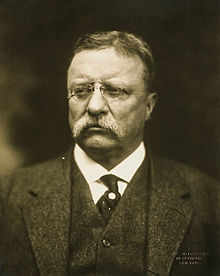
“The man of great wealth owes a peculiar obligation to the state, because he derives special advantages from the mere existence of government.’’
-- President Theodore Roosevelt in a 1906 address to Congress. He meant the rule of law (including property rights), public infrastructure and other things that only government can provide.
The president is proposing big bucks to help struggling families. Some of this is more properly individual families’ responsibility (such as some college costs). And where’s the reference to what’s behind a lot of family poverty? That’s the failure of so many fathers to share economic responsibility for the children they help create and the associated fading of marriage, a foundation of socio-economic stability. All marriages have their problems, but all in all, in their role as the basic unit of society, they play essential roles in maintaining healthy societies. We let the obligations of marriage and parenthood erode at our peril.
Think Long Term
As Rhode Island officials continue to mull how to spend money that the state might get from President Biden’s infrastructure plan, if it survives Republican opposition, I hope they keep in mind projects that strengthen the state’s long-term proven comparative advantages, especially in maritime matters, design and in its location between New York and Boston.
xxx
“Quasi-public’’ agencies, such as the Rhode Island Convention Authority, tend to be secretive and show favoritism to well-connected people. It would be better government if they were gradually eliminated and replaced by real agencies, whose operations can be better understood by the public. As the old line goes, “Sunlight is the best disinfectant.’’
xxx
It’s foolish for a state to embrace big companies, such as the gambling industry company International Game Technology, with long-term deals. As of this writing, IGT has a $1 billion, 20-year, no-bid deal with the State of Rhode Island. House Speaker Joseph Shekarchi has said he wants to negotiate a better deal. But I’m skeptical of any state deals with big companies, especially long-term ones.
Businesses rarely keep their promises about the number of employees they’ll hire, etc.; their senior executives come and go in quick succession; their ownerships change, and the economy evolves in all sorts of unpredictable ways.
xxx
The proliferation of speed bumps in Providence and some other communities in the region is civilizing and calming, and can be a lifesaver for pedestrians and bicyclists. Wouldn’t it also be nice if signs went up asking drivers to signal, something all too many are loathe to do around here?
Vegetable Vertigo
Every year at this time we wrestle with the momentous question of which vegetables to buy and plant. There are so many hybrids and so many claims of their glories that it’s very confusing. We’ve experimented over the years; some choices have turned out to be aesthetic and culinary duds, some very tasty surprises. Those “heirloom” plants!
Anyway, the surest and easiest bet has been cherry tomatoes, which are terrific snacks.
Then there’s the great gamble of how early to plant. Those sneaky early May frosts can wreak havoc, though, as the climate has warmed, we seem be to getting fewer of them. (And stuff grows later into the fall.)
Planting is fun, weeding and watering less so, but wise or at least lucky choices and fine weather can let harvesting meet the standard of pleasure you pine for in February, when the seed catalogs arrive. And the sense of self-sufficiency, however bogus, from growing a tiny bit of your own food is a bonus, and something to show off to dinner guests.
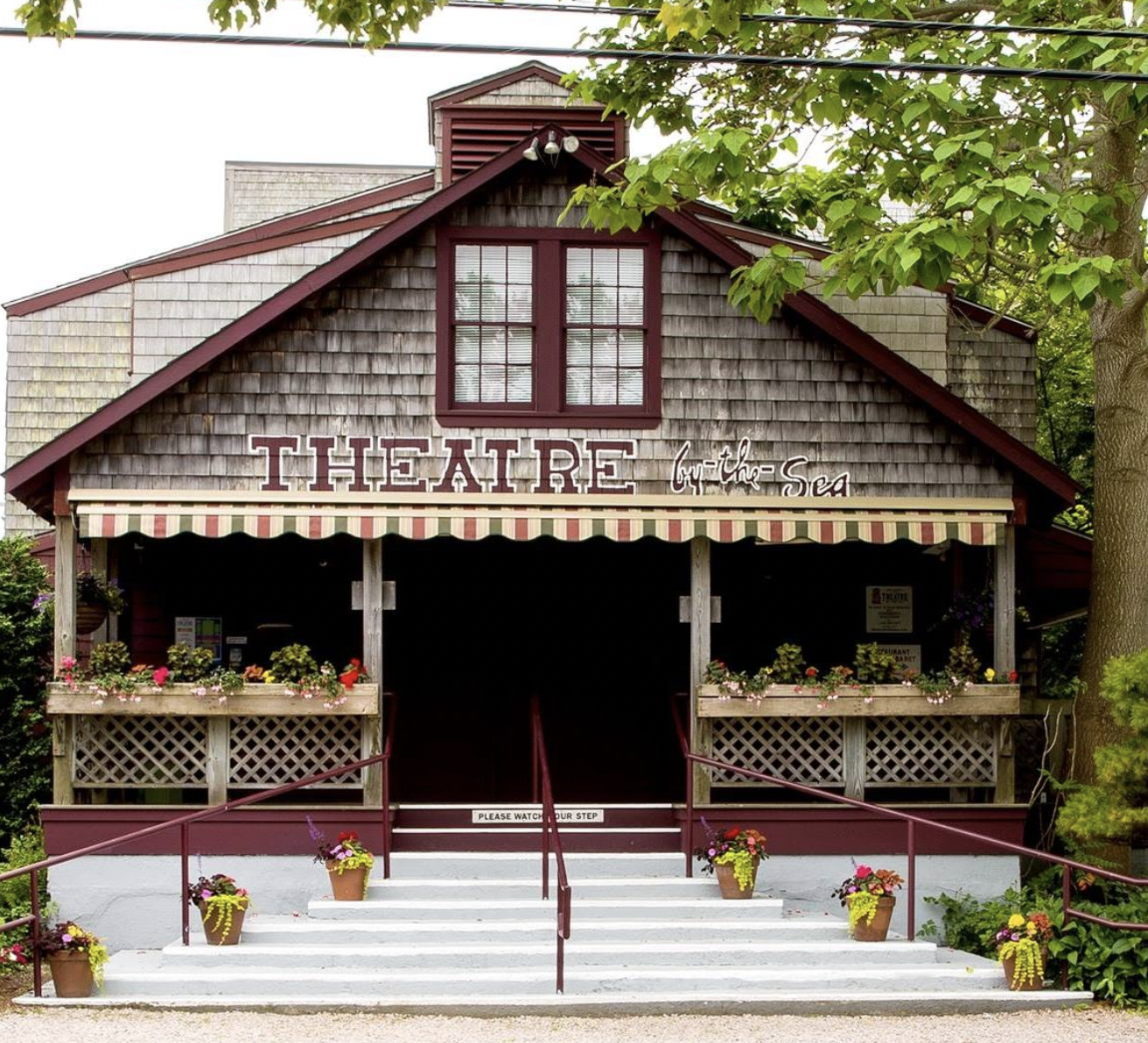
Word that the Theatre by the Sea, in South Kingstown, won’t reopen this summer because of the limitations imposed by the pandemic reminded me of how popular such “summer stock’’ attractions, many in resort towns, used to be. Some were under big, circus-style tents and sometimes even famous actors and singers would be in the casts. Their biggest money makers were Broadway musicals, whose heyday ended in the early to mid ‘60s as rock took over and the great composers and lyricists who had dominated American popular music, some from as far back as the 1920’s, left the scene.
If you lived in one of these towns, you could sometimes hear the music many streets away mingling with the sound of the southwest wind blowing through the foliage of the big old trees.
The Real Count
I was surprised by the lack of questioning of the official number of deaths in India’s COVID crisis. The official count as of last Wednesday was 200,000 deaths and 18 million cases, and that’s been presented as horrific. But the country, much of it still very Third World, has almost 1.4 billion people (!), many living in great density, and a healthcare system that was already a mess before the pandemic. Religious and political gatherings helped make things worse. A real death count so far of a million people?
And what a macabre source of air pollution: innumerable outdoor cremations, mandated by Hindu tradition, of the corpses of those killed by COVID.
Bejing Hungers for Taiwan Tech
A big reason that China’s dictatorship wants to seize Taiwan is to get control of that plucky democracy’s impressive technological complex, which Xi Jinping’s regime could use to intensify its expansion in the Far East and beyond as it seeks to supersede America as the dominant world power. All the more reason to maximize our support for Taiwan.
Kafka for President
You hear endless complaints, especially from the right, about dealing with government agencies, such as the (grossly understaffed) IRS, but my experience has been that huge companies can sometimes be worse in their red tape, frustrating errors, and bad communication. I’ve seen this with insurance companies, banks, utilities, and computer-related companies.
Just a recent tiny example: We tried for more than two weeks to get Citizens Investment Services (part of Citizens Bank) to send us a tax document involving what is a tiny amount of money but necessary for filing our tax return. We made repeated calls, expressed with increasing urgency, with us offering several easy ways to get it to us. We got promises that it was sent. Waited some more. It finally arrived last Thursday. Hours spent on something that should have taken five minutes. The bank people, who were always very nice, mostly blamed Trumpist Louis DeJoy’s Postal Service.
On the Water
Alec Wilkinson’s book The Riverkeeper is an engaging trio of three discursive essays set on and along the water. One’s about Portuguese fishermen working out of Provincetown, another about an eccentric man (“The Riverkeeper’’ of the title) patrolling the Hudson River to track down polluters, and the third about the Tlingit tribe on Alaska’s Admiralty Island.