


Whitcomb: Just Don’t Call Them ‘Reparations’; Back to Work; Summer Agoraphobia; Cash for Corridor
Robert Whitcomb, Columnist
Whitcomb: Just Don’t Call Them ‘Reparations’; Back to Work; Summer Agoraphobia; Cash for Corridor

“An ingenuity too astonishing
to be quite fortuitous is
GET THE LATEST BREAKING NEWS HERE -- SIGN UP FOR GOLOCAL FREE DAILY EBLASTthis bog full of sundews, sphagnum-
lined and shaped like a teacup….
there is so much light
In the cup that, looking,
you start to fall upward.’’
--From “The Sun Underfoot Among the Sundews,’’ by Amy Clampitt (1920-1994)
xxx
“You may drive out nature with a pitchfork, yet she’ll be constantly running back.’’
-- Horace in 20 B.C. He was a leading Roman poet.
xxx

But seeming to bill people living now specifically because of the offenses of others, most of them long dead, could widen racial discord. And there’s no end to where you can go with history’s crimes. (Seek reparations from the descendants of African tribal chiefs who kidnapped people and sold them to Western slave traders?)
I would guess that most white Americans do not feel guilty about what some of their ancestors may have done against Black people, much as they regret the history. To create a “reparations’’ system would embitter many of them. And beware of extreme “identity politics’’ that can grossly reduce the perceived individuality of people. Each of us have our own genomes. We’re each much more than our race, class, sexual preferences, etc. And we’re all mongrels.
Yes, treat current problems, by helping the poor and battling the remaining systemic racism. Yes, many people are poor because of past and present racial bias. But don’t call the help “reparations.’’ You can’t fix the past, only help the living and those to come. The most effective way is to improve the socio-economic status of victims of history.
The murder conviction of Derek Chauvin, which depended on video, raises various questions going forward.
One is whether the expanding use of such electronic surveillance will discourage police from their lawful and necessary use of force when warranted in dangerous encounters. The answer in a few cases is yes, at least until the police get more used to having many crisis situations videoed. And, of course, in these high-stress and sometimes violent cases, latitude must be given to the police when they must make split-second decisions.
I think, meanwhile, that they’ll also realize that having such recordings will, in many cases, justify their actions and help convict bad actors. Criminals, as well as cops, will be recorded, and in most cases that will be good for the cops.
Another question that arises is what awaits the three other officers at the scene of George Floyd’s murder who watched Chauvin murder George Floyd. The trio await trial after being charged with aiding and abetting unintentional second-degree murder and aiding and abetting second-degree manslaughter. Let’s wait and see what happens in their trials. But obviously, as a general principle all citizens and not just police officers, have at the very least a moral obligation to try to stop brutality. Their trials may affect law enforcement almost as much as Derek Chauvin’s.
Unfortunately, California Congresswoman Maxine Waters toxified the situation by asking, before the Chauvin verdict, for folks to be “more confrontational” if he was acquitted. This could have encouraged violence. And President Biden didn’t help by saying before the verdict that he hoped for a “correct” one. Getting involved in jury deliberations in this way unnecessarily undermines trust in our justice system and encourages, albeit less brazenly than Ms. Waters’s remarks, disorder. Always wait for the verdict!
Violence in the streets does not usually make things better. Consider that polls suggested that the looting that occurred after Mr. Floyd’s murder boosted the vote for Trump in the 2020 election with his police-are-always right position. If major disorders had continued well into the fall, Trump might have been re-elected.
And let’s remember that law enforcement is overwhelmingly a local and state responsibility. National political leaders (mostly Democrats) will opine on the need for policing reforms but these changes are almost entirely out of their control. They’re up to state legislatures and governors and whatever reform commissions that might be created. Very wide differences among states will continue, though national leaders can set a moral tone and federal courts will bring to bear constitutional protections.
xxx

Back to Work!
Rhode Island will soon again require that people receiving jobless benefits show proof that they’re looking for work. That requirement was put on hold at the start of the pandemic.
But the economy is improving and the vaccination rate, while still too low in some cohorts, is increasing at a good clip. Consider that vaccines are now available to everyone 16 and older – meaning pretty much everyone who can work. Some sectors, such as restaurants, are crying out for staff.

I’m happy that Newport’s restaurant, bar and hotel sector expects to do a land-office business this summer, with an explosion of pent-up demand expected. That sector is a very important part of the economy of southeastern New England, including tax revenues.
But, as Sam Goldwyn said, “Include me out.’’ Crowds and waiting in line aren’t for me.
I’m always surprised at the tendency of the public to do everything at once, which greatly reduces the time that they have to enjoy what they set out to enjoy or just to get things done.
A minor example: I use the big Providence post office at least once a week. If you get there by, say, 8 a.m., there are often no lines at all. If you get there at 8:30, the lines can stretch out the door.
So we’re going to put off major travel and, as much as possible, visits to local resort centers until after Labor Day, when much of the pent-up demand will, presumably, be satisfied. This assumes that there won’t be a re-explosion of COVID-19 via yet more variants (the Cuttyhunk variant?) and/or a terrorist attack or even a late-summer hurricane.
In any event, there are lots of interesting and beautiful places to visit in New England this summer that rarely have big crowds.
Hit this link to read a GoLocalProv.com article on Newport’s coming summer season.
Put the Money on the Right Track
Politicians across America, even anti-“Big Government” right-wingers in rural states, want Amtrak service, some of it as local pork, however lightly it is used. But as Congress considers President Biden’s almost $2 trillion infrastructure program, and the $80 billion in it for Amtrak, they should, but might not, set aside the lion’s share of the money to improve the Northeast Corridor, where it’s by far the most needed.
That where the nation’s thickest population density is; such density is very important in justifying rail passenger service. And the great popularity of the service, between Boston and Washington, D.C., has been demonstrated for decades.
The Northeast Corridor line plays an important part in lubricating the economy of this immensely important part of America, which includes both its political (Washington) and financial (New York) capitals as well as crucial technological, education and healthcare infrastructure. Amtrak service there should be expanded, for economic and environmental reasons.
Amtrak owns and controls some 80 percent of the Corridor, which means, importantly, that it has considerable control over how the few freight trains use it on short sections. New York State, Connecticut and Massachusetts, for their part, own relatively sections of the route. But Amtrak is in the driver’s seat, as it should be. That isn’t to say that at least one more set of tracks, for freight and passengers, hasn’t long been needed.
You must expect that if all or part of the Biden infrastructure package is approved, that Amtrak service to thinly populated and economically insignificant parts of the country will be preserved or even expanded with lightly used long-haul trains (much beloved by train romantics), especially in states with powerful members of Congress. So be it in legislative sausage-making, but the core need for the benefit of the entire country is the Northeast Corridor.
xxx
Note the importance of Providence’s Amtrak stop not only for Rhode Islanders but for the many people from southeastern Massachusetts and eastern Connecticut who also use it, for Amtrak and MBTA service.
It’s Classic
All hail Harvard Prof. Cornel West (an African-American) for denouncing Howard University’s decision to close its classics department, which teaches Latin and ancient Greek and related material from that first act of Western Civilization. He noted in a Washington Post column:
“{O}ne of America’s greatest {predominately} Black institutions, Howard University, is diminishing the light of wisdom and truth that inspired {Frederick} Douglass, {Martin Luther} King {Jr.} and countless other freedom fighters.
“Academia’s continual campaign to disregard or neglect the classics is a sign of spiritual decay, moral decline and a deep intellectual narrowness running amok in American culture. Those who commit this terrible act treat Western civilization as either irrelevant and not worthy of prioritization or as harmful and worthy only of condemnation.
“Sadly, in our culture’s conception, the crimes of the West have become so central that it’s hard to keep track of the best of the West. We must be vigilant and draw the distinction between Western civilization and philosophy on the one hand, and Western crimes on the other. The crimes spring from certain philosophies and certain aspects of the civilization, not all of them.’’
Hit this link to read his column:
It should be obvious that there’s great wisdom -- of utility in living our lives – to be found from such thinkers as Socrates (and his followers who wrote down what he said), Marcus Aurelius, Cato, Cicero and others who show models of behavior and how to face life’s challenges. Their thoughts are for the ages.
Part of the problem is the tendency to turn liberal-arts institutions such as Howard into vocational schools aimed at getting graduates their first jobs rather than preparing them more broadly to deal with what life pushes onto us without our permission. Vocational training can be quickly superseded by technological change while you can carry the wisdom gained by reading great thinkers through life.
Still, there’s at least one “vocational” benefit of studying Latin. As the basis for all the Romance languages and huge contributor to English, too, learning Latin can be very helpful, as I found again while working in Europe as an editor in the 1980’s after having had four years of Latin in school two decades before.
It seems hard to believe now but it was common for high-school students on the college track to take Latin and Greek 60 years ago.
‘The Hub’ of Something
The new picture book Beacon Hill Through Time, with a text with eccentric and sometimes archaic diction by Anthony M. Sammarco and a mix of new photos by Peter B. Kingman and ones from the archives, surprised me by showing me many pictures of buildings that I had thought, from my time working in Boston, were much older than they actually were or are (especially Colonial Revival and Federalist style knockoffs). Shades of the recreated buildings at Colonial Williamsburg….
The physician, essayist and poet Oliver Wendell Holmes whimsically dubbed the Massachusetts State House, atop Beacon Hill, "The Hub of the Solar System" in 1858. So “Hub’’ or “The Hub’’ became shorthand for Boston for many years. Indeed, it was still often used in newspaper headlines when I worked for the old Boston Herald Traveler in 1970-71. Very handy over a one-column article!
But now it has pretty much disappeared.
Speaking of olde Boston, watch/listen to these old Brahmin cousins chat in accents that have mostly vaporized since they were recorded in 1985. Strange creatures indeed.
xxx
The all too briefly flowering trees seem more beautiful than ever this spring. Or maybe those of us of a certain age just appreciate them more every year.
xxx
Pretty much everybody has vivid memories from very early childhood, though we may not really know why certain ones remain so powerful. One of mine is my mother handing me a glass of ginger ale as the sunlight poured through a window, lighting up the dust particles in the air. I’d guess it was around this time of year because the air coming in from the partly open window was very fresh and smelled of wet, newly cut green grass.
Dictators Sticking Together, Redux
China’s dictatorship, a weird mix of fascist and communist, loves the brutal, kleptocratic junta now terrorizing Burma because its thugs have many business ties with China and because for Burma to have a democracy would encourage freedom fans in Chinese dictator Xi Jinping’s Orwellian police surveillance state. Not surprisingly, Russia’s fascist dictatorship also supports the junta.
xxx
In trying to improve conditions for people in Central America so that they don’t feel compelled to flee in our direction, the U.S. should focus on using internationally respected nongovernmental organizations. They should avoid as much as possible funneling aid money through governments there, where much of such money is stolen. The governments in the region range from very corrupt to very, very corrupt.
Silly Spraying
The theatrical antiseptic spraying continues in public places as the pandemic slogs on even though the chances of getting the disease from touching a wall or other surface are almost nil. Far better to use the money being spent on spraying to upgrade ventilation systems, buy extra facemasks for people who may have forgotten to wear them to a building and otherwise face the fact that the danger is overwhelmingly in the air, not on surfaces. And spraying can kill good microbes as well as dangerous ones.
But let’s keep washing our hands a lot.
Trips to Understanding
Going on a trip is both a physical act and a mental one. Just the act of moving can change how we see the world and ourselves. I thought about this while reading two recently published books.
First, there’s This Land of Snow: A Journey Across the North in Winter, by Anders Morley, who divides his time between northern New Hampshire and northern Italy. It’s about his trek, mostly by ski, and camping along the way, from the coast of British Columbia across northern Canada to Saskatchewan; he originally wanted to go all the way across the country but warming weather and his change of heart about where he was going in life led him to abandon the plan part way.
He encounters much hardship, some of its potentially lethal, sees great natural (if often harsh) beauty and encounters a surprisingly friendly and generous cast of characters in remote places. Already a very experienced outdoorsman, he learns even more than he already knew about how to survive in the wild during the most challenging time of the year. But even more important, he comes to better understand himself. That includes his relationship with his wife, which is crumbling at the start of his journey but is strengthened by the new self-awareness he develops on the trip, and his attitudes toward solitude and society.
He’s an intensely observant writer, and a self-deprecating one with a finely droll sense of humor.
xxx
The other book, Biking With Bismarck: A Little Tour of France, by the travel writer/essayist/historian Matthew Stevenson, reports on his tour of sites of the Franco-Prussian War and World War I, and yes much of it is by bicycle. Mixing anecdote, deep reading of history and a little bit of his own family history, he strongly evokes in the reader’s mind’s eye and ear some of the tragic, edifying, funny, absurd, and often ironic events of relatively recent Western history, the outwash from which we still swim in, as well as the countryside, villages, and cities where big events unfolded.
As with his earlier books, Mr. Stevenson is just the kind of thoughtful traveling companion you want, as a reader or actually on the road with him. (I’ve met him.)
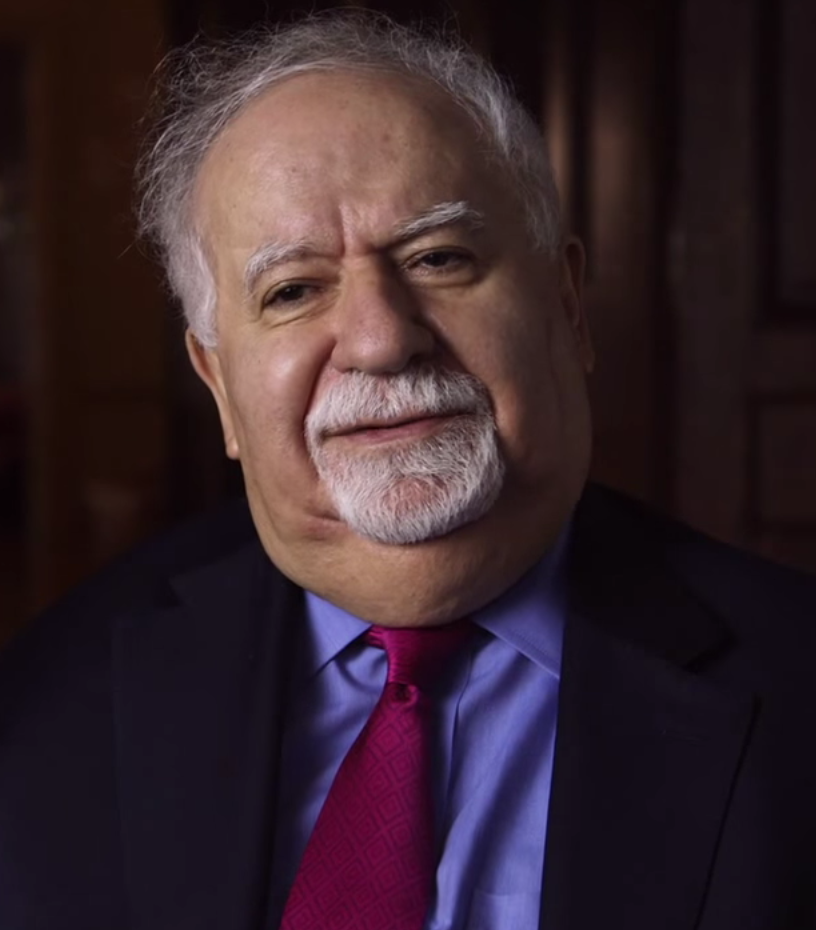
RIP, Vartan Gregorian, a happy and visionary warrior of academe (president of Brown University in 1989-1997 and provost of the University of Pennsylvania, 1979-1980); philanthropy (president of the Carnegie Corporation of New York, 1997-2021), and urban cultural leader (president and one of the saviors of the New York Public Library, 1981-1989, and a loyal promoter of Providence, too). And a big hugger who looked a bit like a bear.
He died on April 15 at 87. He was someone you wouldn’t forget after one brief meeting.