


Whitcomb: Taxes and Infrastructure; Prov Teachers Pension Obsession; Superman Scrap
Robert Whitcomb, Columnist
Whitcomb: Taxes and Infrastructure; Prov Teachers Pension Obsession; Superman Scrap

“Easter has come around
GET THE LATEST BREAKING NEWS HERE -- SIGN UP FOR GOLOCAL FREE DAILY EBLASTagain; the river is rising
over the thawed ground
And the banksides. When you come you bring
an egg dyed lavender.’’
-- From “April Inventory,’’ by W.D. Snodgrass (1926-2009), American poet
“Happiness is an imaginary condition, formerly often attributed by the living to the dead, now usually attributed by adults to children, and by children to adults.’’
-- Thomas Szasz, M.D. (1920-2012), controversial Hungarian-born American psychiatrist
xxx
Nice to see the worms wiggling up on the lawns, to be consumed by robins, who have been making a racket.
xxx

To help pay for his program, Mr. Biden can’t avoid having to recommend raising taxes. His proposal would include, among other things, modestly hiking the top marginal personal income rate, to 39.6 percent from 37 percent, and the top corporate-income rate to 28 percent from 21 percent. (The top corporate rate was 35 percent when Trump took office.) These rates have been much higher during long periods in the past, including in some boom periods.
Of course, this is America, where taxes almost always are made more complicated. (The 1986 tax-reform law is one of the very few examples of modest simplification.) The Biden plan would also probably be convoluted. In any case, because of assorted tax shelters, deductions and other manipulations very few individuals or companies would pay as much as these new rates suggest.
For some historical and other comparisons, please hit these links

The Republicans, whose main voter blocks are rural and exurban voters (with a particular passion for such social issues as guns and abortion) and the very rich, will, of course, fight any tax increases. I think that they fear that the program could be so popular that the GOP could lose the 2022 congressional elections. (But even a week is an eternity in politics….)
(By the way, I’ve never been crazy about corporate-income taxes. Their existence leads to corruption-related lobbying, and, hey, in the end people pay taxes, directly or indirectly, not some creature called a corporation. Corporate-tax matters have helped turn Congress all too often into a parliament of whores. But I suppose that for various economic and political reasons the corporate-income tax will always be with us.)
Much of Mr. Biden’s multi-year program could be paid for by properly staffing the now grotesquely underfunded and understaffed IRS so that it could go after the innumerable, mostly high-income, tax cheats who have deprived the Treasury of hundreds of billions of dollars. That’s money that could have been used to fund government programs without general tax increases. A reason that there’s so much tax cheating is that the U.S. Tax Code is beyond complex and confusing. That favors rich folks with clever tax lawyers and accountants.
Hit this link for a very useful study of tax evasion:
What should be an obvious point is often ignored: Updating infrastructure makes a country more economically competitive, thus raising individuals’ and businesses’ incomes. Consider the wealth created by the Interstate Highway System and the Space Program.
“President Biden’s infrastructure approach seeks to make human, physical, and technological capital more productive. The traditional emphasis on basic infrastructure such as roads and airports is supplemented by measures to unleash the productivity of a much wider spectrum of the American population and to enhance the use of technology.’’
-- Mohamed A. El-Erian, president of Queens College, Cambridge; chief economic adviser at Allianz SE, the parent company of Pimco, where he served as CEO and co-CIO; and chairman of Gramercy Fund Management in Bloomberg News. To read his column, please hit this link:
Whatever, it’s big! There’s a bit too much stuff in the measure that addresses social welfare issues rather than real infrastructure ones but the bulk of the program would get long-overdue stuff done over the next few years. And by the way, when you hear complaints about the cost and the federal deficit, remember that Trump himself last year proposed a $2 trillion infrastructure plan, though without any way to pay for it except by borrowing. This of course followed his big tax cuts. Other leaders of the “conservative” GOP/QAnon Party didn’t complain! Hypocrisy makes the world go round! Please hit this link:
See this article on the huge Interstate Highway System:

The endless standoff between the Providence Teachers Union and would-be reformers in state government reminds me again of why I don’t like public-employee unions. They become political organizations and rigid economic-interest groups, rife with conflicts of interest involving elected officials (to whom they can give or withhold campaign cash). That isn’t to say that teachers shouldn’t have rigorous Civil Service-style protections.
For some reason, the latest standoff reminds me of when I sat right behind two Providence teachers on a train coming back from New York 30 years ago. All that the duo, who looked about 40 years old, talked about were their pensions. Of course, there are many devoted teachers in the Providence public schools (which my kids attended) but also too many time-servers like my fellow passengers that day.

The traffic jam at the Suez Canal caused by the grounding of that huge container ship is a reminder of our over-dependence on global trade and that we need to make more of our stuff in America. Certainly, in such key products as semiconductors and other tech goods, as well as medical supplies, it’s a matter of national security. Indeed, in those areas, the less we depend on supplies from, especially, China the better, whatever the price.
Maybe there should also be a move toward using larger numbers of smaller freighters, the kind that serve such smaller ports as Providence and Quonset.
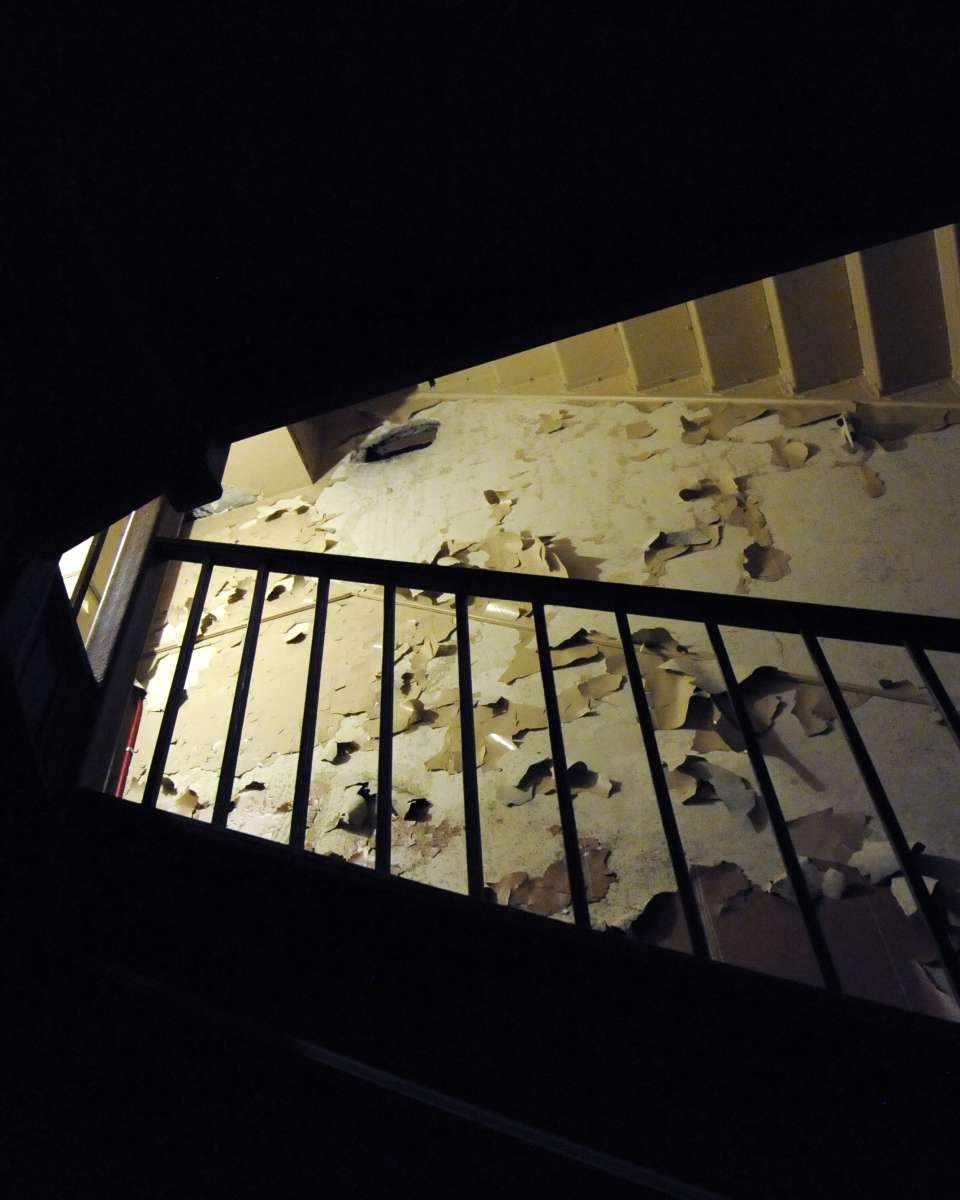
The pandemic probably has ended any still-surviving hopes to put a lot of offices in the Industrial Trust Building (aka Superman Building). Many people will not be returning to conventional business offices, and for many who do, they’ll be spending much less time there than they would have before COVID.
So it looks like apartments and/or condos are the best bet for most of the edifice, with maybe a college or two using some space on the Art Deco skyscraper’s gloriously ornate first floor and a fancy restaurant near the top. And maybe a few co-working spaces scattered through the building, along with some design studios and even some spots for light assembly, say for jewelry? Still, at this point the building seems most likely to simply be torn down.
The Oak Empire
That Southern New England has so many kinds of trees helps explain much of its ecological richness. Oaks are among the most common. I always thought of them as rather boring, especially because their leaves turn blandly brown in the fall and tend to hang on until spring. (I do have fond memories from childhood of treehouses in them and acorn fights.) But Douglas W. Tallamy, an entomologist at the University of Delaware, talks up oaks in his new book, The Nature of Oaks: The Rich Ecology of Our Most Essential Native Trees.
Mr. Tallamy explains how oaks support more life-forms than any other North American tree genus. They provide food (especially acorns and caterpillars) and protection for birds, mammals (consider squirrels, bears and bats), insects and spiders, as well as enriching soil, holding rainwater and cleaning the air. And they can live for hundreds of years.
“There is much going on in your yard that would not be going on if you did not have one or more oak trees gracing your piece of planet earth,” he writes in the book, which shows us what’s happening within, on, under, and around these trees.
Mr. Tallamy offers advice about how to plant and care for oaks, and information about the best oak species for your area.
Hug your oak trees and/or plant some. (And if they get uprooted in a storm, they make about the best firewood.) Fewer lawns, more oak trees, please. Now that it’s April, those remaining ugly brown leaves from last year will soon be pushed out and we’ll soon be enjoying the shade under oaks’ expansive canopies.
Afghan Anxiety
The Biden administration is agonizing about whether to pull all our troops out of Afghanistan by May 1, which would almost certainly hand that nation to the murderous Taliban, killing the government we have tried to help and a lot of people.
Of course, Americans are sick of our almost 20 years of war there. But pulling out completely would further the idea that there, as in many other places, we’re an unreliable ally – making finding or renewing allies that much more difficult around the world. And what do we do to protect the Afghans who have bravely helped us? Many could face being murdered by the Taliban if we leave. We might have to offer to resettle them in the United States – a moral obligation.
Here Today….
“I am sort of happy not to see them again anyway.’’
-- A friend telling me last week that she’s in no hurry to see again some people she hasn’t seen in a year because of COVID-19. The pandemic as social filter. Some folks have liked the cozy simplifications and reduction in social obligations forced by the pandemic.
xxx
“Our revels now are ended. These our actors,
As I foretold you, were all spirits and
Are melted into air, into thin air….’’
― William Shakespeare, in The Tempest
More “melting” these days for those of us of a “certain age’’.
I’m getting used to seeing people, say at a meal, in seemingly good health and cheer, and then soon, maybe a few days later, learning that they have died. It adds to the growing sense of tentativeness, bordering on the eerie, some of us feel as the years go by.
Usually, they so quickly disappear because of, say, a heart attack or a fall, but sometimes it’s more shocking. For instance, a couple of years ago a French friend of mine and I had lunch with a very interesting and generally successful businessman and writer. He was about 60 years old, was very smart, and, while a bit intense, congenial.
Then a couple of weeks after the lunch, we learned in a local newspaper that he had killed himself and left a splenetic letter denouncing his estranged wife and various lawyers connected with his business.
Then, as I wrote a few weeks ago, there was someone I knew many decades ago with whom I reconnected at lunch last fall. He had lived alone, I think, for a long time. He seemed fine. But a few weeks ago I learned that he had died in January. I made a few calls to people who knew him. So far as I can tell no one (except, presumably, a coroner?) knows yet what killed him.
Then there was the neighbor I saw walking up our street with her husband. A week later she was gone.
It’s a cliché that bears repeating: You never know what’s going on with people.
Lost and Refound
PBS will run a three-part series on Ernest Hemingway (1899-1961), starting April 5, looking at his once revolutionary, stripped-down writing style (much of it adapted from newspaper and wire-service writing) and wild life whose drama has often seemed to eclipse his writing. He remains the most famous American novelist and short-story writer of the 20th Century.
What’s old is new again? Perhaps there will now be a renaissance of interest in other “Lost Generation’’ writers, too. Hemingway’s greatest novel, The Sun Also Rises (1926), was the strongest literary representation to a wide public of the feeling of “The Lost Generation’’. Not that all generations aren’t lost, at least to the previous generation.
History, etc., on the Half Shell
I occasionally edit a book, often by a friend. The latest is Bill Perna’s Maine Oysters: Stories of Resilience and Innovation. It centers on the stories of individual Pine Tree State oyster farmers, some natives and some “from away,’’ as they develop a new industry. But it’s also about history, coastal sociology, biology, hydrology, chemistry, climate change, political fights, entrepreneurialism, family dynamics and a bunch of other things, accompanied by gorgeous photos.