


Whitcomb: The Paranoid Style; More Audits, Please; Plants Under the Panels; Socialite Stress
Robert Whitcomb, Columnist
Whitcomb: The Paranoid Style; More Audits, Please; Plants Under the Panels; Socialite Stress

“Outside, the landlord undertakes the landscape
GET THE LATEST BREAKING NEWS HERE -- SIGN UP FOR GOLOCAL FREE DAILY EBLASTWhile he waits. He is ignoble
In his T-shirt, jiggles
A little above the taut power
Of his mower.’’
-- From “Leaving the Country House to the Landlord Five Years Later,’’ by Wesley McNair (born 1941), a Maine-based poet
“Gossip is one of the great luxuries of a democracy. It is the tawdry jewel in the crown of free speech and free expression. You don’t read gossip columns in dictatorships.’’
-- Liz Smith (1923-2017), gossip columnist
xxx

The er, wacky, fez-topped, heavily armed, anti-government (so presumably anti-federal tax) “Rise of the Moors,” some of whose members were arrested on weapons charges along Route 95 in Wakefield, Mass., on July 3, reflect a long tradition in America. They were on their way to “train’’ at some remote location in Maine, where I’m sure they’d find many people who agree with them, especially in huge Aroostook County.
Whatever their hatred of our government, they’re happy to use such government facilities as highways that taxes pay for. Interestingly, unlike most such groups, “Rise of the Moors” seems to mostly be Black Americans, not angry whites.
Then there was the group of more than 30 people traveling from Boston to the Bahamas on an American Airlines flight who refused to wear masks and became disruptive on July 5, when they were catching a connecting flight from Charlotte, N.C., the airline said.
They might call themselves libertarians. I’d call them selfish.
The great historian Richard Hofstadter (1916-1970) would have understood this. His books Anti-Intellectualism in American Life (1963) and The Paranoid Style in American Politics (1965) explored the impressively persistent irrationality and conspiratorial thinking in American culture.
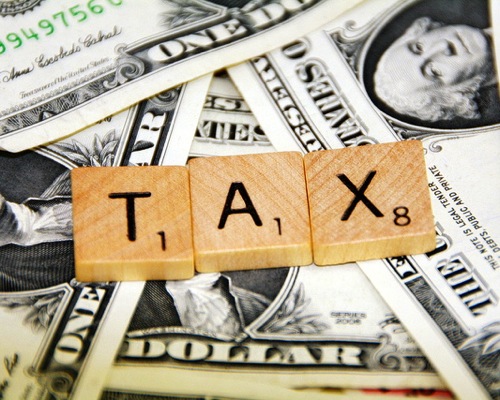
Speaking of taxes, there’s an overdue bipartisan plan crafted by some senators and the White House to pump $40 billion into the grossly understaffed IRS. This should help bring in north of $100 billion in tax revenue to help, a little, fund government over the next decade. The agency has been starved of resources in part because of Republican efforts to help one of its major constituencies – very rich campaign donors – pay as little tax as possible.
The nonpartisan Congressional Budget Office found that IRS funding fell 20 percent in inflation-adjusted terms from 2010 to 2018, and its staffing was cut by a quarter, even as the country’s population grew to about 327 million from 309 million. The IRS said the number of employees working on enforcement has fallen to about 6,500 from about 23,500 over the past decade.
To make matters worse, the agency also has the federal government’s oldest information technology, which is astounding considering the nature of its work. Having had to deal with the IRS in annual phone conversations about a nonprofit organization’s tax status, I can testify to how hamstrung the agency is by understaffing and substandard tech.
No wonder that so many very rich people, who can pay lots of CPA’s and tax lawyers to legally or illegally shield income at home and abroad, pay such a small percentage of their incomes in taxes. (Of course, that the tax code strongly favors capital-gains profits over earned income is a big advantage to the wealthy, too.) Anyway, every year, there’s as much as $1 trillion in unpaid federal taxes.
If the GOP plutocracy doesn’t want higher taxes, it could at least support enforcement of current tax laws, most of which the Republicans crafted. But it won’t.
But maybe of more importance in gaining revenue to fund government without endlessly swelling deficits would be that most nations, including America, have just endorsed the idea of setting a minimum tax rate for multinational companies, many of which search the world for the lowest rate they can extort in return for having operations there; it’s a race to the bottom. In principle, I don’t like corporate taxes, since in the end individuals (such as corporate execs and shareholders!), not some blob called a company, pay the taxes. Still, a minimum global tax for huge companies is fairer than what we have now.

“The gun lobby’s interpretation of the Second Amendment is one of the greatest pieces of fraud, I repeat the word fraud, on the American people by special interest groups that I have ever seen in my lifetime. The real purpose of the Second Amendment was to ensure that state armies – the militia – would be maintained for the defense of the state. The very language of the Second Amendment refutes any argument that it was intended to guarantee every citizen an unfettered right to any kind of weapon he or she desires.’’
--Then retired U.S. Chief Justice Warren Burger in 1990. His view was the consensus one in constitutional-law circles for many decades.
Even folks familiar with the fanaticism of some NRA gun nuts have to be taken aback by their opposition to a bill just passed by the Rhode Island General Assembly that would ban people other than police or contracted and licensed security personnel from carrying guns at schools and another bill that would ban buying firearms for people barred by law from possessing them.
xxx
How nice that the Rhode Island General Assembly has adjourned for the summer, giving everyone a bit of a respite from political and public-policy disputes and offering some space for reflection.
Planting Under the Panels
Understandably, there’s increasing pushback around here about cutting down trees and otherwise “industrializing” the countryside to make way for solar-panel arrays. There’s the aesthetic element, of course, as well as the environmental ones, such as that trees fight global warming by absorbing carbon dioxide, help the soil retain moisture and provide much habitat for wild creatures.
So, as I’ve often written, whenever possible, solar panels should be put on such already developed land as unused parking lots and, of course, rooftops.
But as a story in the Minneapolis Star Tribune described, solar panels can co-exist, albeit in strange ways, with nature. A global energy company called Enel Green Power, for instance, seeded the land beneath its solar arrays with grasses, sedges and wildflowers that attract bees, butterflies and other pollinators. That enriches the environment for miles around. It sure beats turf grass and gravel – the stuff usually put under the panels.
And the vegetation boosts electrical output by cooling the panels. Meanwhile, experts are looking into raising the height of the panels to let cattle graze there!
To read the whole article, please hit this link:
xxx
Nighttime average temperatures are rising faster than daytime ones in global warming. I wonder what impact that might have on wildlife.
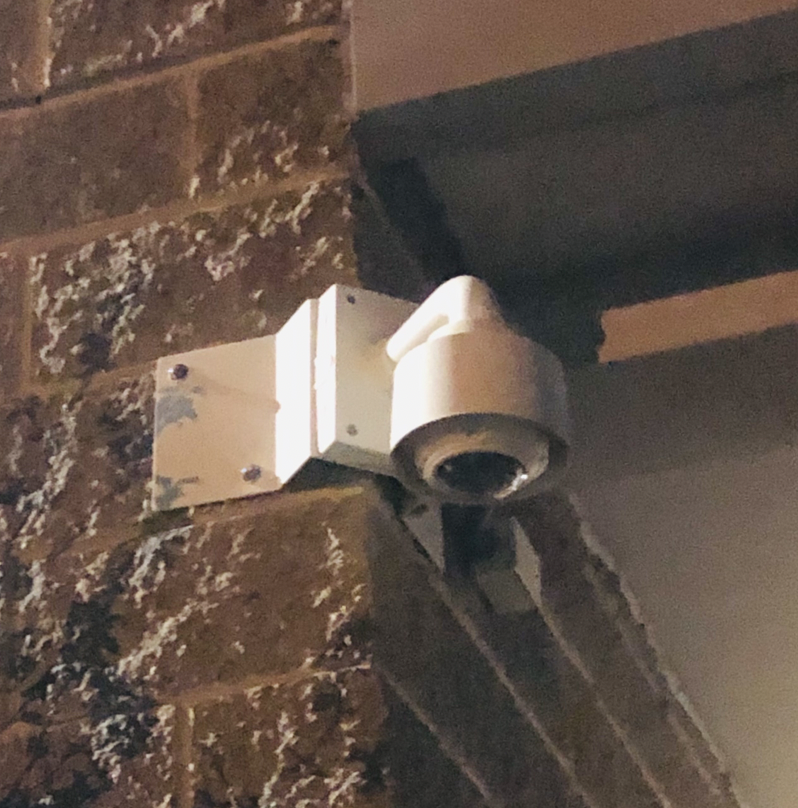
Lower-level workers have increasing reason to be paranoid as companies step up their electronic surveillance of their people. It’s aimed at speeding up production and maximizing profit. You see this is all over the place now, from those vast Amazon distribution centers to Uber and Lyft drivers.
It’s creepy and recalls China’s Orwellian surveillance state.
A partial solution: a revival of American unions to push back. But job-killing robots will push the other way.
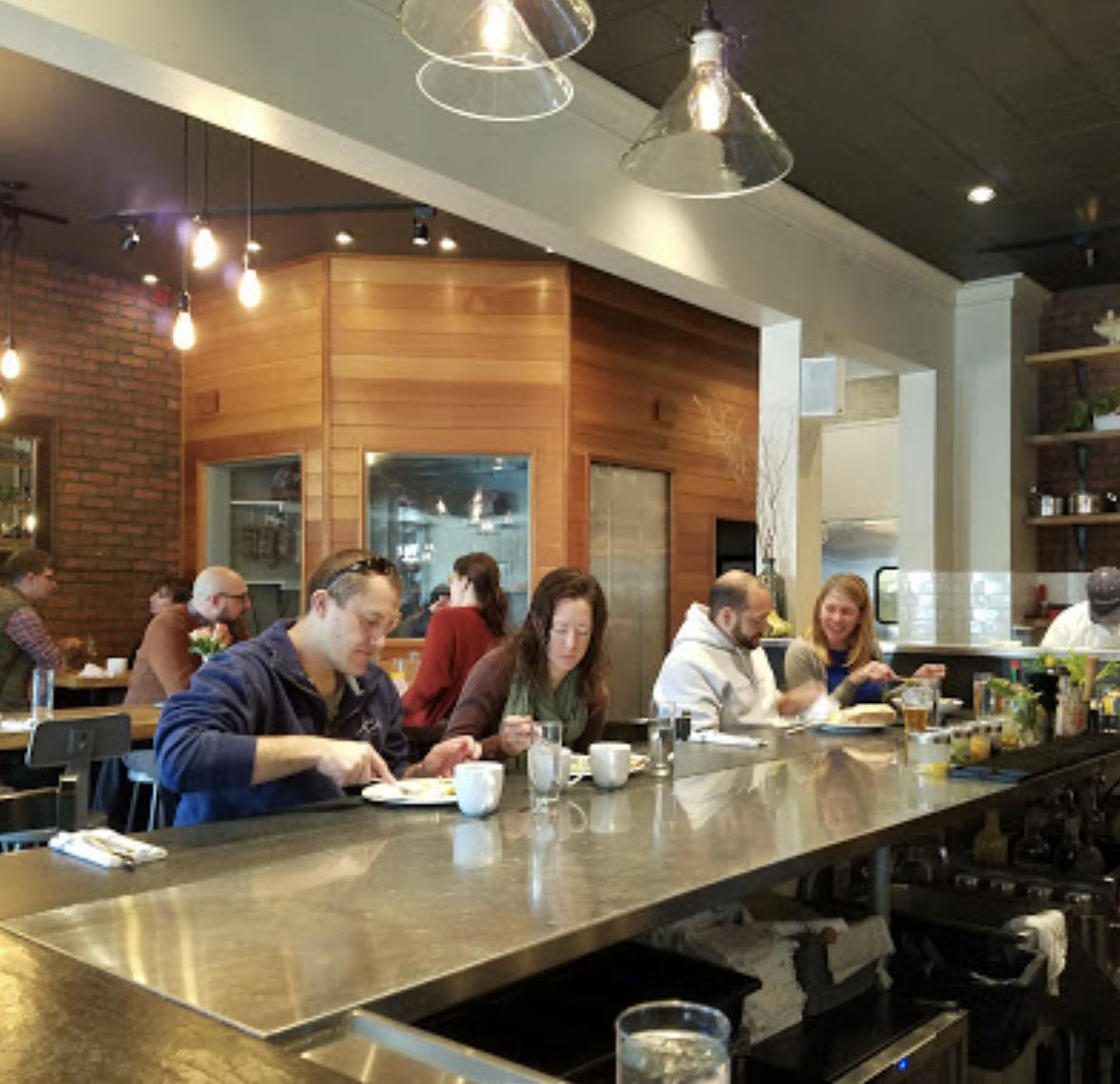
I walk in Wayland Square, on the East Side of Providence, almost daily. It’s now dominated by a wide variety of restaurants, some of them very good. While such neighborhoods used to have more shops than restaurants, now it’s the other way around, as the Internet and other ambiguous forces take away retail business, especially clothing sales. Consider such big pharmacy chains as CVS, whose Wayland Square store, for example, sells a far wider variety of stuff (including underwear, socks and such fast food as plastic-wrapped sandwiches!) than did most drugstores a half-century ago. But bring back the soda fountains!
The exit of some of the charming small shops in places like Wayland Square and Providence’s Harvard Square – Thayer Street –and their replacement by restaurants is sad, even as people are happily eating out more and more in those neighborhoods.
They like to sample food that they feel might be too complicated to prepare at home, they like being served and not having to clean up and they like the psychological ease of meeting people in a place without the complications of being a host or a guest. For one thing, it’s much easier/crisper to end an evening in a restaurant than in someone’s home.
Many people of very modest means spend a fiscally dangerous percentage of their income eating in restaurants. Indeed, it’s so pleasant and easy that many do it several times a week.
But the congenial experience requires what is often exhausting work by restaurant staffs, who must also all too often deal with arrogant, obnoxious people. It’s enlightened self-interest to be nice to restaurant workers. Don’t drive them away even as the tentative retreat of COVID-19 reopens so many understaffed restaurants to indoor service.
The Rust Belt Will Stay Rusty
There was hope in the Heartland/Rust Belt that the pandemic would lead millions to leave the big coastal cities – most notably New York – and move to and energize cities with lower costs that have struggled socio-economically for decades. But that doesn’t seem to have happened. Rather COVID-19 and the accelerated Zooming of many jobs has mostly just encouraged quite a few city dwellers to simply move to the suburbs, exurbs and nearby smaller cities near the big cities where they were living. So property prices have soared there in the past year and a half. Think northern Westchester County for New York City and even Portland, Maine, for Boston.
These new suburbanites continue to like the dynamic metro areas where they’ve been living, and if those cities are near the ocean, so much the better.
Fly Them Some Other Place
I wish that government agencies and public officials would avoid flying flags, usually in times of heightened controversy, with political overtones, such as Black Lives Matter and LGBTQ Pride flags. Stick with federal, state or local government flags, which are meant as symbols of entities that represent everybody.
Another peeve of mine is people taking “pride’’ in their condition, such as being white, Black or gay. There are times when members of long-discriminated-against minorities can take pride in their courage. But why in their born-with characteristics?

The Republicans’ Sharp Turn
In the late 1960s, the Republican Party (“The Party of Lincoln” Republicans used to call it) did a 180-degree turn and became the descendent of the Southern Democrats – promoting “states’ rights” over civil rights. And it began to favor the interests of big business and its campaign donors even more than had the old, Northeast and Upper Midwest-based party, which at least believed in enforcing antitrust laws and accepted the need for taxes adequate for prudently paying for government. While President Ford was pretty moderate, after him the party accelerated to the right to become what these days has fascist elements.
Although some Republican leaders had long been eyeing Southern whites as a fertile field in which to harvest new and reliable voters, it was Richard Nixon’s “Southern Strategy’’ that really got the marketing cooking amidst the tensions of the Civil Rights Movement, which led to the civil-rights laws of 1964 and 1965. Those laws angered many white Southerners.
The Rise, Fall and ? of a Power Couple
In Friends and Enemies: A Life in Vogue, Prison, & Park Avenue, Barbara Amiel, conservative journalist and wife of the former Canadian media mogul and still fine writer (especially as an historian) (Lord) Gordon Black, tells wildly entertaining stories about her gritty, sad childhood, rise as an elegant and provocative writer, especially as a columnist, her energetic sex/romantic life and her becoming a high-end, jet-setting socialite as Mr. Black’s wife after her three previous marriages; Lord Black, for his part, had only been married once before. Oh, yes, and Lady Black discusses her codeine addiction.
Their rise ended as fraud charges took down him and Mrs. Black in connection with his leadership of the late-departed Hollinger, the media company. He eventually did time in a federal prison.
Quite a descent from a duo once called “London’s most glamorous power couple.’’
Much of the book, though sometimes self-lacerating, is score-settling – against those in business and legal systems who, she asserts, engaged in a deeply dishonest persecution of her husband and herself and against those former and highly privileged “friends’’ who dropped the couple when the going got rough.
There’s tons of socialite stuff – dinner parties, couture, jewelry and antiques shopping and so on in Manhattan, Toronto, London, Palm Beach, Paris, etc. And while much of the insular, narcissistic and intensely materialistic world of some of the very rich is tedious, Mrs. Black is such a theatrical and sometimes hilarious (especially in brilliant gallows humor) writer that you’re swept along. At the end of the book, there are highly precise lists of her friends and enemies. A great show in itself.
This is one of the year’s great reads. The last line of the book before its coda says to her enemies: “And bugger off to the whole damn lot of you. We’re still here. You lost.’’ Well, not exactly….