


Whitcomb: Paring Down; Lost Amusements; Nice Idea but Not Near Us; Into the ‘Meta’ Maze
Robert Whitcomb, Columnist
Whitcomb: Paring Down; Lost Amusements; Nice Idea but Not Near Us; Into the ‘Meta’ Maze

“Seeds in a dry pod, tick, tick, tick,
Tick, tick, tick, like mites in a quarrel—
GET THE LATEST BREAKING NEWS HERE -- SIGN UP FOR GOLOCAL FREE DAILY EBLASTFaint iambics that the full breeze wakens—
But the pine tree makes a symphony thereof.’’
-- From “Petit, the Poet,’’ Edgar Lee Masters (1868-1950), American poet and lawyer
“Nothing is or can be so fixed in the mind, or fastened in memory, but in short time is or may be loosened out of the one, and by little and little quite lost out of the other. It is therefore necessary that memorable things should be committed to writing.’’
-- Sir Edward Coke (1552-1634), English lawyer, judge and politician who is considered the greatest jurist of the Elizabethan and Jacobean eras.
"I guess the trouble was that we {Americans} didn’t have any self-admitted proletarians. Everyone was a temporarily embarrassed capitalist.’’
-- John Steinbeck (1902-1968), author most famously of the novel The Grapes of Wrath
xxx

Today we unnecessarily enter the dark days.
xxx
Look at all those house painters and masons rushing to finish outside projects before the real cold weather finally sets in. They must be raking it in these days, though it’s hard work. Learn a trade!
xxx

On the Zoom, I waved around some antlers that I believe came from a deer shot by our paternal grandfather in the ‘20’s in Maine. It was one of the many old things that have continued to gather dust in our cellar in the 31 years we’ve lived in our old house (built in 1890). I thought that my outdoorsy brother, who lives in Michigan, might be interested in taking the antlers off our hands but he demurred. He and I have inherited guns but don’t hunt. Fishing is the limit of our wildlife murder.
We’ve dozens of old things of no utility. For instance, I just again came across a framed tourist map of the Georgia coast that my father must have picked up when he was briefly stationed there as a Navy lieutenant in World War II (or, as we always called it “The War’’). It would be meaningless to most everyone, including the Salvation Army or Savers.
I’m trying to work up the decisiveness to far more rigorously clean out this stuff, possibly even including a few family leftovers going back to the 19th Century. Luckily, I have a cousin who has given us some very keepable family stuff, including a very nice portrait of, I think, a great-great-grandmother painted in the 1830s. She looks like Emily Dickinson.
Unfortunately, my parents had little interest in saving some of the better stuff of historical or at least romantic family interest and gave a lot away or just threw it out.
I would have loved to have inherited something, maybe a book, from my maternal grandfather’s cousin Chester Gillette (1883-1908), who was electrocuted by the State of New York for murdering (with a tennis racket allegedly wielded on a canoe outing) a young woman whom he had impregnated; the circumstantial nature of the evidence makes the case still controversial. Apparently, Chester was an avid reader and not a bad writer. Some of you may have read Theodore Dreiser’s novel An American Tragedy and/or better, seen the movie A Place in the Sun, based on the case.
(Some of young Chester’s problems were said to stem from the fact that his parents were religious fanatics.)
But I do have some beautifully leather-bound books owned by a great uncle who was stabbed to death in Chicago in mysterious circumstances. He, too, was a big reader!
Cheap Thrills
With staring at screens taking up much of the waking hours of young people, how many still engage in the seasonal activities we used to enjoy in New England? In my family and those of our neighbors, the seasonal cycles included smelt fishing (fried smelt are delicious!) in the early fall and making bayberry candles later in the fall.
You’d strip as many bayberries as you could off the bushes (of which we had many) and boil ‘em in water, in which the wax would rise to the surface, which we then skimmed off. Cheap and aromatic thrills, though it was a lot of time for only a little wax. Five pounds of berries could yield only about a pound of wax
Because of this small, and from season to season, unpredictable yield, these candles were only for special occasions or as gifts. Pre-moneyed small children would happily give them as Christmas presents.
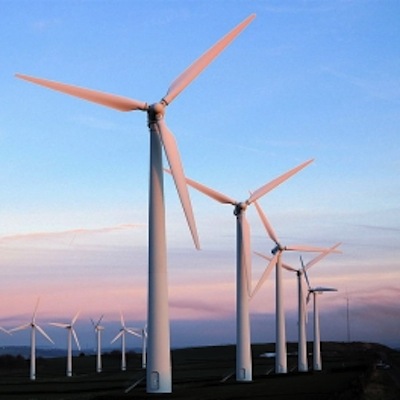
In yet another example of how it often seems impossible to get big projects done in America, Maine voters, by about a 60-40 margin, approved a ballot question that would stop a 145-mile-long Central Maine Power Co. transmission line that was to deliver hydro-electric power from Quebec to Massachusetts in an effort to reduce the reliance on fossil fuels. The Bay State, of course, has by far New England’s biggest population and is the region’s economic dynamo and biggest polluter. But most of Maine is woods.
The opponents of the line, for which a stretch of land has already been cleared, includes people who just don’t want a lot of trees cut down and fossil-fuel interests that don’t want the competition. (For some kinds of wildlife -- especially certain bird species -- that cleared land is perfect habitat.)
In most developed nations, the central government would have just ordered the construction of such a project for “the greater good”. But in the U.S., The Land of Litigation, and where the states have great power, getting big projects done is much, much more difficult. Installing smaller “green” electricity generators, as small as the solar panels on houses, that provide “distributed power’’ is of course much easier. (Solar panels are cropping up on many roofs in our neighborhood; wind turbines, even small ones, are a harder sell.)
This is a pretty good description from the Environmental Protection Agency of distributed energy:
“Distributed generation refers to a variety of technologies that generate electricity at or near where it will be used, such as solar panels and combined heat and power. Distributed generation may serve a single structure, such as a home or business, or it may be part of a microgrid (a smaller grid that is also tied into the larger electricity delivery system), such as at a major industrial facility, a military base, or a large college campus. When connected to the electric utility’s lower voltage distribution lines, distributed generation can help support delivery of clean, reliable power to additional customers and reduce electricity losses along transmission and distribution lines.’’
But utilities dislike distributed power for financial and engineering reasons.
Despite the hoopla from the Glasgow conference on slowing global warming via slashing fossil-fuel burning, it’s pretty clear that most Americans still don’t think much about global warming and its effects, and they certainly don’t want to spend more on goods and services to slow it. Yes, farmers in the drought-stricken West and victims of big coastal storms worry about it intensely for stretches, and many young people are expressing concern. But most folks don’t seem eager to change their lifestyles to address it. The politicians pick up on that.
xxx
Job growth in Providence’s Route 195 redevelopment district has been disappointing so far. However, the area’s increasing visual attractiveness, including its scenic location along the water, and Brown University’s ever-expanding medical and high-technology activities, with their business spinoffs, make the district’s future brighter than you might think.
I like those green and red lanes on some downtown Providence streets meant to make traffic more orderly. I don’t know how well they achieve that aim but they do make the streetscapes cheerier. Gray is so depressing.
xxx
It's rather sad to listen to the amateurish anchors and anchorettes on local TV news; it’s especially embarrassing on the weekends, when the sub-junior varsity performers fill in. As big national chains have taken over most local broadcasting, slashing payrolls, there’s much less money left for such expensive things as investigative journalism, or even newsreaders who can be trained to speak well. The “news” mostly comes down to the likes of fires and car crashes, etc., much of it displayed via free video from viewers (love those cell phones!); sports, and of course the most important people -- the weather reporters (with info from the tax-supported National Weather Service).
xxx
I got an email from an old friend in Greensboro, N.C., the other day in which she quoted from a long-deceased mutual friend’s letter, written in the late ‘80s, in which he made some snarky comments about me. Seeing his very idiosyncratic, tiny handwriting brought back memories of the distinctive voice of this charming and quirky man, who was most notably a superb musician. Now that most letters are by email, or worse, text, we’ll have less and less opportunity to come across these often poignant opportunities to review the past.
But keep writing those notes on paper Christmas cards! And save those old letters!
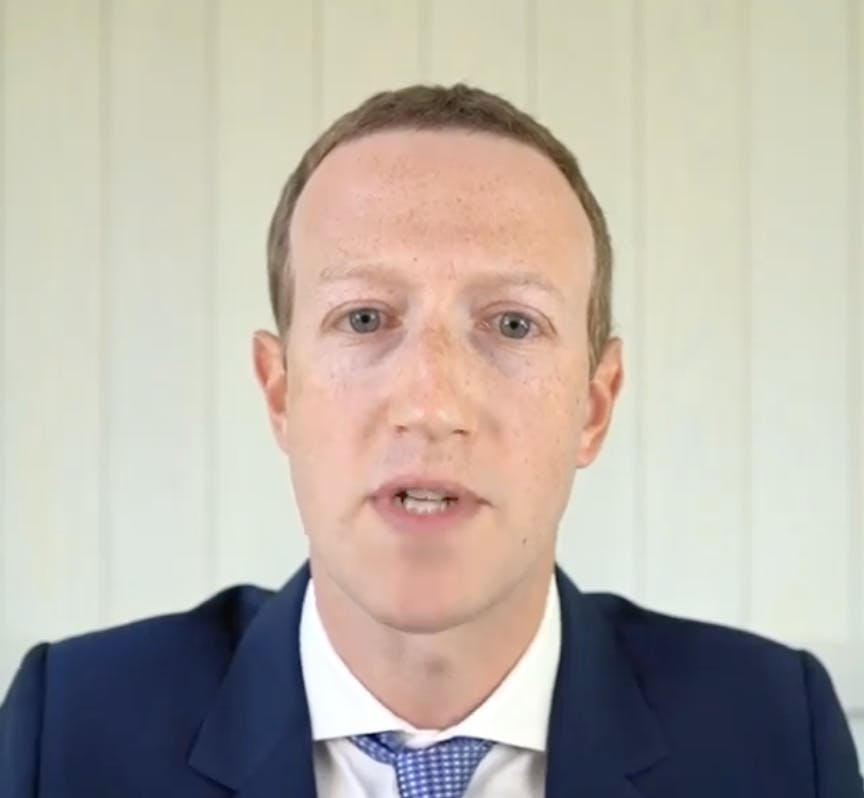
Soft-spoken sociopath Mark Zuckerberg, whose ambition is, to recall the 18th Century expression, to be “rich beyond all the dreams of avarice,’’ has now, after having done so such damage to civic life, changed the name of Facebook to “Meta.’’ His creepy plan is to create a “metaverse,’’ wherein customers can wander, with goggles and other techno devices, in artificial intelligence-created nonphysical worlds, complete with nonpeople “people” (aka avatars) and have all sorts of “experiences’’. No need to travel. Save money on tickets! Just keep buying stuff that Zuckerberg advertises in his brave new world.
What a way to avoid the inconveniences, pains and joys of the “real world.’’ No nasty smells, but no smells of spices and flowers either. No soft breezes. No wet kisses. But what a lucrative way to make people less willing to expend the effort to make things better in “the real world,’’ whatever that is these days. Bread and circuses indeed.
Where oh where is the Antitrust Division!
Internet Ingenuity
Consumers should be aware of a brazen new scam going around, unless the crooks ran for cover after I spotted it. But then scams breed like flies in the Great Dismal Swamp of the Internet.
People have been sent emails purporting to be associated with Rhode Island-based CVS, the pharmacy chain. It’s all under “CVSReward,’’ complete with CVS typography. The emails involve taking a survey for which some (or all?) respondents receive a “free gift” of, say, a watch. The recipients allegedly are only charged for shipping and handling.
But in fact, the recipients are charged for the full price of the watch, plus of course “shipping and handling’’.
Do CVS, the Federal Trade Commission and other authorities know about this? Is there a security gap at CVS that lets these con men obtain customers’ email addresses?
Then there’s the recent bogus email from Providence-based “Citizens Bank’’ (with its green logo):
“Valued Customer,
“We are sorry, your Citizens account is temporarily locked. This action was taken after we noticed you logged in with a computer or mobile device we are not familiar with and you do not usually use.
“To get unlocked, simply confirm your identity with us by….,’’ then there’s a link by which they can defraud you.
xxx
Switzerland, long a favored location for rich people to hide money, is now a favored place for the affluent to spend lots of money to commit suicide in luxurious surroundings. Wealth can’t block dying but it can ease it.

The Republicans’ sweep last Tuesday in Virginia, and near-loss of the governorship in New Jersey, certainly reflected in part the party’s often very effective button-pushing on cultural issues. This includes denouncing the teaching of “Critical Race Theory,” which has all too often been demagogically misdescribed, and excessive sex ed, in the schools and complaining about the loud but small minority of politically suicidal Democrats who are obsessed with racial and sexual identity. (From certain liberal media you might get the impression that half the population consists of transexuals of color!)
Then there are the “populist’’ anti-vax and anti-mask appeals as well as the GOPQ promise to cut taxes further.
(Trump and his lackeys continue to scream the Big Lie about the “stolen” 2020 election. If any recent presidential elections were “stolen’’ it was those in 2000 and 2016. But isn’t it odd that other Republicans seem to have little problem in getting elected?!)
Again, the GOPQ has long been far more effective than the Dems in using hot-button cultural issues – guns, abortion, “religion’’, etc. They wield them to distract from its generally unpopular economic policies, supported by the big money and its family dynasties (Kochs, DeVos, etc.) that really own the national party.
But also important last week was that voters blamed the Democrats for a couple of connected things over which President Biden and the Democratic leadership had no control. Consider the international supply-chain shortages, inflation and innumerable dislocations caused by the ebbing (for now?) of the COVID-19 pandemic, which has caused a surge in pent-up consumer demand. And then there was the sudden and unexpected economic slowdown this summer and fall caused by the disease’s Delta variant. The economy and citizens’ perception of it, however inaccurate in this post-truth era, probably remains the biggest factor in elections.
Knowledge of the facts and research are not requirements for voting!
Finally, there’s Joe Manchin, the outstandingly avaricious “Democratic” West Virginia senator representing the coal industry. (His daughter Heather Bresch, the former pharm exec, rivals him in the greed/sleaze department.) Mr. Manchin, often aided and abetted by Arizona Sen. Kyrsten Sinema, also beloved of big donors, have blocked for many weeks the passage of Biden’s social-safety-net-and-climate package, many of whose elements are very popular in the general public.
This in turn has given the public the sense that the Democrats can’t get big things done, particularly since they hadn’t -- until Friday -- been able to push through their physical-infrastructure bill either! Now at least they have that win. Joe Biden’s soft-spokenness and courtesy are probably part of the problem. He has looked and sounded weak to the Americans who prefer a thug to lead them in these days of rapidly decaying American quasi-democracy.
I have often written that Biden and Democratic congressional leaders should have taken a more modest approach early – just gotten the very popular $1.1 trillion physical infrastructure (roads, trains, electric grid, etc.) through and put off the too ambitious, complicated and controversial social-safety-net-and-climate package, which has been cut to $1.75 trillion from $3.5 trillion to try to please the insatiable Senators Manchin and Sinema. But the impatient minority on the left (“crazy”) side of the party suicidally kept pressing to make passing the social-safety-net-and-climate bill a condition for passing the infrastructure measure. Truly nuts!
Maybe the voting last Tuesday will yank them into reality. In any case, who knows what will happen in next year’s elections? A lot can change in a week, let alone a year.
Meanwhile, given who really runs America, it seems close to impossible to enact any substantial tax hike on billionaires to pay for some of either of these bills. And yet there are so many postponed public needs as the country’s social and physical structures continue to erode. Maybe we should look at European-style national value-added taxes (in effect sales/consumption levies that everyone must pay) as an alternative. The billionaires just might permit that.
The Way We Live Now
Rhode Islanders and other Americans should grab a copy of Michael Fine M.D.’s latest short-story collection, Rhode Island Stories, and absorb more about how we live now, in all its gritty mess and occasional grace. Like other great physician writers, such as Anton Chekhov and Somerset Maugham, Dr. Fine mixes the skills of a clinical observer of individuals with a broad understanding of society’s socio-economics, along with compassion and tolerance, a sense of humor and appreciation of irony.
In doing so, he creates an unforgettable panorama of contemporary American life, made more vivid by the intense diversity, ethnic, economic, and otherwise, found in tiny Rhode Island.