


Whitcomb: Fusion Future; Litigation Traffic Jams; Depressing College ‘Bookstores’; Floors Over Water
Robert Whitcomb, Columnist
Whitcomb: Fusion Future; Litigation Traffic Jams; Depressing College ‘Bookstores’; Floors Over Water

“But whatever we said
In the bright leaves was lost,
GET THE LATEST BREAKING NEWS HERE -- SIGN UP FOR GOLOCAL FREE DAILY EBLASTQuick as the leaf-fall,
Brittle and blood red.’’
-- From “A Reminiscence,’’ by Richard O. Moore (1920-2015), American poet and documentary-film maker
“One is never as unhappy as one thinks, nor as happy as one hopes.’’
--Francois de La Rochefoucauld (1613-1680), French writer
“People are far more sincere and good-humored at speeding their parting guests than on meeting them.’’
-- Anton Chekhov (1860-1904), Russian playwright, short-story writer and physician

Some people are already setting up complicated Halloween displays. Business knows that there’s lots of money in bogus horror.
Scott Fitzgerald, in The Great Gatsby, said: “Life starts all over again when it gets crisp in the fall.” But do we want it to start all over again?
A Fusion-Energy Revolution Starting in N.E.?
Could nuclear fusion’s long-prayed-for potential for providing safe and endless amounts of energy be approaching reality? That’s what scientists Bob Mumgaard, chief of Cambridge-based Commonwealth Fusion Systems, and Dennis Whyte, director of MIT’s Plasma Science and Fusion Center, think, reports the very useful Commonwealth Magazine.
The hope is that fusion could produce carbon-free, cheap energy, which, unlike nuclear fission, which powers current nuclear reactors, leaves no radioactive waste and could reduce the need for solar and wind energy, whose installations often offend Nimbys and others. Fusion (as in the Sun) merges two atoms together under extreme heat to release vast amounts of energy. Fission, on the other hand, involves splitting atoms to release energy. Think Hiroshima….
The magazine reported:
“The potential benefits of fusion are well-known, but containing a mixture of electrically charged particles being heated at 100 million degrees is a major challenge. In an interview on {the magazine’s} The Codcast, Whyte and Mumgaard explained how earlier this month {September} they successfully developed a high-temperature superconductor electromagnet that requires a lot less space and a lot less heat to contain what amounts to an artificial star.’’
“They said their technological breakthrough gives them confidence that they can now move forward with two new challenges where the science is more straightforward – proving a fusion reaction can generate more energy than it uses by 2025 and developing a commercial-scale fusion power plant by around 2030.’’
Commonwealth Fusion is building a fusion-technology campus at Devens, Mass. The eyes of the world will be upon it. The fusion work displays the formidable scientific and technological expertise and inventiveness in New England, with immense regional economic and social benefits accruing from them.
Devens itself is a fascinating creation -- a regional enterprise zone and U.S. Census-designed place, in the towns of Ayer, Shirley and Harvard. It’s the successor to Fort Devens, a military base that operated from 1917 to 1996.
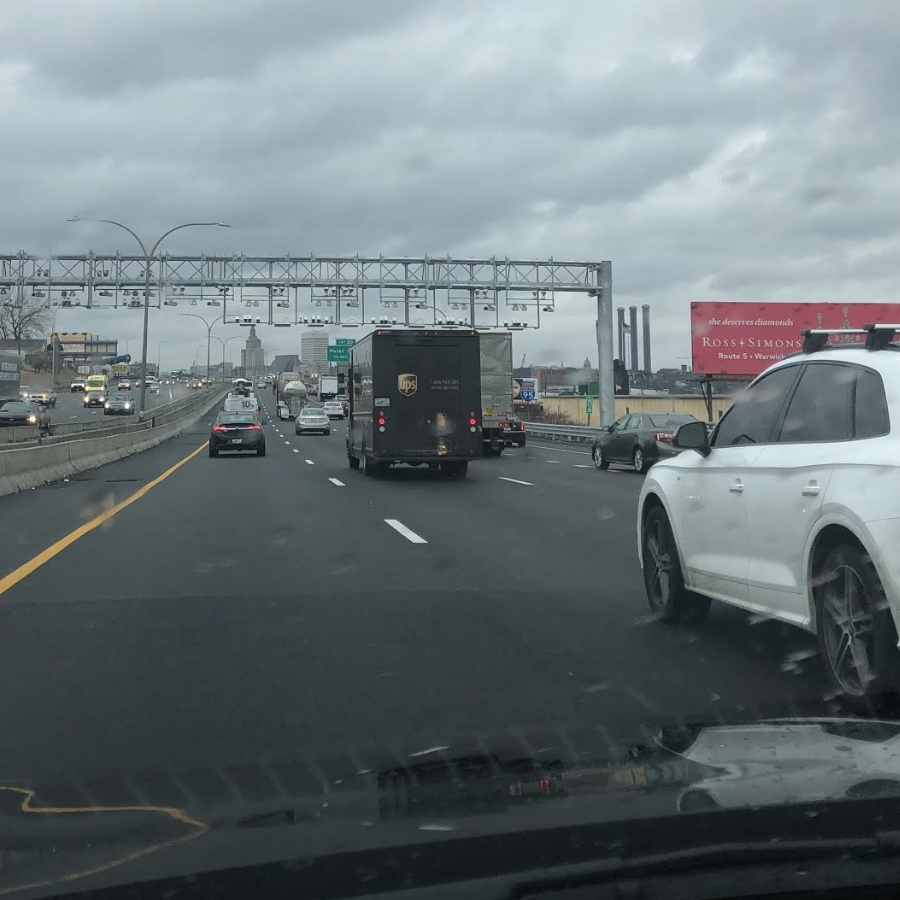
The First Circuit Court of Appeals has ruled that truckers trying to kill Rhode Island’s truck tolls can’t drag former Gov. (and now U.S. Labor Secretary) Gina Raimondo and key former state legislators into giving time-consuming depositions to explain how they came up with the truck-toll plan. The truckers will inevitably try to get the Supremes to reverse that ruling, itself a reversal of a U.S. district court ruling.
Well, the truck toll plan was intensely discussed in public before the legislation was enacted. The deposition idea is just more mischief-making aimed at stopping the tolls by ensnarling them in open-ended litigation. The levies were created to help pay to fix Rhode Island’s infamously bad roads, and in a fair way: Trucks do the heaviest damage.
Governors and legislators are generally legally shielded from having to personally defend their policies in lawsuits. After all, they’ve already had to defend their policies in public. And isn’t it already far too difficult to get anything important done in government – local, state or federal? Gumming up the works even more with such mandatory depositions would make things worse. If the public doesn’t like this or that policy, it can press political leaders and/or, in some cases, regulators to change the policy by statute and/or regulation and/or vote the politicians out of office.
Philip K. Howard, of Common Good (commongood.org), and other reformers have written eloquently about how America’s pathological litigiousness and regulatory red tape make it the most difficult country in the Developed World to get projects done for the public good. You see the results around you.
xxx
The trades, in building and other fields, offer much promise to young people. They provide jobs that are far more resistant to automation and other employment-killing changes than many other sectors. So all hail MTTI, the trade school in Seekonk, Mass., with a track record for getting its students solid employment.
Try getting an electrician or plumber on a weekend!
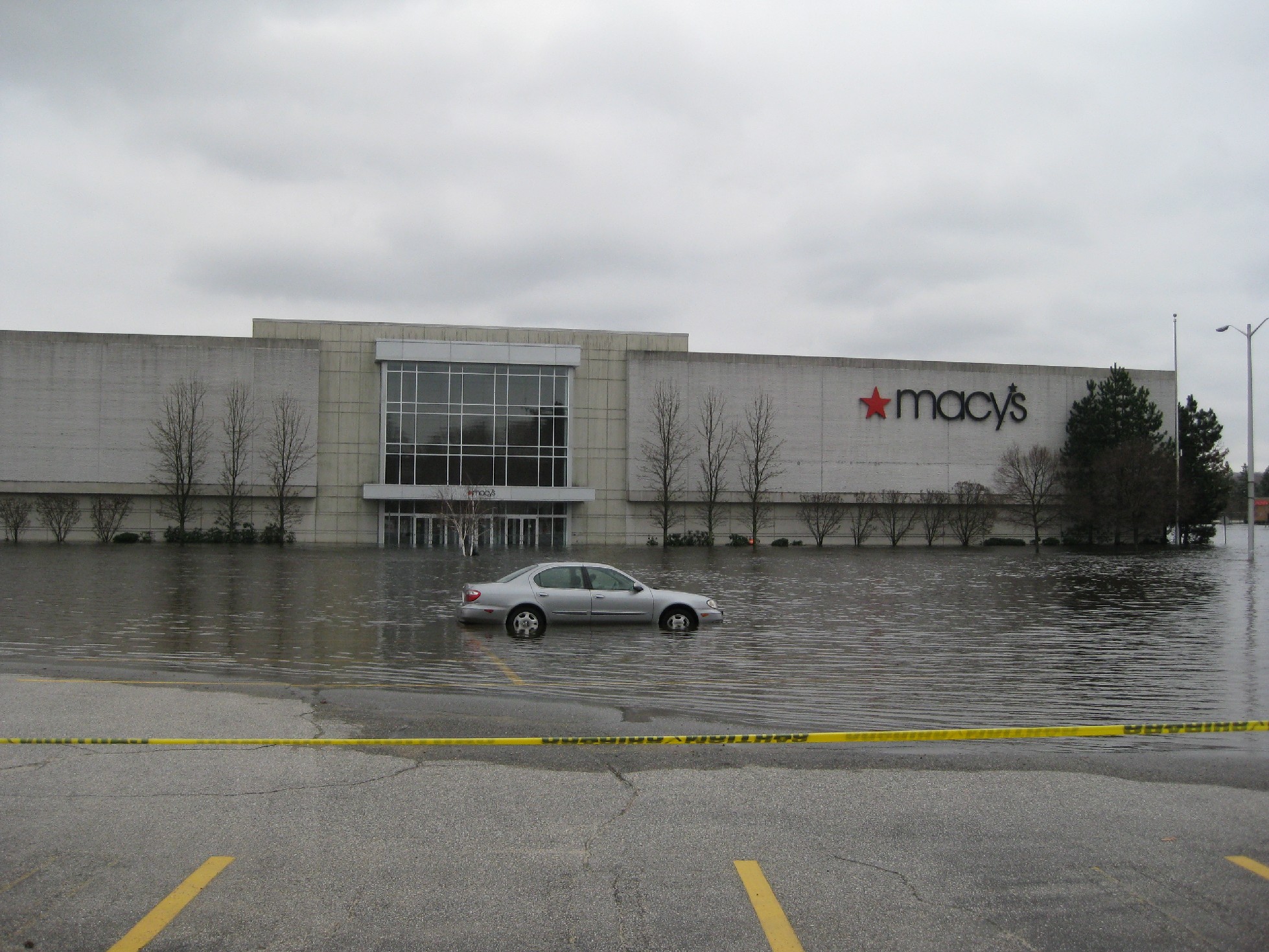
It looks like many New Englanders will be paying more for federal flood insurance, which subsidizes people to own property that maybe shouldn’t have been built on in the first place, especially now with global-warming-related rising seas and more extreme rainfall events. What do we do about places like Barrington and Warren, R.I., and Scituate MA, parts of which seem almost as low as Venice?
“Streets full of water. Please advise.’’
-- Telegram from Venice by American humorist Robert Benchley (1889-1946)
Meanwhile, some municipalities, including Boston, are imposing new building rules in flood-prone areas that mandate that a structure’s utilities and residential space be put on the equivalent of the second floor or mezzanine, instead of in the basement or on the first floor, but, with the proviso that the building call be made taller so as not to discourage development (and associated property-tax revenue).
That sounds reasonable but it will mean that water views will be that much more obscured in some places, except for the generally affluent people in these buildings.

It’s sad to see how college bookstores, once major and charming attractions in New England’s many college towns, are being ruined by the chains that have bought them. There are fewer and fewer books as they’re replaced by the likes of logoed sweatshirts, tacky tchotchkes and other junk. The Brown “Bookstore’’ is particularly depressing. If you want to go to a real bookstore in Providence, I recommend Symposium Books, downtown, or Books on the Square and Paper Nautilus, on Wayland Square.
I guess that the Internet, by taking away the monopoly on textbook sales, helped drive a stake through the old college-bookstore business model. Even the once-grand Harvard Coop bookstore is a skeleton of its former self.
Reading on a screen is not the same as reading on paper, which is easier on the eyes and better supports comprehension and memory of the material. I thought of this the other day in the Route 128 Amtrak/MBTA station, where there’s no longer a newsstand. For that matter, other than one helpful and lonely Amtrak clerk there are no longer any service people to buy tickets or coffee from, or ask a train-schedule question. Heading to the paperless and, for some, service less society.
xxx
Even in the pouring rain in downtown Boston last Tuesday, it was fun to see a dozen Emerson College film students shooting scenes on the sidewalk across from the Common. Most appeared to be of East Asian ancestry and half of them had haired dyed green, purple or blue.
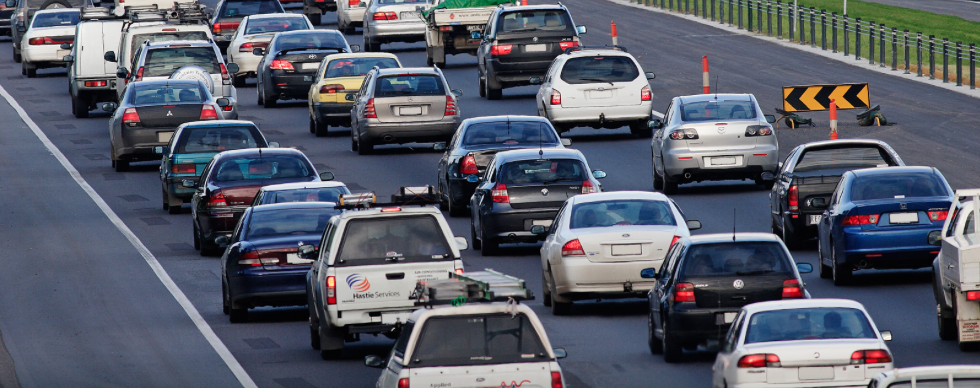
Cars and trucks are better built these days but the drivers are worse. Their antics theatrically display the intensifying crudeness, lack of basic public courtesy (and even knowledge of what courtesy is and why we need it) and selfishness in the land.
We’re seeing more incidents like the one I witnessed last Tuesday on Route 95: A guy and a pal in a truck with Florida plates were speeding, doing very close (say three feet) tailgating, pushing other drivers out of lanes, and giving the finger to any who looked irritated. Of course, this being drugged-out America, the truckers could have been soaring on amphetamines.
Then there are all too many airline passengers, whose obnoxiousness and potential for violence are more fearsome than the coronavirus vaccine they may have refused because some crook on “social” media or Fox told them not to get it.
That airplane seats in coach have been made so narrow to cram in more customers and maximize revenue, and that so many Americans are fat – and getting fatter-- has raised the potential rage level. Airline reregulation is looking better and better….
Perhaps only sociologists and psychiatrists can define with any accuracy what mixture of influences from our tawdry media, ever-wider class divisions, the implosion of the two-parent family and nearly nonexistent civic education for the young is causing this upsurge in barbarism.
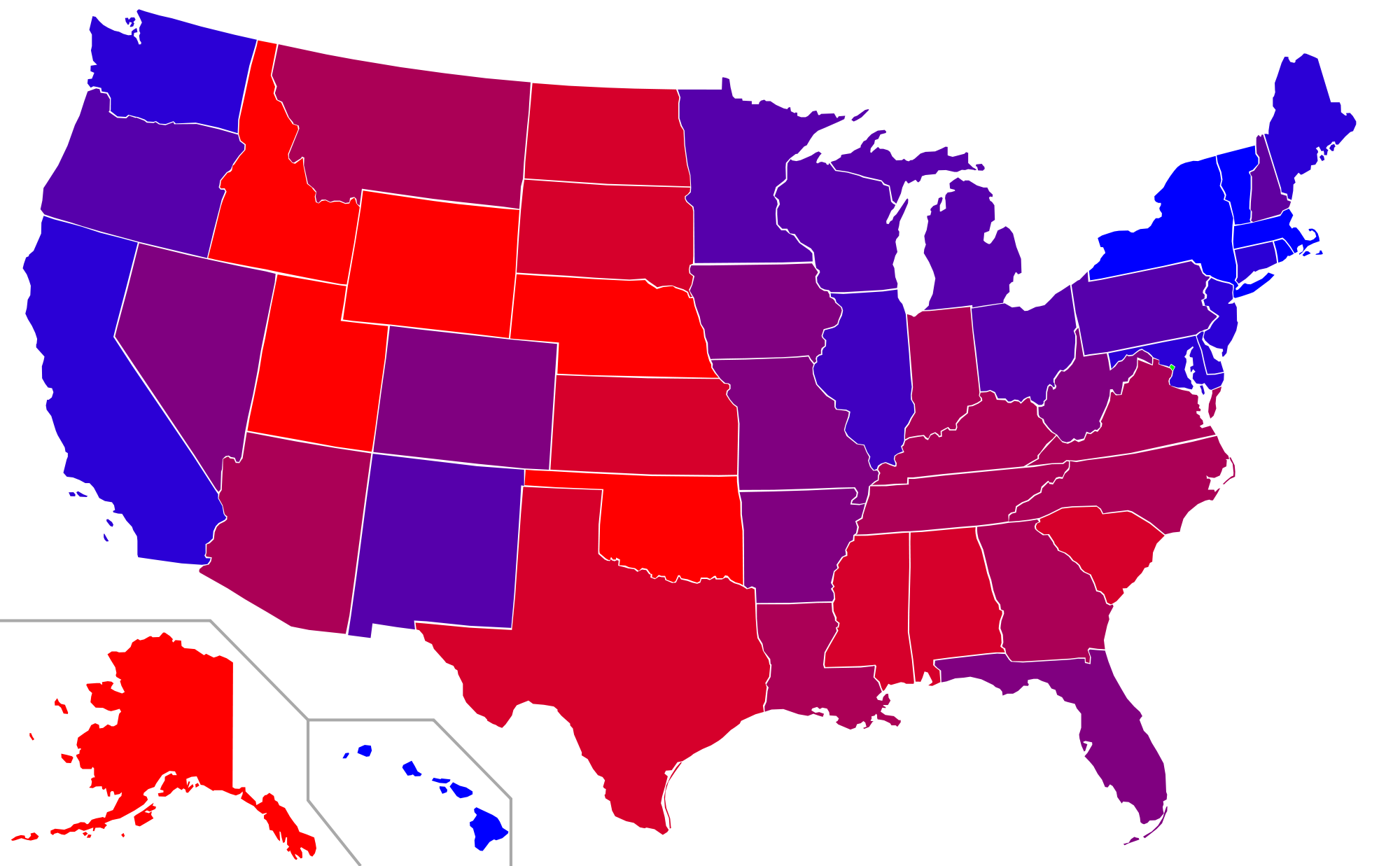
Here’s yet another way in which the Blue States subsidize the Red States.
Throngs of anti-vaxxers, mostly in the Confederacy of Willful Ignorance and Bogus Conspiracy Theories known as the Red States, are demanding to be treated with the new, experimental drug to treat COVID-19 called monoclonal antibodies in lieu of getting a vaccine. Its supply can’t keep up with demand.
Vaccines, of course, usually prevent the disease; the monoclonal stuff is for when you get it. In the relatively rare cases of contracting the virus after vaccination, the shots make it extremely unlikely that you’ll get very sick. And getting the vaccine greatly reduces the chance you’ll spread the disease.
Monoclonal antibody therapy can cost $1,500 to $2,100 per infusion, which requires about an hour and a half, including post-infusion, and clinical staffing must taken away from other tasks. The vaccines cost about $20 a shot. Federal taxpayers pay for this. Blue States, overall, subsidize federal spending in Trump Country by paying in more than they get in return from Washington.
The anti-vaxxers (getting most of their “information’’ from demagogues and con men on social media and the likes of Fox “News,” etc.) cite as a reason not to get anti-COVID vaccines that they were “rushed’’ into distribution. But the hyper-expensive monoclonal antibody treatment was also “rushed” into distribution.
I think some of the “vaccine hesitancy,’’ by the way, is simply fear of needles. It’s amusing to see big lugs who look like football tackles looking terrified at the prospect of being jabbed. But what about a needle in your arm for 90 minutes?

“We’re getting along very, very well with the Taliban.’’
-- Donald Trump on Sept. 10, 2020
General Frank McKenzie, the head of the central command, and other senior officials told the House Armed Services Committee last week that the collapse of the Afghan government and the Taliban takeover can be traced to the 2020 Doha Agreement between the Taliban and the Trump regime, which promised a complete U.S. exit by this past May 1.
“The signing of the Doha agreement had a really pernicious effect on the government of Afghanistan and on its military, psychological more than anything else, but we set a date – certain for when we were going to leave and when they could expect all assistance to end,” McKenzie said.
Defense Secretary Lloyd Austin, testifying alongside McKenzie, said he agreed with him. He added that the Doha agreement also committed the United States to ending airstrikes against the Taliban, “so the Taliban got stronger, they increased their offensive operations against the Afghan security forces, and the Afghans were losing a lot of people on a weekly basis”.
Yep.
That the evacuation at the Kabul airport was a horrific mess was inevitable.
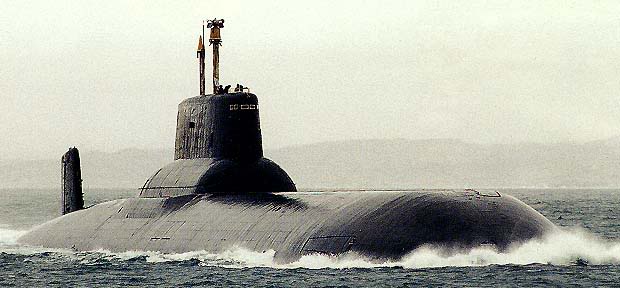
The Biden administration could have better handled the process that went into the Australia-U.S.-Britain deal in which the Aussies will build nuclear submarines with American and British technology instead of ordering French diesel-powered subs, which was the now superseded deal. The three English-speaking nations should have communicated earlier with Paris to explain why the new sub deal was much better on a security basis for them than buying the subs from the French, who angrily acted betrayed. That’s not to say that the French haven’t themselves sometimes blind-sided their allies.
Nuclear subs have much longer ranges and are quieter than diesel subs, and thus are more effective as deterrents to Chinese increasingly aggressive expansionism.
The Last Le Carre Novel
Even in his late eighties, John le Carre (The Spy Who Came in From the Cold, etc.), who died last December at 89, remained a great writer, as you can see in his very atmospheric last novel, Silverview, which will be published next month. You can read an excerpt (with beautiful art) in the October issue of Harper’s Magazine. READ MORE