


Whitcomb: Making Stuff Where You Live; Facing the Pension Peril; Get off the Shore; Save the Woods
Robert Whitcomb, Columnist
Whitcomb: Making Stuff Where You Live; Facing the Pension Peril; Get off the Shore; Save the Woods

Snow o’er the darkening moorlands,
Flakes fill the quiet air;
Drifts in the forest hollows,
And a soft mask everywhere.
The nearest twig on the pine-tree
Looks blue through the whitening sky,
And the clinging beech-leaves rustle
Though never a wind goes by.
But there’s red on the wild rose berries,
And red in the lovely glow
On the cheeks of the child beside me,
That once were pale, like snow.
-- “The February Hush,’’ by Thomas Wentworth Higginson (1823-1911), Massachusetts Unitarian minister, author, abolitionist, and Civil War soldier.
“How simple and frugal a thing is happiness: a glass of wine, a roast chestnut, a wretched little brazier, the sound of the sea.’’
-- Nikos Kazantzakis (1883-1957), Greek writer, best known for his novel Zorba the Greek
.jpg)
The pandemic obviously accelerated the move for many more people to work at home. This has been most noticeable, of course, for people mostly slaving away on computers – variants of “white-collar work,’’ though relatively few people wear white shirts anymore.
What about other work – artisans making things, small-scale assembly, etc.? Up to when the Industrial Revolution resulted in the mass of workers laboring outside the home, often miles away, most people worked in or very near their houses, in such trades as blacksmithing, carpentry, clothes making, and, of course, farming. Thus most neighborhoods had a mix of residential and commercial functions.
Modern zoning changed that in many places, creating neighborhoods that were solely housing, most often single-family residences, or just stores and other commerce. This is less convenient but it had an aesthetic appeal to many people, although it necessitated much more traveling, generally by car.
But with the change in the economy and in work patterns, zoning and other local regulations need to be reformed in some places to allow a wider range of work to be done at home, encouraging the formation of what you might call little one-person or family “factories” making small batches of goods and such trades as barbers as well as more neighborhood stores. Given local politics, state governments will probably have to order localities to make these changes.
This would make for a more vibrant economy, reduce traffic from commuting and reduce stress.
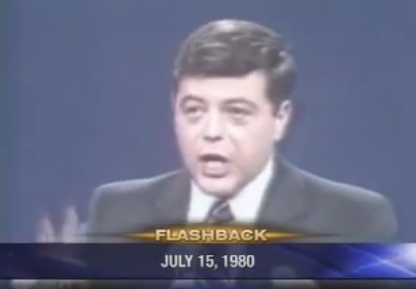
I admire Providence Mayor Jorge Elorza for not kicking down the road addressing the painful problem of the city’s grossly underfunded pension fund to next year, when he will have left office. His administration’s latest proposal is for the city to float a $500 million pension-obligation bond issue to eat into the unfunded part of the pension fund, and he’d (wisely) have residents vote on the plan.
Interest rates are still low, though rising, so the plan might make sense. But given the increasingly volatile interest-rate environment any such plan would be risky.
The pension fund currently has only $396 million in it, with a $1.2 billion unfunded liability, because of former mayors -- notably Vincent “Buddy” Cianci -- giving municipal retirees big annual increases without setting aside the funds to pay for them.
Of course, expanding the tax base is imperative to help fix the problem. You can understand why the city sometimes approves big projects that some neighbors might hate in order to get the revenue from property taxes, on which Providence, like most communities, is dangerously dependent.
xxx

A few well-publicized towings of these offenders’ vehicles would help.
New England state governments, for their part, did a good job in preparing for the storm and clearing the roads during and after.
The science that now allows snowstorms to be predicted with the accuracy of the Jan. 29 blizzard days before its arrival is spectacular!
Delighting in Density
Massachusetts is making progress in making zoning friendlier to people seeking housing in the Bay State, with its sky-high Boston area housing costs:
Governor Baker has signed into law both a provision that lets local zoning ordinances be changed by a simple majority of voters, rather than the two-thirds- vote rule that has blocked many projects that would have alleviated the housing shortage, and the high costs it causes, and a provision to encourage developing new housing near MBTA stations, a boon for middle-class and low-income people. This encouragement of housing density near MBTA stations would also encourage stores and service firms to set up shop nearby.
All this would also lessen sprawl and its nasty environmental effects and make daily life a lot easier for many.

There’s been plenty of commentary, much of it exaggerated, about hordes of people quitting their jobs in the pandemic and reappraising their lives.
But most will have to return to the job market soon, and many to positions they dislike as much as their old ones; indeed their new jobs will probably be pretty much their old ones. And COVID-19 has accelerated automation so there will probably be fewer of these jobs to go around. So a lot more people, young and old, will be forced to create their own gigs, at home. (See item above.)
Move Inland
The pictures of summer houses in Sandwich, Mass., on Cape Cod, dangling over the beach after the Jan. 29 blizzard have quite rightly made many people ask again why federal flood insurance encourages building (most by the affluent since shoreline property is so expensive) in endangered places. The Federal Flood Insurance Program should be phased out. Waterfront folks can try to self-insure when private insurers refuse to cover them (which is good for the rest of us since that would tend to limit premiums).
And also maddening is that politically powerful (campaign donations, etc.) people who own these expensive beach houses get federal, state and local governments to pay for expensive “beach repairs” – stone barriers, etc. – around their houses that worsen erosion down the beach. Welfare for the rich.
Before the New England summer-place construction boom that started in the late 19th Century, very few houses, on the Cape and elsewhere, were built right along the shore – it was considered too dangerous.
The damage in Sandwich, on the north side of the Cape, was largely because the howling north/northeast wind blew directly onshore. In another very vulnerable summer-house strip – the south-facing barrier beaches of Rhode Island’s South County area – similar damage would come from southerly gales and hurricanes.
As several local officials on Cape Cod noted right after the Jan. 29 tempest, planting dune grass above beaches reduces storm damage in many places on the peninsula.
Treasure the Woods
“You should lie down now and remember the forest,
for it is disappearing--
no, the truth is it is gone now
and so what details you can bring back
might have a kind of life.’’
---From “The Forest,’’ by Susan Stewart (born 1952), American poet
With almost every big “green energy” project drawing loud opposition from people who assert that they’re worried about global warming but please don’t put wind turbines or solar farms near them, there’s one thing that most people can agree on: Woods are beautiful.
And they absorb vast quantities of carbon dioxide.
More should be done to protect them in order to help fight global warming and slow the ominous loss of bio-diversity.
Nature wants southern New England, though densely populated by people, to be mostly woodland. We can at least collaborate a bit with her and adopt local and state laws and regulations that protect woods from ever more suburban and exurban sprawl, while remembering that proximity of woods is good for the public’s physical and mental health
xxx

Why Our Death Rate Is Higher
Why is the U.S. death rate from COVID-19 higher than for other developed nations. Here are some reasons:
Poor public education: Too many Americas don’t seem to understand how viruses and vaccines work and don’t plan to learn about them.
Demagogic politicians and greedy social-media, cable TV, radio and podcast conspiracy and rage entrepreneurs.
Too many fat and diabetic people, who are particularly vulnerable to hospitalization and death from COVID.
A dangerously fragmented and chaotic health system.
Gross underfunding of public health agencies.
Now that Omicron is fading, let’s prepare to party this spring, before the next variant swamps us! And get those face masks off schoolchildren and their teachers ASAP so that much fuller communication can resume. Think of how much learning has been lost by the inability to see facial expressions!
Those Legacies
There’s a movement underway to force elite colleges to stop giving preference to applicants for undergraduate admission. I can understand the impetus but the law of unintended consequences might kick in. It stands to reason that people with family connections at colleges are more likely to give to the schools, with much of this money for scholarships, which in turn permits more disadvantaged people to attend.
xxx
I award the Collegiate School, in New York City, the prize for silly wokeism of the week.
The private day school, with a tuition of $60,000, caters to rich Manhattan families. Importantly, it was founded in 1628, when New York was a Dutch colony called New Amsterdam. (It wasn’t chartered until 1638)
But now, fearing complaints about Eurocentrism and Judeo-Christianism, it has redesigned its mascot, “The Dutchman,’’ to hide his obviously white European face and remove his peg leg (a reference to Peter Stuyvesant, the last Dutch governor of the colony) while replacing one of its two mottos, translated from Latin as “Unless God, then in vain” with, translated from Latin, “Wisdom, Community, Kindness.’’ (The private-equity/hedge-fund “community”?) The other motto, translated from Dutch, is "In unity there is strength".
The anxious school is also dropping A.D. (abbreviation for “the year of our lord’’)—too Christian! But without the religious impetus the school probably wouldn’t have been founded.
I don’t think that students or anyone else benefits from erasing such benign reminders of the origins of institutions.
By the way, a 1938 Broadway musical called Knickerbocker Holiday is loosely based on Washington Irving’s Knickerbocker's History of New York.
The famous sad “September Song” (music by Kurt Weill, lyrics by Maxwell Anderson) is sung by the Peter Stuyvesant character.
The Smoking Culture
"So, I smile and say
"When a lovely flame dies
Smoke gets in your eyes"
-- From the 1933 song “Smoke Gets in Your Eyes,’’ with music by Jerome Kern and lyrics by Otto Harbach

For that matter, I remember taking people to big city hospital emergency rooms in the ‘60s and the ‘70s and seeing many of the doctors and nurses smoking cigarettes in rapid succession, presumably to reduce the pressure they felt.
But then, for many people, smoking momentarily reduced stress and encouraged socializing. (Now smokers suffer anxiety from being angrily stared at while lighting up.) Like drinking alcoholic drinks, smoking in its heyday was used as a social lubricant. A labor negotiator I knew in Boston told me once that when bargaining got tense (especially with the tough Teamsters) he’d suggest that everyone leave the room for a “cigarette break outside’’ although most people had already been smoking (cigs, cigars and pipes) during the meeting.
No wonder the U.S. military during World War II gratefully accepted the free cigarettes that tobacco companies provided it to give to soldiers and sailors, thus hooking and killing far more people (some of them from second-hand smoke) than the about 292,000 American combat deaths in that conflict
Smoking, way before the 1964 report, was seen by most folks as obviously unhealthy, but it could evoke romance, say in lighting up with a date at the end of a dinner with (too much”?) wine. You don’t have to watch the movie Casablanca to see what I mean. So I still miss, for brief moments, the cigarette culture.
“O tempora, o mores!’’
To read Dr. Iannuccilli’s column, please hit this link:
xxx
Sometimes a big problem in old age is not so much a decline in short-term memory as an intensification of certain long-term memories,
xxx
You could put together a funny, if somewhat macabre, coffee-table book of death-related screwups, such as the wrong or at least misspelled name on tombstones, burials in the wrong cemeteries, crazy mistakes in obituaries, loved ones’ bodies being put in coffins instead of being cremated and vice versa -- contrary to written instructions -- and so on.
I’ve seen them all.
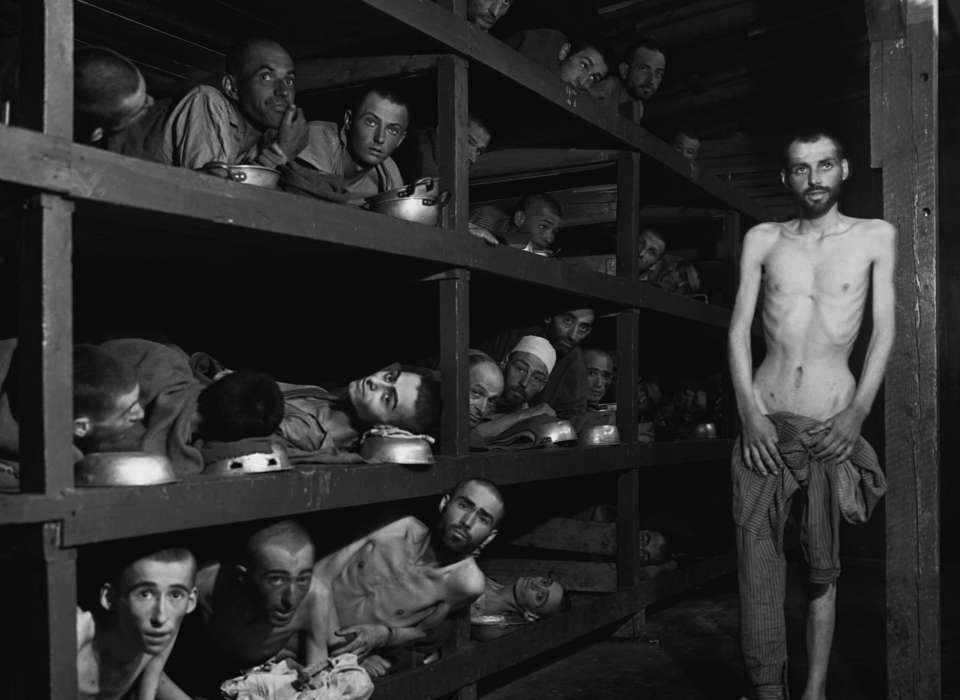
I recommend these two World War II/Holocaust-related books:
Keeping Secrets, by the Polish-born American journalist Bina Barnard (whose exact age I can’t find), is about the disappearance of a member of a Jewish family amidst the brutality and chaos of Nazi-occupied Poland and the search for her more than three decades later in Communist-run Poland by her New York-based sister. It’s a family psychological drama and a sometimes harrowing detective story.
The other book is a gripping nonfiction work called Haven, by the heroic Ruth Gruber (1911-2016), a journalist and humanitarian who went on a secret mission to bring almost a thousand refugees from the Holocaust from Italy to New York, whence they were given sanctuary on an old Army base in Oswego, N.Y. She recorded some of their stories.
This may have been the only official U.S. attempt to shelter Jewish refugees during the war, despite the knowledge of the Nazis’ ongoing mass murder.