


Whitcomb: Lower This Project; Boston’s (Relative) Anti-Murder Success; Keep Bumping
Robert Whitcomb, Columnist
Whitcomb: Lower This Project; Boston’s (Relative) Anti-Murder Success; Keep Bumping

“Mercy is whiter than laundry,
great baskets of it, packed like snowmen.
GET THE LATEST BREAKING NEWS HERE -- SIGN UP FOR GOLOCAL FREE DAILY EBLASTIn the cellar I fold and sort and watch
through a squint in the dirty window
The plain bright snow….”
-- From “Angels in Winter,’’ by Nancy Willard (1936-2017), American novelist, poet and illustrator of children's books.
“To avoid criticism, do nothing, say nothing, be nothing.’’
-- Elbert Hubbard (1856-1915), American writer, philosopher and salesman. He and his second wife, Alice Moore Hubbard, died aboard the RMS Lusitania when it was sunk by a German submarine off Ireland on May 7, 1915.
"We can't vaccinate the planet every four to six months. It’s not sustainable or affordable.’’
-- Prof. Sir Andrew Pollard, chairman of Britain’s Joint Committee on Vaccination and Immunization, saying that booster shots against COVID-19 should be suspended.
xxx
In January the Christmas bills come in; it’s the coldest month; the air often has a metallic quality, and winter seems to stretch over the curve of the Earth. But about this time most of us notice how much later the sun is setting. And there are those clear, calm, bright days with temperatures in the 30s when the sun feels unexpectedly warm on your face and presages the softening coming in a few weeks.
And every once in a while we get some snow that muffles the racket of this crazy world.
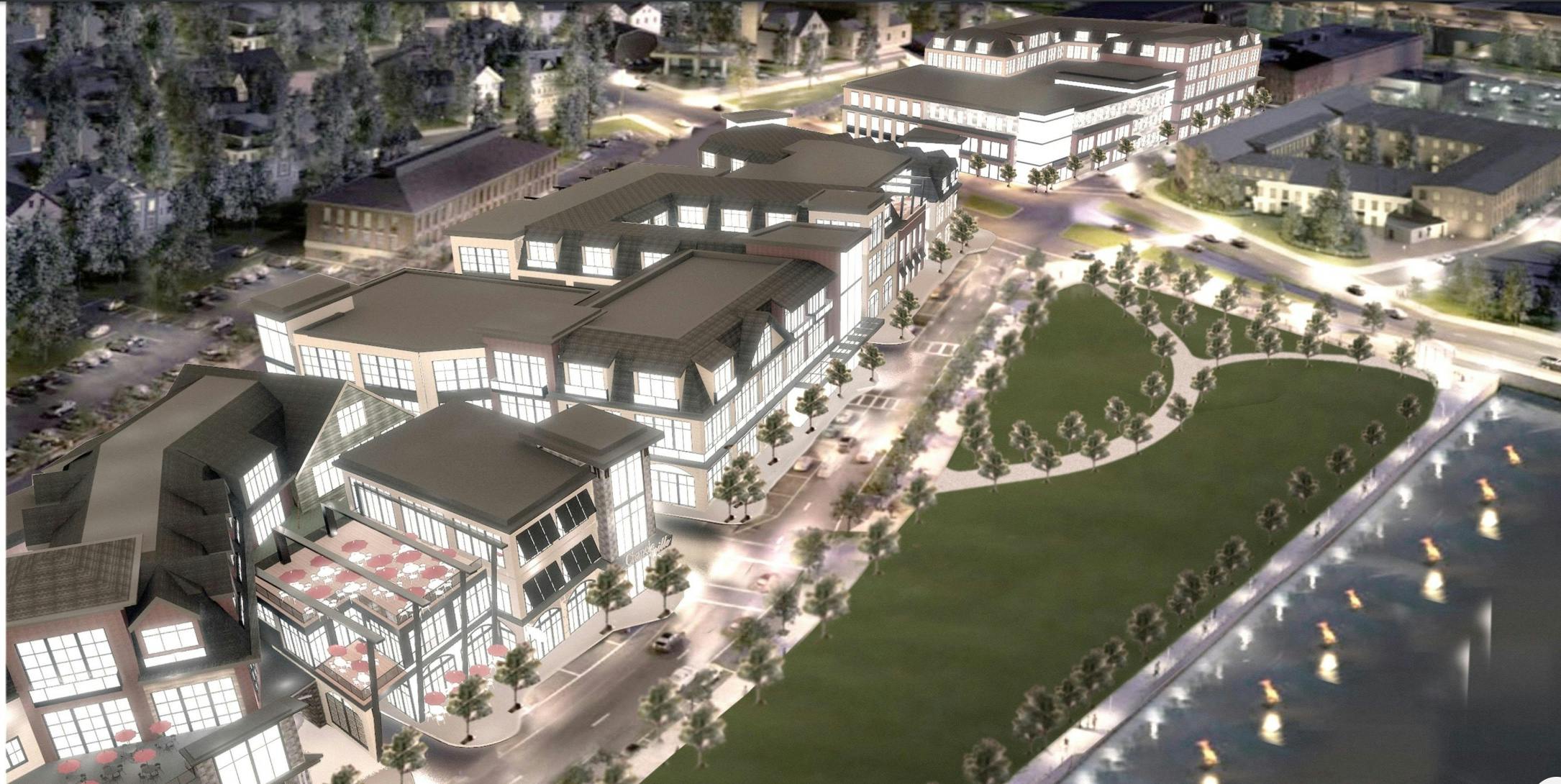
The proposals for a big apartment complex between South Water and South Main streets, at the foot of Providence’s famous College Hill, have aroused much local opposition. And they should. They’re too high for that side of the Providence River, with five or six stories proposed, and the structure should be broken up so as not to present a long unbroken wall along the water. It seems to me that four stories should be the limit. Of course, developers usually try to go as high as they can to maximize profit.
(By the way, I do not live in the neighborhood at issue.)
Hit this link to read William Morgan’s observations last Oct. 16 on these proposals:
There have been some adjustments since then, but Mr. Morgan’s complaints hold up well.
There’s also – this being car-obsessed America -- a rumpus about what people in the neighborhood see as inadequate parking in the three proposals being presented to the I-195 Redevelopment Commission. I’m agnostic on this so far. It depends on such factors as how many people might live in each apartment. I’d guess that most would be older affluent people -- couples and singles -- with no children, and that many would often use Lyft and Uber. (Some might be rich students at Brown University, which has many such people, more than a few from abroad.) And could there be a spot nearby to put up a large garage (old-brick-clad?!) with a shuttle service, for the disabled, old and/or lazy, from the apartment complex?
Would these units swiftly and with great profit, be turned into condos? In any event, with the Rhode Island School of Design and Brown right there, and the lure of the waterfront, these apartments would quickly fill up. Indeed, it often seems that everyone wants to be along the water, and many are willing to pay through the nose for the privilege. So waterfronts tend to be taken over by the affluent.
I assume that it’s too late to change, but I would have preferred that the parcel at issue be used for a job/wealth-creating commercial facility, such as labs or other scientific/technological operations, or design-related work, what with RISD next door, instead of for high-end housing.

Too many local teachers' unions in the current anxiety epidemic are fighting vehemently against returning to in-person work despite much evidence that schools, because they are closely supervised places, are among the safest sites in the pandemic. In schools, such basic precautions as mask-wearing, social distancing and, most important, vaccinations (to lessen the impact of getting infected, which will eventually happen to everyone) can be more easily imposed than in most spots. (Teachers who refuse to be vaccinated should be fired.)
And of course, children are much, much less likely than older people to get seriously ill with COVID, which is now becoming endemic anyway.
Unions’ push to close the schools whenever there’s an increase in COVID cases in the general population extends the disastrous, almost two-year-long damage to students done by their being forced to try to learn “remotely,’’ as well as the injury, including economic, to exhausted parents, many of whose daily lives have been upended for almost two years by COVID-19. But then, it has become harder and harder to be a parent in America. No wonder the birth rate in falling.
Many of these pandemic kids will never catch up. Remote learning is almost a contradiction in terms.
The public has had it with some of these unions, which reminds me why public-employee unions are a bad idea. They have too much power and too many conflicts of interest.
Yes, afford teachers all standard civil service protections, and compensate them well for these key jobs for society, but letting them paralyze public schools has been a big mistake. They’ll regret it one day. And Democratic politicians associated with these unions may pay for it in the next election. Their party needs to move away ASAP from its close connection, in many places, with teachers' unions. I’ve noticed lately that more and more Democratic politicians are putting distance between themselves and teachers' unions. Hurrah for public education but not for these unions.
xxx
I think that speed bumps, at least the newer, less-steep ones, are great. We need a lot more of them. Most of us have a natural tendency to speed, including in dense residential and/or school neighborhoods. Traffic calming/slowing should be encouraged to prevent deaths and injuries and for overall quality of life.
As for snow-plow operators: They should simply slow down to about 20 miles an hour as they approach and go over bumps. The blades will move up to get over the bumps without damage.

Boston is one of those few big American cities that hasn’t had a surging homicide rate in the last few years. (The national crime rate, including for murder, remains lower than it was in the 1970s to 1990s.)
In 2020, for example, Boston had 56 murders, close to its five-year average of 51, and last year that number fell to 40. The city has in recent years been ranked at about 45th among American cities in murder rates. Consider that Baltimore, which has almost 100,000 fewer people than Boston, had 337 murders last year!
Boston’s relatively good record can be attributed to such things as a neighborhood-focused approach to policing that makes heavy use of local nonprofit and other organizations, including religious organizations. But it’s also that Boston lacks the entrenched culture of violence of many cities and that its residents tend to have fewer guns than residents of most big American cities. Indeed, the gun culture has always been weaker in New England than in most of America, with the notable exception of some thinly populated rural parts, mostly in northern New England. And perhaps the much-noticed proliferation of surveillance cameras in parts of Boston may play some small role in discouraging crime.
And, for that matter, New England, of which Boston is the regional capital, has less crime in general than other regions, in part because it has a more stable population and stronger civic culture, with less of the anomie found in the Sun Belt.
Those who misinterpret (ignoring the line about a “well-regulated militia’’) the Second Amendment like to say “guns don’t kill people, people kill people,’’ so the more guns out there the better!
How disingenuous! It’s “people with guns who kill people,’’ and much faster and more efficiently than with other weapons. Details, details!
In any event, Boston has some lessons for other American cities.
xxx
The email scams titled the likes of “CVS/Rewards”, “Kohls/Rewards,” “Walmart/Rewards,” etc., keep proliferating. These messages are not from these companies! Beware.
And stay away from storefronts run by an outfit called the “Center for COVID Control,’’ which runs highly dubious testing operations around America and is being investigated by some states.
Cons particularly flourish during times of mass confusion and anxiety, like now.
Division Street America
“It's media. It's social media. I mean, there's a multi-multi-multi-billion dollar hate industrial complex, where people - you know -- can make money by making us hate and fear each other.”’
-- Dave Isay, radio-show producer, on 60 Minutes
Why are Americans so much more divided these days? Certainly that the two major political parties have become more ideological in the past few decades has played a part. But bigger culprits are social media and cable-TV opinion shows, which work in synergy with that increased political polarization.
A special place in hell should be reserved for the likes of Facebook, which hugely profits from getting people riled up by Facebook’s publishing of extremist views and the lies that go with them, and for heavily demagogic cable-TV networks, of which the amoral Rupert Murdoch’s immensely lucrative lie machine Fox News has been the most destructive. The pandemic, with its innumerable easily debunkable conspiracy theories, has deepened already deep divides even more via these malign media.
These divisions have been particularly dangerous when it comes to decisions about whether or to not to get vaccinated, which has become for all too many people a political statement instead of a medical one.
xxx
Do most Americans even care if we lose what’s left of our democracy to fascism? Probably not much, especially if the economy is doing all right. It’s only after it’s gone that they’ll miss democracy when they notice that the dictatorship won’t pay attention to what they want and indeed will suppress those who complain.
Most Germans seemed happy with Hitler in the ‘30s as the Nazis pumped up the economy, partly through war preparations, amidst triumphalist xenophobic propaganda.
xxx
Good for Rhode Island for requiring proof of identity of voters at polling places. All states should have such a rule to maintain public trust in our elections. This should not be a matter of political or ideological dispute. It’s just common sense.

Sir Patrick Leigh Fermor (1915-2011) was an English writer, scholar, polyglot and heroic World War II British Army officer who might have been England’s greatest 20th Century travel writer. You could start with his 1977 travel memoir, A Time of Gifts, about his 1933-34 journey, a large part on foot and much of it along the Danube, and with very little money, across much of Europe heading toward Constantinople/Istanbul. He was 18 years old when he left London to travel to The Netherlands and begin his great walk.
His intense observing, his adventurousness, facility with languages, knowledge of history, humor, charm and self-deprecation create a masterpiece of memory out of his diaries of his trip across a continent still physically, politically and psychologically scarred by the horrors of World War I and with hints of a new, even worse war to come. He saw early Nazi Germany and the poignant remnants of the Austro-Hungarian Empire, dealt with poor peasants, gypsies and rich aristocrats and most other kinds of people, too, be they in tiny villages or great cities. He climbed mountains and strolled across plains and slept in barns and castles.
This is a memoir written many years after his adventures. So there’s an elegiac and sometimes wistful quality to some of the book. The coming war and fascist and communist totalitarianism destroyed much of the beauty and charm of what young Fermor experienced in what used to be called “Middle Europe’’.
There’s a retrospective glow tinctured with melancholy.
A Time of Gifts takes Fermor as far as the middle Danube. A second volume, Between the Woods and the Water (1986), and a third (put together by others from a diary and an early draft after his death), The Broken Road (2013), complete the story of his trek to Constantinople.