


Whitcomb: Long Day of Election Work; Celebrating New England in Flood Zone; Sad Story of Pius XII
Robert Whitcomb, Columnist
Whitcomb: Long Day of Election Work; Celebrating New England in Flood Zone; Sad Story of Pius XII

“Ah, Piglet, you must never trust
Young ladies from the upper crust.
For now, Miss Riding Hood, one notes,
Not only has two wolfskin coats,
But when she goes from place to place,
She has a PIGSKIN TRAVELING CASE.’’
-- From “The Three Little Pigs,’’ by English writer Roald Dahl (1916-1990)
GET THE LATEST BREAKING NEWS HERE -- SIGN UP FOR GOLOCAL FREE DAILY EBLAST
“Waking in drifts of whiteness! head to toe
I’m a white sheet, with all but nose below.
Toes ripple, push, make corners; the sheet pulls tight
Until I’m hemmed in a box here, with four right
Angles and four straight edges, as if I lay
Chalky ---
A skirt swirls. And the breakfast tray!’’
-- From “Hospital Breakfast: With Grace After,’’ by John Frederick Nims (1913-1999), American editor, poet and translator
“The ultimate question for a responsible man to ask is not how he is to extricate himself ... but how the coming generation is to live.’’
-- Dietrich Bonhoeffer (1906-45), German Lutheran minister, theologian and anti-Nazi dissident involved in plots to kill Adolf Hitler. He was executed by the Nazis on April 9, 1945, as Hitler’s regime was collapsing.
xxx

Unfortunately, I never got important guidance on what such jobs entailed until a couple of days before the election because online training material from the Providence Board of Canvassers ended up in my computer’s spam file. So, with the help of generally cheerful and experienced colleagues, I had to learn my duties as co-greeter on the job.
Our ethnically and socio-economically diverse crew had to show up at 6 a.m. Tuesday, and we couldn’t leave until almost 9:30 p.m. No meals were made available, though there was running water (!), and the chairs were (for me anyway) notably uncomfortable.
Oh, the humanity! No coffee was made available!
There were, however, candy and muffins at the table where I and the other co-greeter signed-in citizens at the entrance of the voting room. Most of these empty calories were consumed by voters and their kids, giving some of the very long day a Halloween feeling – sugar high followed by crash.
The nice lady and I at the check-in table warmly welcomed voters and then scanned in their ID’s – mostly Rhode Island drivers’ licenses but also passports, military identification, student ID’s and a couple of more mysterious ones. That scanning indicated which of two tables, each representing a precinct, the voter should report to get his/her ballots. My very good-humored co-greeter had done this sort of work before, thank God for me and the voters. So there were few traffic jams at our end.
While most people were easy to check in, some had ID problems that our all-patient, all-calm (at least on the surface) “clerk’’ had to deal with, which she did rapidly.
Because of many complicated local referendum items, especially in Providence, ballots were long, leading to delays in moving people through the process as they struggled to figure out what exactly they were voting on. The news media could have done a better job in publicizing and explaining these referendum items, though state and local authorities had put out information on them in the weeks before the election.
We said “thank you for voting!” to everybody who showed up, and many of these folks thanked us for working to make in-person voting so accessible in their neighborhoods. And most folks took one of those “I voted” stickers on their way out.
A sometimes frustrating issue was that more than a few of the hundreds of people who came to vote at our polling place were supposed to vote at another. The usual (but far from universal) problem was that people simply hadn’t carefully checked shortly before going out to vote. And the location- information cards snail-mailed to voters were easy to overlook.
The density of sites on the East Side of Providence surprised me. For example, the building where I worked Tuesday was only across the street from another polling place! The density meant individual polling places had shorter lines than you might have feared but it spawned some confusion, too.
Despite the opportunity for anger and frustration, only one voter seemed enraged by confusion on where she should vote – a lady saying “I’m from New York City and this sort of thing never happened there!’’ I told her quietly that I, too, had lived in New York and had heard of confusions similar to the ones in Providence.
Our soft-spoken crew kept their personal political views to themselves, including, most importantly, about individual candidates. It was all business as we struggled to serve the surges of voters as expeditiously and politely as possible. Given the neighborhood’s demographics, a strong majority of the voters must have been Democrats and independents, but I saw a few Republicans, too, including at least one wearing a MAGA hat. I also greeted some acquaintances I hadn’t seen for years, but of course, we had to keep the pleasantries brief. I witnessed one tearful reunion.
The poll workers’ silence on political opinions continued through the tedious, very rigorous and seemingly stressful vote tabulation at the end of the evening. As that went on, some of us had to disassemble the voting desks –a very physical chore and harder than you might think – and carefully check off and pack away that and other equipment, of which there was a lot.
It was heartening to see the police show up to securely take materials to the state Board of Elections at the end of the evening.
Morale rose when some drippy, delicious pizza arrived after polls closed, at 8, thanks to the generosity of one of the supervisors’ husbands.
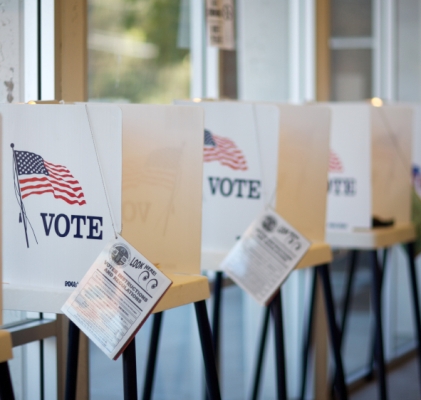
For one thing, change the laws to make Election Day a national holiday or move it to Sundays. Having it on a workday acts as in-person voter suppression, which some people want because they think it helps their candidates and causes. In-person Election Day voting should be encouraged as a civic celebration/encouragement in our partly democratic/partly plutocratic nation. In many countries Election Day is, as it should be, a national holiday.
Polling places should be staffed in two shifts so that volunteers don’t have to work painful plus-15-hour shifts, which probably scares away some people who might otherwise want to volunteer again for this essential work as an expression of civic duty. Maybe try to offer some liquid refreshments and simple food as an incentive, though people can bring their own; I was surprised that, so far as I could see, few did at my site. Had they expected at least sandwiches to be offered to people sort of imprisoned in these temporary workplaces for so many hours? You were not permitted to leave the building where the voting was happening and then return.
And the state, city and town officials could do a better job communicating polling-place changes. I was surprised by how many people were confused about where they should vote.
One of the best things about being a poll volunteer is that you get some snapshots of changing manners and fashions. I noticed, for example, that many of the voting men, even older gents, had three or four days of hair on their faces, as if they couldn’t decide whether to grow a beard or not. And while a few decades ago most people would get a bit dressed up to engage in a public act like voting or getting on a plane or train, most people now show up in sloppy weekend wear, although at least we didn’t see anyone in pajamas last Tuesday.
We seem to be losing our sense of occasion.
Then there are the tattoos, most of them aesthetically unsuccessful, and alarming examples of the national epidemic of obesity, which we all pay for in disease, death and insurance premiums.
But bless ‘em all for voting!
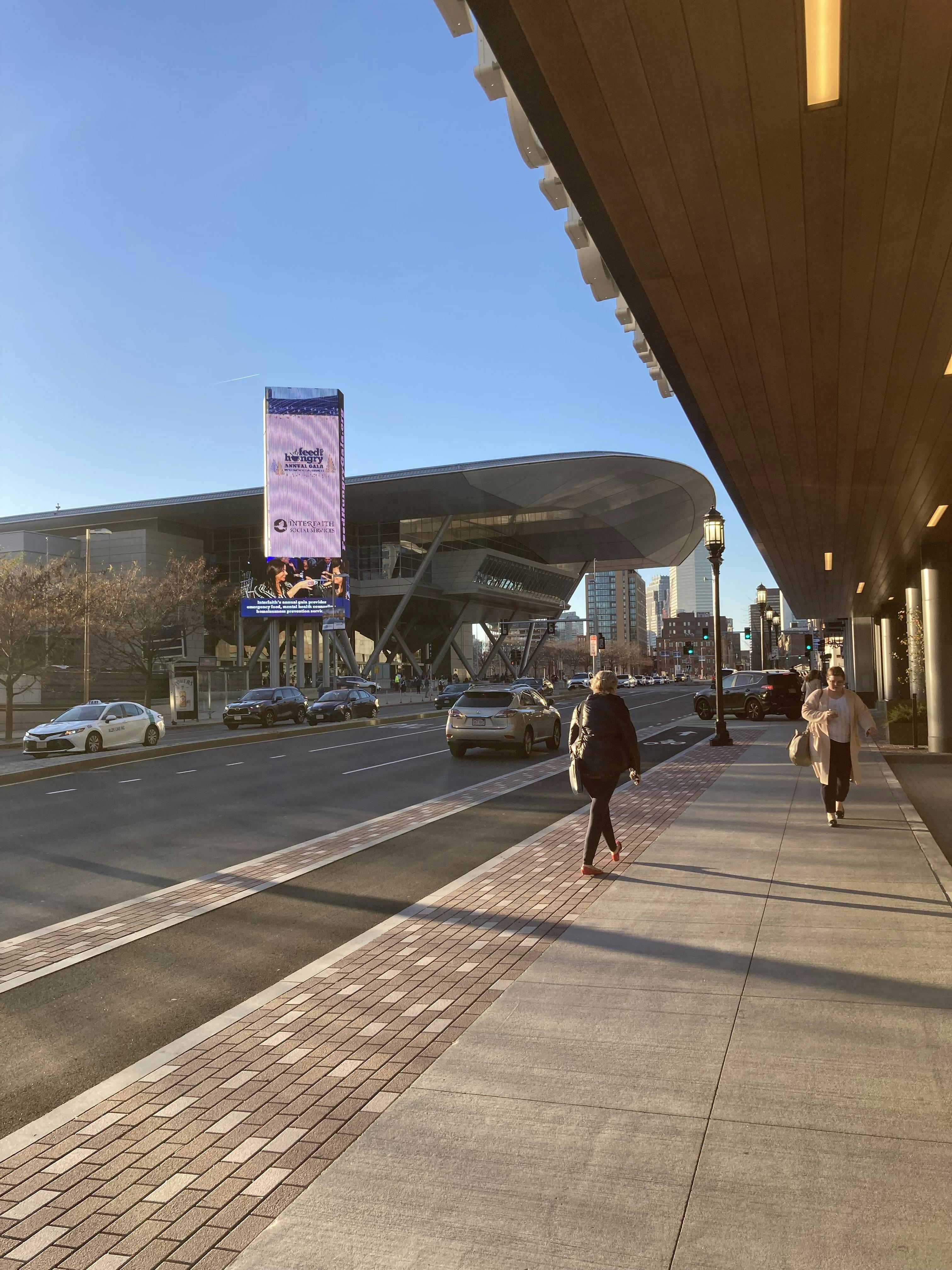
I attended the big annual reception last Monday of the regional business lobbying organization The New England Council, which, under the long-time leadership of the great James Brett, its president, has done super work in pulling together the region’s six states to cooperatively promote our economy and quality of life. I’m sorry I had to leave before the dinner, which included honoring “New Englanders of the Year’’.
The bash was held in the Omni Boston Hotel at the Seaport. Walking to it from South Station on that weirdly summery day gave me quite a scenic sense of the amazing Seaport District. While I remember old warehouses, factories, vacant lots, crumbling docks and rotten pilings from my summer jobs in the ’60s on the waterfront – paradise for arsonists -- now it’s glitzy hotels, fancy restaurants, gleaming office buildings, including of bio-tech companies, and a spectacular convention center. While the Fort Point Channel was once infamous for its, er, aroma, its much cleaned-up water now has kayakers on it, and a waterfront park/trail along one side.
My only reservation is the very low-lying district’s growing vulnerability to flooding caused by global warming. One could almost see it as becoming a sort of Modernist Venice.
Unless or until the waters wash over all its streets, the Seaport District will stand as one of the most impressive urban transformations in America.
David I. Kertzer’s latest book, The Pope at Work: The Secret History of Pius XII, Mussolini, and Hitler, is distressing. Mr. Kertzer is a professor of social science, anthropology and Italian studies at Brown University.
Based on his meticulous research, some of it made possible by the estimable Pope Francis’s recent brave opening up of Vatican archives, the book displays Fascist-friendly Pius XII’s obsession with protecting the power, property and prerogatives of the Vatican instead of keeping the teachings of Jesus front and center. But yes, you can understand his fear.
As for the Holocaust, Pius XII’s main concern was saving Jews who had converted to Catholicism or were children of Catholic-Jewish “mixed marriages.’’ Some converts became Catholic because they had come to sincerely accept the Church’s teachings, but many, probably most, because they were trying to save themselves and their children from being murdered by the Nazis and their allies.
Pius XII – a curious mix of narcissism, asceticism, workaholism, timidity, power drive and industrial-strength hypocrisy -- kept mostly mum and vague about the mass murder of Europe’s Jews. But then, he had very fond feelings for Germany. And now he’s headed for sainthood….
If only Pius XII’s immediate predecessor, Pius XI, who strongly spoke out against Fascist (Mussolini) and Nazi (Hitler) tyranny, hadn’t died shortly before World War II broke out with the Nazi invasion of Poland.
I’ve often had deep distrust of organized, bureaucratic religion. Mr. Kertzer’s book amplified that. All too often, some religious organizations’ main interest is in perpetuating their political and economic powers above all else. Consider those rich Trump-the-Traitor-worshipping “evangelist” con men with their mega churches and TV shows….