


Whitcomb: Transitional Zones; Keeping Their Money; Peeling off Layers of Walz
Robert Whitcomb, Columnist
Whitcomb: Transitional Zones; Keeping Their Money; Peeling off Layers of Walz

“Look, and you will see that the furniture is fading,
that a wardrobe is as insubstantial as a sunset,
“that I can see through you, the tissue of your leaves,
the light behind your veins; why do you keep sobbing?...”
-- From “For Adrian,’’ by Derek Walcott (1930-2017), Nobel Prize-winning poet who split his time between New York, Boston and St. Lucia.
GET THE LATEST BREAKING NEWS HERE -- SIGN UP FOR GOLOCAL FREE DAILY EBLAST
“We are so constituted that we believe the most incredible things, and once they are engraved upon the memory, woe to him who would endeavor to erase them.”
-- Johann Wolfgang Von Goethe (1749-1832), German writer and polymath
“A miracle drug is any drug that will do what the label says it will do.’’
-- Eric Hodgins (1899-1971), American author

The heyday of porches (including so-called sleeping porches upstairs, off bedrooms) was before A/C but it’s good to see in the past few years that more new houses have them. They’re certainly a lot nicer to look at than the doors of the two-car garages that have dominated the front of so many houses built since just after World War II.
Porches are better than decks! If you’re very fortunate, you have a front porch, on which to commune with society if you want to or must, and a back one on which to brood and read alone, watch wild animals (fending off the suburban/exurban bears and coyotes) and from which to throw cherry pits and apple cores. And smoke a cigar?
With this summer of political conventions, I look back at watching those shows over the decades, sometimes on small TV’s on porches. Those circuses used to be more unpredictable and less tightly programmed than now and so more interesting. I particularly remember my parents’ back porch, with its cool-to-bare-feet slate floor and sighing oak trees just outside, while hearing Barry Goldwater’s speech accepting the 1964 Republican presidential nomination. In it, he famously asserted: “I would remind you that extremism in the defense of liberty is no vice! And let me remind you also that moderation in the pursuit of justice is no virtue!”
Stirring rhetoric, but Goldwater went down in flames in the general election against incumbent Lyndon Johnson, who was setting out to try to complete the New Deal via his Great Society programs.
The convention was a major marker in the decline of the old Eastern Establishment “liberal Republican’’ Party, led by the likes of then-New York Gov. Nelson Rockefeller, and the generally accelerating ascendancy of the party’s right wing. But Goldwater was a true libertarian and would have detested the kleptocratic fascists who now run much of the national GOP.
xxx
Bally’s, the Providence-based gambling company, has told its investors that revenue is down because of the Washington Bridge failure. While the bridge mess reduces revenue to state government under its deal with the company, it also reduces the money taken from the pockets of gamblers who might decide not to go to Bally’s casinos in Lincoln and Tiverton because of the traffic tangles on and around the bridge. That’s money that won’t go to out-of-region investors. This could have a benign macroeconomic effect around here.
The money that’s not sent to these investors could be spent in buying goods and services from locally owned businesses – some that actually make or grow things -- or even in investing in them.
After all, gambling at venues like Bally’s doesn’t exactly increase a region’s long-term wealth; it subtracts from it.
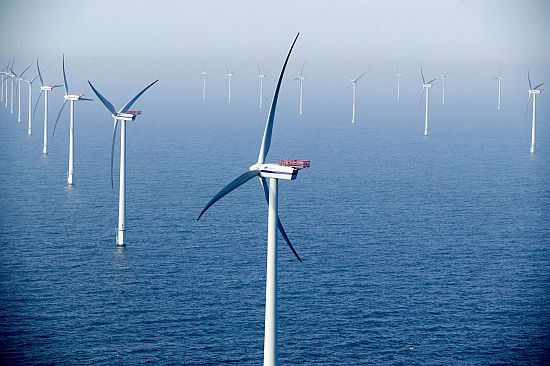
“We have been paying enormous amounts of money to import oil and gas, just to keep the grid secure and to make sure we don't have a blackout in winter.’’ Muller said offshore wind is “like a clutch player in the winter. It shows up almost exactly in sync with periods where we have very low temperatures.”
But some people are angry about debris from broken wind-turbine blades along the southeastern New England coast.

In the first 20 years or so of my so-called career, having drinks at long “business lunches’’ was very common, especially in the more languid days of summer, often accompanied by smoking. Things in some ways were more relaxed then and getting to know your colleagues, as well as customers, in person seemed more important than in our Internet world.
It wasn’t particularly healthy, but it seemed as if we had more fun in those days.
(Two of the times I was hired were at well-lubricated lunches, one of which lasted about three hours as the hirer (a big-deal editor) got increasingly sloshed and friendly.)
The capacity of some people to hold their liquor was impressive. I especially remember a senior editor at Business Week in 1972 having at least two stiff drinks, and then wine, at lunch at the celebrated Manhattan theater district restaurant Sardi’s with one of his colleagues and me, and then going back to preside at an editorial meeting with about 30 people at which he reeled off assorted economic statistics and did fast calculations in between puffs on his meerschaum pipe. But our other lunchmate went back to his office, closed the door, and took a long nap. (I was jealous.) His secretary told callers he was in a meeting. He “retired,” or “was retired,’’ later that year at age 55.

Kamala Harris’s selection of Minnesota Gov. Tim Walz as her running mate, at least at first, didn’t make all that much sense to me. Pennsylvania Gov. Josh Shapiro seemed the more rational choice – highly successful and confident chief executive of a big swing state, good on TV and at 51, younger than the avuncular Walz, 60 but looks older, who has been presiding over a state that’s usually in the Democratic column in presidential elections anyway.
Clearly, Harris was swayed by Walz’s relaxed, modest, and good-humored manner, which she apparently finds soothing and thinks that swing-state voters, including many independents and some Republicans, will too. (As a congressman he represented a GOP-leaning district.) In manner, anyway, he comes across as a moderate. He’s clearly a liberal Democrat, though in Congress, he developed a strong reputation for doing bipartisan deals with Republicans and, as governor, has sometimes cooperated with Republicans to get major legislation through a closely divided Minnesota legislature. Pragmatic.
Presumably, we’ll learn more about the ticket’s policies when the party’s platform is announced at the Democratic National Convention on Aug. 19-22. I suppose the aim will be to scoot a bit toward the middle.
Will Walz’s personality and salt-of-the earth, small-town background (middle class, high school teacher, football coach, etc.) be enough to help him help Harris defeat Trump (psychopathic robber baron) and Vance (former Silicon Valley venture capitalist, acolyte of fascist billionaire Peter Thiel and a man of impressive political plasticity)? We’ll probably know in a month or so. As of this writing, the vast majority of the electorate knows little or nothing about Walz, and even political junkies will probably be surprised by what might bubble up about him as journalists and, especially, the Trump/Vance “opposition research” crew, dig deep.
Certainly, Trump-Vance will hammer him for such things as friendliness to immigrants (illegal and otherwise – to wit, driver’s licenses for illegals, which may make roads safer but draw more immigrants) and support of transexual rights. They may also try to color him as anti-business, though he’s helped enact various pro-business-development programs, and Minnesota has remained a very prosperous state, with very good public services and infrastructure, under his governorship.
And here’s the story about Walz’s military service record to read after hearing Vance’s attacks:
Walz joined the National Guard in 1981 and held the rank of command sergeant major before he left the Guard, in 2005, because he planned to run for Congress. He retired for benefit purposes at the lower rank of master sergeant because he had not completed coursework to qualify for retirement benefits at the higher rank. Planning to run for Congress, Walz retired well before his battalion received its deployment orders for Iraq.
Harris obviously had to decide on a running mate very fast after Biden bailed out. I hope that she did all the necessary homework and that the fact she just happens to like Walz as a person was not the key factor in her choice. And did she fear that Shapiro would upstage her on the hustings? Or did she fear anti-semitism?
Minnesota, where many members of my mother’s family have lived since the Civil War, has a long reputation as liberal (and in some places socialist), although there’s also long been plenty of far-right politics there, too (including a few of my relatives ) that goes back to even before Minnesotan Charles Lindbergh’s infatuation with Nazi Germany. (Mostly what I remember about the Land of 10,000 Lakes is, well, hanging out on a lake one summer at relatives’ weekend “camps.’’ Saunas! Canoers paradise!)
This quote is from a 2007 New York Times profile of Walz, in this case, he’s commenting on his role as a teacher:
“The Holocaust is taught too often purely as a historical event, an anomaly, a moment in time. Students understood what had happened and that it was terrible and that the people who did this were monsters.
“The problem is that relieves us of responsibility. Obviously, the mastermind was sociopathic, but on the scale for it to happen, there had to be a lot of people in the country who chose to go down that path. You have to make the intellectual leap to figure out the reasons why.”
News Deserts
With all the publicity around a federal judge’s ruling that Google is a monopoly, it would be nice if the Justice Department’s Antitrust Division looked at the concentration of ownership by national companies in local news media, too. Consider such huge enterprises as the hedge fund Alden Global Capital (an asset stripper that has eviscerated many local newspapers), iHeart Radio Network, Fox Television Stations, and Sinclair Broadcast.
The concentration has created local news deserts, as local ownership is driven out of business and reporters disappear, making it easier for public corruption to flourish and democracy to wither.
Of course, Google and Facebook, by gobbling up so much advertising revenue, have also played big roles in devastating large parts of the news business.
xxx
With private-equity firms buying up rental properties, thus in some places adding to the housing-affordability challenge, look for the spread of tenants unions to try to curb the powerful firms’ rapaciousness.
xxx
Kremlin-linked online sites distributing disinformation are playing a role in fomenting the recent race riots in England. Watch for this sort of thing in America. The aim is to sow chaos in Western democracies.
xxx
The wars in Ukraine and Gaza take the oxygen away from journalistic coverage of other bloody conflicts, such as in Sudan.