


Will Providence's Parking Meter Expansion Hurt Small Businesses?
Kate Nagle, GoLocal News Editor
Will Providence's Parking Meter Expansion Hurt Small Businesses?
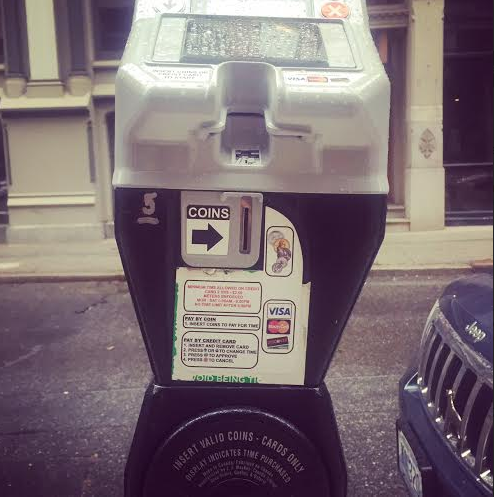
The city, which has already extended meters to Federal Hill, Wayland Square, and Thayer Street areas, and is looking at plans to expand to Wickenden Street (which has prompted a change.org petition against it with over 1,100 signatures), is also now the focus of concern by business owners on Hope Street -- and one of the state's top business academics has come down on the move to raise more revenue.
"[I'm] opposed to more parking meters. They hurt small businesses and discourage people from visiting local stores. They change the character of the community," said University of Rhode Island Distinguished Professor of Business Edward Mazze. "They almost never raise the forecasted revenue when you look at the expenses of enforcement. Moreover, they cause poor relationships in the community between government, businesses, the shopping public and tourists."
GET THE LATEST BREAKING NEWS HERE -- SIGN UP FOR GOLOCAL FREE DAILY EBLASTKim Clark with Rhody Craft on Hope Street has been outspoken against the city placing meters in the commercial area that extends between Rochambeau Avenue and FIfth Street.
"I think meters will be detrimental to business on Hope Street because many people avoid destinations with meters. Meters are cumbersome, people don't want to fish through their pockets for change and credit cards while they have children in tow, or it's dark out (proposed meters active until 9 p.m.), or it's freezing cold, or they're in a hurry, wanting just to rush in and out of a store for a quick purchase," said Clark.
"Meters are particularly intimidating for older shoppers. We have been trying to brand Hope Street as a destination. A place to come for the day to get your hair done, shop with friends, have lunch or dinner and that requires more than 2 hours on a meter. Meters make people rush, we want them to linger," said Clark. "We don't have parking lots where day visitors can park for the day and be done with it. Wayland Square reports significant drop of in business since meters went in, and, very angry customers."
Providence City Councilman Sam Zurier said that in discussions he has had with the city and shop owners last fall, that he didn't believe that businesses would be adversely impacted.
"I believe the administration projects a $2 million increase in this year’s budget from the new parking meter program," said Zurier. "Councilman Yurdin and I met with merchants from Wayland Square and the administration concerning this issue last fall, and at the time the administration said they expected the meters would not materially affect their businesses. I remain open to revisiting the issue if the business owners’ experience does not match the administration’s prediction."
Lessons Learned?
"There was a lot of opposition in the beginning," said Simone. "They're on Spruce [Street] and three quarters of Atwells, and they'll go down the rest of Atwells and the side streets shortly. It's been mixed results so far. Some are finding it's allowing people to get in and out quicker, and others are saying there's not enough time to let people stroll."
"We've had some compromise, we got [the city] to extend the time to three hours, we're talking about the possibility of four," said Simone. "We didn't look at it as an argument. We said to them this is why we don't think this is going to work, and here's the reasons. So it's been ongoing conversations. [The city] still comes up and talks with us even as it's in place and moving forward."
On Hope Street, Asher Schofield with the Frog and Toad said that he hoped that conversations between business owners -- and the city -- will be "honest."
"While I fully understand the city's fiscal picture and desire to have healthy parking management, I'm not entirely convinced that some of their targeted neighborhoods fit the paradigm that they are proposing," said Schofield. "I look forward to honest discussion and future studies that will best serve the interest of Providence's small business community, our shoppers and our residents."
Clark said that she viewed meters as being antithetical to efforts to get residents to "buy local," however.
"I don't think anything mitigates the damage of meters. I think it's counter productive for the city to support 'buy local' campaigns and then make it more difficult to buy local. I understand the city needs money, but the few million the city would ultimately reap from meters is offset by the purchase cost, installation, maintenance of meters and most importantly, the loss of tax revenues from businesses seeing sales diminish," said Clark. "If parking meters were good for business, the city wouldn't offer meter-free days over the holidays to increase likelihood of shoppers coming to Providence."
Aaron Renn, who is a senior fellow at the Manhattan Institute and contributing editor at City Journal, offered the following perspective on the tug-of-war between local business owners and the city.
"If there is a shortage of parking spots during certain times of the days, meters could help allocate space. If there are always parking spots to be had easily, this is more likely a revenue matter. If it's a matter of revenue that makes it more debatable," said Renn. "But this does highlight that drivers feel entitled to be able to drive for free and park for free, even though their cars impose costs on the city and its streets."
Main Photo: Flickr/Katy
10 Biggest Issues Facing Providence in 2016

#10
Firefighters, Con't
The battle that started last year spills over into 2016. After Mayor Elorza announced he was going to reorganize the Fire Department from four platoons to three with a condensed shift schedule, the firefighters took the battle to court — and callback costs soared with injured firefighters out on leave. Elorza said the change could save the city “as much sat $5 million” in the next fiscal year (FY17) -- but the city is currently seeing red. "Through the middle of December, fire fighter "call back" expense has been $4.7 million, which represents almost all of the $5.05 million budgeted for the entire fiscal year," reported Councilman Sam Zurier on Sunday. "Should this trend continue, the cost of this line item could exceed the budget by $5 million by the end of the year."
Now it all rides on the outcome in the courts. If it ends in a negotiated settlement, the crisis could be averted. If not, firefighter union head Paul Doughty has said that Elorza can “hand over the keys to the city" for bankruptcy.

#9
Crime
From the West Side to the East Side, residents across the city in 2015 were organized and mobilized to demand action from the Elorza Administration on crime in the city. GoLocal reported at the end of 2015 that over half of the police department is eligible to retire — and the city still needs to get a new class of officers underway as budgeted. Tensions were high following a Dunkin’ Donuts worker writing #blacklivesmatter on a police officer’s cup (and the Black Major Movement continuing to call for a black major in the department).
Councilman Seth Yurdin announced this week that he is introducing a resolution to establish a special commission to review relations between the Providence Police Department and the community it serves. The Special Commission on Community-Police Relations will review current public safety practices and create opportunity for public input.

#8
Grafitti and Potholes
It’s been a mild winter so far, so perhaps at least one of the two scourges of the city will be mitigated this coming year. But addressing the conditions of the roads continues to be an issue for Providence. Last year, Mayor Elorza made a public display of commitment to addressing problematic potholes, and also pledged to respond to the rampant graffiti issue in the city that has seen the property destruction spread to private houses.
City Councilman Michael Correia recently put up a $1000 reward to find who was tagging properties in his district. Residents of the city want to feel safe, and that includes driving on roads that won’t inflict damage on their cars (or take out runners and bikers) and that their personal property won’t be destroyed. Graffiti continues to crop up, and it needs to be addressed quickly when it does.

#7
Taxes - Commercial
The city’s commercial tax rate might be frozen — for now — but there are a lot of moving pieces. The $36.75 per $1000 rate on commercial properties is among the highest in the country -- a point well-known in RI circles.
“Providence has a problem with the commercial tax rate,” said developer Colin Kane. “With new construction or significant rehab -- the costs aren't supported by current rent.” The property revaluations expected shortly will shed some light how the city will move forward addressing tax rates, but in the meantime, the TSA extensions before the Council are the 600 pound elephant in the room. “The City Council is looking for nickels in the couch cushions because of the fiscal challenges facing the city,” said Kane. “And they weren't caused by this council or mayor, but by the fact that they were kicked down the road. And now we want to malign people like Buff Chace who made the city what it is?”

#6
Taxes - Residential
The owner occupied residential tax rate could be in the crosshairs as the city looks to address revenue issues in the coming year. “Everything’s on the table,” Aponte told GoLocal. And with the revaluation, things could be in flux for the current owner-occupied rate of $19.25 per $1000 .
“Suppose you had a city where there was a wild appreciation of real estate values — that used to happen here, Providence has seen 10% before. State law says you can only increase the levy unilaterally by 4 and a quarter,” said City Counciman Sam Zurier. “So supposed you have a situation where your values go up 10% and you want to collect 4 — you have to reduce the rate by 6%. "
"If values go up enough — even 5% - then the city will get additional money without raising the rate. During a [revaluation] year - you have to get into tax bills versus rates. And when you factor in commercial and non-owner occupied values and rates, it’s tricky.

#5
Schools
Providence Schools face a tall order ahead of them. The search is on for a new superintendent following the departure of Dr. Susan Lusi. The current School Board President is stepping down at the end of the month. Providence High Schools scored among the worst in the state following the release of the first year of PARCC test scores. Current School Board member Nick Hemond is slated replace outgoing President Keith Oliveira, but question remains for the choice of the new super. Council President Aponte told GoLocal this week that stability in leadership in the school department is one of the greatest challenges facing the city moving forward. Can that be achieved in 2016?

#4
Superman
Lights have been spotted on recently in the Superman Building - i.e. Industrial National Bank Builcing — but the fact remains that the city’s iconic skyscraper remains vacant, which former Mayor Joseph Paolino called one of the biggest issues facing the city (stating that the fact that it remains empty cost him a mortgage from a top bank for an adjacent property).
Citizens Bank is eyeing a new corporate campus somewhere in Rhode Island, and while indications point to one most likely going in the suburbs, a number of business and community leaders are hoping Superman isn’t ruled out completely. Previous efforts to get state support to turn the building into apartments fell flat, and Providence residents are gun-shy about any project looking for public support. But the fact remains that the empty anchor is an eyesore for the city, and getting a tenant — or tenants — in should be a top priority in 2016.

#3
Lack of Development
Providence needs more cranes. The city has seen its first one in a while by the Jewelry District with developments at Johnson and Wales, which is a good sign — but the city needs more.
“Owners and property developers want to be treated fairly and play on a level field. Providence does not have a business friendly reputation. This is why there are few cranes in the sky in Providence and very few new businesses coming to the city or planning to expand in the city,” URI Distinguished Professor of Business Edward Mazze told GoLocal earlier. So in order to get the construction equipment in — Providence has to figure out how best to lure businesses here in the first place.

#2
Leadership
Providence needs a win — or a least a path to victory. Whether that be getting a tenant in Superman, bringing in a notable business, or articulating a concrete plan to move Providence forward, residents want to feel that the city is on the right track.
The City Council recently announced that it received the results of its cluster analysis study to identify where opportunities lie — and now we need to see results. The Mayor made multiple trips abroad in 2015. He campaigned on a promise of doubling exports from Providence in five years. What results will we see from those overseas meetings? Providence wants a concrete vision moving forward.

#1
Bankruptcy
“Absolutely not,” said City Council President Luis Aponte, as to whether the city could go into receivership in light of its current precarious financial condition.
“If the city loses, Elorza can hand over the keys, because the city will go bankrupt,” has said firefighter union head Paul Doughty regarding the firefighters legal battle over the Mayor’s platoon reduction.
Financial advisor and GoLocal MINDSETTER Michael Riley said receivership is almost a certainty.
“Essentially Providence is bankrupt and insolvent. It is only by illegally borrowing from the pension fund the last 10 to 15 years that have saved them from being sued by creditors, and the lies continue,” said Riley. “Until Providence goes into receivership nothing else can happen — no railroads, no Superman, they are sunk. I consider everything else irrelevant.”


