


Gencarella & Bishop: Political Football v Public Safety
Pam Gencarella, Brian Bishop, GoLocalProv MINDSETTERS™
Gencarella & Bishop: Political Football v Public Safety
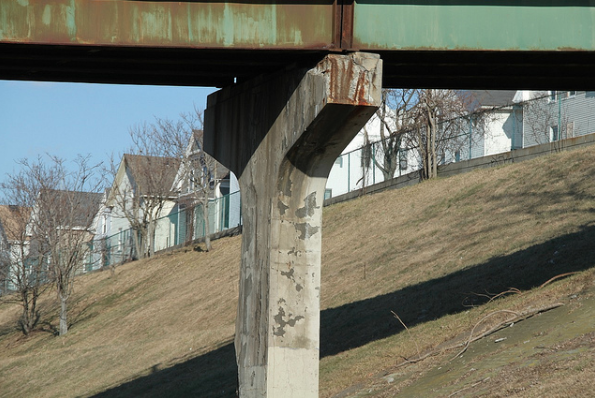
Feds Say Not So FAST(Lane), Governor Says Hurry Up And Do It
A few weeks ago, after the federal government said that the proposed 6/10 ‘big dig’ isn’t what they had in mind for the FASTLANE (motor freight) grants and just after another public meeting about plans for the 6/10 Connector brought out hundreds seeking a more neighborhood-friendly and effective commuter solution, Governor Raimondo completely changed course. She unexpectedly issued an edict: No more discussion to determine the most efficient replacement for the 6/10 Connector.
GET THE LATEST BREAKING NEWS HERE -- SIGN UP FOR GOLOCAL FREE DAILY EBLASTAccording to WPRI, Speaker Mattiello is backing her. He likely has four less supporters for that position after Tuesday, but the final verdict on the impact of tin-eared governance awaits November.
So rather than listening to those impacted by this major state decision, rather than being open to a potentially better idea that’s a better fit for the taxpayers’ wallet, the Governor and Speaker favor a rebuild that is status quo bricks and mortar, starting now, to the tune of hundreds of millions of dollars and years of construction delays. And why you ask? London Providence bridges falling down.
Raimondo’s version: “the situation is growing too dangerous to continue discussing alternatives”. The Providence Preservation Society disagrees saying the decision is shortsighted and they are joined by the West Broadway Neighborhood Association. James Kennedy, from Transport Providence doesn’t mince words. He says the Governor is lying and has used fear about the safety of bridges throughout the entire process as a way of derailing discussion.
In a move eerily similar to the abrupt closing of a bridge adjacent to the Speaker’s business office, the governor suggests public policy must turn on a dime because of ‘only recently discovered’ accelerated bridge deterioration. No one disagrees that the bridges are in bad shape, but more frightening than the bridges, it is frighteningly suspicious that they suddenly became so degraded as to foreclose all other options precisely when the Governor and RIDOT started losing the public argument and their funding for Disneyland style plans.
We Can Still Be Safe And Have A Full Vetting
But let’s take the Governor at her word, solely for argument’s sake mind you. Let’s imagine for a moment that this is really a technical and traffic engineering challenge and has nothing to do with her administration having alienated the Federal Department of Transportation and suddenly seeing Uncle Sam’s spigot choked off nor with the dreamed of reward for the trades who backed her election drying up. Let’s pretend the problem exists in isolation and is solely the accelerated deterioration of the Huntington Avenue Bridge. Does this development really foreclose other options?
The recently formed coalition, Fix 6/10, must now focus on a much smaller question than an overall vision for Olneyville, Silver Lake, Arlington, Hartford and Thornton neighborhoods. Is there a better solution to the problem than fast tracking “in-kind” replacement of the Huntington Avenue span, one of seven bridges in the connector? This is an especially important consideration since the Governor’s approach would then lock us into rebuilding the other 6 bridges more or less “in-kind”, having spent $200 million on the first installment.
The RI Trucking Association has begun discussion of a different and more thoughtful way forward. If the safety of the Huntington Avenue Bridge is such an imminent concern, then the governor should restrict trucks on that bridge as RI Trucking CEO Chris Maxwell suggests, basically calling her bluff.
Let’s Start With A Cost Effective Temporary Solution That Works For All
In a well functioning administration, having received notice from the federal highway officials that the bridges could face weight restriction in the near future, the Governor wouldn’t wait for a press release from the truckers, but would have picked up the phone and called various trucking interests and city officials to discuss the difficulties that such restrictions might pose and how to solve them.
There are objections to seeing the truckers offer alone as a solution. Olneyville Square already sees truck traffic from the lack of the fabled northwest passage from Rte. 10 North to Rte. 6 West. It should not be the place that sustains all the truck traffic from both directions. Even though truck counts are low on this road (and that is part of the Trucking Association’s point), the square is a neighborhood center afterall, where people are meant to stop, not to use as a through road. A detour off the connector with no other provisions would be good neither for truck traffic, nor the small businesses, artists and entrepreneurs who occupy the square.
But there is a cost effective solution that has already been studied and planned, that could remove all the trucks from Olneyville Square while still allowing for the Huntington Avenue Bridge to be restricted. That is the Delaine Street improvements contemplated in the “Olneyville Circulator Study."
Aside from simple alterations of cornering, traffic signals and parking patterns, the important change is the extension of Delaine several hundred feet to Hartford Avenue. This would simply and inexpensively provide the road around Olneyville Square connecting Routes 6 and 10. The Huntington Avenue bridge lifespan could thus be easily and safely extended for commuters by restricting trucks without choking the square. A very viable solution.
Webster - An Informed Decision - A Decision Based On Facts And Information.
This would allow the public discussion of the best style of replacement for the 6/10 Connector to continue without over investing in infrastructure that might end up being useless if one alternative were chosen over another. So this approach does not foreclose any outcome to the 6/10 discussion: In-kind replacement or Boulevard or Parkway or some hybrid. And the Delaine improvements won’t got to waste when trucking restrictions end, but will provide needed relief for Olneyville Square regardless of the eventual trajectory of the 6/10 Connector debate. Sounds like a win-win temporary solution that would allow a full vetting of the ultimate 6/10 Connector rebuild.
While many Rhode Islanders are reasonably skeptical of a boulevard to replace the 6/10 highway system, they have not had the chance to see a well thought out template of how the experiences in other communities with highway removal have been successful, both for neighborhoods and traffic. And there are a number of them.
Government Should Have The Capacity To Adapt, To Be Open To New Possibilities.
Without a full analysis of how one could most effectively apply this concept in Providence that contemplates not just Olneyville but connections to 95 North at the Mall, access improvements for Route 10 at the Niantic Industrial Park and adjacent commerce and industry to the west and improvements providing other surface routes into Downtown, and any associated pedestrian, bike, mass transit, neighborhood and economic improvements, no one can form a serious opinion about whether a boulevard is appropriate.

An Informed Decision Leads To Better Results.
All this coalition is asking for now is strategic, cost effective planning for the safety of commuters so that we can have the citizen input and dispassionate analysis promised repeatedly by the Governor and DOT Director Alviti. We think it inappropriate to ask citizens to choose without such an undertaking. Thus we don’t ask those interested to abandon skepticism of or cheerleading for a boulevard. Rather we ask them to join us in calling for the Governor to stop playing political football and adopt a plan that makes commuting safe but allows us to have this important discussion.
2016 Primaries -- Winners and Losers

Speaker Solid Night
Holding Serve for Mattiello
In a year with controversies swarming around Gallison and Carnevale, the Speaker held off challengers to more than ten of his supporters, but lost three races.
House Majority Leader John DeSimone, Jan Malik and Eileen Naughton all were long-time House members and all were knocked off. Overall, the night was a solid night for Mattiello.

Progressives
Score Some Upsets
Sam Bell's efforts to restructure the legislature with a slate of Progressive candidates scored some, repeat some high profile upset wins, but overall did not add big numbers. The Progressive can score four high profile challenger wins, but lost in eight other races.
The big wins were Marcia Ranglin-Vassell, Moira Walsh, Jason Knight, and Jeannie Calkin.

Morgan Takes a Hit
Morgan's Lawton Gets Beat Badly
Shawna Lawton was Rep. Patricia Morgan's candidate and was suppose to give Steve Frias a battle in the 15th District. But, in the end Frias beat Lawton 80% to 20% -- a proverbial beat down.
For Morgan who seeks to be the House Minority Leader succeeding Brian Newberry the Lawton performance is a significant setback.

Williams Beats Developer
Controversial Williams Wins
In maybe the most toxic race was the battle between long-time and embattled State Rep. Anastasia Williams and controversial developer Michael Gazdacko. Williams is tied to a number of ethical issues and the demise of the John Hope Settlement House.
Rhode Island State Representative challenger Michael Gazdacko has been working with Lance Robbins for more than a decade starting in California, where Robbins garnered the reputation as one of the most infamous "slumlords" in the country.

Serpa Wins
House Oversight Chair Wins
In House District 27, Pat Serpa, the new chair of the House Oversight Committee fought off a solid challenge and gave a solid win for the leadership.
Patricia A. Serpa 454 55.1%
Nicholas E. Delmenico 370 44.9%

Pichardo is Out
Pichardo Beat
Juan Pichardo, the controversial state senator who came under fire for his dual as chair of the Board of Licenses is out.
Senate District 2 turned into an upset. Pichardo was heavily criticized for making political decisions as Chair of Licensing, Ana Quezada was focused going door-to-door in the district.
Ana B. Quezada 1,157 52.2%
Juan M. Pichardo 1,060 47.8%

Warwick Senate Upset
Calkin Winner - Bernie Legacy
One of the biggest upsets of the night -- la ong-time Warwick Senator went down in Senate District 30 in the Democratic primary
Jeanine Calkin 1,090 51.8%
William A. Walaska* 1,015 48.2%
Calkin said, "For a first time candidate like me, who is motivated to keep the political revolution alive, it is so important to have the support of a Working Families Party."

Frias Beats Lawton
Frias Winner - Sets Up Race With Speaker
Steve Frias crushed Shawna Lawton which sets up a battle between Frias and Speaker Nick Mattiello in November.
This was a win for GOP Chair Brandon Bell, who was all in on Frias, and passed on recruiting significant challengers for Congress to focus on District 15.
This could be a mega-battle in November.

Ciccone Holds Serve
Ciccone Winner - Holds Off Progressive
Senate District 7 was a battle between the old guard and the progressives and Ciccone held off DeLos Santos in the Democratic primary.
Frank A. Ciccone, III* 1,109 54.6%
Doris Mayleni De Los Santos 922 45.4%

DeSimone Goes Down
Ranglin Winner - Biggest Upset of the Night
House Majority Leader John DeSimone appears to have been defeated. DeSimone's opponent Marcia Ranglin is claiming victory -- an epic win for the Providence School teacher. The vote in House District 5 was a surpise.
Marcia Ranglin-Vassell 611 51.1%
John J. DeSimone 584 48.9%

Tanzi Beats Two Back
Tanzi Fights Off Two
District 34 Representative and sometimes lightning rod Teresa Tanzi has beaten two challengers - Tanzi captured nearly 63% of the vote.
Representative in General Assembly District 34 (View votes statewide)
Teresa Tanzi* 977 51.3%
Ewa M. Dzwierzynski 469 24.6%
Rachel Clough 458 24.1%


