


More of Us Live in News Deserts - Rob Horowitz
Rob Horowitz, MINDSETTER™
More of Us Live in News Deserts - Rob Horowitz
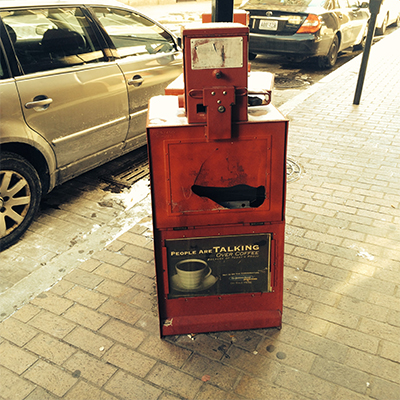
There are now 206 American counties with a total population of 3.5 million that meet the definition of a news desert. This number alone, however, understates the problem. With newspapers continuing to close and digital options only partially picking up the slack, there are 55 million Americans with limited to no access to local news, according to the report.
GET THE LATEST BREAKING NEWS HERE -- SIGN UP FOR GOLOCAL FREE DAILY EBLAST
Continuing an unfortunate trend, 130 newspapers have closed over the past year. “Since 2005, more than 3,200 print newspapers have vanished,” documented the state of local news report. “Newspapers continue to disappear at a rate of more than two per week.” Additionally, a significant number of newspapers have downsized their print offerings, “shifting from dailies to weeklies.”
The marked decline in circulation for the newspapers that are still alive--and--kicking is compounding the problem. “In the past year alone, 500 of the largest daily and weekly newspapers in the United States have lost an estimated two million print and digital readers, according to data from the Alliance for Audited Media,” wrote the authors of the report. “Since 2005, overall circulation has decreased by more than 75 million, or more than 60%.”
One positive countervailing trend has been the growth of digital-only outlets. In the past year alone, there has been a net increase of more than 80 stand-alone local digital news sites.
Another positive development is the continuing significant investment of foundations and individual donors in non-profit news sites, including Texas Tribune and ProPublica. “Over the past six years, grants to U.S. journalism organizations and outlets have totaled more than $1.23 billion,” documented the report.
So far, however, neither the growth of digital only options nor the stepped-up investment in non-profit news outlets has been anywhere near sufficient to plug the gap. The decline in local news coverage, unfortunately, continues to proceed.
We also feel the impacts of this thinning of local coverage more negatively because of the dangerous level of political polarization in the nation. People trust local news more than national news in part because it tends to be reported without the same kind of partisan or ideological filter that characterizes most of the national news we receive. Unlike national cable news, for example, it is usually designed to appeal to the entire community, not a slice of the electorate. Reversing the decline of local news is an essential factor in limiting todays’ ugly partisan divide and reminding us of all that we share in common.
Local news is the lifeblood of local politics and government, the foundation upon which our democracy is built. As I wrote in a 2022 column, marking the release of the first State of Local News report, “It is on the local level where people learn the skills and habits essential for effective self-governance: how to reach principled compromises with people with whom they may disagree; how to distinguish between facts and evidence-based arguments and falsehoods and disinformation; and how to accept that sometimes your side wins and sometimes your side loses, but more important than the outcome of any individual election is protecting the democratic process and that means accepting the results no matter how much we don’t like them.”
It will take new thinking, innovative approaches and public-spirited, entrepreneurially minded pioneers to build a local news and information system that is sustainable in today’s digitally dominated marketplace. That is what it will take to stop the decline in local news, fill the gaps in underserved areas, and bring it back better than ever.