


Prospects for Musk’s New “America Party” - Top Political Experts Weigh In
GoLocalProv News Editor Kate Nagle
Prospects for Musk’s New “America Party” - Top Political Experts Weigh In
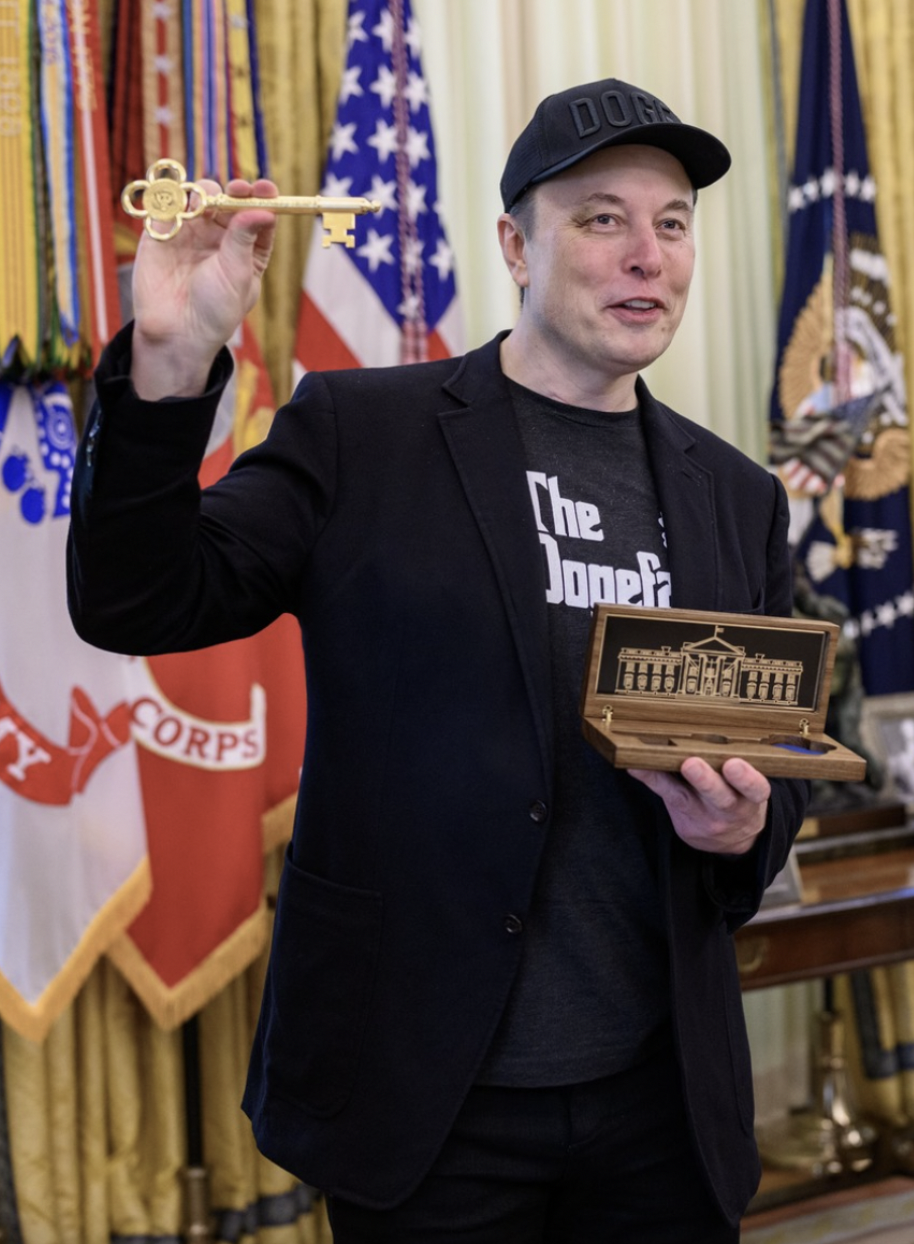
“When it comes to bankrupting our country with waste & graft, we live in a one-party system, not a democracy,” Musk announced on X. “Today, the America Party is formed to give you back your freedom.
It marked the latest move in the contentious relationship between Musk and Republican President Donald Trump, where tempers flared most recently over Trump's signature spending legislation, the so-called "big beautiful bill."
GET THE LATEST BREAKING NEWS HERE -- SIGN UP FOR GOLOCAL FREE DAILY EBLAST“It’s one thing for an individual candidate to run under a third-party label and entirely another to establish a functional 3rd party to compete at multiple levels and in all 50 states,” said Rhode Island College Professor Val Endress, whose area of focus is political communications. “That would take a considerable investment of both time, talented personnel and certainly monetary resources.”
“With the latter, Musk is well-positioned, should he decide to try this, but it takes patience and dedication to see this through and to address a labyrinth of obstacles in individual states, in order to mount candidates for congressional runs,” she added. “Some states have more obstacles than others, but it’s clear that, to unpack the requirements would likely take a lot of patience and expertise, something often lacking from Musk when he enters the political arena.”
Darrell West, a Senior Fellow in Governance Studies at Brookings said he believes Musk himself presents an obstacle.
“Musk is the wrong messenger for this party, as he is wildly unpopular with liberals and conservatives. He was let go by the Trump Administration because he had become toxic in the budget-cutting effort,” said West.
“The main thing he has going for him is lots of money, which is a big help. But money can't overcome messenger problems," added West. "For this to get much traction, he will have to find much more popular people to run as candidates and he will have to stay in the background. Both of those things probably will be hard to do. He has burned too many bridges in the last six months.”

According to Endress, the challenges of mounting an entirely new party effort are steep.
“A sitting president comes with a whole set of advantages that keeps the party together ideologically, and Trump has proven to trade upon both personal loyalty and political threat to do that...and often in equal amounts,” said Endress. “This will be read as an anti-Trump move by those loyal to the president and those who voted for him in both presidential elections.”
“A third party with Musk at the organizational helm is more likely to draw voters from the GOP than the Democratic Party, and will be read as endangering the stronghold that the President has on political power at almost every level. Clearly, Trump will have extra incentive to protect both his party--that he shaped in his own image-- and his longer-term political legacy,” she added.
Endress, whose research has included a look at past third-party efforts including Ross Perot’s “Reform Party,” spoke to the historical perspective.
“Third parties in America are typically associated with a single candidate or a set of candidates. Ross Perot was able to capture nearly 22% of the vote at his zenith, but the Reform Party thereafter had little or no impact on the federal level. What advantaged Perot was capitalizing upon voter discontent and his unique role as an outsider and a CEO,” said Endress. “This is a lane that Trump currently occupies inside a traditional party, so it may be difficult to pull voters away from the GOP with a different appeal. Anti-‘Big Beautiful Bill’ is a lane that Democrats will occupy in any upcoming election. It’s difficult to imagine another equally compelling message that isn’t already voiced inside the two-party system for 2026 or 2028.”
“While Musk has talked about targeting just a few races, that wouldn’t be enough to establish a viable national party and will still be a very expensive venture,” said Endress. “Third parties don’t have the advantage of political primary participation in our two-party system, and thus candidates can have difficulty gaining momentum. Primary season can be a time in which interest in elections can peak, so when running for the general election, name recognition is often a problem for third-party candidates without considerable funding for additional media spots. "
“Conservative candidates who are invested in their own political future can also read the tea leaves about the consequences of Trump disloyalty and are likely to stay loyal to the MAGA base. I doubt that an incumbent politician from the GOP would consider jumping ship, and emerging candidates will weigh the risks,” she added. “And, too, Democratic candidates won’t want the association with Musk after his very public role in the Trump administration that has unwound many of programs in which their party initiated. While Musk’s candidates may have access to more funds, Trump again has a track record and MAGA momentum on his side and can damage reputations before they are even established with the electorate. It’s a real risk, and one many will not will willing to take.”