


The Trump Victory - Rob Horowitz
Rób Horowitz, MINDSETTER™
The Trump Victory - Rob Horowitz
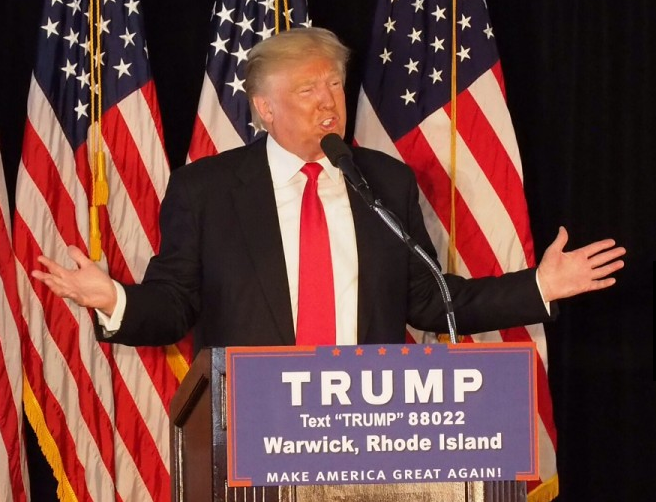
Mr. Trump won even though 53% of those that cast their ballots had an unfavorable view of him and 54% believed his views were too extreme, according to the national exit polls. He was able to prevail despite his unpopularity in large measure due to his success with the so-called double-haters. Among the nearly 1-in-10 voters who disliked both Trump and Harris, he outpaced the vice president, 56% to 30%.
GET THE LATEST BREAKING NEWS HERE -- SIGN UP FOR GOLOCAL FREE DAILY EBLAST
The former president benefited enormously from a political environment that was heavily tilted in his direction. Nearly 3-in-4 (73%) 2024 election voters were dissatisfied or angry with “how things are going in the country today.” More than 2-in-3 (68%) rated the economy “not so good or poor.” Only 40% approved of Joe Biden’s job performance as compared to 59% who disapproved with 45% expressing strong disapproval.
While Kamala Harris performed well overall as a presidential candidate, easily besting Mr. Trump in their one debate, she did not sufficiently distance herself from President Biden. Even if she more expeditiously and crisply defined how she would have been a different kind of president than Mr. Biden, however, as the vice president in an unpopular administration, the Trump campaign may have still succeeded in tying her to its perceived deficiencies.
President Biden’s ill-advised decision to seek re-election despite his advanced age and declining public communication skills was perhaps the single most important contributing factor to Trump’s victory. If he had announced he wasn’t running for reelection in the fall of 2023, there would have been a primary process that would have produced either a Democratic candidate less associated with the Biden administration--most likely one of several impressive Democratic governors --or given Kamala Harris a longer runway to develop her candidacy. In either case, the nominee would have been in a much stronger position to take on Mr. Trump.
Additionally, while African American voters came home with the vice president ending up doing nearly as well as Biden did with that sub-group, Mr. Trump substantially narrowed the Democratic advantage with Latinos. A majority of Latino men chose the former president, and he only lost Latinos overall by six percentage points. In contrast, Mr. Trump lost Latinos to Joe Biden by 33 percentage points. Donald Trump continued his dominance of non-college whites, winning this large sub-group by 2 to 1. His ability to win even larger majorities than a traditional Republican candidate among this sub-group--which comprises a more sizable share of the vote in the Northern Blue Wall states than in the rest of the nation--was a key to his narrow victories in Michigan, Pennsylvania and Wisconsin as it was in 2016.
The overall turnout was on the high side historically for a presidential election, but there is still a significant drop from 2020- a turnout high water mark. When all the votes are counted it appears that Mr. Trump will win the popular vote with roughly around the same number of votes that he received in 2020 in a race where he lost the popular vote by more than 7 million to Joe Biden. The reduction in turnout was most pronounced in counties that voted Democratic in 2020. This turnout differential was another reason for the Trump victory.
To all the observers who want to blame the Harris defeat on her emphasizing “the threat to democracy” as a closing argument, the exit polls tell a different story. More than 1-in-3 voters (34%) named “the state of the democracy" as the top issue in determining their vote and 80% of those voters selected Harris. In contrast, 32% named the economy, 14% abortion and 11% immigration. As the exit polls confirm, Kamala Harris had narrowed the gap on the economy and immigration with the former president to 6 percentage points and 9 percentage points respectively. Since the president, however, retained his majority on the handling of those issues despite Harris’ best efforts. more emphasis on them down the stretch, while failing to hammer home the advantage she had on protecting the democracy would have likely resulted in a somewhat larger defeat.
As all presidents do, Donald Trump will likely claim that the election produced a mandate for his policy agenda and for the extreme actions’ he repeatedly said he would take. That is an understandable and perhaps willful misreading of the results. Given a choice between offering undocumented immigrants a chance to apply for legal status and deporting them to the countries they came from, for example, 56% of voters chose legal status and only 40% favored “deportation.” This is not exactly a ringing endorsement of his plans for mass deportation.
This election was mainly driven by dissatisfaction with the Biden administration, stemming mainly from our first serious bout of inflation in more than 40 years. In other words, it was more of a referendum on the incumbent administration than a full-fledged embrace of Mr. Trump.
While this is wishful thinking, if Mr. Trump comes closer to modeling the tone of Kamala Harris’ gracious concession speech the day after the election than he does his own actions from election day 2020 through January 6, 2021, he can be a successful president. I am not optimistic that we will see any fundamental change in the qualities that continue to make his return to the presidency highly concerning: his authoritarian bent; his firehose of falsehoods; and his instinct for division and insult.
As an American, however, I am hoping that I am wrong and see signs of growth. If he is a much better president the second time around, it is good for the nation. For that, we all must root.