


Disturbing Number of NE Patriots Claim Brain Injuries, According to Lawsuit
GoLocalProv News Team
Disturbing Number of NE Patriots Claim Brain Injuries, According to Lawsuit
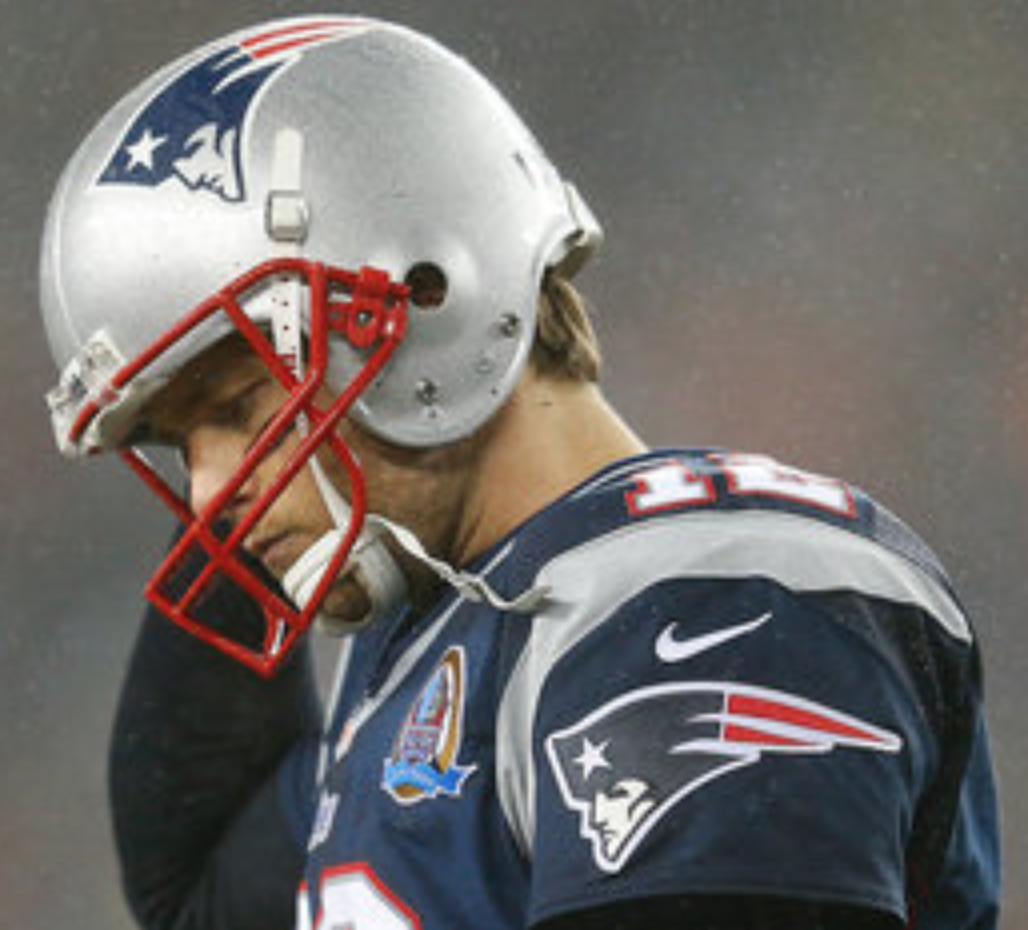
The Patriots won three Super Bowls in fours seasons and went from league also-ran to dynasty.
While the memories are rich for fans, that damage has been debilitating to the former Patriot stars, according to a lawsuit.
GET THE LATEST BREAKING NEWS HERE -- SIGN UP FOR GOLOCAL FREE DAILY EBLASTA new report by the Boston Globe unveils how many once Patriots now claim brain damage.
“Some 42 of about 100 Patriots who were members of New England’s first three Super Bowl title teams have alleged in a landmark class-action concussion suit against the NFL and the helmet maker Riddell that they have experienced symptoms of brain injuries caused by the repetitive head impacts they absorbed in games and practices,” reports the Boston Globe.
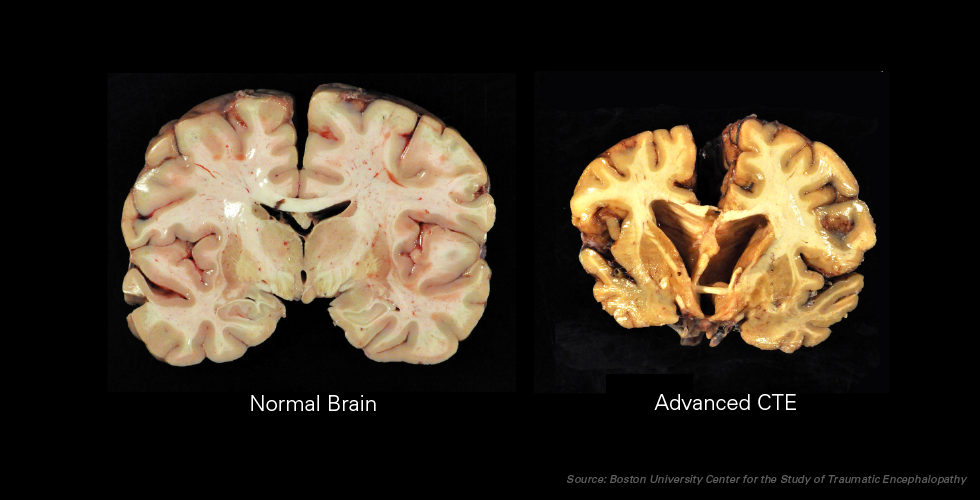
Reports of the impact of repetitive brain injuries are not new.
In a breakthrough article in 2009 published in the New Yorker, author Malcolm Gladwell wrote, “The stained tissue of Alzheimer’s patients typically shows the two trademarks of the disease—distinctive patterns of the proteins beta-amyloid and tau. Beta-amyloid is thought to lay the groundwork for dementia. Tau marks the critical second stage of the disease: it’s the protein that steadily builds up in brain cells, shutting them down and ultimately killing them. An immunostain of an Alzheimer’s patient looks, under the microscope, as if the tissue had been hit with a shotgun blast: the red and brown marks, corresponding to amyloid and tau, dot the entire surface.”
As GoLocal reported last fall, despite the building scientific data on the impact of CTE (Chronic Traumatic Encephalopathy), Patriots fans seem to be immune to dangers to players.
Former Patriot Junior Seau committed suicide and it is believed that his depression was tied to CTE. Former Patriot fullback Kevin Turner died of CTE although he was suffering from ALS as well.
At the time, Dr. Ann McKee of Boston University said In a statement, "The severity of Mr. Turner's CTE was extraordinary and unprecedented for an athlete who died in his 40s. While he had typical cognitive symptoms and problems with impulse control associated with CTE, it also appears that CTE decimated the motor cortex of his brain at a young age, likely leading to his ALS symptoms.”
This past week, the autopsy on once-convicted murderer Aaron Hernandez found that he suffered from severe CTE. Hernandez committed suicide in his cell. His conviction was voided after his suicide as he had appeals pending.
"Mr. Hernandez had chronic traumatic encephalopathy (CTE), Stage 3 out of 4, (Stage 4 being the most severe). This diagnosis was confirmed by a second VABHS neuropathologist. In addition, Mr. Hernandez had early brain atrophy and large perforations in the septum pellucidum, a central membrane,” said McKee.
Hernandez’s family have filed a lawsuit against the NFL seeking damages for Hernandez’s CTE.
10: Number of Patriots’ Hall of Famers who alleged they suffered brain injuries: Houston Antwine, Nick Buoniconti, Raymond Clayborn, Sam Cunningham, Steve Grogan, John Hannah, Stanley Morgan, Jon Morris, Steven Nelson, and Babe Parilli.
8: Number of Patriots who have been posthumously diagnosed with CTE: Ronnie Caveness, Aaron Hernandez, Dr. Bill Lenkaitis, Chuck Osborne, Junior Seau, Mosi Tatupu, Kevin Turner, and Dennis Wirgowski.
21: Number of Patriots in the lawsuit who died before the NFL settlement. Their average age at death was 57.6.
A 2017 study from researchers from Boston University on CTE found an association between participation in youth tackle football before age 12 and impaired mood and behavior later in life. The study appears in Nature's Translational Psychiatry.
The study looked at 214 former American football players, including 43 who played only through high school and 103 who played only through college. The average age of the former players at the time of the study was 51.
According to researchers, participants received telephone-administered cognitive tests and completed online measures of depression, behavioral regulation, apathy and executive functioning (initiating activity, problem-solving, planning and organization). Results from former players who started playing tackle football before the age of 12 were compared against those of participants who started playing at age 12 or later.
"This study adds to growing research suggesting that incurring repeated head impacts through tackle football before the age of 12 can lead to a greater risk for short- and long-term neurological consequences," said Michael Alosco, PhD, lead-author of the study and a post-doctoral fellow at BU.
The 21 Biggest Patriots Controversies

"Snow Plow" Game
December 12, 1982
The Snowplow Game took place against the Miami Dolphins at the old Schaefer Stadium in Foxboro. During the game, the stadium's snowplow operator cleared a spot on the snowy field in order for New England kicker John Smith to kick the winning field goal to give the Patriots a 3–0 win.
The Astroturf surface of the field had been waterlogged the night before due to heavy rain, and froze over before the game began. Shortly after the game began, it began to snow heavily. For this game, officials could call for a time-out, and allow the ground crew to use a snowplow to clear the yard markers.
With just 4:45 left to go in the scoreless game, Patriots coach Ron Meyer ordered a snowplow operator to clear a spot on the field for placekicker John Smith. Instead of plowing straight across the field, the plow turned left, directly in front of the goal post, giving Smith a clear advantage. Miami coach Don Shula vehemently protested but the field goal was good and the Patriots won the game with a final score of 3–0.
The following year, the NFL banned the use of snowplows on the field during a game.
The plow itself now hangs from the ceiling at an exhibit marking the event at Gillette Stadium.

‘Roughing the Passer’
Dec. 18, 1976
Patriots vs. Raiders
On December 18, 1976 the Patriots visited the Oakland Raiders in the AFC Divisional Playoff game at the Oakland-Alameda County Coliseum.
The Patriots led the game 21-17 with 1:24 to play when Patriots Defensive tackle Ray Hamilton sacked Oakland quarterback Kenny Stabler in what should have been the end of the game.
However, referee Ben Dreith called a roughing the passer penalty on Hamilton giving Oakland new life. Stabler proceeded to get himself into the end zone with ten seconds left to give Oakland a 24-21 lead.
The game still stands as one of the most controversial games ever played.

Chuck Fairbanks Quits
1978
Chuck Fairbanks had been Head Coach of the Patriots since 1973.
In 1978, wide receiver Darryl Stingley was left paralyzed following a hit by Jack Tatum during pregam play in Oakland; Fairbanks had worked out a contract extension with Stingley before the game but later, owner Chuck Sullivan reneged on the deal. Fairbanks was furious and resolved to leave the team after the season.
The Patriots won the AFC East title that year, and seemed poised for a Super Bowl appearance. Just before the final regular season game, Sullivan suspended Fairbanks for breaking a contract by agreeing to become head coach for the University of Colorado in 1979. Fairbanks was reinstated for the Pat's first playoff game, but the Patriots were upset by the Houston Oilers.
The Patriots sued Fairbanks for breach of contract. During the course of the lawsuit, he admitted recruiting for Colorado while still on the Patriots payroll. The team won an injunction preventing him from leaving. However, a group of CU supporters bought out his contract, paving the way for him to leave the Patriots.

Irving Fryar PVD Fight
October 1990
A nightclub altercation in downtown Providence left New England Patriot wide receiver Hart Lee Dykes hospitalized with an eye injury and teammate Irving Fryar facing a weapons charge back in October of 1990.
Fryar had filed a police report that said he was hit over the head from behind while trying to help Dykes.
Fryar was supposedly walking to his car outside Club Shalimar around 1:20 a.m., when he saw Dykes arguing with some people, and pulled a handgun out during the fracas.

Michael Jackson
Summer 1984
In the summer of 1984, Michael Jackson reunited with his brothers for the final time for their "Victory" World Tour. The tour was promoted by Patriot's owner Billy Sullivan and his son Chuck.
Chuck Sullivan guaranteed the Jacksons a $36.6 million advance, and put the stadium up as collateral for a $12.5 million loan to pay the first installment shortly before the tour started.
He tried to use his NFL connections to make more lucrative deals with other stadium owners, but many balked at his terms.
In the most humiliating chapter of this story, the board of selectmen in Foxboro denied a permit for the concert, citing an "unknown element" of danger, thought to be a fear of a large black attendance at the shows.
The Sullivans lost tens of millions on the tour, forcing them to sell the team to Victor Kiam in 1988.

Potential St. Louis Move
1992
James Orthwein purchased the New England Patriots from Victor Kiam in 1992 when the Kiam was facing bankruptcy and owed Orthwein millions. He planned to relocate the Patriots franchise to St. Louis, renaming the team the St. Louis Stallions.
His plans were curtailed when Bob Kraft, owner of Foxboro Stadium, refused to accept a buyout of the lease. Kraft used his ownership of the stadium to stage a hostile takeover, offering to pay $175 million for the team knowing that Orthwein no longer wanted the team if he could not move it to St. Louis. Orthwein accepted the bid.

Drew Bledsoe Mosh Pit
November 13. 1997
On Christmas Eve, 1997, Patriots QB Drew Bledsoe was sued by a woman who said that she was injured when Bledsoe and teammates Scott Zolak and Max Lane were stage diving and crowd surfing at an Everclear concert at Boston's Paradise Rock Club.
It was determined that there was no criminal wrongdoing, but Bledsoe and Lane each settled, with Bledsoe paying $400,000 and Lane paying $600,000 towards a $1.2 million settlement.
Bledsoe, who weighed 235 pounds, and Lane, who weighed 305 pounds, admitted they dove off the stage, but said they did not cause the woman's injuries.

Potential Providence Move
October, 1997
After Bob Kraft purchased the Patriots in 1994, he spent years trying to negotiate a new stadium deal either in Foxboro or in Boston proper. Several New England cities began talking with Kraft, including Providence. Mayor Buddy Cianci was a particular cheerleader for a stadium to be built downtown near I-95, where the Foundry is located.
Kraft later came to terms with the town of Foxboro and state of Massachusetts and built a new stadium right next to the old one.

Superbowl XX Humiliation
January 26, 1986
The Patriots were humiliatingly defeated in their first Super Bowl appearance, losing 46-10 to the Chicago Bears.
Maybe the less said about that one, the better.

Potential Hartford Move
November 1998
After failing to get anywhere while trying to secure a new stadium to replace the aging, outdated 1971 facility in Foxboro, Bob Kraft unsuccessfully attempted to negotiate a move to Boston or Providence. In November of 1998, Hartford, CT came calling with an offer for a 100% publically financed stadium facility on the riverfront. A deal was made, and plans moved forward, until it was discovered that the proposed site was contaminated, and would require a massive cleanup cost.
Massachusetts ended up coughing up $72 million for a new stadium in Foxboro, with Kraft financing the rest himself.

Millen vs Sullivan
Jan. 5, 1986
Sometimes a picture is worth a thousand words. This is one of those times.
This incident occurred at the L.A. Coliseum on Jan. 5, 1986, after an AFC divisional playoff game between the Patriots and the Raiders. The Raiders’ Howie Long had spent the week leading up to the game taking shots at the Patriots.
In response, General Manager Pat Sullivan spent the whole game mocking and teasing Long.
The Raiders wound up losing 27-20. After the loss, Long and Sullivan met up on the field. Long said things got heated when Sullivan grabbed his face mask.
This is where Matt Millen comes in.
Millen said he saw someone swing at Long, but didn’t know who it was. He got quite the shot in, claiming to not realize it was Sullivan.

Parcells Exits
1996
Coach Bill Parcells left the Patriots in 1996 after disagreements with owner Robert Kraft. Parcells thought that he didn't have enough input into personnel decisions. When he left, he famously said: "They want you to cook the dinner; at least they ought to let you shop for some of the groceries. Okay?" This was in reference to an incident during the 1996 draft where Parcells, who wanted to draft a defensive player with their first-round choice, was vetoed by Kraft, who favored drafting a wide reciever instead.

Belichick/Jets Tampering
1999
When Bill Parcells stepped down as head coach in of the New York Jets in 1999, he had already arranged to have Belichick be his successor.
Belichick would be the New York Jets' head coach for only one day, however. At Belichick's press conference announcing him head coach, he surprisingly resigned the post. He then delivered a half-hour speech explaining his resignation to the assembled press corps.
Soon after, he was introduced as the Patriots' head coach. Parcells and the Jets claimed that Belichick was still under contract to the Jets, and demanded compensation from the Patriots. The NFL agreed, and the Patriots had to surrender a first-round draft pick to the Jets, causing the loss of acquiring running back Curtis Martin.

The "Tuck Rule" Game
January 19, 2002
The 2001 AFC divisional playoff game, or the "Tuck Rule Game", took place at Foxboro Stadium between the Patriots and the Oakland Raiders.
The name "Tuck Rule Game" comes from a controversial play where Raiders' cornerback Charles Woodson sacked Patriots' quarterback Tom Brady which initially appeared to cause a fumble that was eventually recovered by Raiders' linebacker Greg Biekert. If it was a fumble, it would have almost definitely guaranteed a win for the Raiders.
Officials reviewed the play, and determined that Brady's arm was moving forward, making it an incomplete pass and not a fumble. As a result, the original call was overturned, and the ball was given back to the Patriots who moved the ball into field goal range. With under a minute remaining in the game, Adam Vinatieri kicked a 45-yard field goal to tie the game, which sent the game into overtime.
In overtime, Vinatieri kicked a 23-yard field goal to win the game for the Patriots, who went on to win Super Bowl XXXVI.

"Spy-gate"
September 9, 2007
During the 2007 season, the Patriots were disciplined by the NFL for videotaping the New York Jets' coaches' signals during a September 9, 2007 game.
After an investigation, the NFL fined Patriots head coach Bill Belichick $500,000 (the largest fine ever imposed on a coach in the league's history and the maximum allowed) for his role in the incident, fined the Patriots $250,000, and relieved the team of their first-round selection in the 2008 NFL Draft.

Aaron Hernandez
June 2013
On August 22, 2013, tight end Aaron Hernandez was indicted by a grand jury for the murder of Odin Lloyd, a semi-professional football player, in July 2013. On May 15, 2014, Hernandez was indicted for the 2012 double homicide of Daniel de Abreu and Safiro Furtado.
After his arrest, Hernandez was released by the Patriots organization.

Deflated Balls
January 18, 2015
After the 2015 AFC Championship game between the Patriots and the Colts, the NFL announced that it was investigating reports that game balls had been deflated. One such report came from Indianapolis Colts player D'Qwell Jackson after he intercepted a pass by quarterback Tom Brady.
Patriots coach Bill Belichick said he didn't know anything about the controversy until the morning after the game, and that he "cooperate fully" with any probe. Brady called the allegation "ridiculous".
According to reports, the NFL found 11 of 12 Patriots game balls were underinflated.

The South Boston Megaplex
Mid 90's
The South Boston "Megaplex" was proposed in the mid-1990's to replace the aging Fenway Park and Foxboro Stadium.
Massachusetts Governor William Weld pushed for construction of a full "Megaplex" at one site, while Boston Mayor Thomas Menino favored a new convention center complex at another site in South Boston. In the end, the residents of neither of these neighborhoods wanted a stadium, and protested vigorously.
In the end, Fenway replacement plans were cancelled, and the Patriots constructed a new stadium right next to the old Foxboro Stadium after flirting with moves to Hartford and Providence.

The "Flying Elvis"
1993 Season
In 1993, the team replaced mascot "Pat Patriot" with a new, aerodynamic logo that resembled the King of Rock and Roll. Dubbed "The Flying Elvis" by fans, the new logo never took off with some fans, who prefer the "Old School" Pat Patriot to the sleek Flying Elvis.

Bledsoe Vs. Brady
November 2001
When Drew Bledsoe returned from a lung injury during the 2001 season, he assumed that he'd return to his QB position.
However, Coach Bill Belichick controversially announced that Tom Brady would be starting quarterback for the rest of the season. Many fans thought this was unfair to Bledsoe, but history has proven Belichick made the right move.

Ravens "Manipulation"
January 10, 2015
After the team's 35-31 loss, Ravens headcoach John Harbaugh complained about a "substitution trick" by the Patriots during the game, saying it was "clearly deception" that he hoped the NFL would investigate.
Harbaugh received an "unsportsmanlike conduct" penalty for running onto the field and screaming in objection. After the game, he said that the officials "didn't understand what was going on."
The NFL found that there was no wrongdoing by the Patriots.


