


Can Buddy Beat the Master Lever?
Stephen Beale, GoLocalProv News Contributor
Can Buddy Beat the Master Lever?
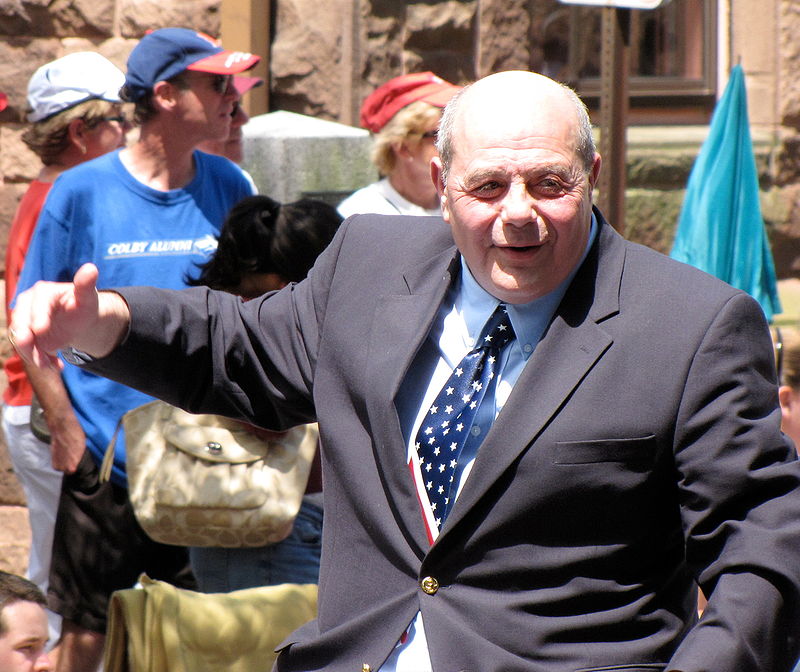
Board of Elections data for the past four general elections shows that more than a third of city voters typically pull the master lever—also known as straight ticket voting—for Democrats. In 2012, 41.1 percent of voters did so. So did 43.6 percent four years before. In 2006, 36.3 percent opted for the master lever.
Only one other community has Providence beat: Central Falls, where just over half of the ballots cast in 2006 and 2008 were through the master lever. No other community comes even close. The next in line is Pawtucket where a little over 28 percent voted a straight ticket both years.
GET THE LATEST BREAKING NEWS HERE -- SIGN UP FOR GOLOCAL FREE DAILY EBLASTThe exception in Providence was 2010, when just 21.7 percent went for the master lever. That’s when independent Lincoln Chafee and Democrat Frank Caprio topped the ticket (along with the GOP’s John Robitaille).
Does Cianci have a math problem?
A ward-by-ward look at voting patterns shows the math is against Cianci as well. On the East Side, where Democrat Jorge Elorza is the expected favorite, master lever voting is at its lowest levels in the city. In Ward 1, which encompasses Fox Point, just 25.7 percent of voters utilized the master lever in 2012. In Wards 2 and 3 it was 16.9 percent and 24.2 percent, respectively.
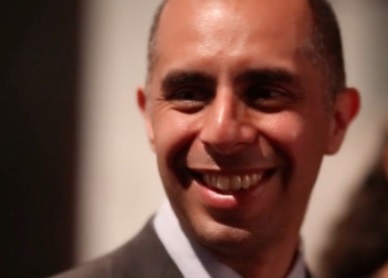
Ric Santurri, a local real estate investor and GoLocalProv MINDSETTER™, says Cianci has a math problem. He points to two factors: the East Side’s historic preference for ideologically kindred outsiders with little experience in office—and the impact of the master lever. “My theory is that Elorza will benefit from the master lever,” Elorza said. “He can benefit from the top of the ticket earning votes.”
Polls do not incorporate the master lever
Of course, in his first comeback campaign, in 1990, Cianci was able to eke out a win as an independent. That year, he won 35 percent of the vote, with 31 percent going to Democrat Andrew Annaldo and 34 percent to the other independent candidate Fred Lippitt.
The most recent polling done on the race suggests that Cianci’s current support is in line with his 1990 numbers. That poll, put out last month by WPRI, shows Cianci leading at 38 percent, with Elorza at 32 percent. The third candidate, GOP contender Dan Harrop, was a distant 6 percent. Nearly one in five voters—21 percent—remained undecided at the time of the poll.
One thing the poll does not measure—at least explicitly: the impact, if any, of the master lever. WPRI pollster Joe Fleming told GoLocalProv that he did not—and does not as a general rule—ask voters if they plan to pull the master lever. If a voter indicates preference for a particular candidate—say, perhaps, the Democrat in the race—the assumption is that those responses will include both those who split their tickets and those who vote a straight ticket, according to Fleming and other pollsters interviewed for this report.
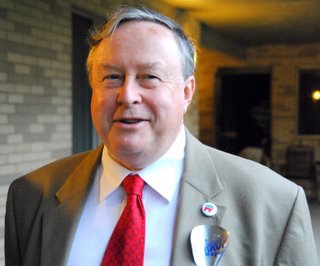
But does a voter answer a pollster’s question the same way he tackles a ballot on Election Day? “The answer is, we think so,” Profughi said.
“Most polls don’t look specifically at the impact of the master lever. It is more common to ask about vote intention in a series of races and see how many people are voting a straight party line. We never asked about the master lever in our Brown surveys,” said Darrell West, the Vice President of Governance Studies at the Brookings Institution and the former head of Taubman Center for Public Policy at Brown University.
West said he doesn’t expect the master lever to have “much impact” on the mayoral race, given the state’s long history of split-ticket voting.
But master-lever voting has been known to have an unexpected impact elsewhere. For example, in the 1982 race for governor in Illinois, pre-election polls wrongly predicted the outcome. “The finding is quite simple: although people said they preferred [the] Republican incumbent … many voted a straight Democratic ticket once inside the voting booth,” writes Graham Walden in Public Opinion Polls and Survey Research, a 1990 handbook of case studies from the 1980s.
A similar claim about polling in Chicago is made by three pollsters in the book Pre-Election Polling: Sources of Accuracy and Error, published in the late 1980s.
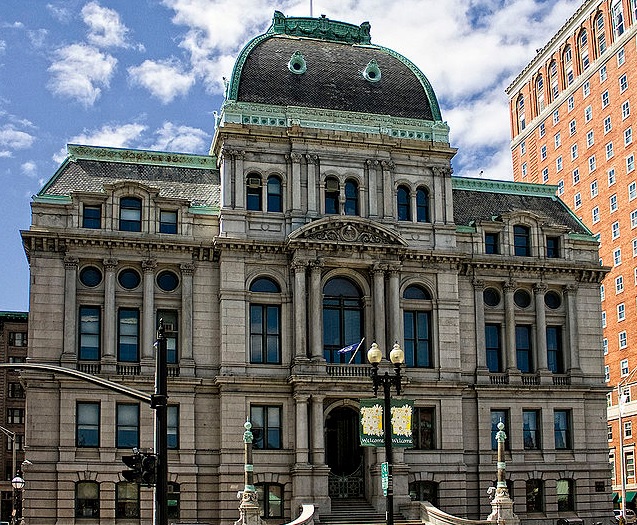
Block: Cianci celebrity beats the master lever
Few people in state politics have a better grip on the impact of the master lever than Ken Block who successfully led the charge for its abolition (which doesn’t take effect until next year). In an interview Block said the impact is most palpable on down-ballet races for state rep, town council, or school committee.
Decisions about which party to pull the lever for are shaped by who voters like at the top of the ticket, according to Block. That means that presidential election years draw out more straight-ticket voters than in off-years, Block said. Hence, in Providence, the master lever accounted for just over 40 percent of ballots case in the last two presidential elections.
That means that Cianci is facing fewer master lever votes. The question then becomes whether Providence voters will behave as they did in 2006, when 36.3 pulled the lever, or 2010, when just 21.7 percent did. (Block himself was a candidate for Governor in the race under the Moderate Party banner. He recently ran unsuccessfully in the GOP gubernatorial primary.)
The difference between 2006 and 2010, of course, is the Chafee factor. Can Cianci replicate what Chafee did? Santurri says Chafee’s Left-leaning progressive policy stances helped pull away traditional Democrat voters. “And Buddy certainly doesn’t do that,” Santurri said.
But Cianci does have the name recognition of a local celebrity—and that moots any hindrance the master lever might pose to his candidacy in the election, according to Block. “I’d be shocked if there was a huge master lever component to it,” Block said. “I believe his name recognition can beat the master lever.”
The Elorza campaign did not respond to a request for comment. Cianci’s campaign did not respond in time for publication.
Master Lever Accounts for 40 Percent of Providence Votes: See the Numbers

#15-Ward 2
Neighborhoods: College Hill, Wayland, Blackstone
# Registered Voters: 9,271
# Ballots Cast: 4,535
# Master Lever Ballots (for Democrats): 768
% Master Lever (for Democrats): 16.93%

#14-Ward 3
Neighborhoods: Mount Hope
# Registered Voters: 9,110
# Ballots Cast: 5,492
# Master Lever Ballots (for Democrats): 1,331
% Master Lever (for Democrats): 24.24%

#13-Ward 1
Neighborhoods: Fox Point and parts of College Hill and Wayland Square
# Registered Voters: 8,239
# Ballots Cast: 3,341
# Master Lever Ballots (for Democrats): 860
% Master Lever (for Democrats): 25.74%

#12-Ward 5
Neighborhoods: Mount Pleasant and Elmhurst
# Registered Voters: 7,372
# Ballots Cast: 4,373
# Master Lever Ballots (for Democrats): 1,175
% Master Lever (for Democrats): 26.87%

#11-Ward 14
Neighborhoods: Elmhurst
# Registered Voters: 6,479
# Ballots Cast: 2,959
# Master Lever Ballots (for Democrats): 1,044
% Master Lever (for Democrats): 35.28%

#10-Ward 13
Neighborhoods: Federal Hill, as well parts of the West End and Downtown
# Registered Voters: 7,746
# Ballots Cast: 3,194
# Master Lever Ballots (for Democrats): 1,213
% Master Lever (for Democrats): 37.98%

#9-Ward 4
Neighborhoods: North End
# Registered Voters: 6,664
# Ballots Cast: 3,307
# Master Lever Ballots (for Democrats): 1,519
% Master Lever (for Democrats): 45.93%

#8-Ward 12
Neighborhoods: Smith Hill, Mount Pleasant, Capital Center District
# Registered Voters: 6,051
# Ballots Cast: 2,475
# Master Lever Ballots (for Democrats): 1,141
% Master Lever (for Democrats): 46.10%

#7-Ward 6
Neighborhoods: Mount Pleasant, Manton, Olneyville, and Fruit Hill
# Registered Voters: 5,774
# Ballots Cast: 2,524
# Master Lever Ballots (for Democrats): 1,344
% Master Lever (for Democrats): 53.25%

#6-Ward 7
Neighborhoods: Silver Lake and Hartford
# Registered Voters: 5,388
# Ballots Cast: 2,622
# Master Lever Ballots (for Democrats): 1,418
% Master Lever (for Democrats): 54.08%

#5-Ward 8
Neighborhoods: South Elmwood, Reservoir Triangle, and the West End
# Registered Voters: 6,389
# Ballots Cast: 2,976
# Master Lever Ballots (for Democrats): 1,624
% Master Lever (for Democrats): 54.57%

#4-Ward 15
Neighborhoods: Olneyville, Silver Lake, Valley, and West End
# Registered Voters: 5,184
# Ballots Cast: 2,229
# Master Lever Ballots (for Democrats): 1,240
% Master Lever (for Democrats): 55.63%

#3-Ward 9
Neighborhoods: Elmwood and South Elmwood
# Registered Voters: 6,665
# Ballots Cast: 3,194
# Master Lever Ballots (for Democrats): 1,874
% Master Lever (for Democrats): 58.67%

#2-Ward 11
Neighborhoods: West End, Elmwood and Downtown, including the Jewelry District
# Registered Voters: 6,778
# Ballots Cast: 2,856
# Master Lever Ballots (for Democrats): 1,775
% Master Lever (for Democrats): 62.15%

#1-Ward 10
Neighborhoods: Lower South Providence and Washington Park
# Registered Voters: 6,055
# Ballots Cast: 2,654
# Master Lever Ballots (for Democrats): 1,727
% Master Lever (for Democrats): 62.15%


