


RIPEC Report Says Truck Toll Plan Raises Too Much Money, Mattiello Responds
GoLocalProv News Team
RIPEC Report Says Truck Toll Plan Raises Too Much Money, Mattiello Responds

The report includes a cash-flow analysis of the current proposal contained in H. 7409 and S. 2246, which consists of $300 million in additional borrowing and $45 million in new tolling revenue annually, as well as three alternative models for financing the RhodeWorks program.
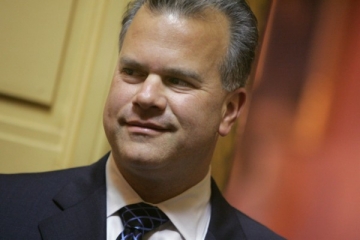
Speaker Nicholas Mattiello immediately responded to RIPEC's claims.
GET THE LATEST BREAKING NEWS HERE -- SIGN UP FOR GOLOCAL FREE DAILY EBLAST“The plan that we are moving forward with is the right one and the analysis by RIPEC confirms that it is very viable. I respect RIIPEC’s work greatly and this analysis will be shared with the House Finance Committee and thoroughly reviewed at tomorrow’s hearing. I was also extremely pleased that the Greater Providence Chamber of Commerce strongly endorsed the RhodeWorks plan today at the annual legislative luncheon,” said Mattiello.
“The plan that we are moving forward with is the right one and the analysis by RIPEC confirms that it is very viable. I respect RIIPEC’s work greatly and this analysis will be shared with the House Finance Committee and thoroughly reviewed at tomorrow’s hearing. I was also extremely pleased that the Greater Providence Chamber of Commerce strongly endorsed the RhodeWorks plan today at the annual legislative luncheon," said Speaker of the House Nicholas Mattiello.
RIPEC conducted a cash-flow analysis comparing the Rhode Island Department of Transportation’s (RIDOT) publicly-stated expenditure needs with available funding which found that RIDOT faces an estimated funding gap of approximately $450.6 million over the six years from FY2016 to FY2021. The transportation finance proposal before the General Assembly is supposed to eliminate the funding gap through increased borrowing and placing tolls on large commercial trucks in a number of locations throughout the state.
RIPEC’s analysis found that the proposal does not provide sufficient resources to meet RIDOT’s annual cash flow requirements in FY 2020, FY 2021, and FY 2022, but does provide sufficient resources to meet RIDOT’s entire ten-year funding requirements over the FY 2016 – FY 2025 period. RIPEC adds that the current proposal would result in a "substantial accumulation of unprogrammed funds at the end of the FY 2016 – FY 2032 period."
Alternative Models
The report also includes cash-flow models for three alternative financing plans developed by RIPEC for the FY 2016 – FY 2025 period, as well as for an extended time period from FY 2016 – FY 2032.
According to RIPEC, each of the three alternative plans provides sufficient funding for the RhodeWorks program, including bridge repairs and maintenance, reconstruction of the Route 6/10 Interchange and all other proposed transportation programs and projects, for each of the years included in the analysis.
RIPEC Model 1 includes increased borrowing only, with no tolling program or other sources of new or increased revenue. RIPEC Models 2 and 3 consider the implications of reducing the $45 million tolling program and increasing the size of the $300 million GARVEE bond currently under consideration.
Costs
RIPEC Model 1, which assumes a GARVEE borrowing of $515 million and no tolling, was found to have a total local cost of $282.2 million over the same time period.
RIPEC Model 2, which assumes a GARVEE borrowing of $435 million and $20 million in tolling revenue annually, was found to have a total local cost of $368.3 million.
RIPEC Model 3, which assumes a GARVEE borrowing of $400 million and $30 million in tolling revenue annually, was found to have a total local cost of $409.3 million.
Unprogrammed Surplus
RIPEC’s analysis of the current proposal also found that while it may not generate sufficient revenue to meet RIDOT’s capital needs in the short-term, it would result in a large unprogrammed surplus over the long-term. By the end of the FY 2016 and FY 2032 time period, the current proposal would result in an unprogrammed surplus of approximately $701.7 million.
Each of the three RIPEC alternative models would also result in a unprogrammed surplus by FY 2032, though to a smaller degree than the current proposal.
Winners and Losers in Raimondo's FY17 Budget Proposal

Winner
School Infrastructure
An $80 million appropriation for construction and renovation, including of $9.1 million for the school building authority.
A $40 million general obligation bond to renovate and modernize school facilities with a focus on immediate health and safety, and investing in STEAM learning spaces.
A requirement that all schools post their actual budget online.
The Governor continues to address the pressing needs of the state’s children and the condition of the schools they attend in her FY17 budget proposal; the public could have the opportunity to follow-suit by approving the general obligation bond in November — or not.

Winner
Hospitals
While the Governor delved little into structural healthcare issues in her budget address on Tuesday (she did propose a multi-million dollar comprehensive strategy to address the opioid overdose epidemic which includes medication assisted treatments at the prisons, and $187,000 to combat lead poisoning), the Rhode Island Hospital Association immediately lauded the budget following its introduction, and addressed that while it is facing some reductions, that it "applauds" this years budget after landing on the "loser" list last year.
“The Hospital Association of Rhode Island applauds Governor Raimondo’s commitment to strengthening our state’s health care system,” said Michael R. Souza, president, Hospital Association of Rhode Island. “Although hospitals will face reductions in the proposed budget, we look forward to working with the General Assembly and Administration to implement lasting solutions that provide us the resources and tools necessary to transform the health care delivery system. Hospitals will continue to invest in innovation, technology, and a high-quality workforce with the continued support of our State partners.”

Winner
Affordable Housing Advocates
Proponents of affordable housing opportunities in the state notched a preliminary victory by landing a spot in the Governor's’s budget. Now they need to make it through the General Assembly — and garner approval from voters in November.
Said the Housing Network of RI following Raimondo's budget address:
The Housing Network of Rhode Island and its membership of sixteen nonprofit affordable housing developers wish to thank Governor Raimondo for recognizing the importance of state investment in housing opportunities for low and moderate income Rhode Islanders. As we all work together to reinvigorate the state’s economy, affordable housing development plays a critical role in our state’s recovery plan. Governor Raimondo’s inclusion of an affordable housing bond in her FY 17 budget will not only stimulate the creation of new housing and boost economic growth by creating jobs in the construction, retail and service industries, but will also bring substantial additional outside financial resources into our state.
Data shows that many Rhode Island households continue to struggle to find housing options that are affordable to them. According to HousingWorks RI, two in every five Rhode Island households are cost burdened, spending more than thirty percent of their income on housing. Governor Raimondo’s inclusion of an affordable housing bond recognizes this need and is a notable step towards addressing a major need of working class Rhode Islanders. We commend Governor Raimondo’s efforts and are grateful for her leadership on such an important issue.

Winner
Recent Grads
Raimondo continues to try to stave off the “brain drain” in Rhode Island by supporting incentives to keep recent college grads in the state.
In her FY17 budget proposal, the Governor upped the Wavemaker Fellowship to $5 million to increase the loan forgiveness program, and through the Ocean State Grad Grant looks continue funding through RI Housing to provide recent college graduates with up to $7,000 in down payment assistance on a first home.

Tie
Minimum Wage Increase
Good for employees, not so much for business owners. The Governor has proposed raising the state’s minimum wage to $10.10, making good on her campaign promise to do so (albeit one year later that planned).
The business community including the National Federation of Independent Business, who said that “any increase in the minimum wage will impact job create at small businesses for younger, less experience workers," continues to push back on the issue. The same arguments were made last year when the state raised the minimum wage to $9.60; watch and see if any new approaches are taken by employers during the session related to the issue.

Tie
Increase in Cigarette Tax
First blush win for the state — the state gets more revenue ($7.1 million) by increasing the cigarette tax twenty-five cents from $3.75 to $4.00. The price per pack would still be less than neighboring Massachusetts ($9.78 in RI vs $10.18 if it goes through — it’s now currently $9.49 in RI). More Rhode Islanders might be deterred from smoking with the increased cost.
The National Federation of Independent Business, however, said the proposed increase in the cigarette tax will hurt small convenience stores. When CVS stopped selling cigarettes, those smaller stores undoubtedly saw the windfall. Can they absorb a small tax increase?

Loser
Medical Marijuana Caregivers - and State of Rhode Island
The RIDOH and DBR along with the State Police are calling for medical marijuana caregivers and cultivators to now pay an annual fee for a tag on every medical marijuana plant. The state entities claim that “under current law, the caregiver market lacks accountability and oversight” as opposed to compassion centers. The state agencies say that the tags amount to just 2 percent of the value of the marijuana produced.
The Governor and the General Assembly however need to address an underlying issue that has plagued them since the implementation of the medical marijuana — which is that the oversight committee as mandated by law has never once met. The state should be included on the “loser” list for failing to adhere to the mandate as required by law, as they would have the input from stakeholder and empirical evidence to what is working — or not — in the current law. Instead, the state is clamping down with zero input from the community.

Loser
Home Care Agencies
The Rhode Island Partnership for Home Care blasted Raimondo's budget almost immediately after its unveiling:
“Governor Raimondo’s proposed budget does not provide for the substantial increase needed for home care agencies to comply with new federal and state mandates, the increased cost for delivering healthcare services in the home, the barriers that Rhode Islanders face when accessing home care, and the ability for home care agencies to retain direct care workers.”, said Nicholas Oliver, Executive Director of the Rhode Island Partnership for Home Care.
While the Governor proposed a seven-percent increase for Medicaid home and community-based long-term services and supports, including personal care attendant services provided by contracted home care agencies, the Governor also proposed another increase in the state’s minimum wage from $9.60 per hour to $10.10 per hour, a 50 cent increase. Because the current average home care aide starting wage is $10.50 per hour, the proposed increase, earmarked toward direct care worker wages, increases the wage to a minimum $11.00 per hour, but without financial support for compliance to the employer mandate for health insurance coverage under the Affordable Care Act for home care agency employees and compliance with the U.S. Department of Labor overtime and travel rules impacting home care. Oliver added, “The Governor’s proposed increase is nothing more than an inflation adjustment that otherwise establishes a ninth consecutive year of frozen rates. This budget proposal does not reflect in writing what the Governor has publicly stated in the past year, such as the need to rebalance long-term care, the need to shift funding toward home and community-based healthcare services over nursing homes, and her interest to establish a comparable wage for home care workers to their counterparts throughout the healthcare sector.”

Loser
Fiscal Conservatives
Governor Gina Raimondo's budget proposal raised some eyebrows in Republican (and Libertarian) circles for the expansive role of the state government in market-based conditions.
Justin Katz with the free-market Center for Freedom and Prosperity offered the following budget release.
After budget addresses from progressive governors, free-market commentators frequently refer to the budget's focus on special interests, but Governor Raimondo's fiscal year 2017 budget is a stunningly special-interest budget. Nearly every item is directly targeted toward a particular narrow group of recipients. It's the kind of budget a chief executive puts forward when she doesn't trust the people of her state to make their own decisions. For example, despite a projected increase of $85 million in income and sales taxes, next year, the governor offers offers no broadbased tax reductions. In fact, she wants to add nearly $250 million in debt to the $300 million she wants to incur without voter approval for her RhodeWork's program.
In short, this budget doubles down on the strategy of remaking Rhode Island in the governor's image. If you fit her vision for the state, there's money for you. If you're one of the existing special interests, in Rhode Island, you'll like what you're getting. But if you're a regular Rhode Island chasing your own dreams according to your own lights and supporting your own responsibilities, you'll find yourself holding the bill, and without subsidies.

Loser
Toll Opponents
It comes as no surprise that the Governor remains committed to pushing through her newly revised RhodeWorks plan — which includes truck tolls — to address the state’s infrastructure needs. On Tuesday, Raimdondo said the state needs to “stop playing the politics of procrastination” with fixing the state’s bridges and roads.
Pay-go proponents — as well as public-private partnership ones — will have a short window to contest the Governor’s new plan to have a $300 million Garvee bond in order to support the program, which is on the fast track for consideration at the General Assembly with the Speaker’s stated goal of sealing the deal before the body breaks for February vacation.
Expect the opposition to remain heated in these coming weeks, however.


