


Prov City Council Moves to Restrict Police From Working With ICE, Mayor Says Portion May Be Illegal
GoLocalProv
Prov City Council Moves to Restrict Police From Working With ICE, Mayor Says Portion May Be Illegal
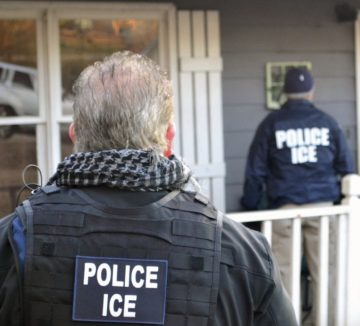
“The proposed changes come as Providence residents demand greater accountability following several concerning incidents this summer involving the Police Department. In one such incident, PPD officers were found to have provided ‘operationally significant’ assistance to Immigration and Customs Enforcement (ICE) personnel performing a raid in the city as part of President Trump’s dangerous nationwide crackdown on undocumented Americans,” said the Council’s release.
But Providence Mayor Brett Smiley says he has already covered many of these issues through an executive order that he issued two weeks ago.
GET THE LATEST BREAKING NEWS HERE -- SIGN UP FOR GOLOCAL FREE DAILY EBLASTFurthermore, Smiley states that a portion of the Council’s ordinance may be unlawful.
“Many of the updates included in this amendment are aligned with the Executive Order I recently signed and I agree with many of the changes. I understand the Council's intent and like all ordinances, as national realities change, local protections must be assessed,” said Smiley.
“I remain extremely concerned by Section (i)(3) of the ordinance that not only is potentially illegal, but is impossible to operationalize within our current court system. In addition to opening up the city to legal liability, it creates a parallel process to our already existing external authority, PERA, who should have the responsibility to review these matters,” added Smiley
The proposed changes that Smiley raises concerns about is:
An organization incorporated in the State of Rhode Island and that has within its stated purpose the advancement of civil and/or human rights, the well-being of the residents of Providence including its youth, or the promotion of opportunities for disenfranchised or marginalized communities may seek appropriate relief in a civil action for injunctive and declaratory relief, in any court of competent jurisdiction, for any violation of this ordinance, other than a violation of subsection (i)(6), for bringing such an action against: a. Any governmental body that employs any law enforcement officer who has engaged, is engaging, or continues to engage in violations of any section of this ordinance; and b. Any law enforcement officer who has engaged, is engaging, or continues to engage in knowing and willful violations of any section of this ordinance. c. The City of Providence as a Municipal Corporation as described under R.I. Gen. Laws §45-15-1.
According to the City Council’s release, the proposed changes fall into five major categories:
1. Expanding types of prohibited contact between PPD and federal immigration authorities, including ICE
By broadening the legal definition of federal immigration enforcement agencies to include any federal entity tasked with carrying out such activities, the prohibition on cooperation by PPD will include agencies not normally tasked with immigration who have recently been deputized by the Trump administration in order to expand capacity and meet their stated goal of 3,000 arrests per day. The list of prohibited activities will be expanded to include identification verification and translation services, further limiting interactions between municipal and federal law enforcement that could be exploited to harm Providence residents.
The changes would prohibit the Police Department from exercising authority under 287(g) or 103(a)(10) of the Immigration and National Act, which allows municipal law enforcement agencies to be formally deputized and authorized to conduct federal immigration enforcement.
2. Clarifying prohibited collaboration with federal authorities without a signed judicial warrant
Under the proposed changes, Providence Police will continue to comply with all federally required and lawfully directed actions, as they always have – as long as those directives are accompanied by a valid, signed, criminal judicial warrant. The proposed CPRA changes prohibit police involvement based on civil immigration warrants, an intimidation tool used by federal immigration authorities that carries no legal requirement for compliance by local law enforcement. The amended ordinance clearly lists what exactly is prohibited, including but not limited to:
- Providing information to ICE about arrestees that is not available to the public
- Using any city money, personnel, or resources to assist in the investigation, interrogation, detention, detection, or arrest of anyone for immigration enforcement
- Establishing traffic perimeters or otherwise controlling public areas to assist immigration enforcement
- The amendments also allow for student IDs or any other valid photo IDs to be used as acceptable forms of identification.
3. Establishing protected spaces within the city
The changes expand the CPRA’s definition of “schools” to include charter schools, city-run preschool and early-learning programs, and daycare and after-school facilities. The ordinance then requires those schools, as well as the courts and non-public parts of the public department, to deny access to their premises if immigration enforcement requests entry without presenting a valid judicial warrant. Defining these protected spaces allows families, and especially youth, to have more confidence about their safety while at school or accessing city services. Providence Police, courthouses, prisons, and jails would also be required to designate a person who can independently verify judicial warrants that are presented by federal authorities.
4. Limiting collection and disclosure of sensitive personal data
To meet their presidentially directed quotas of resident arrests, federal immigration authorities have been demanding more frequent and more specific private personal data from municipal law enforcement. To limit the harm disclosing this data would cause to Providence communities, the proposed changes would prohibit Providence police from collecting demographic data, such as race or ethnicity, via city-operated surveillance technologies such as Flock cameras and services such as the Real Time Crime Center. They would then require that all current and future partner agencies accessing city-owned data agree via formal written agreement to all of the restrictions set forth in the ordinance, including not sharing any data with federal immigration enforcement absent a judicial warrant.
5. Allowing organizations to hold the city accountable by suing after alleged violations
The proposed changes establish organizational standing in the private right of action. This would allow certain types of non-government organizations, such as civil rights, human rights, and youth organizations, to file civil action against the city, the department, or an officer if they allege CPRA violations by Providence Police. By intentionally broadening the city’s accountability in cases of alleged violation, councilors are sending a clear message that every Providence resident deserves to have their rights protected – and that violations must be accompanied by consequences.
The amendments will now be presented to the full council at the next regularly scheduled city council meeting on Thursday, October 16 for the first of two required passages, along with the committee’s recommendation to pass.