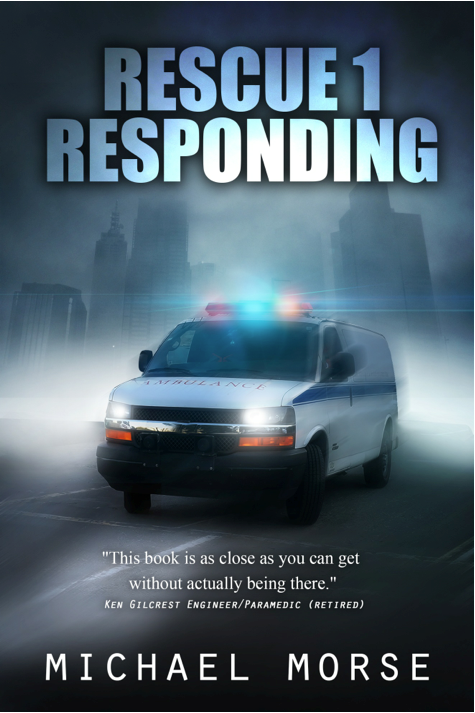
Rescue 1 Responding: Chapter 4, a Book by Michael Morse
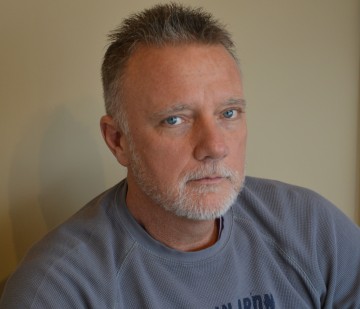
Michael Morse, Author
Rescue 1 Responding: Chapter 4, a Book by Michael Morse
I’m glad I took the time to document what happens during a typical tour on an advanced life support rig in Rhode Island’s capitol city. Looking back, I can hardly believe I lived it. But I did, and now you can too. Many thanks to GoLocalProv.com for publishing the chapters of my books on a weekly basis from now until they are through. I hope that people come away from the experience with a better understanding of what their first responders do, who they are and how we do our best to hold it all together,
Enjoy the ride, and stay safe!
GET THE LATEST BREAKING NEWS HERE -- SIGN UP FOR GOLOCAL FREE DAILY EBLASTCaptain Michael Morse (ret.)
Providence Fire Department
The book is available at local bookstores and can be found HERE.
Note from the author
Without a good partner life on an ALS rig can be unbearable.
There is something sacred inside the cab of the world’s ambulances. The small space that we inhabit after the smoke has cleared, the battles for life won or lost, babies delivered, lives changed forever, and things we will never experience in the outside world.
The ambulance cab holds more secrets than a church confessional. Never are emotions as raw, honesty so vivid, and life moments exposed, disseminated, cursed and glorified as they are moments after the call — when the only two people on earth have cleaned the truck, processed the necessary paperwork and left the hospital behind.
Those are the moments medics live for, when they can confide in another human being exactly how it feels without the risk of being exposed for being human. Those are the moments I remember. Those moments made it all worthwhile.
Chapter 4
While driving back to quarters, Mike’s body goes into convulsions. He looks at me with crossed eyes and says, “I think I’m going into a coma!”
“Cut that out and drive, you idiot,” I say.
“I’m not an idiot, I’m a human being,” he says while holding his left arm up to his nose, simulating an elephant’s trunk. “I am not an animal!”
“You’re the elephant man!” I say. It’s going to be a long night. I take my phone from my top pocket and call home.
“Hello.”
As the years progress in any relationship, simple words begin to have multiple meanings. The tones and inflections used when speaking a word such as “hello” give the word power it really doesn’t deserve. This particular “hello” shouts, “prepare to die.” I decide to retreat and take a defensive position.
“Hi babe, how is your night?”
“Easter is the day after tomorrow, the house is a mess, I haven’t done any shopping and you’re asking how my night is.”
“Have the kids help.”
“Brittany is out, Danielle has her own life and you’re at work. That leaves me to do everything. As usual.”
“We appreciate it.” I say, knowing it is much too late for compliments but unable to stop.
“Bullshit. If you appreciated it so much you wouldn’t have forgotten the manicotti.”
She’s hitting a nerve. Time to break cover.
“What, do you think this is easy? I’ve been busting my balls over here and all you do is complain.”
“I’d rather do your job than stay in this house.”
“Be careful what you wish for.”
“I’ve got too much to do. I’m not wasting time talking nonsense with you.”
“Fine.”
“Fine.”
This battle has ended with no victor. I have a feeling the war is not over. I hang up first, then pick up the radio mic and go in service. It is still in my hand when it talks back.
2320 hrs. (11:20 p.m.)
“Rescue 1, respond to 385 Mawney Street for a man hearing voices.”
“Rescue 1 responding.”
“I’m hearing voices too. My wife’s. And it ain’t pretty.” I mumble to myself.
“You love it,” says Mike. I can’t even have a conversation with myself in this stupid truck.
“No I don’t. I hate when she gets like this.”
“They all get crazy around the holidays, you’re not special.”
“My wife is worse,” I say.
“I’m telling you, they’re all nuts.”
“Women.”
“Women.”
There is a patient who is hearing voices waiting for us at Mawney Street. I have no idea if those voices are telling him to kill the rescue guys when they get there.
“Rescue 1 to fire alarm, are the police responding?”
“They have been notified.”
“Message received.”
We pull the rescue in front of an old, decrepit apartment building. I have been to this address numerous times for calls ranging from murders to drunks. Outside, a man and woman are waiting. The woman hails us as if we were a cab. The truck has barely stopped as the two reach for the rear door handle to let themselves in. The truck stops and I get out and confront them.
“What are you doing?” I ask, moving the man’s hand off of the door handle.
“I called for a rescue, what do you mean, what am I doing,” he says. His eyes are wild, giving him a menacing appearance.
“What do you think this is, a cab company?” I ask.
“You’ve got to take him to Butler,” the woman with him demands.
Butler Hospital is a psychiatric hospital located on the Seekonk River in the city’s East Side. They don’t accept patients from rescues, only walk-ins and physician referrals.
“We can’t take him to Butler,” I say. "If he needs to be seen, we can take him to Rhode Island Hospital for a psych evaluation and they will take him to Butler.”
“I’m not going to Rhode Island, they don’t do nothing,” he says.
“You better go, you been hearin' voices again. I ain’t goin' through that bullshit ever.” She turns to me and demands I take him to Butler. Mike has joined me outside the truck and asks some questions.
“What is the problem?” The two people ignore me and talk to Mike. Lunatics always seek each other out.
“He hasn’t been taking his meds for a week,” the woman explains, “then this morning he told me the voices are telling him things.”
“What kind of things?” Mike asks.
“They’re telling me to hurt myself and other stuff too,” he says. “I need to go to Butler.”
“Do you have a plan?” I ask. One of the criteria for emergency medical treatment for psychiatric emergencies is whether or not the patient has a plan to carry out any suicidal thoughts.
“Yeah, I got a plan,” he says. “I plan on going to Butler.”
Why I get myself into these things is beyond me.
“Get in the truck.” I say, and they do.
“And don’t sit in that seat,” I say, while pointing to my seat. They all want to sit in my seat, it drives me crazy.
Once inside and sitting on the bench seat the man appears to have relaxed. Mike starts to asses his vital signs and I attempt to explain things to him again.
“We’re going to take you to Rhode Island where they will give you an evaluation then transfer you over to Butler. That is the best we can do. Now that you have told me you are suicidal and have a plan to carry out those wishes, we have to make sure you get some help. I know it isn’t exactly what you wanted, but it’s the best we can do.”
“Well why didn’t you say so?” the woman asks as she prepares to leave the back of the truck.
“Where are you going?” I ask.
“I’m going to meet him there later,” she says and walks away.
The trip to Rhode Island takes about three minutes. Again, I ask myself if anybody in this city is able to take care of themselves.
My patient is a thirty-year-old male with a history of bi-polar disorder and depression. He is supposed to be taking numerous psych medications, but feels he is cured and no longer needs them. As soon as the medication wears off, the symptoms return. It looks as though he is ready to go into the manic part of his disease. Anything can happen at this point. If the trip to the hospital were any longer I would wait for the police, but I am reasonably certain I can get him there without incident. In the event that he attacks me, Mike is ready to speed the truck up rapidly. For the patient to get from the bench seat over to where I am seated, he has to stand up. As soon as Mike steps on the gas, he’ll go flying. At that point, I can either abandon ship and leave the guy alone in the truck or wrap him up in a sheet and ride the rest of the way while sitting on top of him. It is not a fool-proof method, but it has worked in the past. My preferred method is to keep the patient calm by talking. People love it when somebody listens, and our transport time is so short he won’t have time to get sick of me.
I am relieved when I feel the familiar bumps in the road and know we are backing into the rescue bay. Mike has alerted ER security to stand by; we have a possibly combative patient. Two guards, Amir and Steve are waiting. The hospital couldn’t have picked better guys; both can handle themselves without a problem, but more importantly they know how to talk the patients into staying in line. This patient may be beyond reason, so I alert them of that possibility before talking to the triage nurse. Gary is back; I’m batting a thousand. He takes the report, and then moves the patient into the observation area without incident. Steve and Amir stand by holding four point restraints. It looks as though they won’t be needed, but it is better to be safe. People have gone berserk here with no warning. A doctor will do an evaluation soon and the patient will probably be transferred to Butler. In the meantime, the hospital is responsible for his well being. I’m just glad we got him here without incident. I can’t help but think of an incident on Broad Street that happened to a social worker late last year. He was on a routine visit to a psych patient’s home. The social worker, a guy in his forties with a wife and two kids, finished his evaluation and felt that his patient wasn’t doing well and should be seen at a hospital. While they waited for a rescue to arrive, the patient took a screwdriver and stabbed the social worker in the neck, killing him instantly.