Rescue 1 Responding: Chapter 7 & 8, a Book by Michael Morse
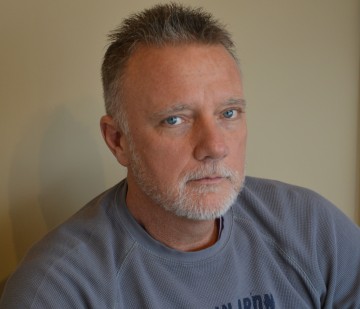
Michael Morse, Author
Rescue 1 Responding: Chapter 7 & 8, a Book by Michael Morse
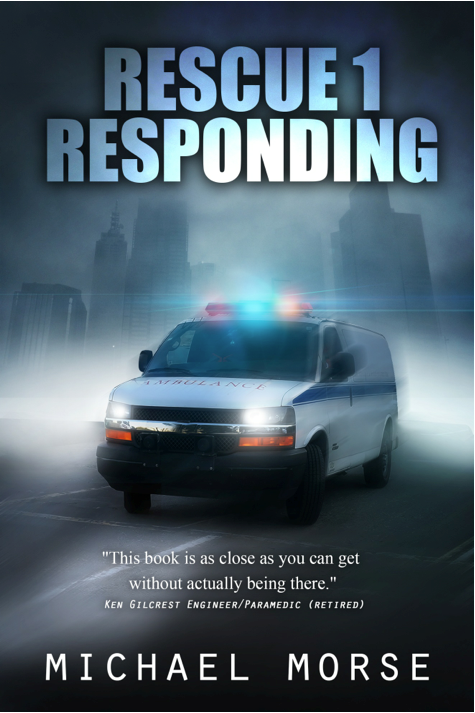
I’m glad I took the time to document what happens during a typical tour on an advanced life support rig in Rhode Island’s capitol city. Looking back, I can hardly believe I lived it. But I did, and now you can too. Many thanks to GoLocalProv.com for publishing the chapters of my books on a weekly basis from now until they are through. I hope that people come away from the experience with a better understanding of what their first responders do, who they are and how we do our best to hold it all together,
Enjoy the ride, and stay safe!
GET THE LATEST BREAKING NEWS HERE -- SIGN UP FOR GOLOCAL FREE DAILY EBLASTCaptain Michael Morse (ret.)
Providence Fire Department
The book is available at local bookstores and can be found HERE.
Note From the Author
Panhandlers plague our streets, but the false belief that these poor souls are making fifty thousand a year and parking their Cadillac’s around the corner is utter nonsense. Imagine standing on a corner, sign in hand, completely at the mercy of society. It is not a job anybody in their right mind would want. The vast majority of panhandlers are mentally ill, battling addiction and in dire need of assistance. A dollar here and a dollar there is not the assistance they need. Improved mental health options are just the beginning. I wish I knew how best to help these unfortunates, but even after getting to know dozens of people over the years who ended up with a can in their hand I have more questions than answers. The best I could do was treat them kindly and get them to a safe place. Unfortunately the safest place I could bring them to was the area emergency rooms who are already overburdened with uninsured patients.
Chapter 7
The city is quiet. A few cars are with us on the road and I can hear the hum of tractor-trailers in the distance as they cruise down 95. Some thin clouds obscure the moon and stars, but for the most part they are visible, casting a serene glow over the sleeping city.
Alas, not all of the city sleeps. Half a mile from Hasbro I see Frankenstein’s Monster stumbling down Eddy Street.
0400hrs. (4:00 a.m.)
“Rescue 1 to fire alarm, hold us out of service, Armand is loose.”
“Roger Rescue 1, at 0400.”
I don’t need to give the dispatchers any more information; they are familiar with Armand. He is another of the many homeless alcoholics who roam the city. It is unusual to see him at this late hour; I want to make sure he is all right. Mike pulls the rescue close to him and I unroll the window. Armand keeps on trucking. The toes of both of his feet were amputated last winter because of frostbite, as well as all of his fingers on his right hand. Three of his left fingers are gone as well, amputated from the second knuckle. When sober, his movements are a little unusual; when intoxicated he is the spitting image of the famous monster.
“Hey Armand, where are you going?” I ask. He raises his right hand and waves us off.
“Don’t go making fists at me,” I say. Without fingers, his wave looks like a fist shaking.
Suddenly, he stops walking, falls to his knees then rolls onto the sidewalk. It appears he has had enough.
“Let’s get him,” says Mike.
We leave the cab, glove up and go get him. Mike takes the feet and I get the shoulders.
“On three. One, two, three.” I say and we lift him off the pavement.
We carry him to the back of the truck and lay him on the floor. No sense wasting clean linens, he is filthy. I get in back with him and Mike drives us to Rhode Island Hospital, which is right next to Hasbro.
“What’s up, Armand?” I ask.
“The shelter’s closed,” he slurs. “Take me to the hospital.”
“We’re already there,” I tell him. Mike has backed the truck into the rescue bay and is retrieving a stretcher from the triage area.
Armand is my favorite drunk. He is an educated man, or so he tells me, who lost his wife years ago and has been drinking himself to death since. When they are not lost or broken, he wears a pair of wire-rimmed glasses, giving him a distinguished look. At one time he was a welder and held a job at Electric Boat working on submarines. Rumor has it that he lives on a trust fund and has a wealthy sister who handles his money. It is only a matter of time that we will find him dead. He has lost the will to live. As he says, “I don’t give a fuck.”
Something must have snapped for him to become so despondent. He treats his body with reckless disregard. The frostbite from last year resulted in his fingers and toes being amputated. His disfigurement is obvious. The damage done to his soul is much more devastating and will be the cause of his early demise.
Mike opens the rear doors of the rescue. I keep Armand’s head safe and Mike grabs him by the belt and drags him onto the hospital stretcher. We wheel him in. Tanya takes one look at our cargo and says, “We just let him go.”
“I can’t leave him lying on the sidewalk,” I say.
“What’s wrong with him?” she asks.
“He collapsed.”
“Bring him in,” she says with an exasperated sigh.
There is no reason for Armand to be here other than he has nowhere else to go. I don’t know why the hospital released him in the middle of a cold spring night. I wish there was a better way to care for the indigents who plague the health care system, the present method is sorely lacking. Incarceration may be the safest for the patient and most cost effective for society.
It’s late, I’m tired and I have had enough for one night. Mike drives back to the station. I turn the volume on the radio up when the DJ plays Lynard Skynard’s brilliant Sweet Home Alabama.
Chapter 8
My wife is home, sleeping by herself in our bed, the effects of her disease contributing to her loneliness as it continues on its destructive path. As her mobility decreases her world gets smaller and her dependency on me grows, only I’m not there, leaving her alone to deal with something nobody should have to face. Multiple Sclerosis is a bitch.
0623 hrs. (6:23 a.m.)
“Rescue1, Respond to the intersection of Broad and West Friendship for a woman with a head injury.”
The last thing I remember is feeling sorry for myself. I must have fallen asleep while wallowing in self-pity. I’m glad I got that out of the way. The blow lights have come on, filling the station with fluorescent light. They stay on for one minute, then automatically shut off as I make my way down the stairs and toward the rescue. The morning is upon us and gives enough light for me to find my way, although I could find it in my sleep - and often do. Mike is already in the truck and has the motor running. He looks refreshed, as though he has had a full nights sleep. I look at him and shake my head.
“Sleep well?” he asks.
“Like a baby,” I lie.
The door opens and we are again on our way toward Broad Street. This time we are headed to an area where prostitution and drug dealing are done openly on the street. I try to remain objective as we make our way to the patient. She may be an innocent victim of crime, or have just had an accident. The streets are mostly deserted; everybody must have found their way home, everyone except for the person who called for help. She waits on the corner of Broad and West Friendship, her clothes torn and hanging from her body and blood rushing down her face. She stands in the street calmly as we stop the rescue near her, get out and walk toward her.
“What happened?” I ask.
Her reply is so softly spoken that I cannot understand her. Mike has brought a sheet with him and wraps it around her like a cape. The woman clutches it around her neck. Only then do I notice the tears streaming down her face. We help her into the truck and close the door. Mike examines her head wound, controls the bleeding and reports his findings.
“She has a two inch laceration to the top of her head, on top of a large bump. It looks like somebody clubbed her over the head."
"Do you remember what happened?” I ask her.
“I was raped,” comes her reply.
“Rescue 1 to fire alarm, have the police respond to this location.”
“Received, Rescue 1. Nature for the police?”
“Possible sexual assault.”
“Message received.”
“Do you know who did it?” I ask.
“No.”
“We have to take you to the hospital. Did you lose consciousness when you got hit in the head?” I ask
“I think so.”
I get a cervical collar and gently put it around her neck. Mike has retrieved a long board from the side compartment and lays it on the stretcher while the patient stands up. She sits on the board in the middle then lies back, me cradling her head and back as she eases to a flat position. The tears continue to flow.
A series of loud knocks comes from the rear of the truck. Mike opens the door and a man tries to get in.
“Who are you?” Mike asks.
“What happened to you?” the man asks our patient in an impatient way, ignoring Mike.
“Are you family?” Mike asks.
“Yeah I’m her daddy, now shut up and let me talk to my girl,” he says. Mike closes the door. Hard. The man is done knocking and leaves the scene right before the police arrive. The side door opens and a rookie officer sticks his head into the rescue, takes a look at the patient and shakes his head.
“Do you know her?” I ask.
“Everybody knows her. What happened sweetheart, deal gone bad?” He carries himself as though he has forty years on the streets and has seen it all. His smug grin transforms his good looks into a sneer that gives him the appearance of a punk. If I were to guess, he comes from the suburbs, played quarterback on his high school football team and wouldn’t know a thing about hard knocks if they were trampling down his door.
“Where are you taking her?”
“Rhode Island ER.”
“I’ll meet you there.” The cop leaves but his attitude lingers.
“What is your name?” I ask.
“Destiny.”
“Mike is going to take your vital signs and we’ll get going. The people at the hospital will take care of you.”
“Nobody takes care of me,” she says. “Nobody gives a shit”
“You’re wrong. Right here, right now, you are the only person that matters to me. After I drop you off at the hospital that will change, but for now your best interests are all that I care about. I don’t give a shit about the cops or the pimps or the asshole that beat you. I don’t know who you are or what happened in your life for you to end up out here and it’s none of my business, but I do care about is what is happening now and how I can make it better. Now shut up and let Mike take your vitals.”
I don’t know whether or not she believes me, but she seems to have settled down. Mike finishes with her, gives me her signs and goes to the front to drive. Life is not easy. Without a few breaks, good parenting and education, it is easy to fall into the many traps life has waiting to snare people without the skills to avoid them. Destiny would rather be anywhere than here, addicted to heroin and selling herself on the streets. If more people begin to give a shit and stop being so judgmental, her future may brighten. The odds are against her. There are a lot of kids in this city teetering on the edge of respectability or despair. A push in either direction will land them on their feet - or on their ass.
Heroin is cheap and readily available in Providence. It can be snorted through the nose or injected into a vein. The euphoria only lasts for a little while and then it’s back to reality, a reality that most junkies prefer to forget. The drug takes a person's dignity, confidence and productiveness and leaves a shell where a human being once was. The spirit can and sometimes does reappear, but it is rare and sometimes fleeting. Once a junkie, always a junkie is the common perception, harsh, but unfortunately true. Some addicts manage to leave it all behind and go on to lead normal lives, most crash.
It is a selfish, lonely world the addicts live in. I’ve seen people left for dead in cars, apartments, fields; anywhere people gather to do their drugs. Every man for himself when somebody overdoses.
Keeping a job while under the influence of heroin is next to impossible. The users are forced to go underground. Selling the drug to other addicts is one way to get by, selling your body another.
Our prisons are full. A large number of inmates are incarcerated because of drug related crimes. The numbers don’t tell the entire story. The robberies, B&E’s, muggings, prostitution and scams are in large part devices used to obtain drugs. Legalizing the drugs would lead to more problems. Imagine if every drug dealer on the streets suddenly lost his income. The only way they know how to get by is by doing something illegal. Flipping burgers is unacceptable for this segment of the population; they see themselves as a cut above the common man. Maybe if they traded their fancy Cadillac Escalades and Lincoln navigators for a Ford pick-up truck or Chevy Blazer, and decided to cut lawns, clean offices of find some other line of honest work, the experience and work ethic would grow and they would become respectable members of society. Problem is, nobody wants to start at the bottom and work their way up. The riches available by leading a life of crime are too tempting to those afraid of work. Take the easy route of dealing drugs away and watch our other crime rates soar.
I should be going home; instead I’m looking at twenty-four more hours in Providence.