


Secrets and Scandals - Reforming Rhode Island 1986-2006, Chapter 16
H. Philip West Jr.
Secrets and Scandals - Reforming Rhode Island 1986-2006, Chapter 16

Since colonial times, the legislature had controlled state government. Governors were barred from making many executive appointments, and judges could never forget that on a single day in 1935 the General Assembly sacked the entire Supreme Court.
Without constitutional checks and balances, citizens suffered under single party control. Republicans ruled during the nineteenth and early twentieth centuries; Democrats held sway from the 1930s into the twenty-first century. In their eras of unchecked control, both parties became corrupt.
GET THE LATEST BREAKING NEWS HERE -- SIGN UP FOR GOLOCAL FREE DAILY EBLASTH Philip West's SECRETS & SCANDALS tells the inside story of events that shook Rhode Island’s culture of corruption, gave birth to the nation’s strongest ethics commission, and finally brought separation of powers in 2004. No single leader, no political party, no organization could have converted betrayals of public trust into historic reforms. But when citizen coalitions worked with dedicated public officials to address systemic failures, government changed.
Three times—in 2002, 2008, and 2013—Chicago’s Better Government Association has scored state laws that promote integrity, accountability, and government transparency. In 50-state rankings, Rhode Island ranked second twice and first in 2013—largely because of reforms reported in SECRETS & SCANDALS.
Each week, GoLocalProv will be running a chapter from SECRETS & SCANDALS: Reforming Rhode Island, 1986-2006, which chronicles major government reforms that took place during H. Philip West's years as executive director of Common Cause of Rhode Island. The book is available from the local bookstores found HERE.
16
A Pivotal Election (1992)
Rep. Robert A. Weygand’s courage in wearing a hidden microphone for the FBI had snared Pawtucket Mayor Brian Sarault. When the story broke in June 1991, Weygand became a Rhode Island hero who admitted his fears at a news conference. “I’ve never done it before,” he said. “I don’t know how I went through with it.”
But rumors around the State House oozed suspicion. Cynics said federal agents must have trapped Weygand and forced him to deliver Sarault. Weygand’s role as a witness prevented him from setting the record straight. He and his family lived under a cloud, isolated and in danger.
After Sarault pleaded guilty and went to prison the FBI, U.S. attorney, and State Police lauded Weygand at a State House ceremony.
At forty-four, Bob Weygand was a telegenic, conservative, Irish-Catholic Democrat. He had a picture-perfect marriage to his childhood sweetheart and three outstanding children. He had played no role in RISDIC, and from the moment he announced his candidacy for lieutenant governor he became the odds-on favorite. Rather than tangle with Weygand in a Democratic primary, the incumbent, Roger N. Begin, announced that he would not run for re-election.
Under the Rhode Island Constitution, the lieutenant governor had no duties beyond presiding in the state Senate and standing ready in case the governor were to die. In typical election years, candidates for lieutenant governor were left in the shadows, but the spotlight followed Weygand. Criticism never seemed to faze him. It made little difference when the state’s largest teacher’s union broke ranks with Democrats to endorse an independent in the three-way race.
Most candidates for public office spent the fall of 1992 demonstrating their diligence against corruption or stepping warily over RISDIC tripwires. Atty. Gen. James E. O’Neil, a Democrat, struggled to deflect charges by his Republican challenger Jeffrey B. Pine, a prosecutor from his own office, that he had done too little to stop RISDIC. Pine accused O’Neil of giving a pass to friends at Jefferson Loan and Investment, which later failed.
O’Neil had ousted Atty. Gen. Arlene Violet in 1986. For nearly two years after RISDIC’s collapse, O’Neil and Violet blamed each other for failing to prevent the catastrophe. Other Republicans, including Nancy J. Mayer, the former chief legal counsel for the Department of Business Regulation, a candidate for general treasurer, also attacked O’Neil.
Mayer was rich, brilliant, and peppery. The craggy attorney general towered a foot above her, but she knew his weaknesses. She had testified before the RISDIC commission that O’Neil had ignored wrongdoing at Jefferson, which belonged to his close friends of thirty years. She insisted that she had tried to persuade O’Neil to investigate the troubled thrift, but nothing happened. Without actually running for the office O’Neil held, she campaigned hard against him.
Pine proved equally aggressive. He accused O’Neil of making what he called “patently contradictory statements” about when and how he learned of the Stitt Report. One of his attack ads showed O’Neil on a news program in January of 1991, announcing that he had reviewed the Stitt Report in 1987, “when we first arrived in office.” In another video clip he came across as evasive: “That document was not read by me or presented to me. That document was located . . . sometime after the credit union crisis erupted.” Pine pounded on his former boss: “The question now has to be, ‘Mr. O’Neil, when were you telling the truth?’ ”
Although attack ads filled TV screens, the furor over RISDIC was fading. Mo Guernon had left Operation Clean Sweep, and moderate leaders began to emerge. Charlie Silverman now led a group of volunteers that included Beverly and Bill Clay, retired teachers who struck me as decent, diligent, and unpretentious. With little money and less hierarchy, they devoted themselves to the quest for honest government. It became possible to close rifts in the reform community and to pursue goals we all shared.
During the fall of 1992, six organizations launched a quiet campaign to hold the General Assembly more accountable. Operation Clean Sweep brought four other groups to the table: the Government Accountability Project (GAP), Reform ’92, US-PAC, and the Rhode Island Taxpayers’ Association. Most of these had been members of the Public Interest Alliance that attacked RIght Now! and pushed for draconian ethics and campaign finance rules. But in spite of our disagreements through the spring, we started meeting at GAP’s office in a triple-decker near the State House. Without ground rules, we began hammering out goals that all could support.
We knew that clerks for various legislative committees typed their data into terminals linked to the General Assembly’s mainframe computer. Committee agendas appeared as bright green text on dark screens, then as printouts that were posted outside the hearing room. The clerks could locate any bill and generate tracking reports. Their knowledge served the legislative leaders who controlled the committees, while rank-and-file legislators and members of the public knew the information existed but were not allowed to touch the terminals. This meant that committee leaders got the latest versions of bills printed instantly; the public waited days before printouts became available in a musty basement bill room.
Everyone around the table at GAP’s office agreed we should push for public access to this digital treasure trove. We would argue that taxpayers had paid to produce this data, and everyone — whether lawmaker, journalist, lobbyist, or citizen — should be able to search for bills and committee schedules in real time. No one should have to drive to the State House each day and dash from room to room to learn which bills were posted for committee hearings. We would advocate for terminals at the State House library and in libraries around the state.
“While we’re at it,” suggested Beverly Clay, “we should also ask for timely printouts of bills and amendments. It drives me crazy to watch from the gallery when they pass out an amendment. Legislators and reporters on the floor get copies, but I can’t read what’s being debated.”
Our fledgling coalition also decided to press for a more public process in awarding legislative grants. Campaign brochures often showed representatives and senators presenting enlarged checks to sports teams, neighborhood groups, and other causes. It was a mystery how these grants were awarded in amounts that ranged from a few thousand dollars to megabucks. House and Senate leaders used such grants to exert immense pressure on incumbents seeking reelection, but so far GAP’s efforts to get the data about these grants always hit a stone wall.
In place of legislative grants, our coalition proposed an open process with clear criteria and public votes. “Fat chance,” Charlie Silverman snorted with his characteristic smile. “The leadership will never go along with that.”
These meetings at GAP encouraged me. Whatever our differences had been, these were honest people who felt betrayed by their government. Rage over RISDIC had drawn them into the public arena, and they were staying involved. As I walked back from GAP to the Common Cause office, I wished we could have recruited these activists into our ranks, yet I knew the time when all could have coalesced into a single organization had long passed. Like planets revolving around the sun, we circled the State House in separate orbits. At least we were orbiting in the same direction.
In an August questionnaire, “Opening the Legislative Process,” we spelled out five top priority reforms. We asked every General Assembly candidate to declare support for or opposition to each proposal. Bunches of questionnaires landed on my desk from challengers, fewer from incumbents. Many liked the idea of public access to computer terminals that would show bill texts and schedules; most wanted to reform the legislative grants process. Solid majorities supported rules requiring fiscal notes with all bills that carried financial obligation. Respondents split over ideas for reducing the huge number of bills introduced.
The Providence Journal had covered the debate over four-year terms extensively. Its editors had been urging readers to vote “yes” on Ballot Question One, but they outdid themselves on the Sunday before Election Day. An editorial supporting four-year terms filled an entire column on the paper’s front page, reiterating the RIght Now! case. Without mentioning DiPrete’s disgrace, the editors decried the distraction of nonstop fundraising, which, they wrote, “our state just cannot afford.”
The Providence Sunday Journal had a circulation close to 250,000, and most households had several readers. With one timely and highly visible run, this single editorial might reach more people than all of our flyers combined. Even with our television commercials and newspaper endorsements across Rhode Island, I wondered whether voters would finally approve the longer terms that they had previously rejected three times.
That Sunday night, with the election two days away, our coalition of grassroots reform groups gathered with flashlights for a rally outside the darkened State House. John Hazen White Sr., who had promoted reform with full-page ads in the Providence Journal, had rented a truck with four high-powered spotlights that sent beams into the clouds. At one point, White asked the crowd to turn their lights off. He led a countdown that ended with noisemakers and all the lights shining on the white marble facade, against darkened windows, and toward the looming dome. Each of us who spoke emphasized one self-evident theme: citizens must keep shining light on government.
Nearly an inch of rain fell on Election Day, but the pull of a three-way presidential election boosted turnout. Alan Hassenfeld hosted a seafood dinner at the Lobster Pot in Bristol for the RIght Now! steering committee. After dinner, we drove over surprisingly empty roads to Providence for stops that Dave Duffy recommended — first to the Biltmore for the Democrats’ victory party and then to the Mariott for the Republicans’ celebration. “You’re not endorsing either party,” Duffy told me in the car, “but you need to show your face. I’m almost sure we’ve won four-year terms. Reporters will want comments from you and Alan.”
The polls closed at 9:00 across Rhode Island, and returns started appearing almost immediately on large TV monitors in the Biltmore’s ballroom. Sundlun and Weygand were winning handily. The battle between O’Neil and Pine for attorney general was too close to call. Question One, for four-year terms, jumped off to a comfortable lead that held as precincts reported.
“So what do you think?” asked Brian Jones, a reporter for the Providence Journal. He planted himself between Hassenfeld and me.
“It’s a real beginning,” Hassenfeld beamed. “Now people can plan for the future, and we can do the right thing for the state. Then it will be up to all of us to make sure that real solid, good candidates run.”
I reminded the reporter that voters had rejected four-year terms in 1973, in 1982, and in 1986. “The most recent question coupled executive and legislative four-year terms. Nearly sixty percent of voters said ‘no.’ ”
“So what does it mean that you seem to be winning by almost that same percentage?”
I said RISDIC had produced a toxic negativity that heaped blame indiscriminately on politicians. The RIght Now! Coalition had aimed to fix a dysfunctional system. “If these numbers hold up,” I said, “I think this vote is a victory over cynicism and suspicion.”
After months of uncertainty, our constitutional amendment establishing four-year terms for the five statewide general offices cruised to a comfortable 60.2 percent victory.
In statewide races, Bruce Sundlun crushed Elizabeth A. Leonard, a lackluster Republican challenger, and several independents. Bob Weygand overwhelmed his Republican and independent opponents with an astonishing two-thirds of the votes cast. Ethical issues had contributed to Weygand’s victory and those of the other three general officers. In the race for general treasurer, Republican Nancy J. Mayer convinced voters that brokerage firms that relied on state investments were financing the campaign of Democrat Marlene Marcello McKenna. Mayer trounced McKenna with 58 percent of the vote.
After a bruising battle for attorney general, the Republican challenger Jeffrey B. Pine ousted his former boss James E. O’Neil by a narrow margin, largely over questions about O’Neil’s failure to follow up on the Stitt Report or to investigate his friends’ credit union. The final count relied on mail ballots and took several days. In the race for secretary of state, Republican Barbara M. Leonard charged that incumbent Democrat Kathleen S. Connell had steered a no-bid printing contract to a company that donated $15,000 to her campaign. Except in emergencies, Leonard promised, she would award contracts only through competitive bidding. Although Connell had led all Democrats in previous statewide races, Leonard captured the third general office for Republicans.
The 1992 election brought a sea change in the Rhode Island General Assembly. As polling places phoned in their results, the tallies showed that newly elected representatives and senators would occupy 55 of 150 seats, more than double the normal rate of turnover.
On the morning after the election it also became clear that Senate Majority Leader John Bevilacqua had been ousted. Four of his allies had not run for re-election, and GOP challengers knocked off four other Bevilacqua loyalists. While I was careful never to take sides, I reveled privately in the results from Bristol, where Richard M. Alegria — owner of the King Philip Inn, Bevilacqua confidant, and the lowest ranking senator on our scorecard — lost decisively to his Republican challenger, Mary A. Parella, who captured 53.7 percent of the vote. In her campaign, Parella had hammered Alegria’s low standing in scorecards of both Operation Clean Sweep and Common Cause, and she pounded his political machinations for construction of his hotel. In victory, she cited Alegria’s ties to Bevilacqua and a perception that he had used his political power for his personal gain. “People felt he needed to be defeated, that he had become too powerful. I provided an opportunity for people to do that.”
Bevilacqua dodged reporters, but his loyal Judiciary Committee chairperson, Sen. Tom Lynch, announced that the majority leader would not fight to keep his post. Nor could the former majority leader, David Carlin, return. He had run a quixotic campaign against incumbent Republican Congressman Ronald K. Machtley in the 1st District but garnered less than a quarter of the votes cast.
Senate Democrats caucused behind closed doors and elected Sen. Paul S. Kelly of Smithfield as their leader. Kelly promised that Senate committee meetings would start on time and would take timely votes on legislation. “A senator shouldn’t have to sell his soul to get his or her bill heard,” Kelly announced. I liked Paul Kelly, who showed neither anger nor arrogance. He stood taller than most other members of the Senate. Abundant silver hair framed blue eyes and a cheery smile. He wore ties emblazoned with Peanuts cartoon figures and had the gift of concentrating completely on every conversation.
The battle to succeed House Speaker Joe DeAngelis would stretch into January. DeAngelis had thrown in the towel five months earlier, when he chose not to file candidacy papers. In the bitter aftermath of RISDIC, 26 of 100 representatives had abandoned their seats. Other incumbents had lost, either to reformist Democrats in the September primaries or to Republicans in November.
The struggle to become speaker — arguably the most powerful political office in Rhode Island — boiled down to a battle between Warwick Rep. Russell Bramley, who inherited DeAngelis’s mantle, and Pawtucket Rep. John Harwood, a muscular Ivy League hockey player who often joked that he had been “in Siberia” since he lost to DeAngelis four years earlier. As Rhode Island recovered from the RISDIC scandal, would either of them support further reforms?
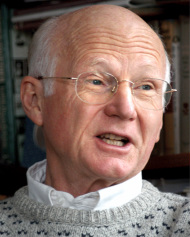
He helped organize coalitions that led in passage of dozens of ethics and open government laws and five major amendments to the Rhode Island Constitution, including the 2004 Separation of Powers Amendment.
West hosted many delegations from the U.S. State Department’s International Visitor Leadership Program that came to learn about ethics and separation of powers. In 2000, he addressed a conference on government ethics laws in Tver, Russia. After retiring from Common Cause, he taught Ethics in Public Administration to graduate students at the University of Rhode Island.
Previously, West served as pastor of United Methodist churches and ran a settlement house on the Bowery in New York City. He helped with the delivery of medicines to victims of the South African-sponsored civil war in Mozambique and later assisted people displaced by Liberia’s civil war. He has been involved in developing affordable housing, day care centers, and other community services in New York, Connecticut, and Rhode Island.
West graduated, Phi Beta Kappa, from Hamilton College in Clinton, N.Y., received his masters degree from Union Theological Seminary in New York City, and published biblical research he completed at Cambridge University in England. In 2007, he received an honorary Doctor of Laws degree from Rhode Island College.
Since 1965 he has been married to Anne Grant, an Emmy Award-winning writer, a nonprofit executive, and retired United Methodist pastor. They live in Providence and have two grown sons, including cover illustrator Lars Grant-West.
This electronic version of SECRETS & SCANDALS: Reforming Rhode Island, 1986-2006 omits notes, which fill 92 pages in the printed text.
Rhode Island's History of Political Corruption

Buddy Cianci
Vincent A. "Buddy" Cianci resigned as Providence Mayor in 1984 after pleading nolo contendere to charges of assaulting a Bristol man with a lit cigarette, ashtray, and fireplace log. Cianci believed the man to be involved in an affair with his wife.
Cianci did not serve time in prison, but received a 5-year suspended sentence. He was replaced by Joseph R. Paolino, Jr. in a special election.

Joseph Bevilacqua
Joseph Bevilacqua was RI Speaker of the House from 1969 to 1975, and was appointed as Chief Justice of the State Supreme Court in 1976. It was alleged that Bevilacqua had connections to organized crime throughout his political career.
According to a 1989 article that appeared in The New York Times at the time of his death:
The series of events that finally brought Mr. Bevilacqua down began at the end of 1984... stating that reporters and state police officers had observed Mr. Bevilacqua repeatedly visiting the homes of underworld figures.
The state police alleged that Mr. Bevilacqua had also visited a Smithfield motel, owned by men linked to gambling and drugs...

Thomas Fay
Thomas Fay, the successor to Bevilacqua as Chief Justice of the Supreme Court, resigned in 1993, and was later found guilty on three misdemeanor counts of directing arbitration work to a partner in his real estate firm, Lincoln Center Properties.
Fay was also alleged to use court employees, offices, and other resources for the purposes of the real estate firm. Fay, along with court administrator and former Speaker of the House, Matthew "Mattie" Smith were alleged to have used court secretaries to conduct business for Lincoln, for which Fay and Smith were business partners.
Fay was fined $3,000 and placed on one year probation. He could have been sentenced for up to three years in prison.

Brian J. Sarault
Former Pawtucket Mayor Brian J. Sarault was sentenced in 1992 to more than 5 years in prison, after pleading guilty to a charge of racketeering.
Sarault was arrested by state police and FBI agents at Pawtucket City Hall in 1991, who alleged that the mayor had attempted to extort $3,000 from former RI State Rep. Robert Weygand as a kickback from awarding city contracts.
Weygand, after alerting federal authorities to the extortion attempt, wore a concealed recording device to a meeting where he delivered $1,750 to Sarault.

Edward DiPrete
Edward DiPrete became the first Rhode Island Governor to be serve time in prison after pleading guilty in 1998 to multiple charges of corruption.
He admitted to accepting bribes and extorting money from contractors, and accepted a plea bargain which included a one-year prison sentence.
DiPrete served as Governor from 1985-1991, losing his 1990 re-election campaign to Bruce Sundlun.

Plunder Dome
Cianci was forced to resign from the Mayor’s office a second time in 2002 after being convicted on one several charges levied against him in the scandal popularly known as “Operation Plunder Dome.”
The one guilty charge—racketeering conspiracy--led to a five-year sentence in federal prison. Cianci was acquitted on all other charges, which included bribery, extortion, and mail fraud.
While it was alleged that City Hall had been soliciting bribes since Cianci’s 1991 return to office, much of the case revolved around a video showing a Cianci aide, Frank Corrente, accepting a $1,000 bribe from businessman Antonio Freitas. Freitas had also recorded more than 100 conversations with city officials.
Operation Plunder Dome began in 1998, and became public when the FBI executed a search warrant of City Hall in April 1999.
Cianci Aide Frank Corrente, Tax Board Chairman Joseph Pannone, Tax Board Vice Chairman David C. Ead, Deputy tax assessor Rosemary Glancy were among the nine individuals convicted in the scandal.

N. Providence Councilmen
Three North Providence City Councilmen were convicted in 2011 on charges relating to a scheme to extort bribes in exchange for favorable council votes. In all, the councilmen sought more than $100,000 in bribes.
Councilmen Raimond A. Zambarano, Joseph Burchfield, and Raymond L. Douglas III were sentenced to prison terms of 71 months, 64 months, and 78 months, respectively.

Charles Moreau
Central Falls Mayor Charles Moreau resigned in 2012 before pleading guilty to federal corruption charges.
Moreau admitted that he had give contractor Michael Bouthillette a no-bid contract to board up vacant homes in exchange for having a boiler installed in his home.
He was freed from prison in February 2014, less than one year into a 24 month prison term, after his original sentence was vacated in exchange for a guilty plea on a bribery charge. He was credited with tim served, placed on three years probation, and given 300 hours of community service.

Joe Almeida
State Representative Joseph S. Almeida was arrested and charged on February 10, 2015 for allegedly misappropriating $6,122.03 in campaign contributions for his personal use. Following his arrest, he resigned his position as House Democratic Whip, but remains a member of the Rhode Island General Assembly.

Gordon Fox
The Rhode Island State Police and FBI raided and sealed off the State House office of Speaker of the House Gordon Fox on March 21--marking the first time an office in the building has ever been raided.
Fox pled guilty to 3 criminal counts on March 3, 2015 - accepting a bribe, wire fraud, and filing a false tax return. The plea deal reached with the US Attorney's office calls for 3 years in federal prison, but Fox will be officially sentenced on June 11.


