


Top Ten Bills of the 2015 RI General Assembly Session
GoLocalProv News Team and Kate Nagle
Top Ten Bills of the 2015 RI General Assembly Session
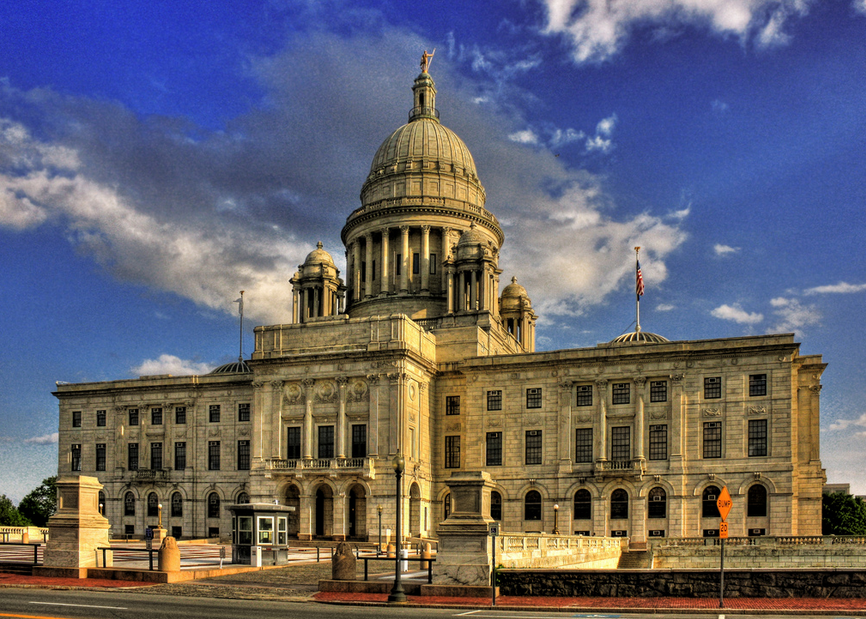
"I won't say it broke down, we were bogged down in minutiae," said Mattiello of the House negotiations with the Senate -- and adjournment just before 11. "9:30 came we didn't have progress, our options were to go home now, confident that we're doing things that will transform the state, rather than be bogged down with non-important bills into the early morning."
Slides: See the Biggest Bills of the 2015 General Assembly Session BELOW
GET THE LATEST BREAKING NEWS HERE -- SIGN UP FOR GOLOCAL FREE DAILY EBLASTConfusion as to where things stood was highlighted when the legislative press office sent a release saying the Assembly OK'd online voter registration, only to retract it twenty minutes later explaining that the Senate did not, in fact, take it up before leaving.
"Business has not concluded, we could always address it," said Mattiello. "But we're going to be looking at the infrastructure proposal, and the Paw Sox. I plan on meeting with the Governor shortly, we'll have a product ready [on infrastructure]. And we'll see what we can do with the PawSox. I want to put together a good deal for the public."
Earlier on Thursday, opponents to the PawSox leaving Pawtucket -- or for any taxpayer subsidies for a stadium in Providence -- held a rally outside the State House.
Leaders on Business
While some are touting a number of wins during the session, others are pointing out missed opportunities
"There have been few bills that have been passed that make Rhode Island more business friendly or create jobs other than those bills that support economic development activities in the budget," said URI Distinguished Professor of Business Edward Mazze. "Most of the new legislation deals with items such as increasing the minimum wage, amending a section of the worker’s compensation act or unemployment laws, establishing additional standards for a profession, electronic filing of annual reports and/or making appointments to various commissions.
"The most important bill so far has dealt with increasing the minimum wage because it has a significant impact on many Rhode Island businesses," said Mazze, of the move to increase the minimum wage in Rhode Island to $9.60.
Greater Providence Chamber of Commerce President Laurie White spoke to what she saw as the upside -- and downside -- in the 2015 session.

A major education debate around public charter schools made it through both chambers, as both the House and Senate approved versions of a bill to require the Council on Elementary and Secondary Education to demonstrate that any new charter school -- or charter school expansion -- would not have a negative impact on the finances of the local districts.
Rhode Island taxpayer advocacy group OSTPA took issue that action taken - as well as number of others.
"The charter school bill and the minimum wage bills both send terrible messages to the business community. Rhode Island cannot improve its business friendly standing by continually increasing the cost to do business and by continually gutting education reform. We are sliding further down the hole in both areas," said OSTPA spokesperson Pam Gencarella.
Providence Notches Win; Groups Cite Missed Chances
The City of Providence scored a win when legislation approved in the Senate to give the State control over tax treaties on the 195 land -- not the city -- was not taken up in the House.
Senate Majority Leader Dominick Ruggerio, House Majority Leader John DeSimone and the City of Providence announced Thursday that they "will work together to develop a tax stabilization agreement, or TSA, for companies that locate in the I-195 Redevelopment District."

Free market advocacy group Rhode Island Center for Freedom and Prosperity touted some wins, and a number of setbacks -- in this year's Assembly.
CEO Mike Stenhouse pointed out the particulars.
"Recognizing the few minor tax relief items in the budget, for example eliminating the sales tax on commercial energy consumption, general revenue spending still increased by 3.1% over last year," said Stenhouse. "With our declining tax base, no matter how you slice it, Rhode Islanders cannot afford this increase."
"Any small improvements to the overall business climate for our state was more than offset by the increase in the minimum wage and the new tax health insurance premiums," continued Stenhouse, who added what he saw as "wins" pertaining to the state's RhodeMap plan which it fought hard against.
"Two RhodeMap RI related apparent legislative victories include the postponement of a bill that would have expanded the two-tier property tax system and the advancement through the House of a bill that would restore some sovereignty to local governments," said Stenhouse.
Ethics
"When this session began we set out with two goals; getting a question on the ballot to restore the full jurisdiction of the Ethics Commission over the General Assembly, and bringing our elections into the 21st century with in-person early voting and online voter registration," said Common Cause of Rhode Island Director John Marion. "While we aren't going to see ethics jurisdiction restored we will likely see some of the needed improvements to our voting and elections."
"Of course once the extent of Gordon Fox's crimes was revealed we asked the General Assembly to make significant changes to our campaign finance laws," continued Marion. "Again, the result was a mixed bag; candidates are now required to have segregated accounts and independent treasurers, but there is no requirement that accounts be audited. That was a missed opportunity to ensure that the problems uncovered with Fox and Almeida's campaign finance accounts would have been detected earlier."
The 10 Biggest Bills of the 2015 RI General Assembly

Trucking tolls
One of the more contentious issues facing the General Assembly at the end of session was that of trucking tolls for the Governor's infrastructure plan -- which having reached a stalemate, will be likely taken up in the fall now, according to the Speaker.
The Senate passed legislation (2015-S 997 Sub A) on June 23 to toll large commercial trucks traveling through the state, but the proposal was a non-starter in the House.
The Rhode Island Trucking Association dubbed the process as moving too quickly -- until now.
“This process is moving entirely too fast and there have been no discussions or analysis on the fiscal impact of the proposed toll plan to the trucking industry or the business community,” said Christopher Maxwell, President of RITA, earlier this month.
Whether RITA will have a seat at the table -- or if a deal brokered between Mattiello and Raimondo will gain approval in the Assembly -- will be seen in the months ahead.

Charter School Slowdown
Another of the session's biggest battles languished in the waning hours of the session - for now.
The House approved legislation (2015-H 5555aa) on June 18 that would require the Council on Elementary and Secondary Education to consider the financial impact on sending districts before any new charter school, mayoral academy or expansion of one can be approved.
However, the struggle surrounding this issue came to a halt Thursday, when the Senate version of the measure was approved by the chamber, but needed further action by the House, which did not happen.
“The General Assembly has an obligation to ensure that we are funding education in a sustainable fashion,” said Rep. Jeremiah T. O’Grady (D-Dist. 46, Lincoln, Pawtucket) of the proposed legislation at the time. “It is projected that Rhode Island’s municipalities will be obligated to spend approximately $40 million on charter tuitions in FY16."

195 Tax Jurisdiction
In the battle of city-versus-state over the land that Route 195 formerly occupied, it looks like Providence came out the victor.
Senate Majority Leader Dominick Ruggerio (D-Dist. 4, North Providence, Providence) had sponsored legislation (2015-S 0997A) approved by the Senate that would have given the state control over tax treaties in connection to the 195 land.
However, on Thursday, Ruggerio, House Majority Leader John DeSimone and the City of Providence announced that they will work together to develop a tax stabilization agreement, or TSA, for companies that locate in the I-195 Redevelopment District.
In a joint statement, they said, “We share a mutual goal of establishing a tax stabilization agreement that encourages development in the I-195 District while protecting the interests of Providence and Rhode Island taxpayers. We will work collaboratively to develop a tax stabilization agreement that can be enacted through ordinance at the city level, then codify the ordinance in statute at the next legislative session.”

Minimum Wage Increases
Speaker Mattiello and Governor Raimondo hosted a bill signing ceremony on June 22 that marked the passage of legislation (2015-H 5074A, 2015-S 0194A) to raise Rhode Island's minimum hourly wage from $9 to $9.60 effective January 1, 2016.
“Putting more money in the pockets of those with the lowest wages helps them buy the basic goods and services their families need, but it also helps the economy, because those workers go out and spend that money locally, supporting local businesses," said Representative Bennett (D-Dist. 20, Warwick, Cranston).
On Thursday, the Assembly voted to raise the $2.89-an-hour minimum wage for tipped workers, such as waiters and waitresses, by $1, in two steps, starting on Jan. 1, 2016 -- which now goes to the Governor.
"It is difficult to argue from a social policy point of view against increasing the minimum wage in any sector of the economy. However, in a state of predominantly small and family businesses like Rhode Island, an increase in minimum wage could result in (a) passing the increase along to the buyer of the product or service, (b) the employer reducing the number of employees or the number of hours worked, (c) substituting employees by outsourcing or using technology and/or (d) deciding if it is worth staying in business. Increasing the minimum wage by itself does not result in an increase in productivity," said URI Distinguished Professor of Business Edward Mazze.

Narcan In Schools
The General Assembly has approved legislation (2015-S 0154A, 2015-H 5047A) sponsored Rep. David A. Bennett and Sen. Gayle L. Goldin that requires public middle schools, junior highs and high schools in Rhode Island to have Narcan, an opioid antagonist, on their premises.
In February, GoLocal reported on the epidemic surrounding Narcan, stating that EMS gave Narcan over 50 times to those in the under 18 age group. The bill now head's to Governor Raimondo's desk.
“Given the scope of the opioid epidemic in our area right now, it’s not outside the realm of possibility that any high school or middle school could have a student on campus who experiences an overdose,” said Senator Goldin (D-Dist. 3, Providence). “Every second counts when someone is overdosing, so being prepared with a kit and a school nurse teacher who knows how to use it could be the difference that saves that person’s life.”

Murder-Parole Changes
The House and Senate passed legislation (2015-S 0132A / 2015-H 5158A), as proposed by Sen. Leonidas P. Raptakis and Rep. Patricia A. Serpa, that requires individuals convicted of murder to spend more time behind bars before being eligible for parole.
“Individuals who commit first or second-degree murder should be expected to serve at least the majority of their sentences, although I firmly believe they should be required to complete the full sentence for these kinds of heinous acts,” said Raptakis (D-Dist. 33, Coventry, East Greenwich, West Greenwich). “At the very least, they should have to serve no less than half of the sentence, which has not always been the case as we saw with the ‘Thrill Killer’ Alfred Brissette’s early release.”
The legislation, which will now go before Governor Raimondo for consideration, contains the following:.
1.) First and second-degree murderers not sentenced to life must serve 50-percent of their prison sentence before being up for parole.
2.) Individuals convicted of first or second-degree murder who are sentenced to life will not be eligible for parole until serving at least 25 years of the life sentence.
3.) A person sentenced to consecutive terms would be required to serve at least 25 years of each sentence before being eligible for parole.
4.) No person sentenced to life for a crime other than first or second-degree murder would be eligible for parole until serving at least 20 years of the sentence.
5.) Individuals sentenced to life for first or second-degree murder and also convicted of escaping or attempting to escape from prison will not be considered for parole until serving at least 35 years in prison.

Uber
Transportation disruptor Uber tried to make a last minute shake-up at the Rhode Island State House.
Uber sent an e-advocacy appeal to riders to call their Senator to oppose legislation (2015-S 1005) that would regulate ride sharing companies such as Uber, as introduced by Senator Maryellen Goodwin (D-Dist. 1, Providence) and approved on June 24 in the Senate.
The bill sought to regulate what it calls "transportation network services". Uber deemed that the bill would make "it very difficult for Rhode Islanders...to access safe, affordable and reliable rides through the Uber platform."
The bill was referred to House Corporations. The battle of Uber vs. taxis continues.

Providence PILOT Payment
As part of the FY16 budget (2015-H 5900Aaa), the General Assembly passed a section that addresses the state’s payment in lieu of taxes (PILOT) program. Providence, which was searching for a larger section of money, came up $1.5 million short of their original funding goal.
"We took a slight haircut, but we're still doing better," said City Council President Luis Aponte when asked about the hit Providence took through the PILOT program.
However, Providence has serious and immediate financial realities to face as the possibility of bankruptcy -- according to some -- looms large.

Twin River-Newport Grand
Twin River cleaned up in this year's General Assembly session. It began by getting approval (2015-S 0649) for a hotel for its Lincoln casino, in which a 2005 public law banning the construction of a hotel at their grounds was struck down.
Then, legislation (2015-H 6267) to allow Newport Grand -- now owned by Twin River - to avoid its violation of its Master Contract with the state was incorporated into the budget. The Master Contract required Newport Grand to have 180 full time employees the year preceding renewal of its master contract, with Twin River as able to convince the state to re-write history and make that number only 100, when it became clear Newport Grand was never going to meet the mark.

Budget
The centerpiece of the General Assembly session, the General Assembly unanimously approved the FY16 budget with Senate approval of the House measure on June 23.
The $8.7 billion state budget bill (2015-H 5900Aaa) eliminates state income tax on Social Security benefits for many Rhode Islanders, does away with taxes on utilities for businesses, includes the pension settlement and economic and jobs development initiatives and provides funding for school construction and greater tax relief for lower-income families.
“This budget is an investment in the jobs and economic development that our state’s residents and businesses desperately need and deserve,” said Senate Finance Chairman Daniel Da Ponte (D-Dist. 14, East Providence).
Not everyone was pleased with the quick passage.
Although the Center appreciates that some principles around taxation, regulation, and freedom that we support are at least shuffled into the deck in small ways, with this budget, it is overall a bad deal for Rhode Islanders," said Justin Katz with the Center for Freedom and Prosperity. "The fact that it passed the House so quickly and with such little debate should be seen as terrifying, not encouraging."


