


The Deadliest Jobs in Rhode Island
Stephen Beale, GoLocalProv News Contributor
The Deadliest Jobs in Rhode Island

Between 2001 and 2010, the deadliest jobs in Rhode Island included light and heavy truck drivers, construction laborers, electricians, auto mechanics, and unskilled and untrained laborers, according to the data, obtained from the state Department of Labor and Training. Other jobs that resulted in higher fatality rates were maintenance workers, deliverymen, and operators of moving equipment, such as loaders and conveyors. (See below charts for complete list of the top ten.)
GET THE LATEST BREAKING NEWS HERE -- SIGN UP FOR GOLOCAL FREE DAILY EBLAST

The most common cause for any workplace injuries—especially fatalities—is simply a failure to recognize the hazards involved, said James Celenza, director of the Rhode Island Committee on Occupational Safety and Health, a nonprofit organization.
The second most common scenario for serious injuries are workplaces where employees are, in fact, aware of the hazards, but are effectively powerless to say or do anything about it, Celenza added. That is increasingly the case with Hispanic workers, who do not voice concerns about workplace hazards because of language barriers, fears stemming from their citizenship status, or the fact that they are not unionized, according to Celenza.
Do unions make workplaces safer?
The key difference is whether a workplace is unionized or not, said Michael Sabitoni, president of the Rhode Island Building and Construction Trades Council, which encompasses many of occupations with the highest fatality rates. Labor unions improve safety because they invest in training, have work rules, and emphasize job-site orientation, Sabitoni said.
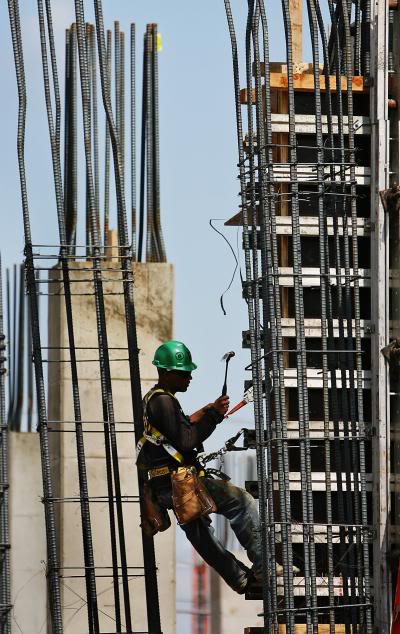
Workplace safety falls under the jurisdiction of the Occupational Health and Safety Administration, or OSHA. But there’s only so far that the federal agency can go, said Patrick Griffin, the area director for the Providence office. “The OSHA standards are the minimum standards,” Griffin said. “On a lot of job sites, there may be more stringent regulations. …It’s better to be more than less.”
At a construction site or a manufacturing facility, unions provide another set eyes to make sure safety standards are indeed being followed, said Celenza, who added that he agreed with Sabitoni’s views on unions and safety. Collective bargaining agreements between labor and management also reinforce OSHA protections against workers who refuse to do a job because it poses imminent danger as well as those who file formal safety or health complaints, according to Celenza.
Sabitoni said the difference is reflection in regional data for workplace fatalities. Between 1998 and 2005 there were 354 fatalities at non-union workplaces throughout New England. During those same years, there were 77 deaths at unionized locations, according to OSHA figures. “It’s blatant in the numbers,” Sabitoni said. “It’s … astounding.”
The Deadliest Job: Truck Drivers
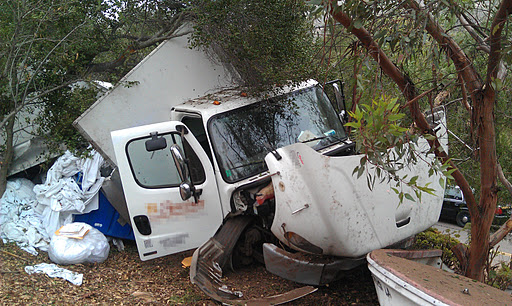
The deadliest job in Rhode Island is being a truck driver—which includes tractor trailers as well as tow, garbage, and concrete mixers. The last decade was marked by an average of one truck-driver fatality every other year, above welders, electricians, and auto mechanics. Operating a truck in of itself may not be dangerous—it’s being on the road that is, according Celenza.
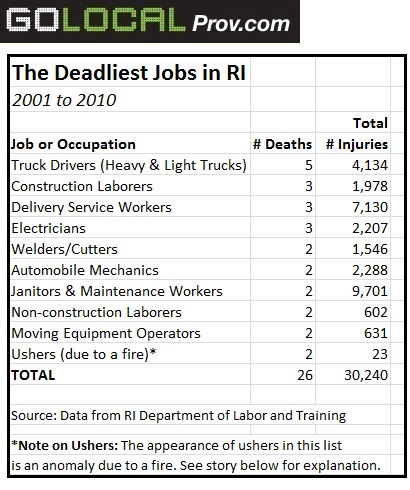
Indeed, all five truck-driver fatalities in Rhode Island were on-the-road accidents. Four out of those five were on the highway. In fact, road accidents account for the lion's share of deaths outside of the trucking industry. In all, motor-vehicle and road-related accidents resulted in 20 out of 51 workplace accidents in Rhode Island.
“Anything could happen on the road. You’ve always got to watch the guy in front of you,” said Kevin Reddy, president of the Teamsters Local 251, which mans about 300 to 400 trucks a day and counts about 2,500 of its members as drivers.
But Reddy said the risks increase for non-unionized businesses. Unionized companies, like UPS—which is the largest employer of Teamster drivers in the Ocean State—are stricter about safety, such as rules on how long a driver can be on the road, avoiding the fatigue—and the accidents that often follow—that can set in on longer drives, Reddy said.
Most of the issues arrive with long-distance independent contractors who are skirting the rules to save money, he added.
The difference in pay between union and non-union workers is another factor. A driver of a UPS tractor trailer makes $110,000 a year. His counterpart at Fedex, which is not unionized, earns $60,000 a year, according to Reddy.
The Biggest Construction Killer

Construction has always been one of the most active areas of attention for the Occupational Health and Safety Administration, according Griffin. The number one killer at construction sites: falls.
Of the three most recent deaths for construction laborers in Rhode Island, one was due to a fall from an elevation. One was a motor vehicle accident and, in the third instance, a worker was caught in collapsing materials that included stonework.
Another potential factor: the category of construction laborers excludes carpenters, electricians, welders and cutters—all of whom either need licenses or special training to do their work. Workers who are considered construction laborers assist in all kind of projects—from buildings and road repair to dams and bridges—and generally perform “other unskilled tasks” according to the U.S. Bureau of Labor Statistics.
Another group of untrained workers also led to a higher fatality rate: non-construction laborers, who likewise perform “unskilled, simple duties” that “may be learned within a short period of time” according to the official BLS description.
Electricians and Welders
As it turns, out all three fatalities among electricians in Rhode Island were not strictly related to handling live electricity. One was actually a motor vehicle accident. The other two incidents involved falls.
As for the incidents that claimed the lives of two welders, both involved lethal exposure to asbestos. In both cases, it took a year or longer for the toxic effects of the exposure to take their toll.
Accidents and Disasters
The remaining six deadliest jobs included the following:
■ Moving equipment operators: This is a catch-all category for anyone who works with equipment that moves a variety of materials, including loaders and conveyers. One of the two deaths in this group resulted from a worker being pinned underneath a forklift. The cause of the other fatality was not reported to state labor authorities.
■ Falls and crashes: It’s not just truck drivers who are exposed to the hazards of being on the road. Traffic accidents also claimed the lives of two delivery service workers and one maintenance worker. The remaining two fatalities—one more in delivery service and one in maintenance—stemmed from the second most common cause of workplace fatalities: falls from high elevations.
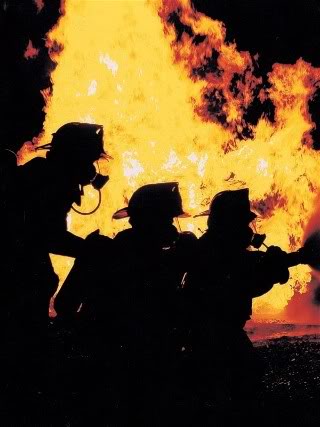
■ Why ushers are on the list: Sometimes a disaster strikes, exposing the hidden dangers of a seemingly safe job. Such was the case for the two ushers who made the list. Both died when they were caught in a fire on Feb. 20, 2003, the date of the Station nightclub fire. In all, there were seven workplace fatalities on that date, all fire-related. One job was not reported. The remaining four were a stock clerk, sales rep, cashier, and a waitress. (Other than noting that all seven were trapped in a fire on the same date and in the same county (Kent), state labor records do not confirm the actual business name or address. A Department of Labor spokeswoman said she could not release the name of the employer because such information is considered "confidential.")
■ Why fishermen aren't on the list: Nationally, being a fisherman is considered the most dangerous job, with the fatality rate ranging from 116 to 200 deaths per 100,000 workers, according to national rankings. But the state Department of Labor does not track injury and fatality rates for local fishermen. Between 2003 and 2010 the U.S. Department of Labor records do not show any fishing deaths in Rhode Island. A CDC report shows that there were 165 fishing industry deaths along the entire East Coast, Maine to Miami, from 2000 to 2009. But state specific information was not available.
If you valued this article, please LIKE GoLocalProv.com on Facebook by clicking HERE.