


Washington Bridge Report: Bridge Danger to Gano Street, Decay Has Gone on for Years and Not Detected
GoLocalProv News Team
Washington Bridge Report: Bridge Danger to Gano Street, Decay Has Gone on for Years and Not Detected
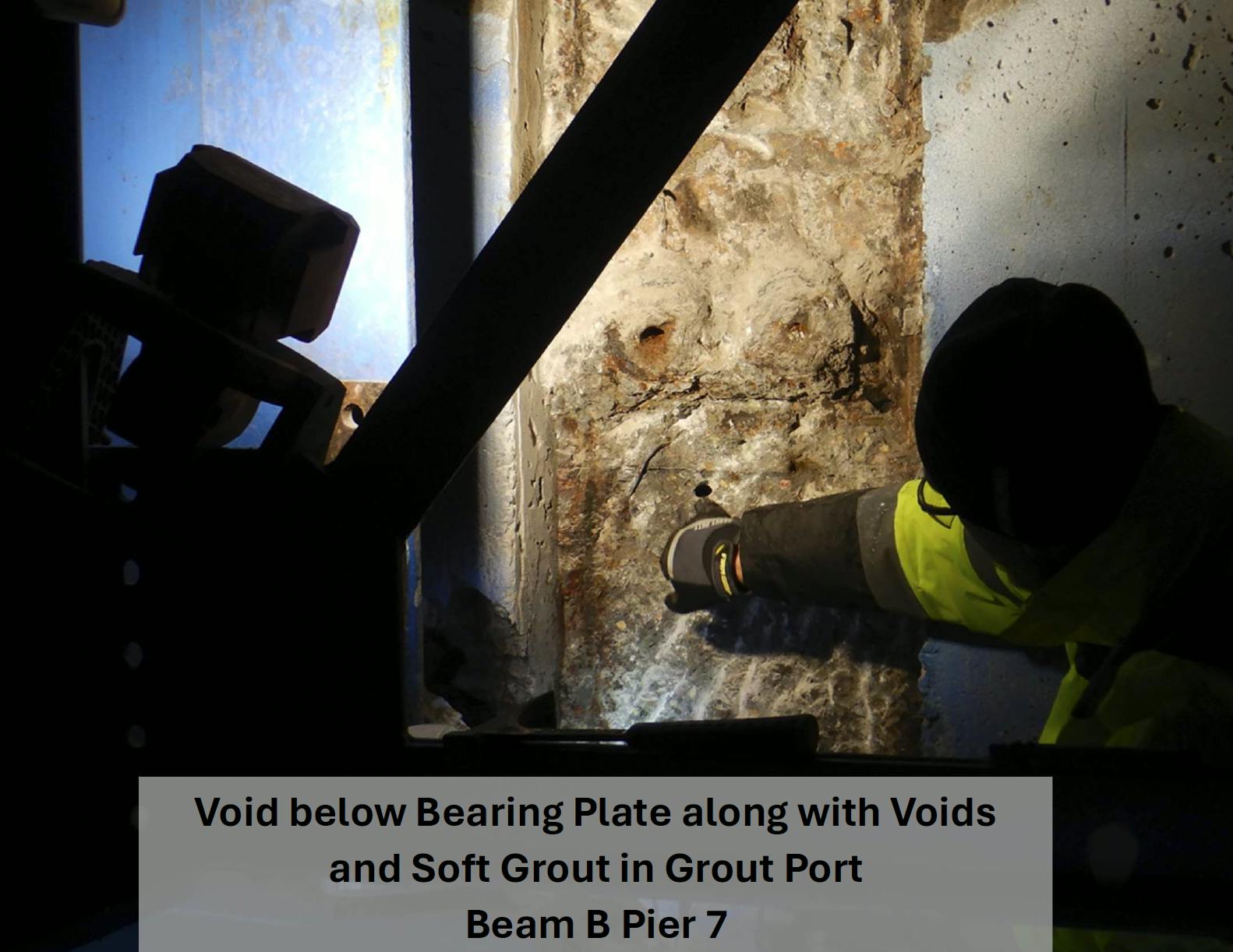
The draft VN Engineers report on the Washington Bridge raises significant questions about the stability of the structure even while it is not in use and raises disturbing questions about the Rhode Island Department of Transportation’s (RIDOT) bridge inspection program, as it cites the decay to the core of the bridge taking place over the years.
GET THE LATEST BREAKING NEWS HERE -- SIGN UP FOR GOLOCAL FREE DAILY EBLASTIn addition, the report raises questions about the ongoing $78 million design-build contract that is now being worked on by the McKee administration and whether the repairs will do anything to stabilize the bridge in the long term.
Specifically, the report identifies that there is a "risk to Gano Street."
The report examination shows damage to nearly every aspect of the critical structure -- decay and damage to the bridge that, in some cases, has clearly taken place over multiple years.
It raises serious questions about the state's inspection program.
The report flies in the face of the claims made by RIDOT Peter Alviti, who in recent weeks said that his department thought that a heavy truck may have caused the failure of the bridge, as well as claims by Alviti that this damage took place since an inspection of the bridge in the summer of 2023.
Alviti has repeatedly made false statements as RIDOT director.
Prior to serving in his role as Rhode Island's chief transportation director, he had little bridge experience. Alviti worked as the public works director in Cranston and had a mid-level job for 15-plus years working for the Laborers' International union.
The report does not identify the exact cause of the failure of Washington Bridge. None of the engineering data was provided.
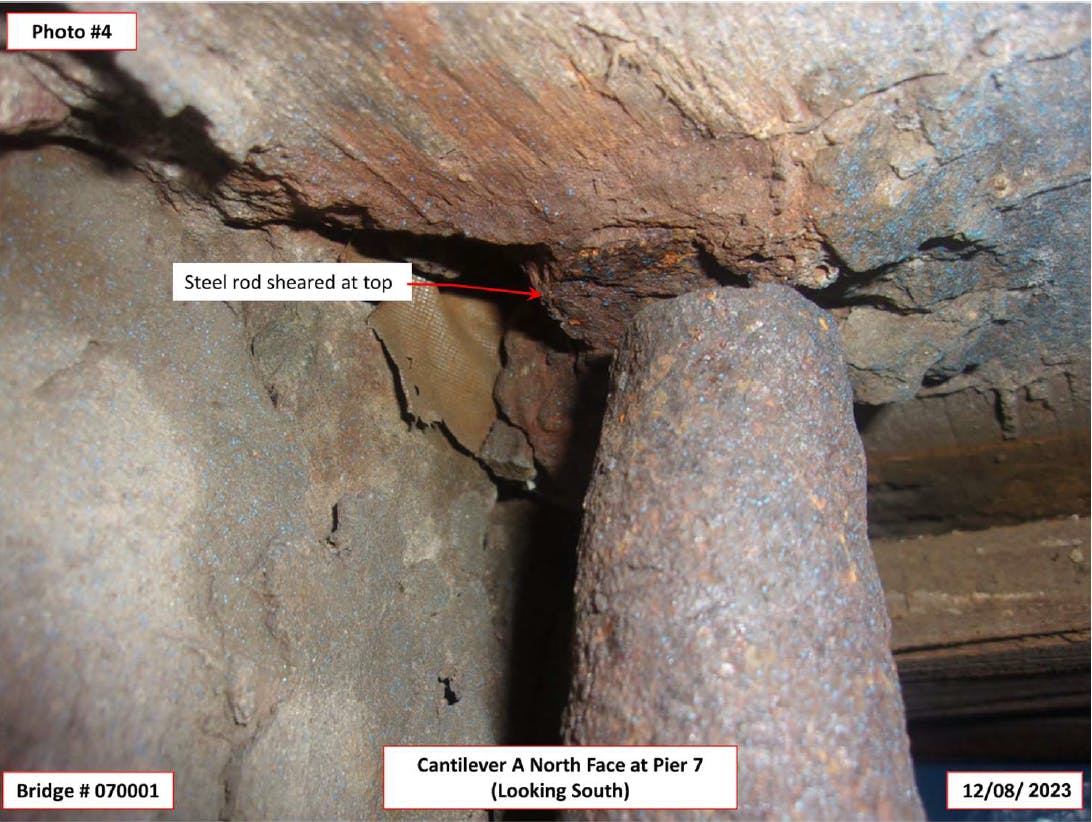
The field inspections and field testing performed on the structure to date have documented the following deficiencies:
- Failure of multiple Tie-Down Rods at Pier 6 and 7
- Exposed PT [post-tension] anchorage assemblies, undergoing active corrosion
- Exposed PT grout ports, undergoing active corrosion, with voids and soft grout present
- Significant voids within the PT ducts
- Soft grout within the PT ducts
- Suspected delamination of the grout within the PT ducts
- Corrosion of PT tendons within the PT ducts
- Unsound concrete in the anchorage development zone of the concrete beams
- Web cracking along the PT ducts at beams throughout the structure
- Concrete of beams at Pier 6 and 7 vulnerable to freeze-thaw damage
- Deck joints leaking above PT anchorage assemblies throughout the bridge
Lack of Redundancy - Risk of Progressive Failure
The report outlines a fundamental flaw with the design of the bridge -- its lack of redundancy. If one element of the Washington Bridge fails, it has an adverse impact on the rest of the bridge.
According to the report:
The Washington Bridge is inherently non-redundant in global configuration due to the balanced and unbalanced nature of the bridge’s cantilever beams, and the associated adjacent drop-in spans providing counterbalance weight for the system. If a cantilever beam were to fail, the adjacent drop-in span would lose its support and fall.
The falling of this drop-in span would unbalance the next adjacent cantilever beam, which would then be at risk of failing or becoming unstable. This could lead to a progressive failure scenario for the entire beam line, or even risk the loss of adjacent beam lines as the bridge attempts to re-stabilize transversely. The risk of this potential progressive failure is compounded by the redistribution of the load associated with the loss of the tie-down rods at Piers 6 and 7.
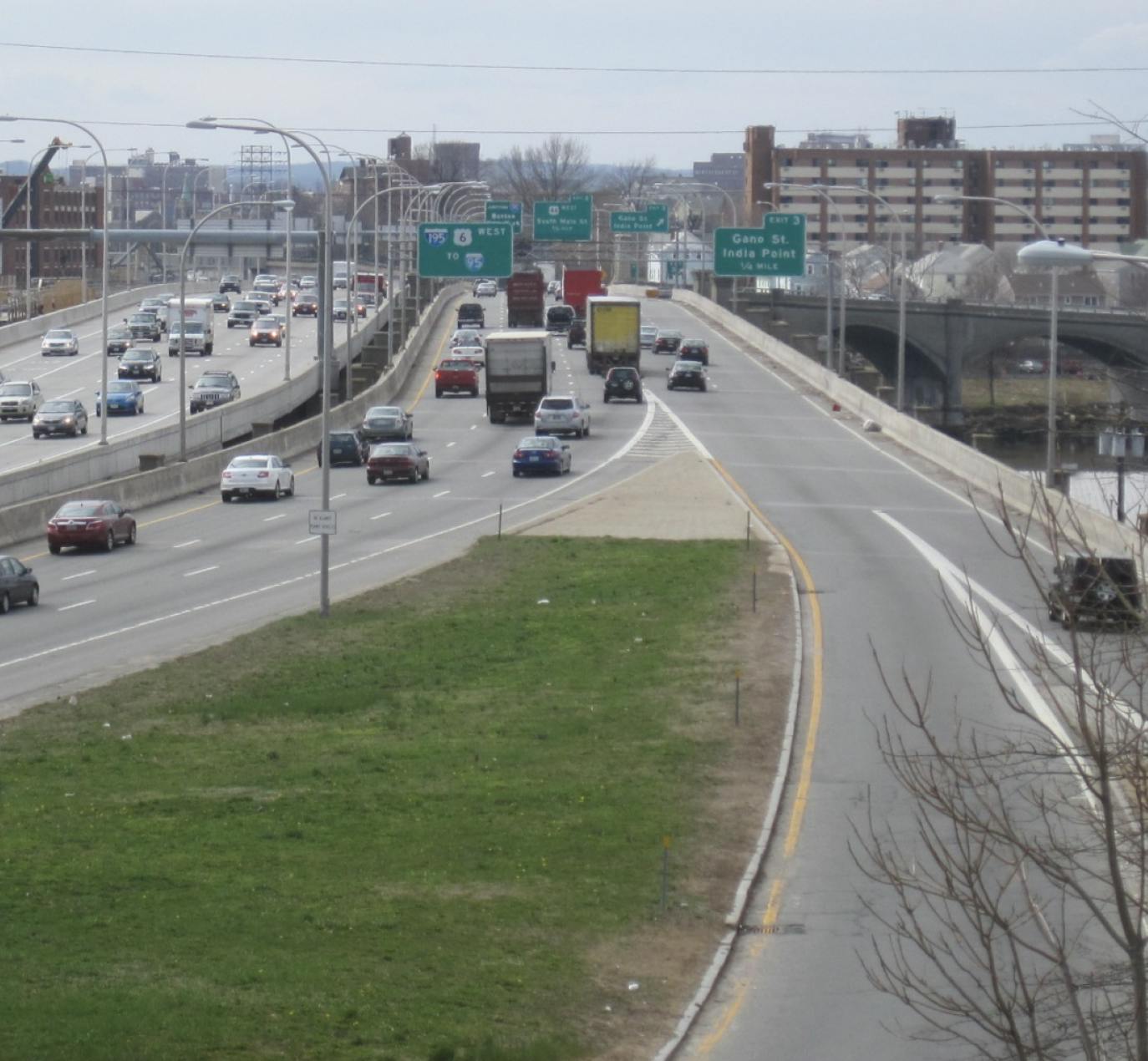
The risk of a progressive collapse of the bridge is believed to be low in a deadload only configuration of the structure, with no traffic on the bridge and the tie-down rods functioning as-designed. This risk is reduced once the installation of the new tie-down rod system is implemented. If it did occur, the following effects of such a failure should be considered in a risk assessment of the structure’s long-term viability:
The potential for elements of the superstructure to fall onto Gano Street.
After receiving preliminary findings covered in this report, and in an abundance of caution, RIDOT has directed the contractor to install temporary support beneath the spans of the Washington Bridge that pose a risk to Gano Street, as a mitigation strategy.
It is important to note that the cantilever beams at the Gano Street crossing are undergoing active monitoring with no documentation of movement in the bridges’ current condition.
The potential for elements of the superstructure to fall into the river and damage the shared foundations of the I-195 East Bound Bridge.
This has the potential to require lane or full bridge closure of the I-195 East Bridge if such a failure of the Washington Bridge did occur, as the foundations of the I-195 East Bound Bridge would need to be assessed and potentially repaired if struck by falling elements of the Washington Bridge.
It is important to note that cantilever beams along the full bridge are undergoing active monitoring. Movement is observed along the cantilever beams located at Pier 6 and 7, but within limits associated with the stable condition of the structure.