


Whitcomb: Drugstore Delirium; Bus Business; Sociopaths Can Be Good Liars
Robert Whitcomb, Columnist
Whitcomb: Drugstore Delirium; Bus Business; Sociopaths Can Be Good Liars

“In heaven it is always autumn. The leaves are always near
to falling there but never fall, and pairs of souls out walking
heaven's paths no longer feel the weight of years upon them….’’
-- From “In Heaven It Is Always Autumn,’’ by Elizabeth Spires (born 1952), American poet
GET THE LATEST BREAKING NEWS HERE -- SIGN UP FOR GOLOCAL FREE DAILY EBLAST
“The most important thing we've learned,
So far as children are concerned,
Is never, NEVER, NEVER let
Them near your television set –‘’
--From “Television,’’ by Roald Dahl (1916-1990), British author of children’s literature
“People react to fear, not love – they don’t teach that in Sunday school, but it’s true.’’
-- Richard Nixon (1913-1994), U.S. president, in 1969 to 1974, when he resigned in the Watergate scandal
The lushness of the grass and the mild, moist air now almost make you think it’s a second spring, except for the low slant of the sun and the absence of sweet fragrances from blossoms. The quintessential autumn aroma is from decomposing fallen leaves. All seasonal smells evoke memories.

Word that Rhode Island-based CVS might split up the company, such as by spinning off its Aetna insurance unit, all with the aim of addressing an impatient Wall Street, is a reminder of the challenges involved in making a publicly held conglomerate work. How do you coordinate CVS’s drugstore chain with its insurance unit and its complicated and sometimes controversial pharmacy-benefit management operation for maximum profit?
Aetna has been a particularly difficult thing, as its customers on Medicare, sometimes lured by relentless advertising for drugs, especially on television (evening news broadcasts!), have cost the insurer more than anticipated.
There’s considerable cause for worry that CVS, which is laying off almost 3,000 employees, will now proceed to close lots of drugstores, leaving “pharmacy deserts,’’ especially in places with lots of poorly insured people. And will the company decide that it can’t afford the complexity of continuing to promote clinic-like services in its drugstores? Offering those services in venues where you can also get your meds also struck me as a fine convenience.
I can foresee that CVS’s problems could, at least in some neighborhoods abandoned by the chain, lead to the opening of locally own drugstores. Back to the future. It would sort of recall the proliferation of small independent and locally owned bookstores in response to the closing of chain bookstores. Locally based businesses aren’t dominated by the need to assuage Wall Street investors. The best ones have close commercial and personal/emotional ties with other local businesses and with a wide range of residents.
But it’s hard to see how towns, cities and states can do much to stop the creation of some drugstore deserts. We can only hope that local businesspeople seek the economic and civic satisfactions of owning such essential businesses as neighborhood drugstores, where the pharmacists and other staffers come to know well their regular customers’ wants and needs.

The Feds plan to buy out owners of flood-prone houses in Cranston and Johnston along the Pocasset River. It’s past time for the Feds and states to stop using taxpayer money to bail out, so to speak, people who are living in obviously vulnerable areas, especially as global warming increases flooding rains and coastal surges. Presumably, insurance companies’ accelerating exits from perilous places will make more and more people decide to forgo the charms of a water view.
Meanwhile, Hurricane Helene is reminder that first gradually, then speeding up, people will be moving away from the extreme heat, hurricanes and inland and coastal flooding of the Southeast caused by man-made global warming to head to the Upper Midwest and parts of the Northeast.
This LINK gives you some idea of how global warming might change American demographics:
Help the Arts Recover
The arts are obviously a major force in Rhode Island. But COVID hit arts organizations very hard, and those effects linger. At the same time, federal income-tax changes pushed through by the Trump administration have made it less attractive for middle-income people to give to nonprofits.
Some beloved institutions, such as the Rhode Island Philharmonic and WaterFire, face threats to their continued existence.,
The arts inspire us, and the creativity they express energizes all of the state’s society, including its economy.
In this past session, the Rhode General Assembly failed to enact a proposed measure to create an $18 million Creative Futures Fund from unspent money in the state’s portion of the American Rescue Plan to help arts institutions.
However, the Assembly did add a $10 million bond referendum to support arts infrastructure to the Nov. 5 ballot. It deserves your vote. But it does not include money for operations, which many organizations now urgently need to stay alive. So please help them out if you can.
Conventional Wisdom
There’s been talk about Rhode Island needing to hold a constitutional convention; its last one was in 1986. The state is probably due for another.
And we need changes in the U.S. Constitution. For example, fix the Second Amendment’s (ratified in 1791) confusing and badly punctuated language (beloved by the gun industry and MAGA) and revise the Electoral College system to make it less vulnerable to being corrupted by ruthless would-be tyrants such as Trump.
Delightful News for Downtowns!
Amazon CEO Andy Jassy has announced that the behemoth’s more than 350,000 corporate employees must return to the office five days a week starting in January. Jassy explained that he wants corporate teams to be “joined at the hip.” He sees in-office collaboration as essential to the company’s success because, among other things, it spawns more creativity than does remote work.
Amazon is far from alone among big companies in pushing against the remote work that took over in the pandemic and that nearly emptied out innumerable office buildings.
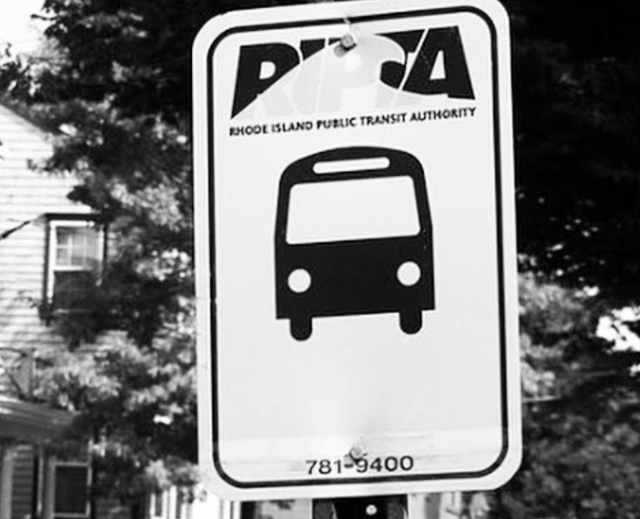
Speaking of deserts, reading a CNN report the other day about the dearth of bus terminals in America reminded me of how important bus lines are for millions of Americans, though the mass of our automobile-bound population doesn’t think about them much. Many bus passengers can’t drive because they can’t afford a car or their health doesn’t permit it. Others just don’t want to drive a car, maybe because they fear there are just too many dangerously bad drivers on the road or because they can snooze and read on a bus.
Certainly, getting more people out of cars and into public transportation would be very good for our air quality.
Where the private sector is unable or unwilling to step in, the Feds, states and cities should subsidize the construction and maintenance of bus terminals because of their important social, economic and environmental roles. They remain an important, if unfashionable and old-fashioned, part of our transportation network.
I used to take buses a lot, first to get to school and then commuting in and out of Boston and other cities. It wasn’t as comfortable as taking the train but was usually less stressful than driving. But being stuck in buses before smoking was banned there was nauseating.
We’re lucky in southern New England in having much more access to trains than most other Americans. And after so many years in which train lines were killed, some have even been revived in the past couple of decades. One example is the train service connecting Boston’s South Shore that was closed in 1959, forcing commuters in and out of Boston to use the new Southeast Expressway, which swiftly became a miles-long parking for hours a day. I remember how much more pleasant it was to ride in those rattling old rail cars to Boston’s South Station from Cohasset than in claustrophobic buses with decayed suspensions from when I was a boy; buses are generally much more comfortable now. Of course, the buses would get stuck in traffic, too, even after the creation of bus lanes.
In any event, a version of the train service was revived in 2007, to the relief of thousands.
Here’s that CNN story about bus terminals:
Where to Retreat To?
The answer might seem obvious, but many ask why Israel launched so many pre-emptive attacks against its enemies. Look at a map! Israel is a tiny sliver of densely populated land. It has little space to retreat back into. Israel rationally fears being quickly destroyed, which the likes of Hamas and Hezbollah would like to do. It must always be anticipating and reacting to such actors as the theocratic tyranny of Russian ally Iran, of which Hezbollah is a subsidiary, and the fanatic Houthis in Yemen as well as Hamas.
Americans tend to lump all Mideast Muslims together, but bear in mind that most Arabs are Sunni Muslims who fear and dislike non-Arab Iran as an aggressive and destabilizing Shia Muslim-run and crazily martyr-obsessed nation. Many would be quietly pleased with an Israeli attack on Iran if it diminished its power, though Arab leaders wouldn’t say that.

On presentation, Sen. J.D. Vance generally won his debate with Minnesota Gov. Tim Walz. That is because he’s a very smart, ruthlessly ambitious, smooth, sometimes charming, if oft oily, and well-tailored Yale-trained lawyer who has been on the national stage as a celebrity since 2016.
Most importantly, he (like his boss) is a nonstop liar and con man, who constantly reinvents history. Charges that he’s astoundingly hypocritical don’t faze him at all. He’s an impressively articulate sociopath of the sort that often makes very good public liars. (Vance’s boss is an out-and-out psychopath. As a malignant narcissist, Trump might well be jealous that Vance got good reviews for his performance.) The brazen Vance seems quite unafraid of everyone except Trump.
But then there are tens of millions of sociopaths in our beloved country and they now have their official spokesmen.
My favored running mate for Harris was Pennsylvania Gov. Josh Shapiro, a very strong debater and all-around speaker from a big state that Harris must win. Like many people, I’m rather mystified she chose Walz.
Vance is an adept shapeshifter; as for example, he sought to sound much more moderate to the general audience who watched him Tuesday night rather than using the menacing fascist rhetoric that he uses when addressing MAGA groups hungering for the demise of their real or perceived enemies.
The kindly, folksy Walz, for his part, is not a very good debater, though he’s good at retail politicking such as schmoozing at such places as state fairs. So he was awkward and nervous in some of the debate, especially at the start. His strange note-taking got in the way of his act. He also was hamstrung by the apparent desire to generally tell the truth, though he sometimes lies, albeit rarely, or at least “misspeaks’’ about relatively unimportant topics, such as about his experience in China. He seems to actually have a conscience.
Some reminders/lessons to those who accepted Vance’s evasions and lies:
Biden won the 2020 election by a substantial margin.
Vice presidents do not make policy and do not have executive powers.
Harris was not the “border czar,’’ but rather was asked to try to help Central American governments discourage their citizens from heading to the United States.
The border isn’t “open,” and Vance’s scapegoating of immigrants – Haitian and otherwise— was soaked in lies.
There are in the range of 11 million to 15 million illegal immigrants in the U.S., not 25 million, as claimed by Vance. Those millions have come here over many years.
Immigration is not the main reason housing is so expensive.
Trump almost succeeded in killing the Affordable Care Act.
Human-caused global warming is a scientific fact.
The Biden administration gave a big boost to manufacturing.
No wonder Vance whined when the debate moderators fact-checked him.
He evaded the Jan. 6, 2001 question, saying he’s “focused on the future’’.
Here’s how he wants the future to look like:
Privatize the National Weather Service!
Both Vance and Walz wisely dodged the question of what Israel should do next against Iran. It is too fluid a situation.
xxx
It would have been ironic if the International Longshoremen’s Association strike had continued and caused economic damage that ended up putting the anti-union Trump back in the Oval Office. The union is particularly worried about automation destroying many jobs at U.S. ports. They should be.